


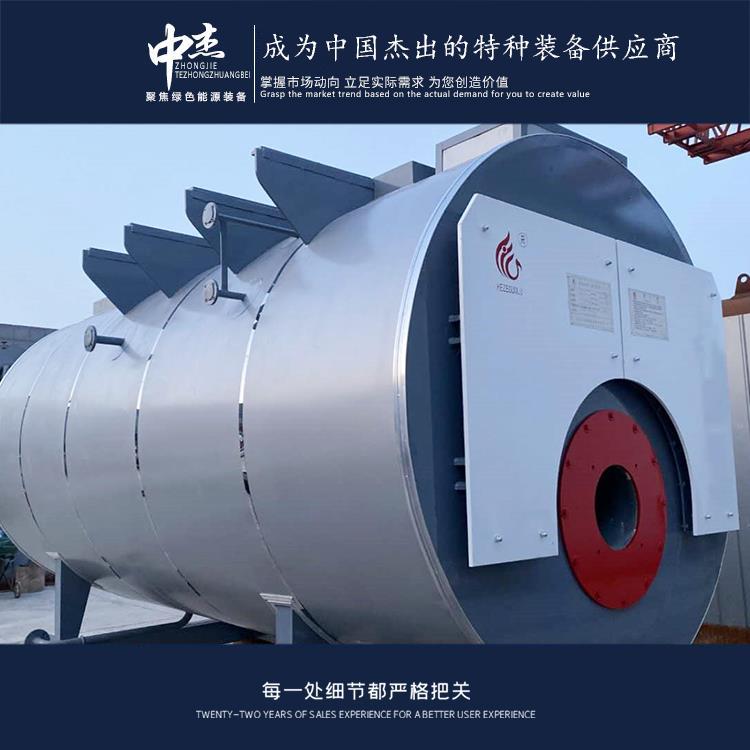

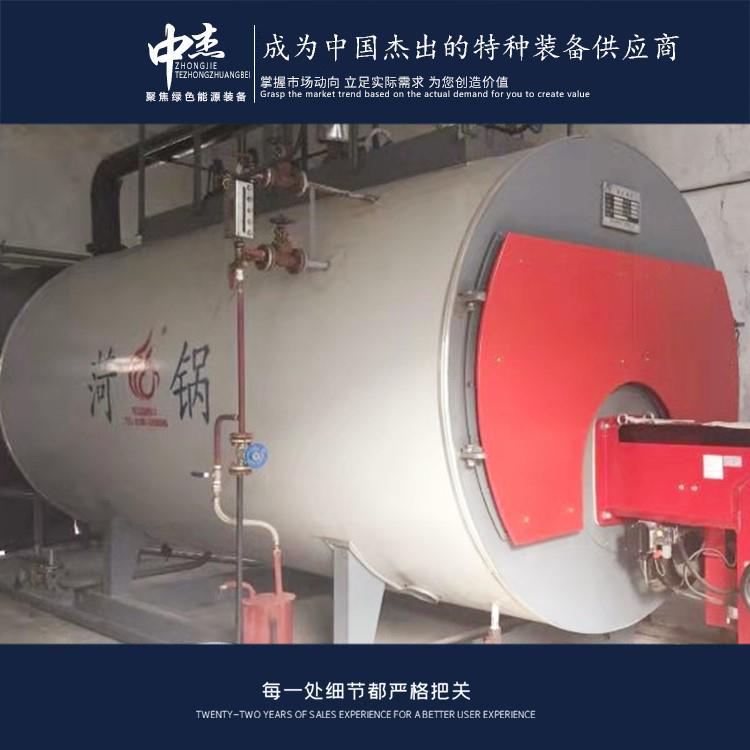
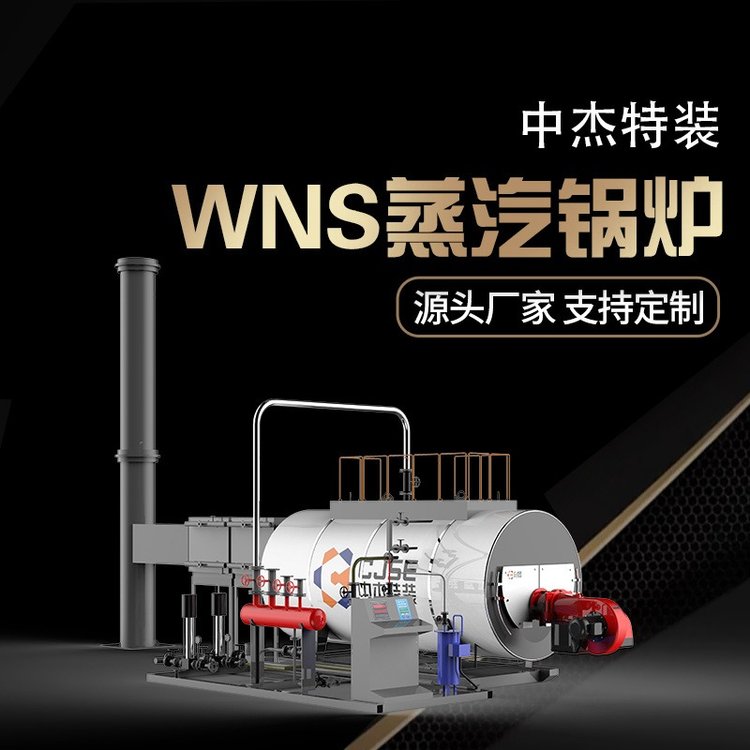


















Shandong Zhongjie Special Equipment's main products include: fuel (gas) boilers, organic heat carrier boilers, biomass boilers, waste heat boilers, and other boiler products; vacuum insulation deep cooling pressure vessels such as LNG tanks, oxygen-nitrogen-aragonite tanks, CO2 tanks, etc.; pressure vessel products such as denitrification engineering equipment, heat storage and energy storage equipment, and complete chemical equipment sets; central air conditioning and ventilation equipment such as ground (water) source heat pumps, air source units, water-cooled screw units, and air-cooled modules. Planned products include large-scale energy centers, LNG transport vehicles, LNG tank containers, and other green energy equipment.
When operating a gas boiler, there are three important points to note:
1. Safe Operation: A gas boiler is a thermal energy equipment, and safety should be a priority. First, ensure the operator has the relevant skills and knowledge, understanding the boiler's working principle and operation procedures. Second, strictly prohibit placing flammable materials around the boiler and maintain good ventilation. Additionally, regularly inspect and maintain the safety valve, pressure gauge, and other safety devices to ensure they function properly.
2. Proper Gas Supply Adjustment: The combustion of a gas boiler requires an appropriate amount of gas supply. During operation, adjust the gas supply according to actual needs to ensure stable combustion. At the same time, regularly check the sealing of the gas pipeline and valves to prevent gas leaks.
3. Regular Maintenance and Cleaning: Regular maintenance and cleaning of a gas boiler are crucial for its proper operation and extended lifespan. Regularly inspect all parts of the boiler, clean the burner, flue, and heat exchanger of accumulated dust and dirt to ensure heat transfer efficiency and combustion effectiveness. Furthermore, regularly replace filters and clean water treatment equipment to ensure clean water quality and prevent scale and corrosion.
It should be noted that these three points are just basic operational guidelines, and specific operation and maintenance requirements may vary depending on the model and specifications of the gas boiler. Therefore, before operating a gas boiler, it's advisable to refer to the boiler's operation manual or consult with experts to ensure correct and safe operation.
The flow rate standard for thermal oil in the oil tubes of a thermal oil furnace typically varies depending on specific applications and equipment requirements, without a unified fixed value. Generally speaking, the flow rate of thermal oil in the tubes should be maintained within a reasonable range to ensure the normal operation of the equipment and the effectiveness of heat transfer. Excessive flow rate of thermal oil may lead to the following issues: increased pressure loss in the system, increased power consumption of the pump. Increased friction loss in the pipes, leading to energy loss. Increased system noise and vibration. A low flow rate of thermal oil may cause the following problems: insufficient heat transfer, affecting the thermal efficiency of the equipment. Extended residence time of thermal oil in the pipes, prone to oxidation and thermal decomposition, impacting the service life of the thermal oil. Formation of carbon deposits in the pipes, increasing pipe resistance, affecting fluid flow. Therefore, when designing and operating a thermal oil furnace system, it is necessary to consider specific equipment parameters, the properties of the thermal oil, and pipeline layout, among other factors, to determine an appropriate flow rate for the thermal oil. Generally, the flow rate of thermal oil should be within the range of 0.5-2.0 m/s, but the specific value needs to be adjusted and optimized based on actual conditions. In practice, the flow rate of thermal oil can be controlled by monitoring and adjusting the pump flow and pipe resistance to meet the thermal energy demands and operational requirements of the equipment.
In addressing issues with gas boilers during the heating process, consider the following aspects:
- Inspect gas supply: Ensure the gas supply is normal and check for any blockages or leaks in the gas pipeline. If issues are found, repair or replace the gas pipeline promptly.
- Clean the burner and combustion chamber: Regularly clean the burner and combustion chamber to remove soot and dirt. This improves combustion efficiency and reduces gas wastage.
- Check and adjust the gas-to-air ratio: Ensure the gas-to-air ratio is appropriate for optimal combustion. An incorrect ratio can lead to incomplete combustion or excessive exhaust.
- Inspect and clean the heat exchanger: Regularly inspect and clean the heat exchanger to remove soot and dirt. This enhances heat exchange efficiency and ensures effective heat transfer to the heating system.
- Check and maintain the circulating pump and valves: Ensure the circulating pump and valves operate properly to allow smooth flow of hot water or steam through the heating system.
- Inspect and maintain the control system: Ensure the control system of the gas boiler operates correctly, with accurate control of parameters such as temperature, pressure, and flow. If problems arise, repair or replace the controller promptly.
- Regular maintenance: Regularly maintain the gas boiler, including cleaning, lubricating, and tightening bolts, to extend its lifespan and reduce breakdowns.
- Training and awareness: Provide staff training to enhance awareness of operating and maintaining gas boilers. Improved knowledge and skills contribute to effective management and problem-solving during the heating process.
- If issues cannot be resolved or there are safety
Steam boiler energy conservation is an urgent mission, for the following reasons: Energy Consumption: Steam boilers typically use fuel to produce steam, and the consumption of fuel directly affects energy consumption. With the increasing scarcity of energy resources and rising energy prices, energy conservation has become a critical task. Environmental Protection: The emissions and waste smoke from fuel combustion pollute the environment, including air pollution and greenhouse gas emissions. By conserving energy and reducing fuel consumption, the impact on the environment and carbon emissions can be minimized. Economic Benefits: Energy conservation can lower energy consumption and operational costs, improving energy utilization efficiency. By implementing energy-saving measures, a company can reduce energy expenses and enhance economic benefits. Sustainable Development: Energy conservation is a crucial component of sustainable development. By reducing energy consumption, the lifespan of energy resources can be extended, providing more energy reserves for future development. Legal and Regulatory Requirements: Many regions have established laws, regulations, and policies for energy conservation and emission reduction, requiring businesses to adopt energy-saving measures and reduce energy consumption and environmental pollution. Therefore, steam boiler energy conservation is an urgent task. By implementing effective energy-saving measures, energy consumption can be reduced, environmental pollution minimized, economic benefits improved, and sustainable development achieved.
Our company attaches great importance to technological innovation and research and development, boasting 1 city-level enterprise technology center in Heze City. We have established testing facilities for non-destructive testing, physical and chemical testing, welding testing, hydrostatic testing, and more. We are equipped with over 600 instruments and equipment, including CNC machine tools, X-ray flaw detectors, digital ultrasonic flaw detectors, mechanical property testing machines, chemical analyzers, spectrometers, tensile testing machines, plasma welding machines, and others. The key products and technologies we have developed, such as welding for temperature and pressure vessels, emissions reduction in biomass boilers, and waste heat recovery, have successively been shortlisted for multiple Shandong Provincial Department of Industry and Information Technology Science and Technology Innovation projects, key projects in Shandong Province, and Heze City Innovation and Excellence projects. We have cumulatively obtained 27 authorized utility models, 16 authorized inventions, participated in drafting 2 standards, 2 industry standards, and registered 15 trademarks. Our technical team, in collaboration with Professor Yajiang Li of Shandong University, has jointly developed deep cryogenic container processing technology using the international plasma arc + wire filling argon arc welding (PAW-GTAW) technology. The provincial-level scientific and technological achievement identification has confirmed that our technology level in deep cryogenic container manufacturing has reached international standards.
Choose ZJET Tailor-Made Solutions, let's create brilliance together!
WeChat Official Account

Scan to follow Official Account



















