


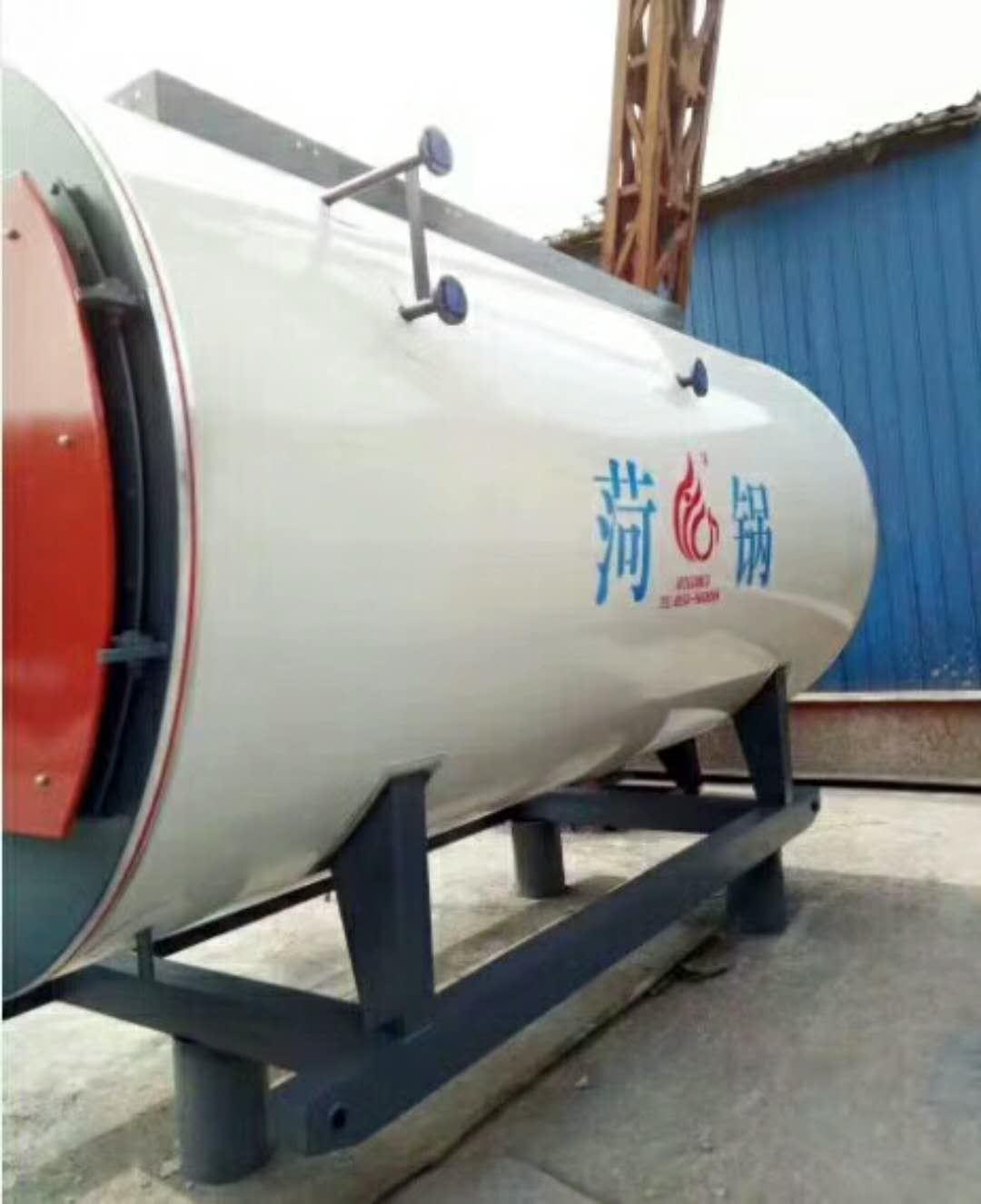



















Shandong Zhongjie Special Equipment (formerly Heze Boiler Factory Co., Ltd.) holds an A-grade boiler manufacturing license, an A2-grade pressure vessel manufacturing license, an A2-grade pressure vessel design license, B-grade boiler installation license, and GB2/Class, GC2/Class pressure pipeline installation licenses, as well as equipment and machinery installation contracting qualifications. It is a member of the China Boiler and Water Treatment Association, the China Chemical Equipment Association, and a director unit of the Shandong Equipment Manufacturing Association. The company has also passed certifications for the ISO9001 Quality Management System, ISO14001 Environmental Management System, OHSAS18001 Occupational Health and Safety Management System, and the American ASME/U2 certification.
Carbon dioxide storage tanks offer the following advantages: High storage density: Carbon dioxide storage tanks can compress the gas into a liquid state, significantly increasing storage density. Compared to storing it in a gaseous state, liquid carbon dioxide can be stored in a smaller tank, saving space and costs. Environmental friendly and renewable: Carbon dioxide is an environmentally friendly gas, and its increased concentration in the atmosphere can lead to warming and climate change. By storing and utilizing carbon dioxide, we can reduce its emissions into the atmosphere, achieving environmental protection and sustainable development. Wide range of applications: Carbon dioxide storage tanks are widely used in various fields, including the food and beverage industry, industry, fire extinguishing, and gas supply. Carbon dioxide can be used as a food preservative, beverage effervescent agent, gas, and fire extinguisher, with extensive uses and market demand. Safe and reliable: During the design and manufacturing process, carbon dioxide storage tanks typically use high-strength materials (such as carbon steel or stainless steel), offering good pressure resistance and safety. The tanks are usually equipped with safety valves, pressure gauges, level indicators, and other accessories to ensure safe operation. Additionally, carbon dioxide is a non-flammable and non-explosive gas, making it relatively safe. These advantages make carbon dioxide storage tanks an important storage and supply equipment, widely used in multiple industries. However, it is still necessary to follow relevant safety operation procedures and standards when using carbon dioxide storage tanks to ensure safe operation and use.
二氧化碳储罐的检验频率应根据当地的法规、标准和制造商的建议来确定。一般来说,以下几个因素会影响二氧化碳储罐的检验频率: 法规和标准要求:不同和地区可能有不同的法规和标准,规定了储罐的检验要求和频率。例如,美国的DOT标准要求液化气体储罐每5年进行一次外部检验和每10年进行一次内部检验。 制造商建议:储罐的制造商通常会提供关于检验频率的建议。这些建议基于储罐的设计、材料和使用寿命等因素,可以作为制定检验计划的参考。 使用环境和条件:储罐的使用环境和条件也会影响检验频率。例如,如果储罐暴露在腐蚀性环境中或经常受到机械应力,可能需要更频繁的检验。 一般来说,液化气体储罐的外部检验通常是通过目视检查、超声波检测、磁粉检测等方法进行的,以评估储罐的外部状况和可能存在的缺陷。内部检验可能需要排空储罐,并通过内部检查、厚度测量、焊缝检测等方法来评估储罐的内部状况。 重要的是,储罐的检验应由经过培训和有经验的人员进行,并严格按照相关的法规、标准和制造商的建议进行。定期的检验和维护可以确保储罐的安全性和可靠性,减少事故的风险。
The primary reason for pre-cooling a carbon dioxide tank before use is to ensure that the carbon dioxide inside the tank remains in a liquid state and maintains a stable temperature during storage and supply. The pre-cooling process typically involves the following steps: Tank Cooling: Before the tank is put into service, it needs to be cooled internally to a sufficiently low temperature to convert the carbon dioxide from a gas to a liquid. This can be achieved by injecting a cooling medium (such as liquid nitrogen) into the tank or by using an external cooling device. Tank Pre-charging: After the tank has been cooled, liquid carbon dioxide must be pre-charged into the tank to fill it and maintain a certain pressure. The purpose of pre-charging is to provide sufficient carbon dioxide supply during storage and supply and to keep the tank's pressure stable. Through pre-cooling operations, it ensures that the carbon dioxide inside the tank remains in a liquid state, avoiding premature evaporation and energy loss. Additionally, pre-cooling helps to lower the tank's temperature in advance, reducing carbon dioxide evaporation and pressure fluctuations, thereby improving the tank's operational efficiency and safety. It is important to note that the specific methods and requirements for pre-cooling may vary depending on the tank design and application scenario. When performing pre-cooling operations, it is necessary to follow relevant safety operation procedures and standards to ensure the safety and effectiveness of the operation.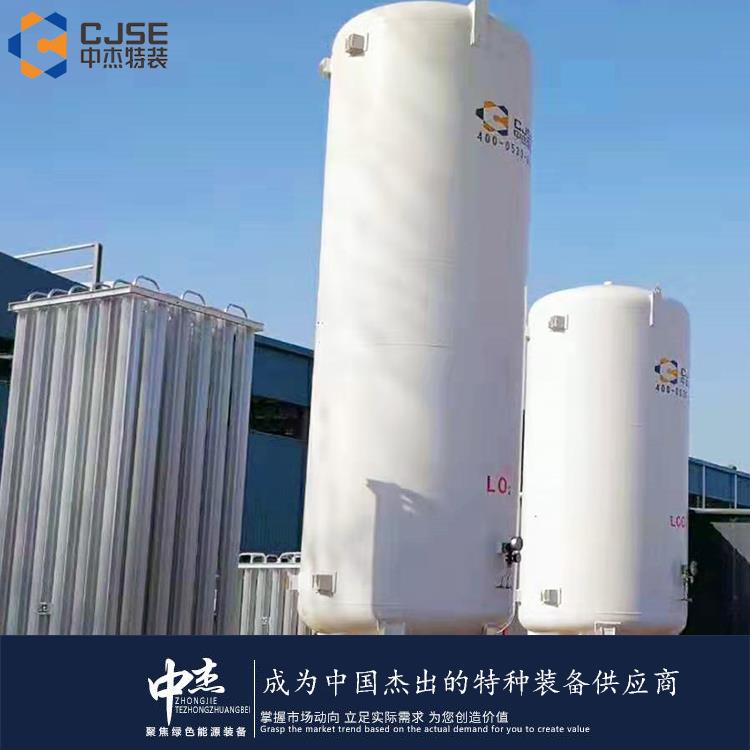
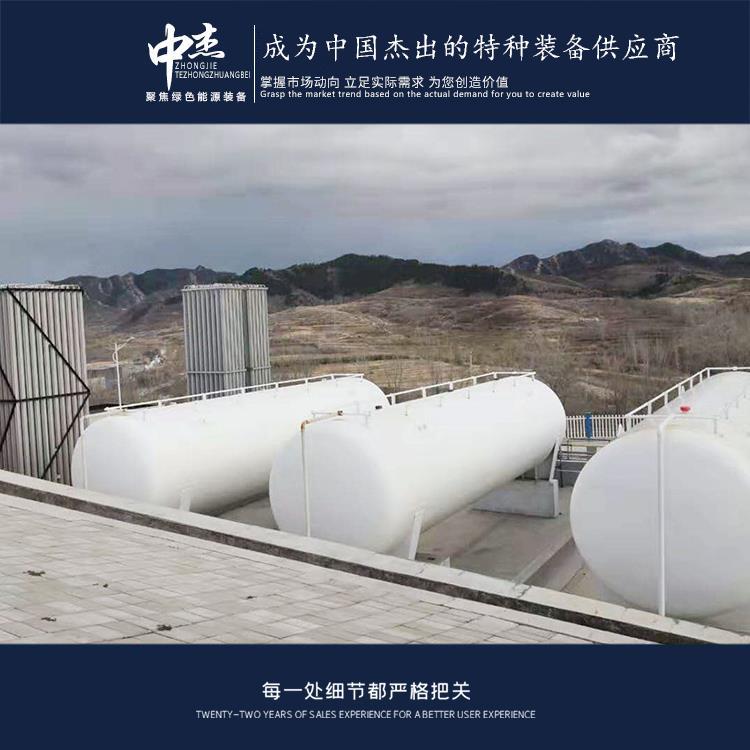
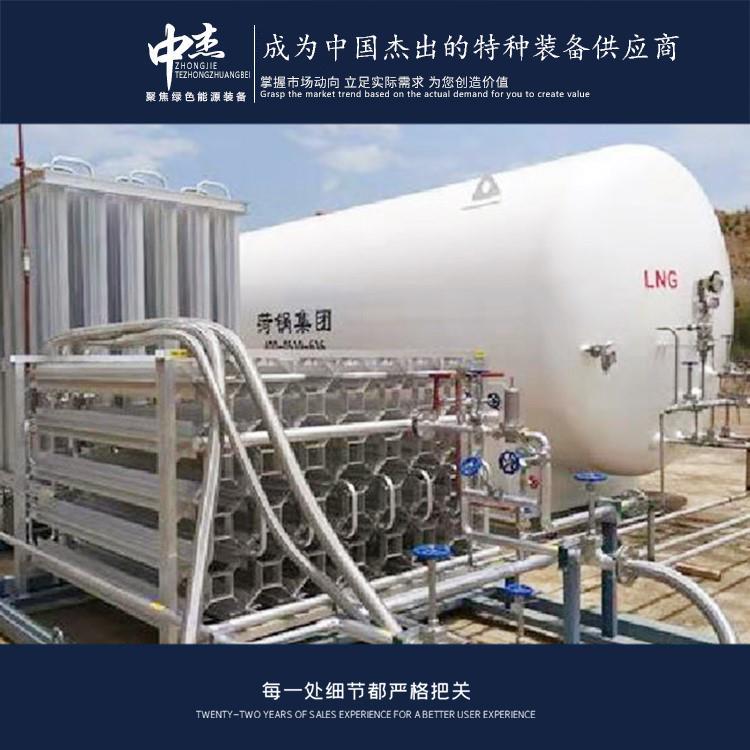
Carbon dioxide tanks are equipment used for storing and transporting carbon dioxide (CO2). They are typically sealed containers with specialized design and structure to ensure safe storage and use of CO2. Below are some common details about carbon dioxide tanks:
Storage Form: CO2 is in a gaseous state at room temperature but can be compressed into a liquid under high pressure for easier storage and transport. Carbon dioxide tanks are commonly used for storing liquid CO2.
Storage Pressure: These tanks usually store high-pressure CO2, with pressures around 20-25 bar. This high-pressure state helps maintain CO2 in a liquid state.
Storage Capacity: The capacity of carbon dioxide tanks can vary, ranging from small ones with a few thousand liters to large ones with tens of thousands of liters. The capacity choice depends on specific application needs.
Safety: Carbon dioxide is a colorless, odorless gas, but it can be dangerous if inhaled at high concentrations. Therefore, appropriate safety measures such as ventilation and protective gear must be taken when using carbon dioxide tanks to ensure the safety of operators.
Application Areas: Carbon dioxide tanks are widely used in various fields, including the food and beverage industry, manufacturing, fire suppression, and gas supply. They are used to store and supply CO2 to meet different industry requirements.
It is important to note that the design, manufacturing, and use of carbon dioxide tanks must comply with relevant regulations, standards, and safety requirements. When using carbon dioxide tanks, operators should follow the operation manual and safety guidelines, and cooperate with local regulatory authorities to ensure the tanks' safety and reliability.
Our company places great emphasis on technological innovation and R&D, boasting 1 municipal-level enterprise technology center in Heze City. We have established testing facilities for non-destructive testing, physical and chemical testing, welding testing, hydrostatic testing, etc., and are equipped with over 600 various instruments and equipment such as CNC machine tools, X-ray flaw detectors, digital ultrasonic flaw detectors, mechanical property testing machines, chemical analyzers, spectrometers, tensile testing machines, plasma welding machines, and more. The key products and technologies we have developed, including welding of temperature-pressure vessels, emission reduction of biomass boilers, and waste heat utilization, have successively been shortlisted for multiple Shandong Provincial Department of Industry and Information Technology Science and Technology Innovation projects, key projects in Shandong Province, and Heze City Innovation and Excellence projects. We have cumulatively obtained 27 authorized utility model patents, 16 authorized invention patents, participated in drafting 2 standards, 2 industry standards, and registered 15 trademarks. The technical team of our company, in collaboration with Professor Li Yajiang of Shandong University, has developed deep cryogenic container processing technology, utilizing the international plasma arc + wire feeding tungsten inert gas arc welding (PAW-GTAW) technology. After provincial-level scientific and technological achievement identification, the technological level has reached international standards in the field of deep cryogenic container manufacturing. Choose Zhongjie Special Equipment, let's join hands to create brilliance together!
WeChat Official Account

Scan to follow Official Account



















