


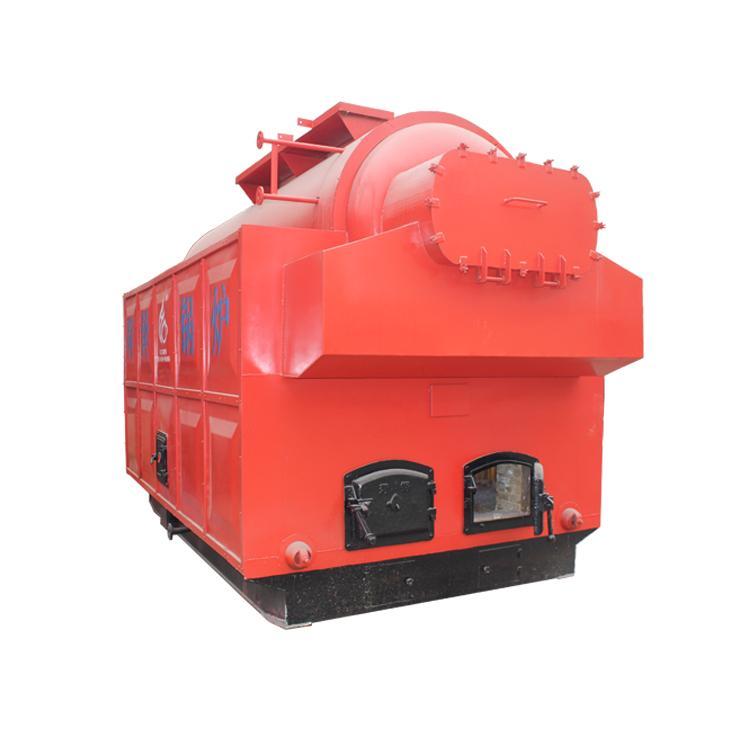

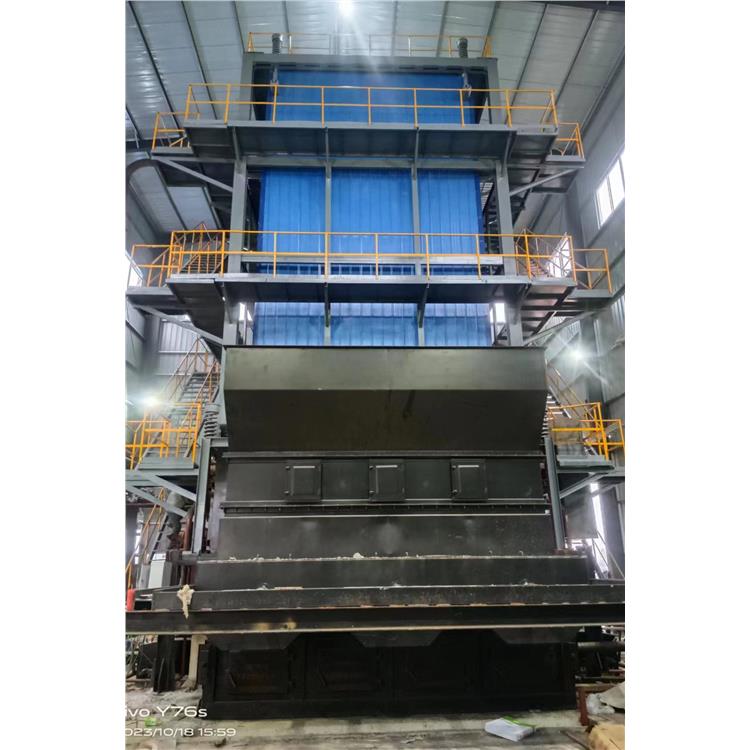
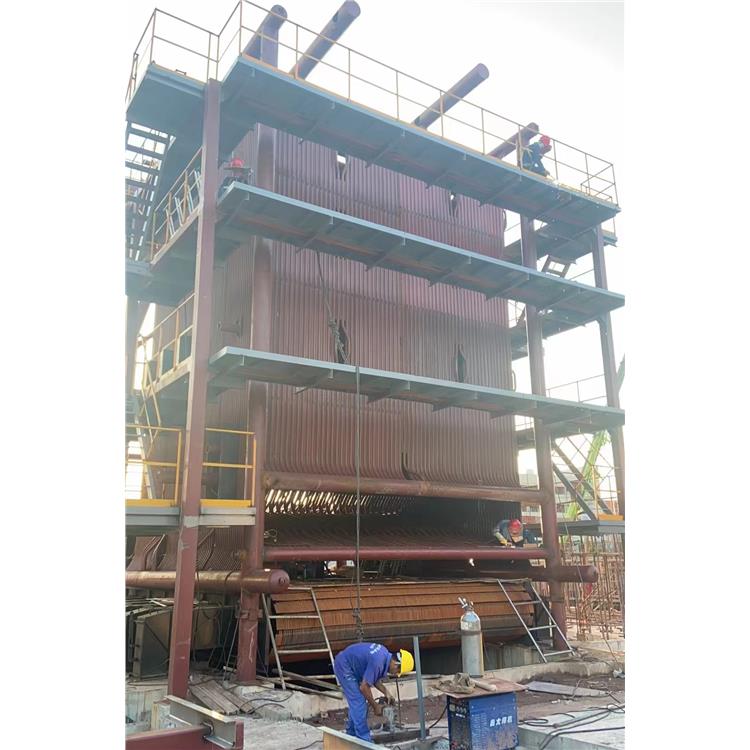


















Shandong Zhongjie Special Equipment (formerly Heze Boiler Factory Co., Ltd.) was established in 2001, located at No. 2218 Jinnan Road, Economic and Technological Development Zone, Heze City. With a registered capital of 50 million yuan and total assets of 500 million yuan, the company operates seven business centers: boilers, deep-freezing containers, pressure vessels, central air conditioning, engineering installation, international trade, and Internet of Things. It has three factory sites on Jinnan Road, East Changjiang Road, and Bohai Road, covering a total area of 200,000 square meters, with the main workshop spanning 83,000 square meters. The company currently employs 710 people, including 247 engineering and technical staff and 82 intermediate-level technicians. In December 2016, it was recognized as a "High-Tech Enterprise" by the Science and Technology Department. In June 2021, it was identified as a "Specialized and New Enterprise in Shandong Province" by the Department of Industry and Information Technology. In June 2022, it was recognized as a "Gazelle Enterprise in Shandong Province" and in August 2022, as a "Specialized and New Small Giant Enterprise" by the Ministry of Industry and Information Technology.
High evaporation rates in biomass pellet boiler fuel may lead to the following issues:
Incomplete combustion: High volatility fuel releases a large amount of steam during combustion, which lowers the combustion temperature and affects the completeness of combustion. Incomplete combustion leads to heat loss and increased emissions, reducing the boiler's thermal efficiency and environmental performance.
Poor combustion stability: Fuels with high evaporation rates are prone to instability in the combustion process, which may result in flameout and uneven combustion. This can lead to unstable operation of the boiler and affect the stability of hot water supply.
To address issues caused by high-vaporizing fuel, the following measures can be taken:
Combustion System Optimization: Optimize the combustion system of biomass pellet boilers, encompassing aspects such as combustion chamber design, air supply, and mixing. Enhance combustion completeness and stability through measures like increasing combustion temperature and oxygen supply.
Combustion Control: Utilizes a combustion control system that monitors and adjusts parameters such as temperature and oxygen content in real-time during the combustion process. Adjusts the supply of combustion air based on actual conditions to maintain stability and completeness of the combustion.
Fuel Pretreatment: Pre-treat biomass pellets with high volatile matter content, such as drying and crushing. By reducing the moisture content and particle size of the fuel, the volatile matter content is decreased, enhancing the combustion efficiency and stability.
Burn Parameters Adjustment: Adjust the boiler's burn parameters, such as combustion temperature and time, based on actual conditions. Through reasonable parameter adjustments, make the combustion process better suited to the characteristics of high-evaporation fuel.
In summary, by optimizing the combustion system, adjusting control mechanisms, pre-treating the fuel, and fine-tuning combustion parameters, issues caused by high fuel evaporation in biomass pellet boiler can be reduced, thereby improving the boiler's
The extinguishing process and maintenance methods for fully automatic biomass boilers are as follows:
Extinguishing Process:
Discontinue Fuel Supply: Prior to extinguishing the biomass boiler, cease fuel supply first to ensure the fuel supply pipeline is closed.
Turn off the burner: Switch the burner's switch or the extinguish button on the control panel to the off position to stop the burner from operating.
Allow for Cooling: Wait until the boiler cools to a safe temperature, which usually takes some time. Do not operate during this period to avoid accidents.
Shut off power: After the boiler has completely cooled down, turn off the power switch of the boiler to ensure the boiler is de-energized.
Maintenance Instructions:
Clean combustion chamber: Regularly clean the combustion chamber to remove ash and dirt generated during the combustion process. Use appropriate tools and cleaning agents to ensure the chamber remains clear and clean.
Heat Exchanger Cleaning: Regularly clean heat exchangers, particularly those on the flue side. During the combustion process, flue gases may contain particulates and slag, which can adhere to the heat exchanger surface, affecting heat transfer efficiency. Employing appropriate cleaning methods, such as mechanical or chemical cleaning, can reduce the accumulation of dirt.
Inspect and Replace Critical Parts: Regularly inspect and replace critical components such as burners, valves, sensors, etc. Ensure their proper operation and performance to avoid malfunctions and safety hazards.
Water Treatment: Proper water treatment for boiler feedwater to prevent impurities and sediments from depositing inside the boiler. Methods such as water softening, deoxygenation, and scaling removal can be employed to maintain the cleanliness and stability of the supply.
Regular Maintenance: Conduct regular maintenance and care, including checking and cleaning control systems, inspecting electrical connections, lubricating moving parts, etc. Develop a corresponding maintenance plan based on the boiler's usage and the manufacturer's recommendations.
Above is the extinguishing process and maintenance methods for the fully automatic biomass boiler. Proper operation and regular maintenance ensure the safe operation of the boiler and extend its service life.
The emission characteristics of biomass fuel boiler flue gases mainly include the following aspects:
Particulate Emissions: During the combustion process of biomass fuel boilers, particulates are produced, including visible dust and fine particles. The amount of particulate emissions is related to fuel characteristics, combustion temperature, and combustion equipment, among other factors. Generally, the particulate emissions from biomass fuel boilers are lower than those from coal boilers, but they still require treatment through dust removal equipment.
(SO2) Emissions: The content of SO2 in biomass fuel is generally low, thus the SO2 emissions from biomass fuel boilers are usually low. However, in certain cases, such as using waste as fuel, the SO2 emissions may increase. To control SO2 emissions, measures such as combustion control and desulfurization units can be adopted.
NOx emissions: The NOx emissions from biomass fuel boilers are related to fuel characteristics, combustion temperature, and combustion equipment factors. Biomass fuel contains a higher nitrogen content, which generates a certain amount of NOx during combustion. To control NOx emissions, measures such as low-NOx combustion technology, combustion control, and denitrification devices can be adopted.
CO Emissions: CO emissions from biomass fuel boilers are generally low due to the relatively complete combustion process of biomass fuel. However, under conditions of incomplete combustion or unstable burning, CO emissions may increase. To control CO emissions, it is necessary to ensure a thorough and stable combustion process.
Volatile Organic Compounds (VOCs) Emissions: The amount of VOCs emitted by biomass fuel boilers is related to the fuel characteristics and combustion conditions. Some biomass fuels contain volatile organic compounds.
Biomass boilers feature the following characteristics:
Renewable Energy: Fuel for biomass boilers comes from organic matter such as plants, animals, and microorganisms, making it a renewable energy source. Compared to traditional fossil fuels, biomass fuel has lower carbon emissions and a reduced environmental impact.
Diverse Fuel Sources: Biomass fuel sources are extensive, encompassing wood, straw, waste crops, food scraps, and municipal solid waste, among others. This diversity in fuel sources allows biomass boilers to be flexible and adaptable, utilizing waste and by-products from plants and animals.
Environmental Friendliness: The carbon dioxide produced during biomass combustion can be absorbed by plants, forming a cycle that reduces air pollution. Additionally, the emissions and ash produced during the combustion process of biomass boilers are relatively low, resulting in minimal environmental impact.
Energy Security: Biomass, as a native renewable energy source, can reduce dependence on imported energy and enhance energy security. In areas with scarce resources, the use of biomass boilers can provide a reliable energy supply.
Economic viability: Biomass fuel is relatively cost-effective, helping to reduce energy costs. Moreover, the technology and equipment for biomass boilers are continuously evolving and maturing, making them more economically competitive.
In summary, biomass boilers feature renewable energy, diverse fuel sources, environmental friendliness, energy security, and cost-effectiveness, making them a vital component in the sustainable energy sector.
Our company attaches great importance to technological innovation and R&D design. We have one municipal-level enterprise technology center in Heze City, equipped with testing facilities for non-destructive testing, physical and chemical testing, welding testing, hydrostatic testing, etc. We have over 600 various instruments and equipment, including CNC machine tools, X-ray flaw detectors, digital ultrasonic flaw detectors, mechanical property testing machines, chemical analyzers, spectrometers, tensile testing machines, plasma welding machines, and more. The key products we have developed, such as temperature and pressure vessel welding, biomass boiler emission reduction, and waste heat utilization, have successively been selected for multiple Shandong Provincial Department of Industry and Information Technology science and technology innovation projects, Shandong Provincial key projects, and Heze City innovation and excellence projects. We have cumulatively obtained 27 authorized utility model patents, 16 authorized invention patents, participated in drafting 2 standards, 2 industry standards, and registered 15 trademarks. Our technical team, in collaboration with Professor Li Yajiang of Shandong University, has developed deep cryogenic container processing technology using the international plasma arc + filler wire tungsten inert gas arc welding (PAW-GTAW) technology. This technology has been appraised as reaching international standards in the field of deep cryogenic container manufacturing at the provincial level. Choose Zhongjie Special Equipment, let's create brilliance together!
WeChat Official Account

Scan to follow Official Account



















