


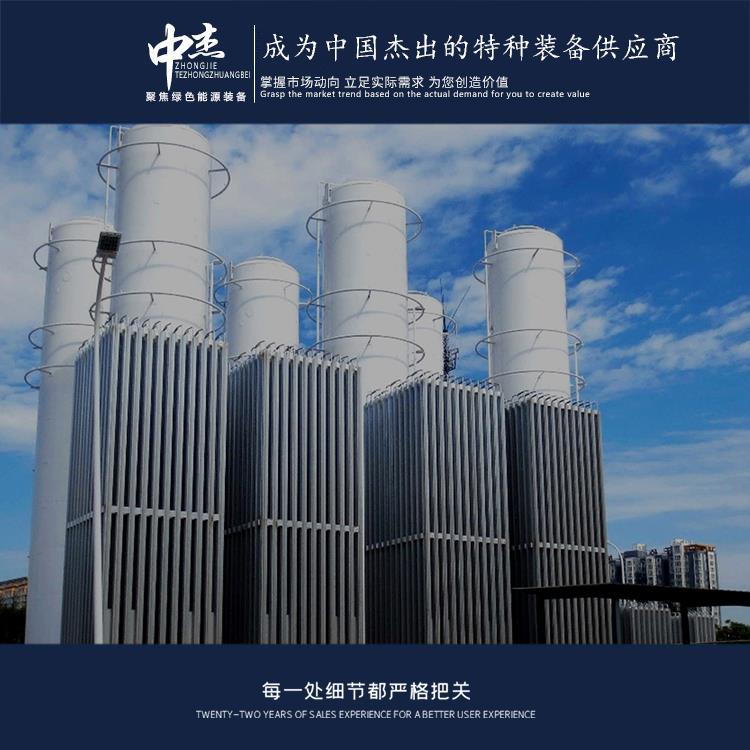

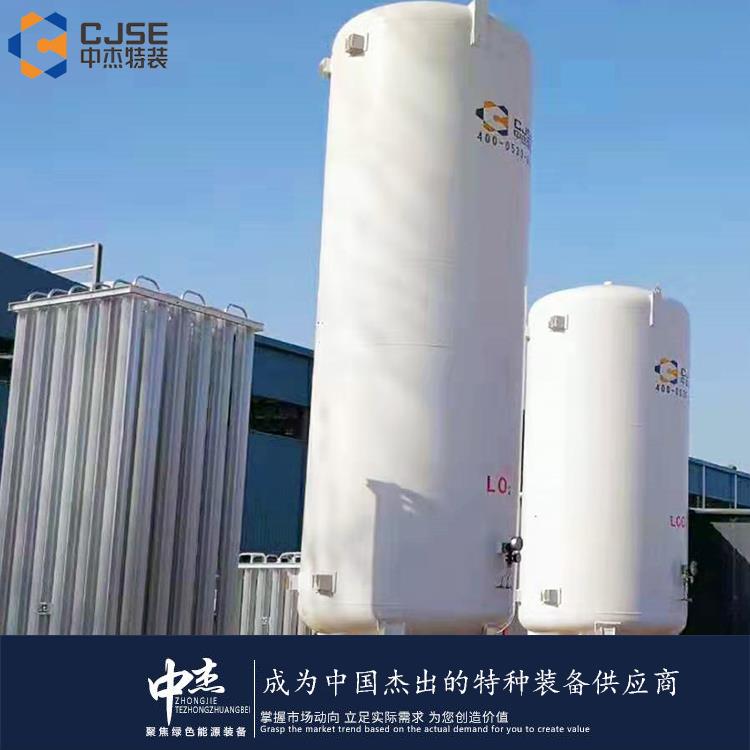
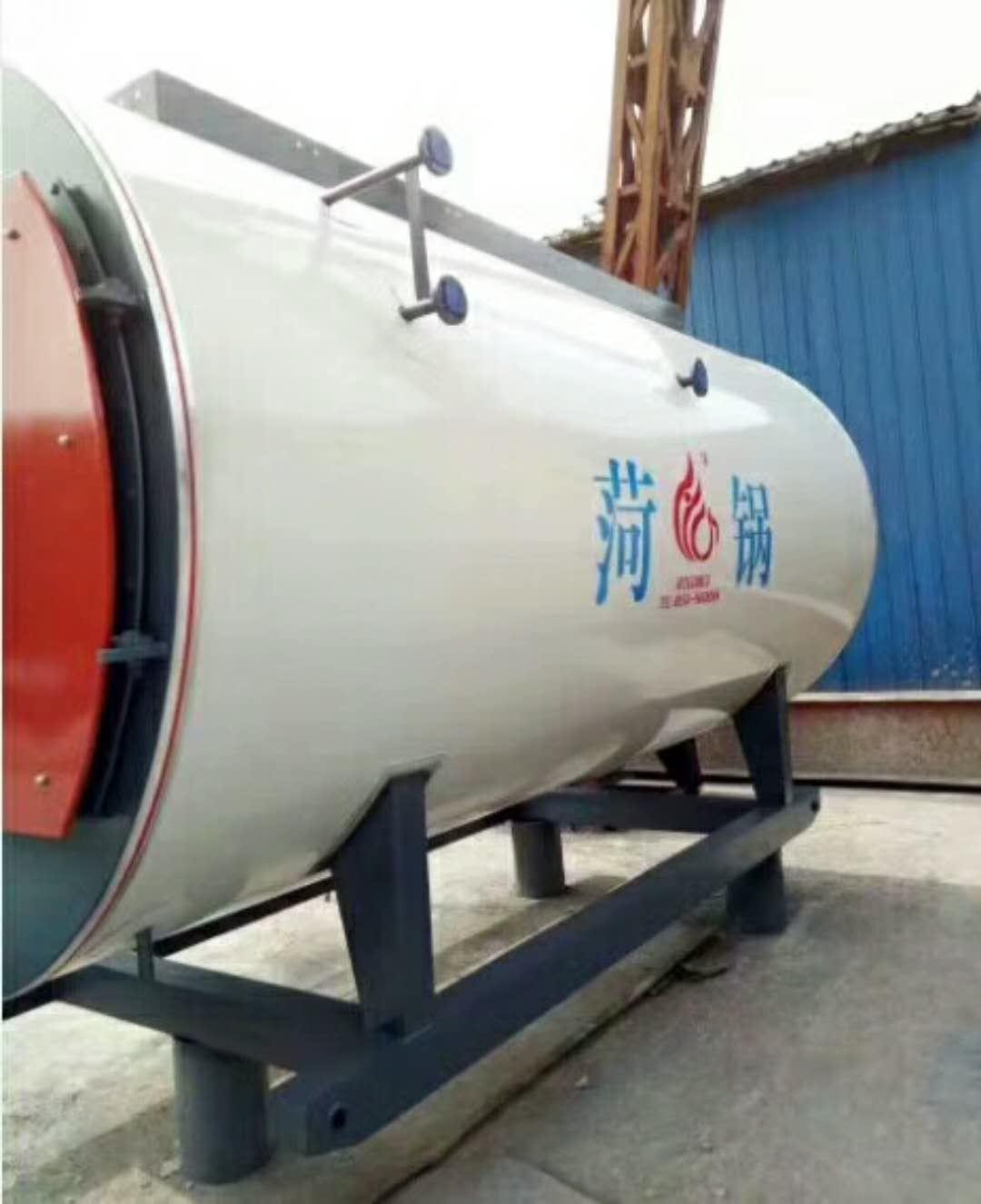


















Shandong Zhongjie Special Equipment's main products include: fuel (gas) boilers, organic heat carrier boilers, biomass boilers, waste heat boilers, and other boiler products; vacuum insulation cryogenic pressure vessels such as LNG storage tanks, oxygen-nitrogenargon storage tanks, and CO2 storage tanks; pressure vessel products such as denitrification engineering equipment, heat storage and energy storage equipment, and complete chemical equipment; central air conditioning and ventilation equipment such as ground (water) source heat pumps, air source units, water-cooled screw units, and air-cooled modular units. Planned products include large-scale energy centers, LNG transport vehicles, LNG tank containers, and other green energy equipment.
The use and operation of the liquid oxygen storage tank system should be mindful of the following points:
Safe Operation: When operating the liquid oxygen storage tank system, it is mandatory to adhere to relevant safety operation procedures and standards to ensure the safety of the operators.
Tanks Selection: Choose liquid oxygen tanks that meet specifications and standards, ensuring their quality and safety performance.
Tank Installation: Tanks should be installed on a sturdy foundation to ensure stability. Additionally, good ventilation should be maintained around the tank, and it should be kept away from flammable materials and heat sources.
Seal Integrity Inspection: Regularly check the sealing performance of the storage tank system to ensure there are no leaks at valve and pipeline connections.
Pressure Control: Storage tank systems should be equipped with pressure gauges and safety valves, with regular inspections and maintenance to ensure pressure remains within safe limits.
Fire Prevention Measures: Liquid oxygen contains a high concentration of oxygen, which is highly flammable. Install firewalls around the storage tank system, prohibit smoking and open flames, and ensure safety.
Static protection: During the operation of the liquid oxygen system, static electricity may cause sparks, increasing the risk of fire. Measures such as using conductive materials and anti-static equipment should be taken to reduce the accumulation and release of static electricity.
Regular Inspections and Maintenance: Conduct regular checks of the storage tank system and related equipment, including valves, pipelines, pressure gauges, etc. Ensure the equipment is in perfect condition, and promptly repair or replace any damaged parts.
Waste Gas Treatment: During the operation of the liquid oxygen system, waste gas is produced, and appropriate waste gas treatment measures must be taken to minimize environmental impact.
Above are the precautions to be taken when using the liquid oxygen storage tank system, ensuring operational safety and the normal operation of the system. During operation, strictly follow the relevant operational procedures and safety requirements to avoid accidents.
Water pressure testing of liquid nitrogen tanks is a common testing method used to check the tank's sealing and pressure resistance. Below are the general steps for water pressure testing of liquid nitrogen tanks:
Preparation: Ensure the tank interior is clean and that all gases and liquids are drained from the tank. Check the tank's sealing and safety devices for proper operation.
Fill with water: Fill the interior of the tank with water, ensuring the water level is above the low water line. Pump or other appropriate methods may be used for filling.
Apply Pressure: Gradually increase the water pressure using a pressure pump or other pressure source until the predetermined test pressure is reached. The test pressure is typically 1.1 times the design working pressure of the tank.
Pressure Maintenance: After reaching the test pressure, maintain it for a period (usually 30 minutes to 1 hour), and observe for any abnormal conditions such as leaks or deformation in the tank.
Pressure Relief: Gradually release pressure to drain water from the tank until the tank is completely empty.
Inspection and Evaluation: Check for leaks, deformations, or other damage on the surface and interior of the tank. Evaluate the test results to ensure the tank meets design requirements and safety standards.
需要注意的是,液氮储罐水压试验需要由人员进行操作,并遵循相关的安全操作规程。在进行测试前,应仔细阅读和遵守储罐制造商提供的操作指南和安全注意事项。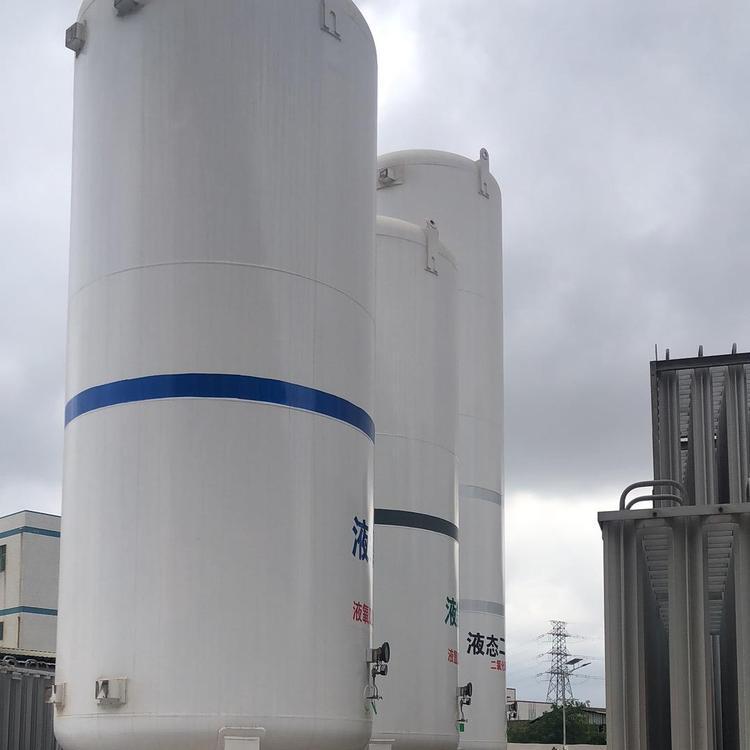
Safe operation of low-temperature liquid storage tanks is crucial and mainly includes the following aspects:
Tank design and material selection: The tank design must comply with relevant safety standards and regulations, capable of withstanding the pressure and temperature of low-temperature liquids. Select suitable materials, such as stainless steel, aluminum alloy, etc., to ensure the tank's corrosion resistance and low-temperature performance.
Insulation and Protection Measures: Low-temperature liquid storage tanks should be equipped with effective insulation to minimize heat transfer and evaporation of the liquid. The selection and installation of the insulation should comply with relevant standards and requirements. Additionally, protective measures such as anti-freezing and explosion-proof measures should be implemented to ensure the safe operation of the tank.
Pressure Control and Safety Valves: Low-temperature liquid storage tanks should be equipped with a reliable pressure control system and safety valves to ensure the pressure inside the tank remains within a safe range. The pressure control system should be capable of timely detecting and adjusting the pressure inside the tank to prevent safety risks from excessive or insufficient pressure.
Leak and Fire Protection: Low-temperature liquids are highly flammable, so measures should be taken to prevent leaks and fires. Tanks and related pipelines should have good sealing properties, with regular inspections and maintenance to prevent leaks. Additionally, appropriate fire protection facilities and fire-fighting equipment should be provided to address fire risks.
Safety Operation and Training: Operators must undergo relevant safety training, familiarize themselves with the safety operating procedures for low-temperature liquid storage tanks and emergency response measures. Adhere to proper operational steps to ensure safe operation.
Regular inspections and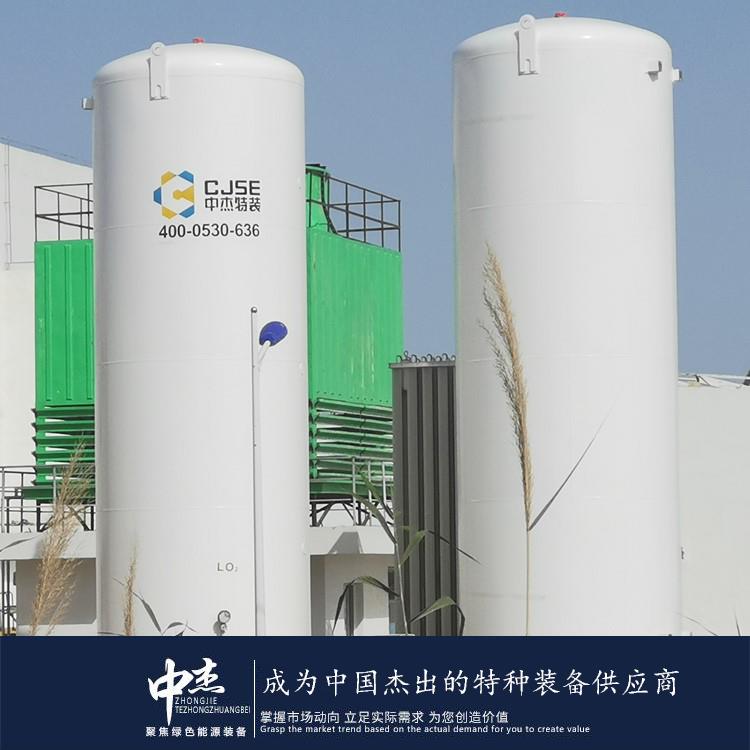
Oxygen cylinders and liquid oxygen tanks are equipment used for storing oxygen, but they have some distinctions: Storage form: Oxygen cylinders are typically used for storing gaseous oxygen, while liquid oxygen tanks are for storing liquid oxygen. Oxygen is in a gaseous state at room temperature but is cooled to a liquid state at low temperatures for more efficient storage and use. Storage pressure: Oxygen cylinders usually store high-pressure oxygen, with pressures around 200-300 bar. Liquid oxygen tanks store liquid oxygen at lower pressures, generally around 2-5 bar. Storage capacity: Oxygen cylinders usually have smaller capacities, suitable for personal or small-scale use. Liquid oxygen tanks have larger capacities, suitable for industrial or large-scale use. Storage method: Oxygen cylinders store oxygen in a gaseous form, through compressed gas storage. Liquid oxygen tanks store oxygen in a liquid form, converting it to a liquid state by cooling it below its boiling point. Safety requirements: Due to the high oxidizing nature of liquid oxygen, liquid oxygen tanks require stricter safety requirements in design and use. Liquid oxygen tanks typically need good thermal insulation, leak control, and fire prevention measures to ensure safe operation. It should be noted that the specific design and specifications of oxygen cylinders and liquid oxygen tanks may vary depending on different regions and application sites. When using these tanks, follow applicable regulations, standards, and safety guidelines, and cooperate with local regulatory authorities and personnel to ensure the safety and reliability of the tanks.
Zhongjie Special Equipment adheres to the grand vision of "realizing employees' dreams, creating value for customers, and striving for the prosperity and strength of our motherland," and is dedicated to the development of the green energy equipment industry. We offer society products and services with high cost-performance!
WeChat Official Account

Scan to follow Official Account



















