


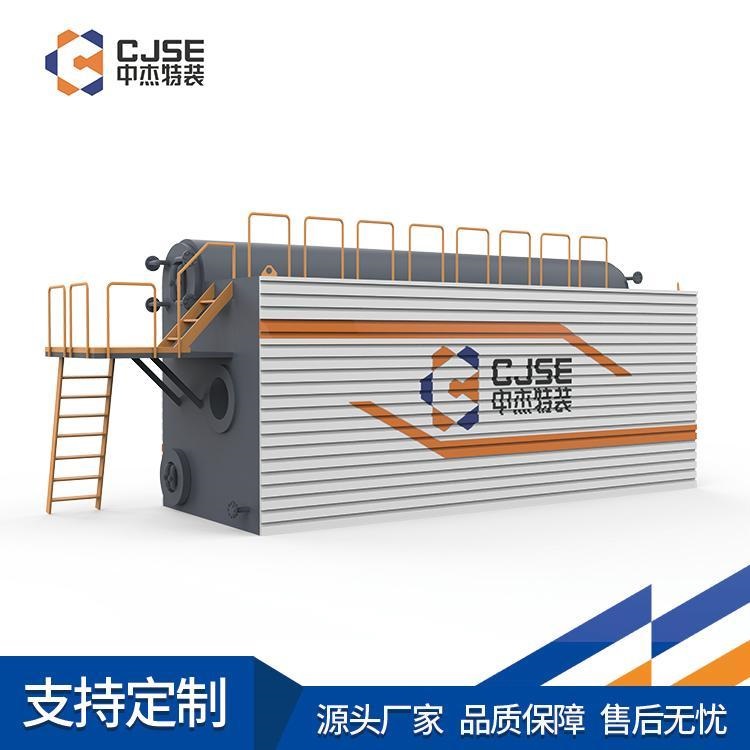

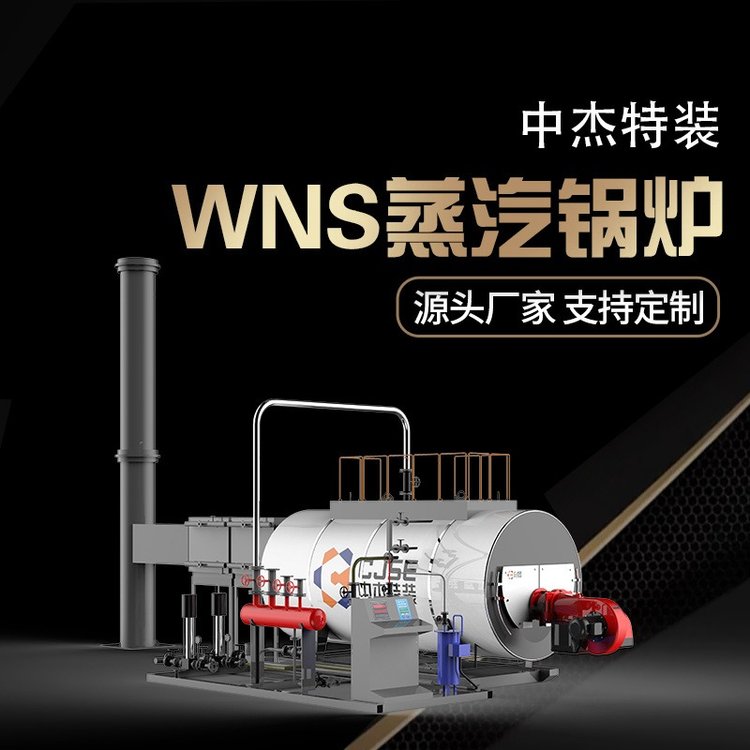
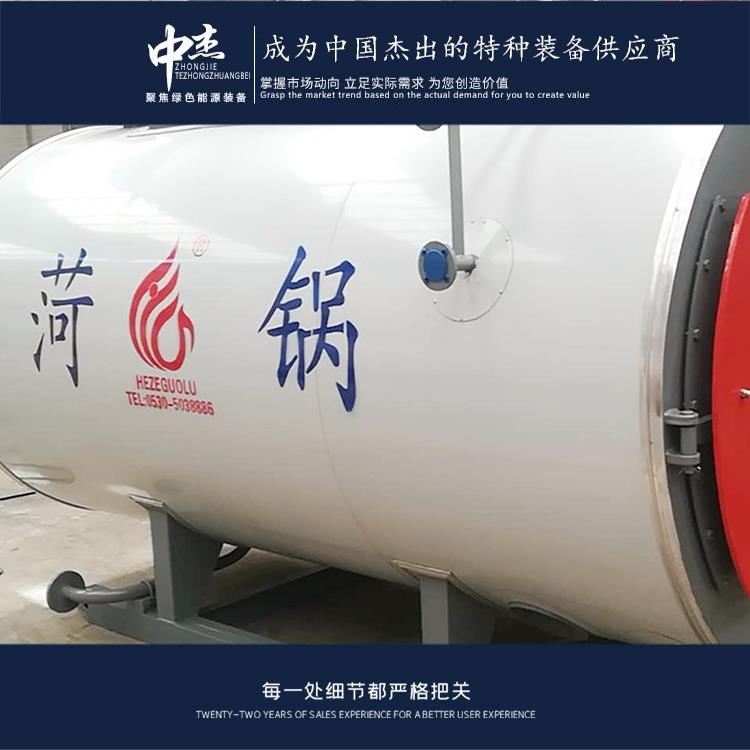


















Shandong Zhongjie Special Equipment (formerly Heze Boiler Factory Co., Ltd.) was established in 2001, located at No. 2218 Jinnan Road, Economic and Technological Development Zone, Heze City, with a registered capital of 50 million yuan and total assets of 500 million yuan. The company has 7 business centers: boilers, deep-freezing containers, pressure vessels, central air conditioning, engineering installation, international trade, and the Internet of Things. It has three factory areas on Jinnan Road, East Changjiang Road, and Bohai Road, covering a total of 200,000 square meters. The main workshop is 83,000 square meters. It currently has 710 employees, including 247 engineering and technical personnel and 82 intermediate-level technicians. In December 2016, it was recognized as a "High-tech Enterprise" by the Science and Technology Department. In June 2021, it was identified as a "Specialized and New Enterprise in Shandong Province" by the Department of Industry and Information Technology. In June 2022, it was recognized as a "Gazelle Enterprise in Shandong Province" and in August 2022, as a "Specialized and New Small Giant Enterprise" by the Ministry of Industry and Information Technology.
When selecting a suitable gas steam boiler, consider the following factors:
Steam Demand: First, determine your steam requirements, including steam pressure and evaporation capacity. Choose a boiler with a rated evaporation capacity and steam pressure that align with your actual needs, ensuring it meets your production or heating requirements.
Fuel Type: Gas steam boilers use gas as fuel, with common types including natural gas, LPG, etc. Select a suitable gas type based on available resources and cost considerations.
Boiler Efficiency: Boiler efficiency directly impacts energy utilization and operating costs. Opt for a high-efficiency gas steam boiler to reduce energy consumption and operating costs. Pay attention to the boiler's thermal and combustion efficiency.
Boiler and Manufacturer Quality: Choose a gas steam boiler from a reputable manufacturer to ensure product quality and reliability. Understand the manufacturer's production capacity, after-sales service, and technical support, and select a reliable supplier.
Safety and Environmental Protection: Focus on the safety and environmental performance of the boiler. Ensure the boiler has necessary safety protection devices and monitoring systems, as well as a combustion system that meets environmental standards to minimize environmental impact.
Economic Viability: Consider not only the purchase cost but also the operating and maintenance costs of the boiler. Overall, assess the energy consumption of the boiler.
When a gas steam boiler experiences overpressure, the following immediate measures must be taken:
1. Shut off gas supply: First, immediately close the gas supply to cut off the source of gas supply, stopping the combustion process to prevent further increase in steam pressure.
2. Open the pressure relief device: Open the boiler's pressure relief device, typically a safety valve. The safety valve is a crucial safety feature of the boiler. When the internal pressure of the boiler exceeds the set value, the safety valve automatically opens to release overpressure steam, reducing the boiler pressure.
3. Reduce the burner load: If the overpressure is caused by excessive burner load, reducing the burner load can decrease steam production and thus lower the boiler pressure. Adjust the gas supply to the burner or the burner's adjustment method to match the current load requirements.
4. Inspection and maintenance: After an overpressure event, the boiler should be inspected and maintained to identify the cause of the overpressure and make repairs. Possible causes include burner failure, control system failure, valve malfunction, etc. If necessary, a boiler maintenance technician can be called in for inspection and maintenance.
It is important to note that overpressure is a dangerous condition in boiler operation and must be addressed promptly. When dealing with overpressure, operators should remain calm, follow safety operating procedures, and ensure their own safety. If unsure how to handle an overpressure situation, immediately contact a boiler maintenance technician or relevant technical support personnel for assistance.
Regular inspections of industrial boilers are crucial for ensuring safe operation, improving efficiency, and extending service life. Here are the importance of regular inspections for industrial boilers:
Safety Assurance: Industrial boilers are high-temperature, high-pressure equipment. Without regular inspections, there may be safety hazards. Regular inspections can identify and rectify potential issues within the boiler, such as combustion system failures, water level control failures, and malfunctioning safety valves, ensuring safe boiler operation.
Efficiency Enhancement: Regular inspections can identify dirt and sediments inside the boiler, maintaining the cleanliness and thermal transfer efficiency of heat exchangers, improving the boiler's thermal and energy efficiency. This helps reduce energy consumption and operating costs.
Extended Service Life: Regular inspections can promptly detect and address corrosion, wear, and fatigue issues within the boiler, preventing further damage and breakdowns, thus extending the boiler's service life. Regular maintenance can also prevent and reduce boiler damage and breakdowns.
Legal and Regulatory Requirements: Many regions have established boiler safety management laws, regulations, and standards requiring regular inspections and maintenance of industrial boilers. Regular inspections are a crucial part of complying with legal and regulatory requirements.
Insurance Requirements: Some insurance companies have specified insurance requirements for industrial boilers, mandating regular inspections and maintenance. Regular inspections can meet insurance company requirements, safeguarding the company's insurance rights.
In summary, regular inspections of industrial boilers are essential for ensuring safety, improving efficiency, extending service life, complying with legal and regulatory requirements, and meeting insurance requirements. Regular inspections should be conducted by qualified institutions or personnel, following relevant laws, regulations, and standards. Timely regular inspections and maintenance can ensure the safe operation of industrial boilers.
The purpose of deoxygenation in industrial boiler feed water is to reduce oxygen corrosion and bubble formation within the boiler, ensuring the safety and proper operation of the boiler and pipeline systems. The main methods of deoxygenation include:
1. Mechanical Deoxygenation: Removing oxygen from water through physical means. Common mechanical deoxygenation equipment includes deaerators and degassers. Deaerators eliminate oxygen by atomizing water into a thin film, taking advantage of the difference in gas solubility. Degassers, on the other hand, remove oxygen by atomizing water into fine droplets, leveraging the same solubility difference.
2. Thermal Deoxygenation: Removing oxygen from water by heating the water body, utilizing the property that oxygen solubility decreases with temperature. Common thermal deoxygenation equipment includes deaerators and deaeration pots. Deaeration pots release oxygen from water by heating it to saturation temperature. Deaerators heat water to lower its oxygen solubility, thereby removing oxygen.
3. Chemical Deoxygenation: Removing oxygen from water by adding chemicals that react with it, thus eliminating the oxygen. Common chemical deoxygenation agents include salts and reducers. Chemical deoxygenation is often used in high-pressure boiler systems and can effectively remove oxygen from water.
The choice of deoxygenation method and selection depends on the specific boiler system and water quality. In practical applications, a combination of deoxygenation methods is often used to achieve the desired deoxygenation effect. The selection and operation of deoxygenation equipment should be assessed and adjusted based on actual conditions to ensure the safety and proper operation of the boiler system.
Our company attaches great importance to technological innovation and R&D design. We have one municipal-level enterprise technology center in Heze City, equipped with testing facilities for non-destructive testing, physical and chemical testing, welding testing, hydrostatic testing, etc. We have over 600 types of equipment, including CNC machine tools, X-ray flaw detectors, digital ultrasonic flaw detectors, mechanical property testing machines, chemical analyzers, spectrometers, tensile testing machines, plasma welding machines, and more. The key products and technologies we have developed, such as temperature and pressure vessel welding, biomass boiler emission reduction, and waste heat utilization, have successively been selected for multiple Shandong Provincial Department of Industry and Information Technology science and technology innovation projects, Shandong Provincial key projects, and Heze City innovation and excellence projects. We have accumulated 27 authorized utility models, 16 authorized inventions, participated in drafting 2 standards, 2 industry standards, and registered 15 trademarks. The technical team of our company, in collaboration with Professor Yajiang Li of Shandong University, has developed deep cryogenic container processing technology using the international plasma arc + filler wire tungsten inert gas arc welding (PAW-GTAW) technology. After the provincial-level scientific and technological achievement evaluation, the technology level has reached an international standard in the field of deep cryogenic container manufacturing.
Choose ZJET Tailor-Made Solutions, join hands to create brilliance together!
WeChat Official Account

Scan to follow Official Account



















