


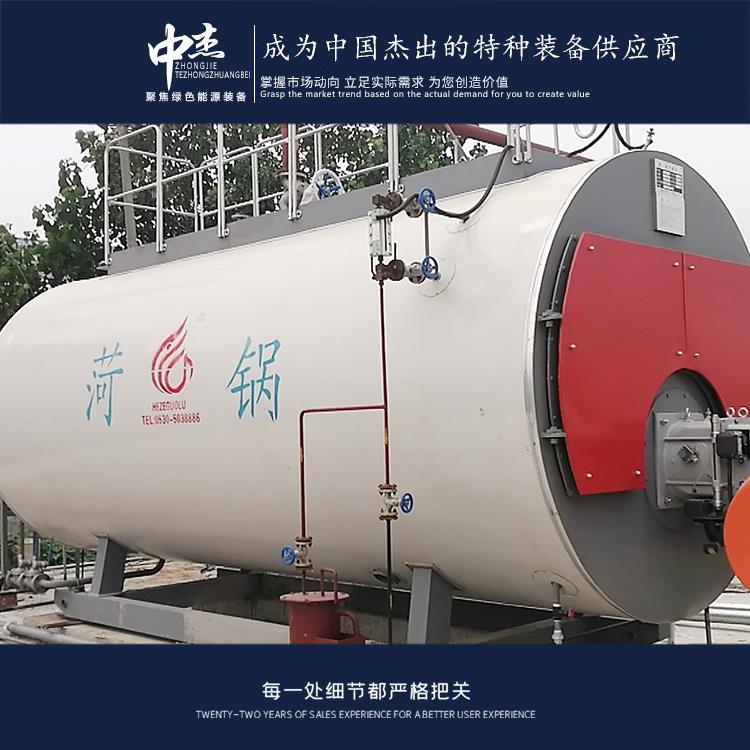

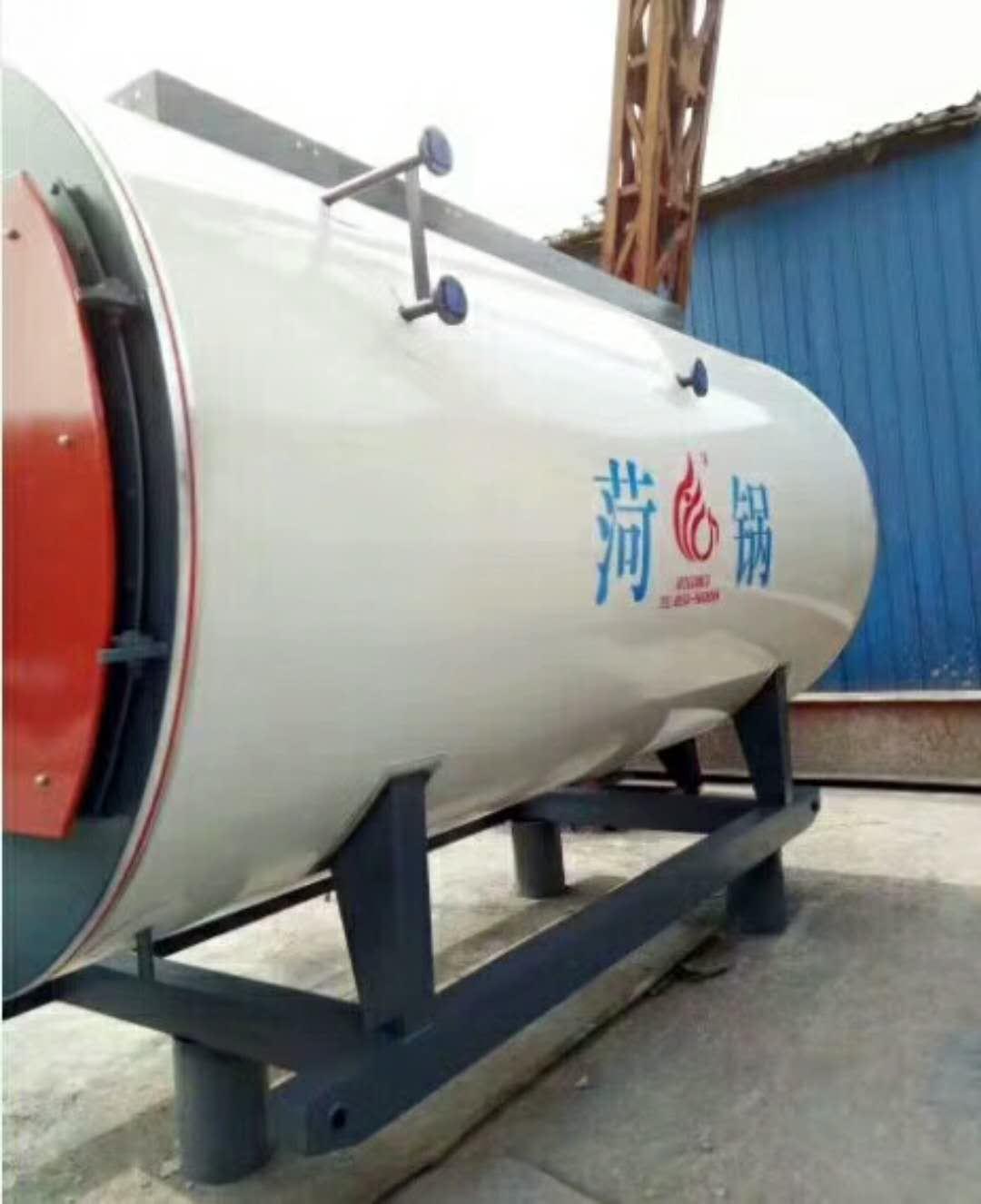
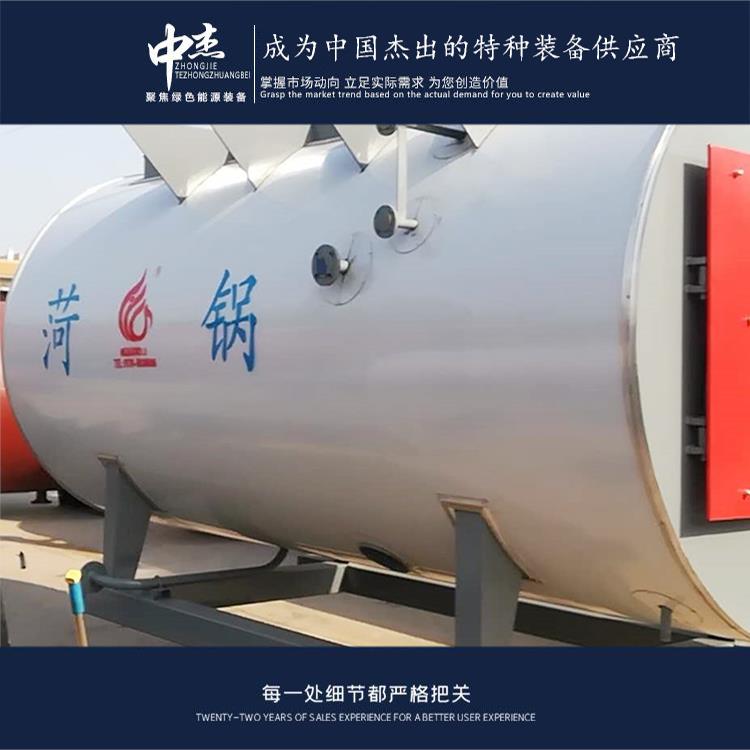


















Shandong Zhongjie Special Equipment (formerly Heze Boiler Factory Co., Ltd.) was established in 2001, located at No. 2218 Jinnan Road, Development Zone, Heze City, with a registered capital of 50 million yuan and total assets of 500 million yuan. The company has 7 business centers: boilers, deep-freezing containers, pressure vessels, central air conditioning, engineering installation, international trade, and Internet of Things. It has three factory sites on Jinnan Road, East Changjiang Road, and Bohai Road, covering a total of 200,000 square meters. The main workshop spans 83,000 square meters. Currently, it has 710 employees, including 247 engineers and technicians and 82 intermediate-level technical personnel. In December 2016, it was recognized as a "High-Tech Enterprise" by the Science and Technology Department. In June 2021, it was identified as a "Specialized and New Enterprise in Shandong Province" by the Ministry of Industry and Information Technology. In June 2022, it was recognized as a "Gazelle Enterprise in Shandong Province" and in August 2022, as a "Specialized and New Small Giant Enterprise" by the Ministry of Industry and Information Technology.
The importance of energy-saving in steam boilers is significant for the following reasons: Energy Costs: Steam boilers typically use fuels (such as coal, gas, oil, etc.) to generate steam, with energy costs forming a significant portion of the boiler's operational expenses. Energy-saving measures can reduce energy consumption and lower costs. Environmental Protection: The combustion process of steam boilers produces exhaust gases and dust, polluting the environment. Energy-saving can decrease fuel usage and reduce emissions, positively impacting environmental protection. Sustainable Development: Energy-saving is a crucial aspect of sustainable development. By reducing energy consumption and extending the boiler's lifespan, resource consumption and waste are minimized, contributing to sustainable practices. To achieve energy-saving, the following measures can be taken: Improving Boiler Thermal Efficiency: By enhancing the boiler's combustion system, optimizing combustion parameters, and increasing heat exchange efficiency, the boiler's thermal efficiency is raised, reducing energy waste. Heat Recovery and Utilization: Employing waste heat recovery systems to capture and utilize the excess heat from the flue gases, which can be used to heat water or other processes requiring heat, thus improving energy utilization efficiency. Application of Energy-Saving Equipment: Using energy-saving equipment like variable frequency drives, energy-saving burners, heat pumps, etc., can lower energy consumption and enhance boiler efficiency.
Fuel and gas boiler combustion safety and explosion-proofing are crucial. Here are some related safety measures:
1. Burner Selection and Adjustment: Choose burners that meet standards and specifications, and ensure they are installed correctly. The burner parameters and adjustments should align with design requirements to ensure stable and safe combustion processes.
2. Fuel Supply System: The fuel supply system of fuel and gas boilers should be safe and reliable. Equipment such as fuel storage tanks,输送管道 transport pipelines, and filters should be regularly inspected and maintained to prevent leaks and blockages.
3. Combustion Control System: The combustion control system of fuel and gas boilers should possess adequate control capabilities. The system should be able to monitor and adjust combustion parameters, such as fuel supply and combustion air volume, to ensure stable and safe combustion processes.
4. Safety Valves and Pressure Switches: Safety valves and pressure switches should be installed on fuel and gas boilers to protect their safe operation. Safety valves can automatically open when exceeding the set pressure, releasing excess pressure gas or steam to prevent boiler explosion.
5. Gas Leak Detection: For gas boilers, gas leak detection devices should be installed. These devices can detect gas leaks in a timely manner and trigger alarms to prevent gas accumulation and explosions.
6. Regular Inspection and Maintenance: Regularly inspect and maintain fuel and gas boilers, including cleaning burners, checking the combustion system, and adjusting combustion parameters. Promptly repair and replace damaged components to ensure normal operation and safety performance.
7. Training and Operating Procedures: Train operators to...
A thermal oil furnace is a device that uses thermal oil as a heat medium, transferring heat energy generated by combustion or electric heating to the equipment or process that requires heating. The working principle of a thermal oil furnace involves heating the thermal oil to a certain temperature, then circulating it through a pump to the heated equipment or process, transferring the heat energy to the heated object. The thermal oil exchanges heat with the heated object in the heat exchanger, causing the object to increase in temperature while the thermal oil cools down and returns to the furnace for reheating. The heat transfer process in a thermal oil furnace primarily relies on the thermal conductivity of the thermal oil. Thermal oil has a high thermal conductivity, enabling it to quickly transfer heat energy to the heated object, achieving effective heating. Additionally, thermal oil has high thermal stability, allowing it to operate stably at high temperatures without decomposition or oxidation. A thermal oil furnace typically consists of the furnace body, combustion system, flue gas system, heat exchanger, circulating pump, and control system. The furnace body is the main part of the thermal oil furnace, used to contain the thermal oil and the combustion system. The combustion system is responsible for burning fuel to produce heat energy and heat the thermal oil. The flue gas system is used to exhaust the flue gases produced by combustion. The heat exchanger is the device where the thermal oil exchanges heat with the heated object. The circulating pump is responsible for circulating the thermal oil back to the furnace for reheating. The control system is used to monitor and control the operation of the thermal oil furnace, ensuring safe and stable operation. Thermal oil furnaces offer high temperature control accuracy, fast heating speed, low energy consumption, and easy operation, and are widely used in industrial fields such as chemicals, textiles, food processing, papermaking, as well as in some special heating processes.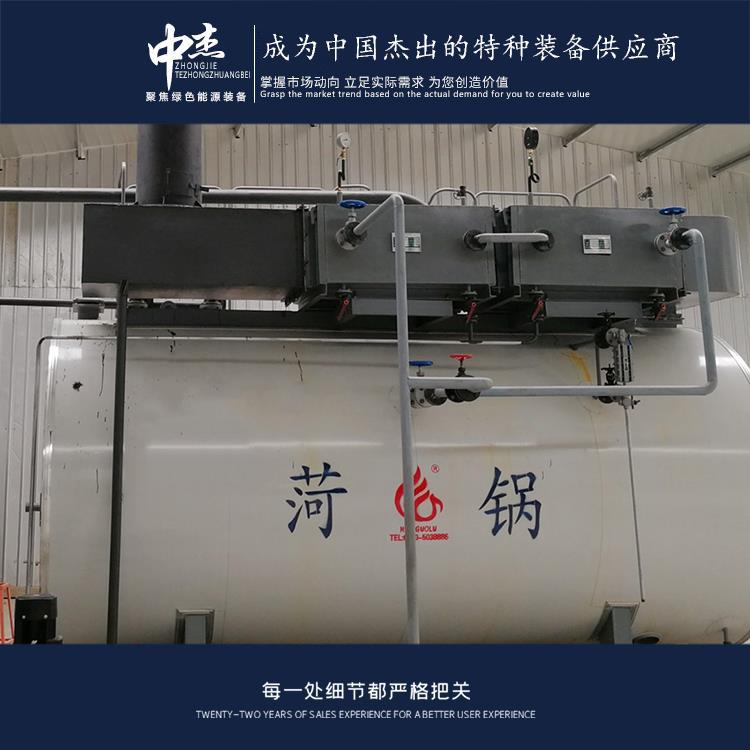
When using a thermal oil furnace with gas, the following points should be noted:
- Safe Operation: The thermal oil furnace is a high-temperature equipment, and safety must be ensured during operation. Operators should be familiar with the operation procedures and safety precautions of the equipment, wear necessary personal protective equipment, and ensure safe operation.
- Gas Supply: A stable gas supply is required for the thermal oil furnace. Before use, check if the gas pipeline is clear and the gas valve is open to ensure normal gas supply.
- Thermal Oil Circulation: The thermal oil furnace needs to circulate the thermal oil to the heat source equipment through a circulating pump. Before use, check the operation status of the circulating pump to ensure it is working properly.
- Temperature Control: The thermal oil furnace usually requires a temperature control system to regulate the temperature of the thermal oil. Before use, check the settings and adjustments of the temperature control system to ensure accurate and reliable temperature control.
- Regular Maintenance: Regular maintenance and maintenance are required for the thermal oil furnace, including cleaning the burner, checking the tightness of the pipeline and valves, and replacing worn parts. Regular maintenance can ensure the normal operation of the equipment and extend its service life.
- Environmental Protection: The thermal oil furnace produces exhaust gas during combustion, and exhaust gas emissions must be ensured. Appropriate exhaust gas treatment measures, such as flue gas purification equipment, can be taken to reduce environmental impact.
- The above are some precautions for using a thermal oil furnace with gas. To ensure safety and the normal operation of the equipment, it is recommended to follow relevant operation procedures and safety requirements, and carry out regular maintenance and inspections. If necessary, consult the manufacturer or engineer of the thermal oil furnace.
Shandong Zhongjie Special Equipment, welcome customers to visit our factory for business talks.
WeChat Official Account

Scan to follow Official Account



















