


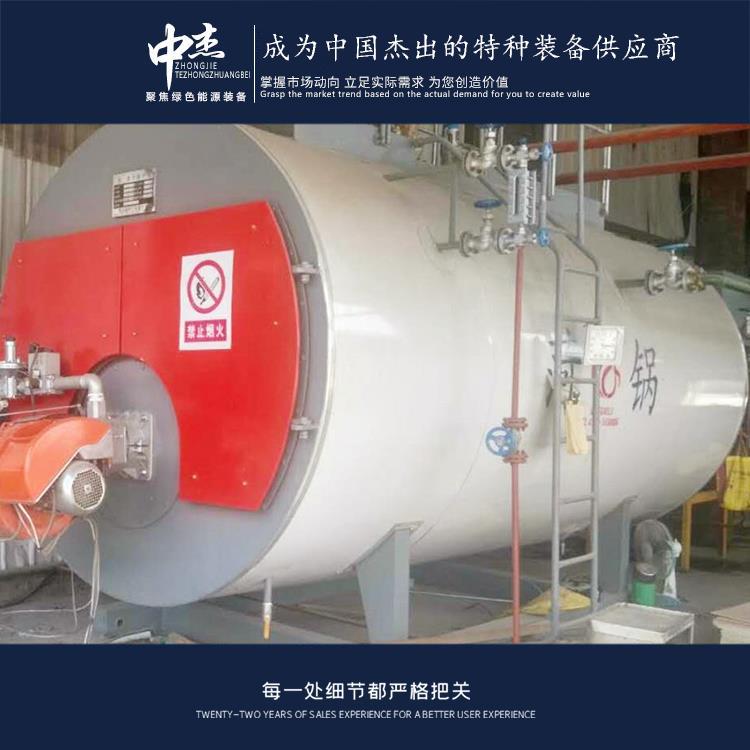

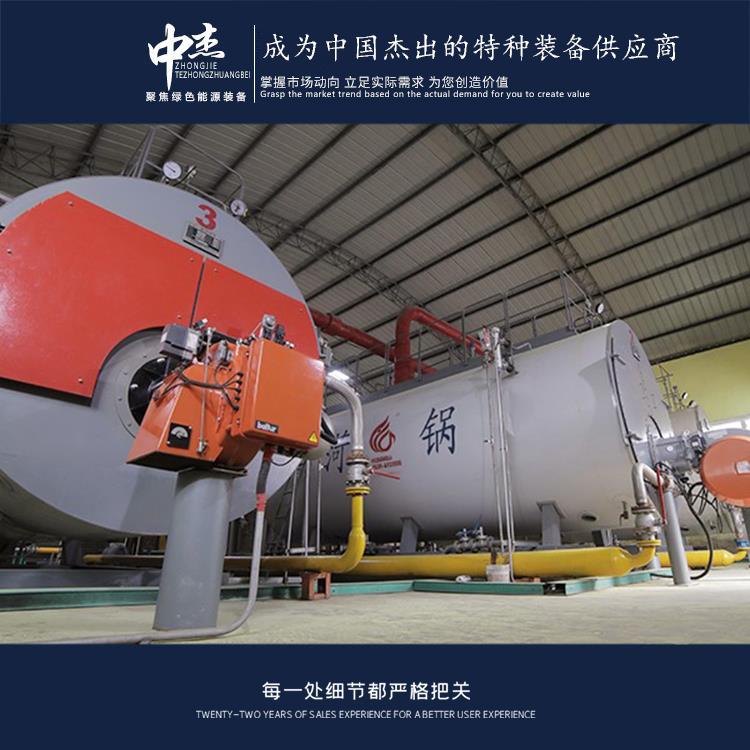
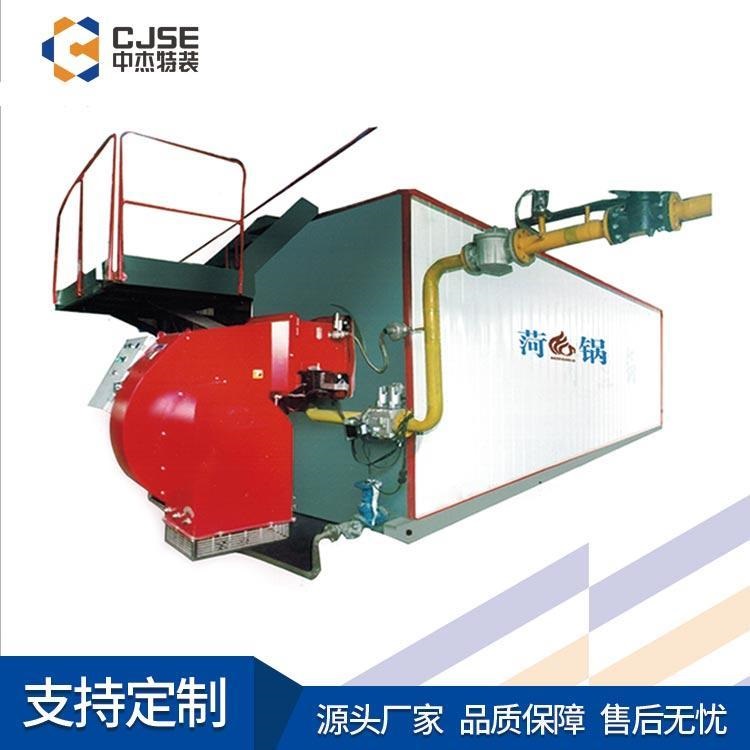


















Shandong Zhongjie Special Equipment specializes in products such as fuel (gas) boilers, organic heat carrier boilers, biomass boilers, waste heat recovery boilers, and other boiler products; vacuum insulated cryogenic pressure vessels like LNG, oxygen/nitrogen/argon storage tanks, and CO2 storage tanks; pressure vessel products including denitrification engineering equipment, heat storage and energy storage equipment, and complete chemical equipment sets; central air conditioning and HVAC equipment such as ground (water) source heat pumps, air source units, water-cooled screw units, and air-cooled modular units. Planned products include large-scale energy centers, LNG transport vehicles, LNG tank containers, and other green energy equipment.
A gas-fired thermal oil boiler is a device that uses gas as fuel to generate heat energy by burning, which then heats the thermal oil. Here are some basic facts about gas-fired thermal oil boilers:
Operating Principle: The working principle of a gas-fired thermal oil boiler involves mixing gas with air and burning it to produce high-temperature flue gas. This flue gas is then passed through flue pipes and heat exchangers to exchange heat with the thermal oil, transferring the heat energy to the thermal oil and raising its temperature. The thermal oil circulates within the boiler, transferring the heat energy to the equipment or process that requires heating.
Thermal Oil: The thermal oil used in gas-fired thermal oil boilers is typically an organic heat carrier, such as mineral oil or synthetic oil. It has high thermal conductivity and stability, enabling it to operate stably at high temperatures and transfer heat energy to the heated equipment.
Gas Combustion System: Gas-fired thermal oil boilers are equipped with a gas combustion system, including burners, gas supply systems, and control systems. The burners mix gas with air and burn it to produce heat energy. The gas supply system provides the gas and adjusts the supply amount as needed. The control system monitors and controls the gas combustion process to maintain a stable operating state.
Safety Protection Devices: Gas-fired thermal oil boilers are equipped with various safety protection devices to ensure safe operation of the equipment. Common safety protection devices include overheat protection, overpressure protection, and water level protection, which monitor and control the boiler's operating conditions to prevent equipment damage and safety accidents.
Application Fields: Gas-fired thermal oil boilers are widely used in industrial sectors such as chemical, textile, food processing, and papermaking. They can provide stable high temperatures for various applications.
The flow rate standard for thermal oil in the oil tubes of a thermal oil furnace is typically determined by specific application and equipment requirements, without a unified fixed value. Generally speaking, the flow rate of thermal oil within the tubes should be maintained within a reasonable range to ensure proper equipment operation and heat transfer efficiency. Excessive flow rates of thermal oil can lead to issues such as increased system pressure loss, higher pump power consumption, increased pipeline friction loss leading to energy loss, and increased system noise and vibration. On the other hand, low flow rates of thermal oil can cause problems such as insufficient heat transfer affecting equipment thermal efficiency, prolonged residence time in the pipeline which can lead to oxidation and thermal decomposition, affecting the lifespan of the thermal oil, and the formation of scale in the pipeline, increasing resistance and affecting fluid flow. Therefore, when designing and operating a thermal oil furnace system, it is necessary to consider specific equipment parameters, the properties of the thermal oil, and pipeline layout factors, among others, to determine an appropriate flow rate. Typically, the flow rate should be within the range of 0.5-2.0 m/s, but the specific figures need to be adjusted and optimized based on实际情况. In practice, the flow rate of thermal oil can be controlled by monitoring and adjusting the pump flow and pipeline resistance to meet the thermal energy and operational requirements of the equipment.
Properly utilizing fuel-gas boilers can enhance energy efficiency and reduce consumption. Here are some suggestions:
1. Select the right boiler model: Choose a suitable fuel-gas boiler model based on actual needs, considering factors like heat load, fuel type, and combustion efficiency.
2. Regular inspection and maintenance: Conduct regular checks and maintenance to ensure the boiler operates smoothly. This includes cleaning burners, inspecting the combustion system, adjusting combustion parameters, and promptly repairing or replacing damaged parts.
3. Control the combustion process: Manage the combustion process to ensure complete, stable, and efficient burning. Adjust burner parameters like air flow and fuel supply to improve efficiency and reduce waste.
4. Heat recovery: Utilize heat recovery systems to capture and reuse waste heat from flue gases, for heating water or other processes requiring heat, to boost energy efficiency.
5. Control boiler operating parameters: Manage the boiler's operating parameters like water level, pressure, and temperature based on actual needs and operational conditions. Avoid extreme parameters to enhance efficiency and safety.
6. Regularly clean heat exchangers: Regularly clean the boiler's heat exchangers to remove dirt and deposits, maintaining their thermal conductivity and reducing energy loss.
7. Energy management: Establish an energy management system, monitor and analyze energy consumption, and develop rational energy use plans and energy-saving measures. Scientific management can increase energy efficiency and reduce consumption.
These are common methods and suggestions, but specific applications should be determined based on actual conditions and boiler characteristics. Also, adhere to relevant laws, regulations, and safety procedures to ensure safe operation of fuel-gas boilers.
Potential operational issues with the fuel system of a thermal oil furnace include:
- Poor fuel quality: Using low-quality or contaminated fuel can cause problems within the fuel system. For instance, the presence of impurities, water, or excessive fuel can lead to clogs in the fuel pump, nozzle, and burner, affecting fuel supply and combustion efficiency.
- Inadequate maintenance of the fuel filter: The fuel filter's purpose is to filter impurities and particles from the fuel to prevent them from entering the fuel system. If the fuel filter is not cleaned or replaced regularly, it can become clogged, affecting fuel flow and supply.
- Improper adjustment of the fuel pump: Proper adjustment of the fuel pump is crucial for maintaining stable fuel supply volume and pressure. Incorrect adjustment can result in either over-supply or under-supply of fuel, leading to incomplete combustion or insufficient fuel supply, affecting the furnace's temperature and thermal efficiency.
- Clogged or worn fuel nozzles: Fuel nozzles are key components that atomize and inject fuel into the furnace. Clogs or wear in the nozzles can cause uneven or incorrect fuel injection, affecting combustion efficiency and thermal performance.
- Inadequate fuel preheating: Fuel must be preheated before entering the burner to enhance combustion efficiency. Insufficient preheating can increase fuel viscosity, affecting fuel flow and injection.
- Fuel system oil leaks: The密封 integrity of the fuel system is essential for stable fuel supply. Oil leaks in the system can lead to unstable fuel supply.
Zhongjie Special Equipment adheres to the great vision of "realizing employees' dreams, creating value for customers, and striving for the prosperity and strength of our motherland," focusing solely on the development of green energy equipment. We dedicate high-value products and services to society!
WeChat Official Account

Scan to follow Official Account



















