



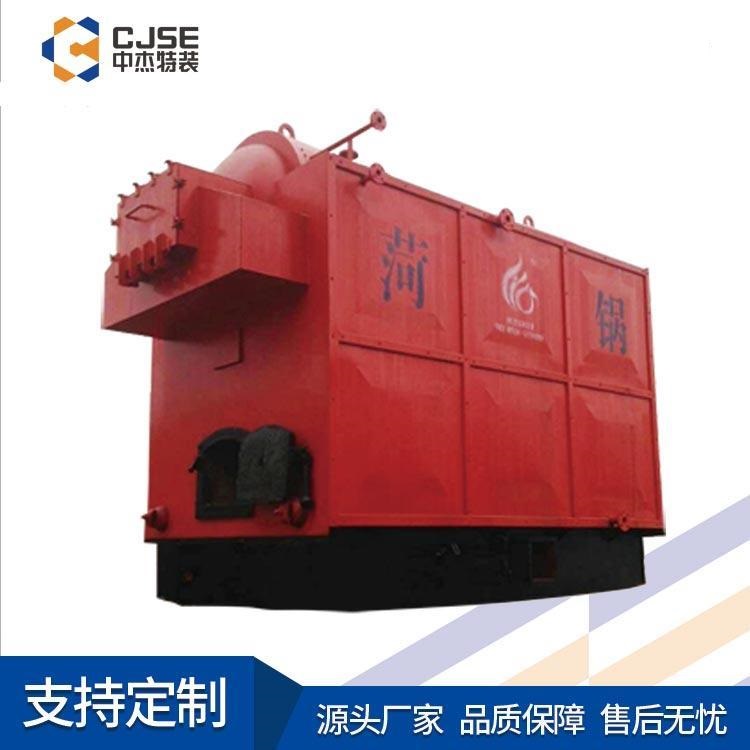
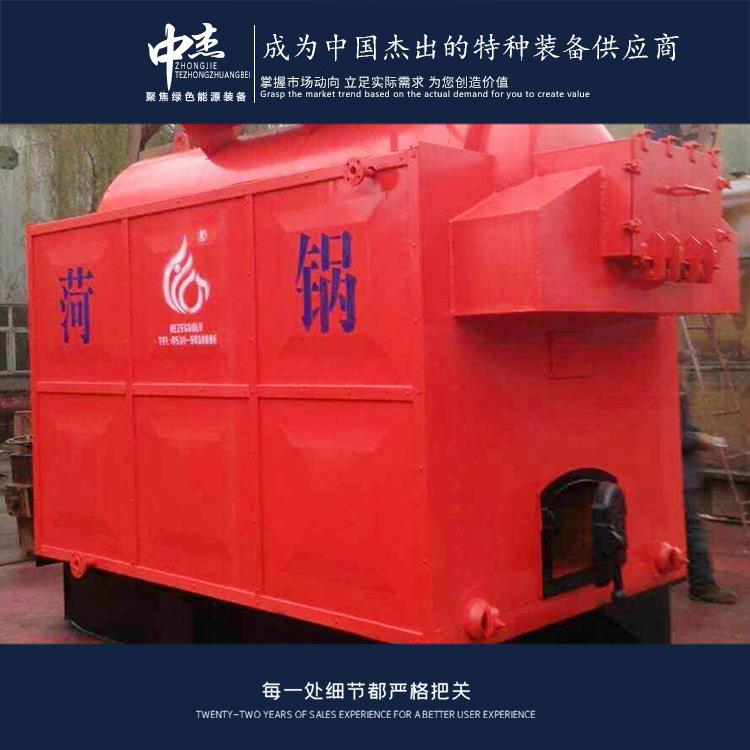


















Shandong Zhongjie Special Equipment (formerly Heze Boiler Factory Co., Ltd.) holds an A-grade boiler manufacturing license, an A2-grade pressure vessel manufacturing license, an A2-grade pressure vessel design license, a B-grade boiler installation license, and GB2/Class, GC2/Class pressure pipeline installation licenses, as well as an electromechanical equipment installation contracting qualification. It is a member of the China Boiler and Water Treatment Association, the China Chemical Equipment Association, and the Council Member of the Shandong Equipment Manufacturing Association. The company has also passed the ISO9001 Quality Management System, ISO14001 Environmental Management System, OHSAS18001 Occupational Health and Safety Management System certifications, and the American ASME/U2 certification.
The emission characteristics of biomass fuel boiler flue gases mainly include the following aspects:
Particulate Emissions: The combustion of biomass fuel boilers produces particulates, including visible dust and fine particles. The amount of particulate emissions is related to fuel characteristics, combustion temperature, and combustion equipment, among other factors. Generally, biomass fuel boilers have lower particulate emissions than coal boilers, but dust removal equipment is still required for treatment.
(SO2) Emissions: The content of SO2 in biomass fuel is generally low, so the SO2 emissions from biomass fuel boilers are usually low. However, in some cases, such as using waste as fuel, SO2 emissions may increase. Measures such as combustion control and desulfurization devices can be adopted to control SO2 emissions.
NOx emissions: The NOx emissions from biomass fuel boilers are related to fuel characteristics, combustion temperature, and combustion equipment factors. Biomass fuels contain a higher nitrogen content, which generates a certain amount of NOx during combustion. To control NOx emissions, measures such as low-NOx combustion technology, combustion control, and denitrification devices can be adopted.
(CO) Emissions: The CO emissions from biomass fuel boilers are typically low due to the relatively complete combustion process of biomass fuel. However, in cases of incomplete combustion or unstable burning, CO emissions may increase. To control CO emissions, it is necessary to ensure a thorough and stable combustion process.
Volatile Organic Compounds (VOCs) Emissions: The VOCs emissions from biomass fuel boilers are related to the fuel characteristics and combustion conditions. Some biomass fuels contain volatile organic compounds.
A biomass boiler economizer is a device used to recover waste heat from flue gas, serving to enhance the boiler's thermal efficiency and reduce energy waste. It does so by transferring heat from the flue gas to the boiler's incoming water, preheating it and thereby decreasing fuel consumption.
According to different structures and working principles, biomass boiler economizers can be classified into the following categories:
Tubular Economizer: A common type of economizer, consisting of a series of parallel pipes. Flue gas flows over the outside of the pipes, while feedwater circulates inside the pipes, achieving the recovery of flue gas waste heat through heat transfer across the tube walls.
Finned Economizer: The finned economizer is an enhanced version of the tubular economizer, featuring fins that increase the heat transfer area and efficiency. It is suitable for higher flue gas temperatures.
Direct-Flow Economizer: A direct-flow economizer is a structure that separates flue gas and incoming water into separate streams, achieving cross heat transfer between the two through multiple parallel flue gas and water channels, thereby enhancing heat transfer efficiency.
Recirculation refers to the process of reintroducing the waste heat from the economizer back into the boiler combustion zone to increase the combustion temperature and thermal efficiency. Recirculation can be controlled by adjusting the recirculation ratio, which is generally adjusted as needed during the boiler operation. Recirculation can raise the combustion temperature, enhance the completeness of combustion, and reduce pollutants.
The biomass fuel boiler boasts the following product features:
Fuel Diversity: Biomass fuel boilers can accommodate a variety of biomass fuels such as sawdust, straw, rice hulls, etc. This diversity allows for greater flexibility and sustainability in energy utilization.
Eco-friendly Low Emission: Biomass fuel boilers burn biomass fuel, resulting in relatively low emissions during combustion, such as particulate matter and nitrogen oxides. Consequently, biomass fuel boilers offer lower carbon emissions and environmental pollution.
Energy-saving: Biomass fuel boilers utilize advanced combustion technology and heat recovery techniques, achieving efficient combustion and heat utilization. High combustion and thermal efficiency ensure maximum energy utilization from biomass fuel.
Automated Control: The biomass fuel boiler is equipped with an automated control system that can accurately control and adjust parameters such as temperature, pressure, and fuel supply. The control system features safety protection functions to ensure the safe operation of the boiler.
High reliability and stability: The materials and processes used in biomass fuel boilers offer excellent durability and stability. Rigorous quality control and testing ensure the high reliability and long-term stable operation of the boilers.
Versatile Application: Biomass fuel boilers are widely applicable in industrial, commercial, and residential sectors, including heating, heating supply, and steam generators. They offer flexible installation methods and capacity options, catering to diverse customer needs.
The utilization of waste heat from biomass boilers is a crucial method for enhancing energy efficiency and reducing energy consumption and emissions. Below are some common applications and analyses of waste heat utilization technologies in biomass boilers:
Eco-friendly Air Preheater: The flue gas produced by biomass boiler combustion contains a large amount of heat energy. The eco-friendly air preheater can recover and utilize the excess heat in the flue gas, preheat the air entering the boiler, and improve combustion efficiency. By recovering waste heat, fuel consumption can be reduced and flue gas emissions can be minimized.
Economizer: An economizer is a device used to recover waste heat from flue gases, by transferring the heat from the flue gases to the boiler feed water, thus increasing the feed water temperature and reducing fuel consumption. The application of an economizer can effectively lower the flue gas temperature of the boiler and improve thermal efficiency.
Waste Heat Boiler from Biomass Boiler Flue Gas: This is a device that utilizes the waste heat from the flue gas of biomass boilers to generate steam or hot water. By converting the waste heat in the flue gas into usable thermal energy, it achieves the reuse of energy and improves energy utilization efficiency.
Direct Utilization of Flue Gas: The excess heat in biomass boiler flue gas can be directly used for heating or drying processes, reducing the demand for other energy sources. For instance, the flue gas can be transported through chimneys or pipelines to the locations requiring heating, utilizing the thermal energy of the flue gas directly.
Flue Gas Waste Heat Recovery System: The flue gas waste heat recovery system captures and utilizes the excess heat from biomass boiler flue gases to supply other equipment or systems, such as air conditioning, heating, and hot water. This enables comprehensive energy utilization, enhancing overall energy efficiency.
Zhongjie Special Equipment upholds the grand vision of "realizing employees' dreams, creating value for customers, and striving for the prosperity and strength of our motherland," and is dedicated to the development of the green energy equipment industry. We commit to society with high-quality, cost-effective products and services!
WeChat Official Account

Scan to follow Official Account



















