


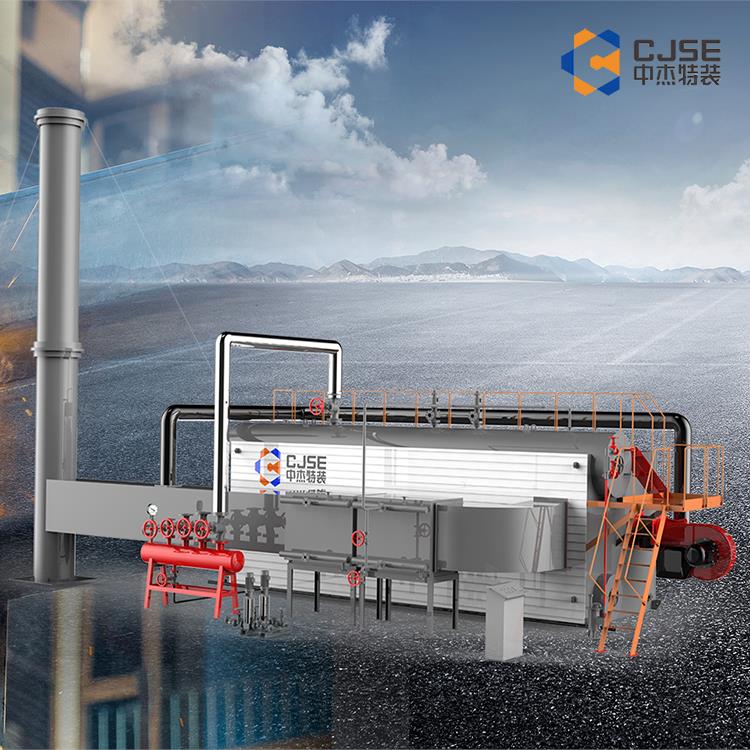

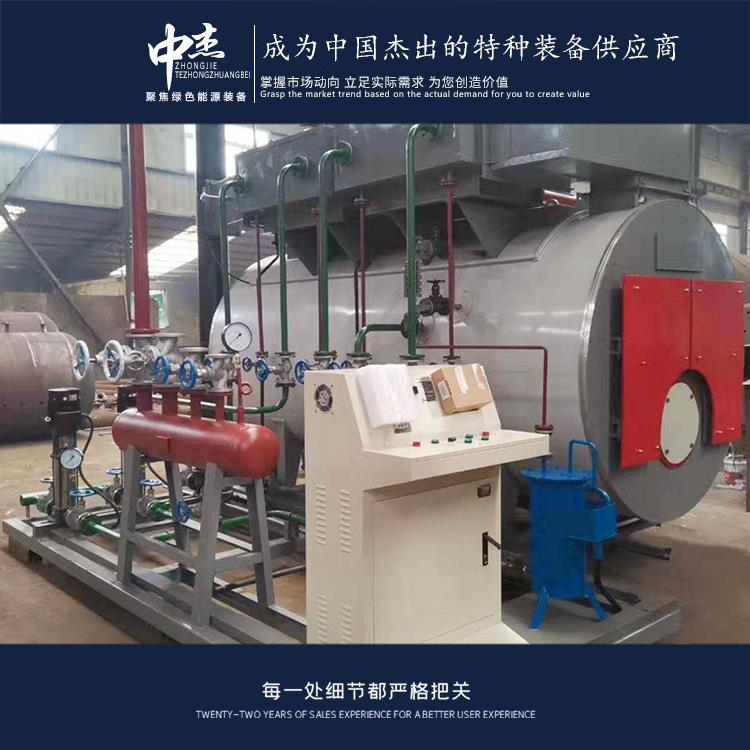


















Shandong Zhongjie Special Equipment's main products include: fuel (gas) boilers, organic heat carrier boilers, biomass boilers, waste heat boilers, and other boiler products; vacuum insulation cryogenic pressure vessels such as LNG tanks, oxygen/nitrogen/argon tanks, and CO2 tanks; pressure vessel products such as denitrification engineering equipment, heat storage and energy storage equipment, and complete chemical equipment; central air conditioning and HVAC equipment such as ground (water) source heat pumps, air source units, water-cooled screw units, and air-cooled modular units. Planned products include large-scale energy centers, LNG transport vehicles, LNG tank containers, and other green energy equipment.
The necessity of flow control in thermal oil heaters is primarily reflected in the following aspects:
1. Heat Transfer Efficiency: The heat transfer efficiency of thermal oil heaters is closely related to the flow rate of the thermal oil. An appropriate flow rate of thermal oil ensures that heat is fully transferred within the heat exchanger, improving the efficiency of heat utilization. Insufficient flow may lead to incomplete heat exchange and affect the heat transfer effect; on the other hand, excessive flow increases energy consumption and operating costs.
2. Temperature Control: The flow control of thermal oil heaters is also closely linked to temperature control. By adjusting the flow rate of thermal oil, the temperature within the furnace can be controlled, ensuring stable operation within the set working temperature range. Insufficient flow may cause temperatures to rise too high, while excessive flow may result in temperatures dropping too low, both of which can affect the normal operation of the equipment.
3. System Stability: An appropriate flow rate of thermal oil can enhance system stability. Flow control helps balance the supply and demand of heat energy, preventing overheating or cooling, and maintaining stable system operation. Stable operation aids in extending the lifespan of the equipment and reducing the frequency of malfunctions and repairs.
4. Safety: The flow control of thermal oil heaters is also closely related to safety. Proper flow control can prevent excessive accumulation of thermal oil in the system, reducing the risk of leaks and explosions. Additionally, flow control ensures that system pressure remains within a safe range, avoiding overpressure and other safety issues.
In summary, flow control in thermal oil heaters is necessary for improving heat transfer efficiency, temperature control, system stability, and safety. Through reasonable flow control, the operation of the thermal oil heater can be optimized, enhancing energy utilization efficiency, reducing operating costs, and ensuring safe and stable operation of the equipment.
In industrial boiler systems, the key functional parameters of pumps include the following aspects:
- Flow Rate: The flow rate of a pump refers to the volume of liquid pumped per unit of time. In industrial boilers, pumps must provide sufficient flow to meet the boiler's water requirements. The size of the flow rate depends on the boiler's rated evaporation capacity and the design requirements of the circulating water system.
- Head: The head of a pump is its ability to overcome liquid resistance and lift the liquid to a certain height. In industrial boilers, pumps need to have adequate head to ensure smooth flow to all parts of the boiler, including the feed water and circulating water systems.
- Power: The power of a pump is the electrical or mechanical energy required to drive the pump. In industrial boilers, the power of the pump must be determined based on flow rate and head to meet the system's needs.
- Efficiency: The efficiency of a pump is the ratio of the input energy to the output fluid energy. High-efficiency pumps can reduce energy consumption and operating costs. In industrial boilers, choosing high-efficiency pumps can improve the energy efficiency of the system.
- Stability and Reliability: Pumps in industrial boiler systems must have good operational stability and reliability. Pumps should be able to run stably for long periods without being affected by external interference or fluctuations and should be adaptable to different operating conditions.
- It is necessary to select the appropriate pump based on the specific industrial boiler system and design requirements, ensuring that the functional parameters of the pump meet the system's needs. At the same time, the selection and operation of the pump must comply with relevant standards and regulations to ensure safe and reliable operation.
Prior to ignition, the preparation of the steam boiler involves the following steps: Clean the boiler: First, clean the internal and external dirt and impurities from the boiler. Remove ash, sediment, and dirt to ensure the efficiency of combustion and heat exchange. Check fuel supply: Inspect the fuel supply system to ensure a smooth supply of fuel. Examine the fuel storage tank, conveyance pipes, and filters; clear blockages and replace damaged parts. Check the burner: Inspect the operating condition and cleanliness of the burner. Clean the burner's nozzle and flame detector to ensure proper functioning. Check the gas system: For gas boilers, inspect the gas supply system. Examine the gas pipes, valves, and pressure regulators to ensure safe and stable gas supply. Check water level and pressure: Inspect the boiler's water level and pressure. Ensure the water level is within the normal range, with stable and required pressure. Add water and adjust pressure if necessary. Check safety devices: Inspect the boiler's safety devices, such as safety valves, pressure switches, and water level controllers. Ensure these devices operate normally to ensure the safe operation of the boiler. Prepare ignition tools: Prepare the tools and equipment needed for ignition, such as a lighter rod, igniter, and matches. Ensure these tools function properly and are safe. When performing the above preparation tasks, follow relevant operational procedures and safety requirements to ensure the safety and effectiveness of the work. If unsure about how to perform the preparation tasks, consult with an expert or the boiler manufacturer for advice.
The purpose of deoxygenation in industrial boiler make-up water is to reduce oxygen corrosion and bubble formation within the boiler, ensuring the safety and proper operation of the boiler and piping system. The main methods of deoxygenation include:
1. Mechanical Deoxygenation: Removes oxygen from water using physical methods. Common mechanical deoxygenation equipment includes deaerators and degassers. Deaerators remove oxygen by atomizing water into a film, utilizing the difference in solubility between gases. Degassers remove oxygen by atomizing water into fine droplets, also utilizing the difference in solubility.
2. Thermal Deoxygenation: Removes oxygen from water by heating the water body, taking advantage of the property that oxygen solubility decreases with increasing temperature. Common thermal deoxygenation equipment includes deaerator pots and deaerators. Deaerator pots release oxygen from the water by heating it to saturation temperature. Deaerators remove oxygen by heating the water, utilizing the reduced solubility of oxygen.
3. Chemical Deoxygenation: Removes oxygen from water by adding chemicals that react with the oxygen, eliminating it from the water. Common chemical deoxygenating agents include salts, reducers, etc. Chemical deoxygenation is often used in high-pressure boiler systems and can effectively remove oxygen from water.
The choice of deoxygenation method depends on the specific boiler system and water quality. In practice, a combination of deoxygenation methods is often used to achieve the desired deoxygenation effect. The selection and operation of deoxygenation equipment should be assessed and adjusted based on actual conditions to ensure the safety and proper operation of the boiler system.
Our company attaches great importance to technological innovation and research and development. We have one municipal enterprise technology center in Heze City, with testing facilities for non-destructive testing, physical and chemical tests, welding tests, hydrostatic tests, etc. We are equipped with over 600 various instruments and equipment, including CNC machine tools, X-ray flaw detectors, digital ultrasonic flaw detectors, mechanical property testing machines, chemical analyzers, spectrometers, tensile testing machines, plasma welding machines, and more. The key products and technologies we have developed, such as welding of temperature and pressure vessels, emission reduction of biomass boilers, and waste heat recovery, have successively been selected for multiple Shandong Provincial Department of Industry and Information Technology science and technology projects, Shandong Provincial key projects, and Heze City innovative and excellent projects. We have accumulated 27 authorized utility model patents, 16 authorized invention patents, participated in drafting 2 standards, 2 industry standards, and registered 15 trademarks. The technical team, in collaboration with Professor Yajiang Li from Shandong University, has developed deep cryogenic vessel processing technology using the international plasma arc + filled wire tungsten inert gas arc (PAW-GTAW) technology. After being appraised as a provincial-level scientific and technological achievement, our technology level in deep cryogenic vessel manufacturing has reached an international standard.
Choose ZJET Customization, let's create brilliance together!
WeChat Official Account

Scan to follow Official Account



















