


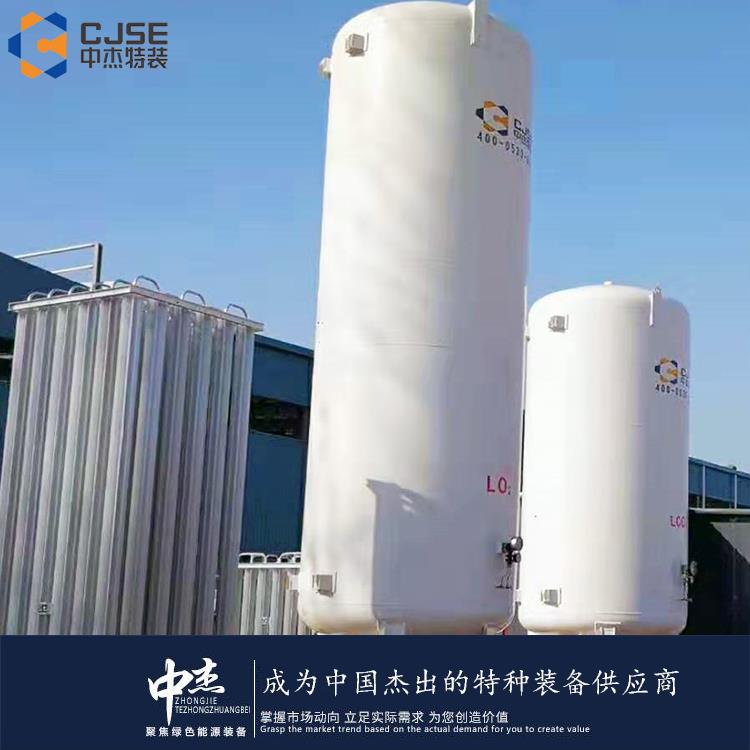

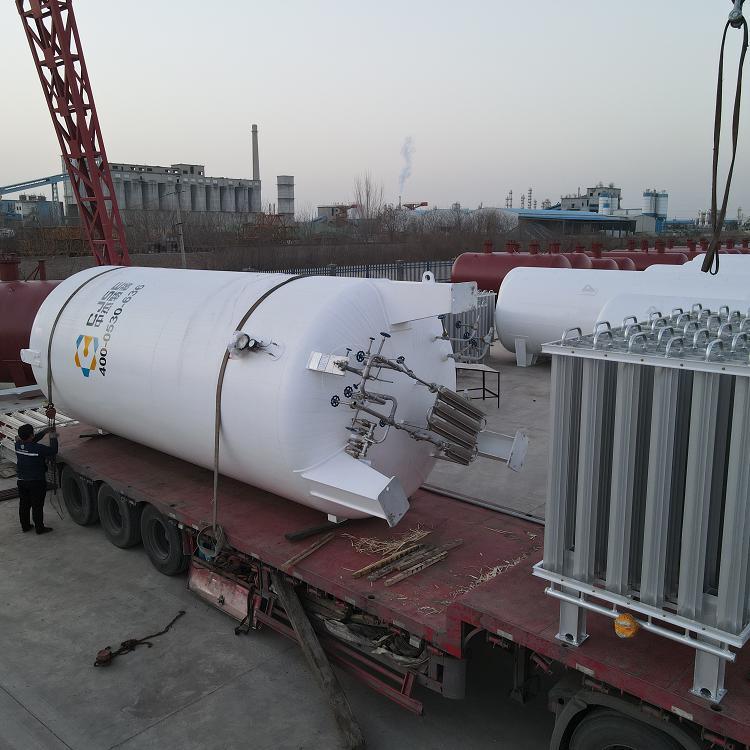
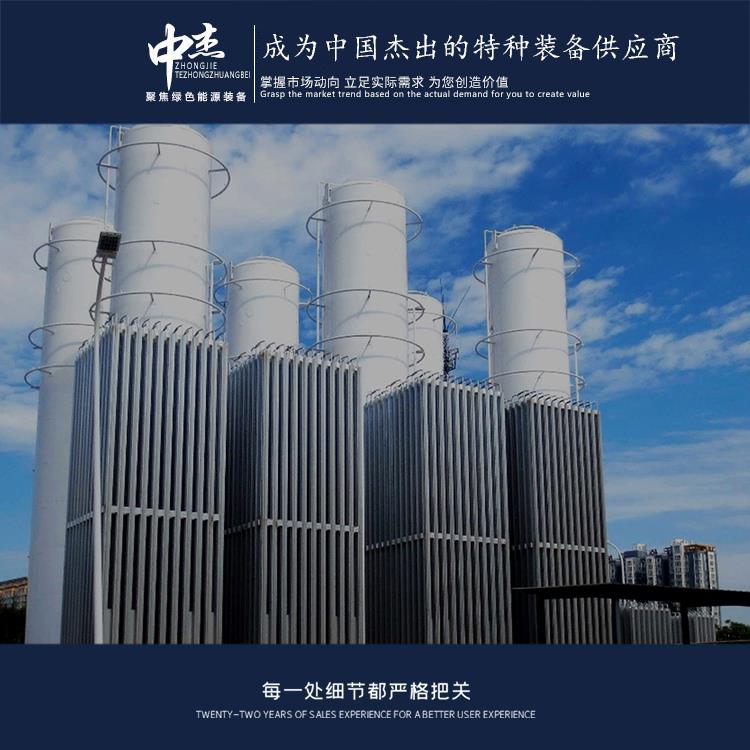


















Shandong Zhongjie Special Equipment Co., Ltd. (formerly Heze Boiler Factory Co., Ltd.) holds an A-grade boiler manufacturing license, an A2-grade pressure vessel manufacturing license, an A2-grade pressure vessel design license, B-grade boiler installation license, and GB2/Class, GC2/Class pressure pipeline installation licenses, as well as a qualification for mechanical and electrical equipment installation contracting. It is a member of the China Boiler and Water Treatment Association, the China Chemical Equipment Association, and the Standing Committee of the Shandong Equipment Manufacturing Association. The company has also passed the ISO9001 Quality Management System, ISO14001 Environmental Management System, OHSAS18001 Occupational Health and Safety Management System certifications, and the American ASME/U2 certification.
Low-temperature carbon dioxide storage tanks offer several advantages:
- Low-temperature storage capability: These tanks can store carbon dioxide at low temperatures, typically between -40°C and -70°C. This low-temperature storage allows carbon dioxide to be stored in a liquid state, significantly reducing the storage space required.
- High storage density: Due to the liquid state of carbon dioxide at low temperatures, its storage density is relatively high. Compared to gaseous storage, liquid storage can hold more carbon dioxide in a smaller tank, improving storage efficiency.
- Environmental and renewable: Carbon dioxide is an environmentally friendly gas, with minimal harmful emissions during storage and use. Additionally, carbon dioxide can be reused through capture and recycling technologies, reducing environmental impact.
- High safety: Low-temperature carbon dioxide storage tanks are made from high-strength materials with excellent sealing and corrosion resistance. They are equipped with safety valves and pressure relief devices to effectively control internal pressure and temperature, ensuring safety during storage.
- Wide application: These tanks are widely used in various industries, such as food and beverage, pharmaceutical, and chemical industries. They can be used for frozen food, refrigeration equipment, gas supply, and more, meeting diverse needs.
In summary, low-temperature carbon dioxide storage tanks offer advantages such as low-temperature storage capability, high storage density, environmental friendliness, renewability, high safety, and wide application. These benefits make them a crucial storage and usage equipment in many industries.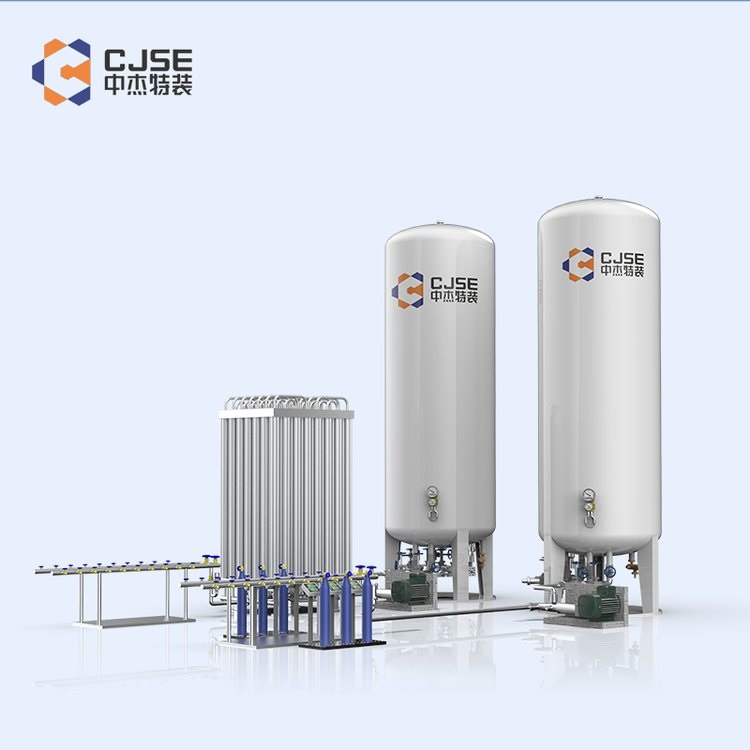
Technical specifications for carbon dioxide storage tanks can be established based on different application fields and/or regional standards. Below are some common technical specifications and standards for reference:
ASME Standards: The American Society of Mechanical Engineers (ASME) has issued a series of standards for pressure vessels, including specifications for carbon dioxide storage tanks such as ASME BPVC Section VIII Division 1 and ASME BPVC Section VIII Division 2.
ISO Standards: The International Organization for Standardization (ISO) has published some standards related to pressure vessels, such as ISO 9809-1 and ISO 9809-2, covering design, manufacturing, and inspection requirements for steel cylinders.
GB Standards: The China National Bureau of Standards has issued a series of standards related to pressure vessels, such as GB 150 "Pressure Vessels" and GB 5099 "Steel Cylinders," including design, manufacturing, and inspection requirements for carbon dioxide storage tanks.
DOT Standards: The United States Department of Transportation (DOT) has issued some standards related to pressure vessels and cylinders, such as DOT-3AA and DOT-4BA, covering design, manufacturing, and transportation requirements for liquefied gas storage tanks.
EN Standards: The European Committee for Standardization (CEN) has published some standards related to pressure vessels, such as EN 13445 and EN 14382, covering design, manufacturing, and inspection requirements for liquefied gas storage tanks.
Additionally, there may be other industry standards and specifications applicable to carbon dioxide storage tanks based on specific application needs, such as relevant standards in the food and beverage industry and industry-specific standards.
When using carbon dioxide storage tanks, appropriate technical specifications should be selected based on specific application requirements and local regulatory requirements, ensuring that the design, manufacturing, and use of the tanks comply with the corresponding standards and specifications.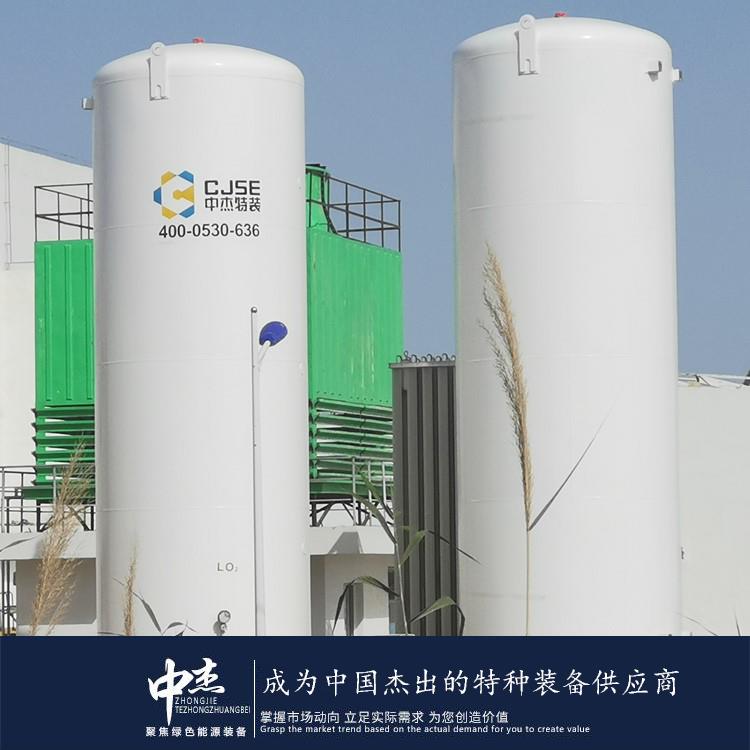
Urea synthesis from carbon dioxide is a significant chemical reaction with several applications: Urea Production: Urea is a vital nitrogen fertilizer and chemical, widely used in both agricultural and industrial sectors. Carbon dioxide synthesis is one of the commonly used methods for urea production. In this process, carbon dioxide reacts under high temperature and pressure to form urea. This method utilizes carbon dioxide resources, reducing dependence on fossil fuels used in traditional urea production. Urea Fuel: Urea can also serve as a urea fuel for internal combustion engines and combustion equipment. By heating and decomposing urea, energy is released, which then reacts with oxygen in the air to produce combustion heat. This combustion process only produces water vapor and nitrogen as by-products, reducing environmental pollution. Chemical Synthesis: Urea is an essential raw material for the synthesis of many chemicals. The carbon dioxide synthesis of urea provides a sustainable supply for the chemical industry, used in the production of other chemicals like plastics, resins, paints, etc. Energy Storage: Urea can also act as a medium for energy storage. By synthesizing urea from carbon dioxide, energy can be stored in the form of chemical bonds. When energy is needed, it can be released by decomposing urea, which then reacts with oxygen in the air to produce combustion heat and release stored energy. The development of carbon dioxide synthesis urea technology aims to reduce dependence on fossil fuels used in traditional urea production methods, lower greenhouse gas emissions, and promote the development of sustainable agriculture and the chemical industry. However, this technology is still in continuous development and research, requiring further technological breakthroughs and practical verification for large-scale application.
Low Temperature Carbon Dioxide Storage Tank Related Knowledge
1. Structure of Low Temperature Carbon Dioxide Storage Tank
The low temperature carbon dioxide storage tank is typically a double-layered cylindrical structure. The inner cylinder is made of 6MnDR alloy steel, while the outer cylinder is made of Q245R or Q345R pressure vessel steel plate. The piping is made of austenitic stainless steel, and the insulation space is filled with high vacuum sintered sand or wrapped with multiple layers for thermal insulation. The storage tank is equipped with valves for operation, which are arranged for ease of use. Pressure gauges and level indicators are also installed to monitor the pressure and liquid level inside the tank.
2. Key Features of Low Temperature Carbon Dioxide Storage Tank
(1) The storage tank is equipped with a liquid filling connection for trucks, enabling liquid supply to vaporizers, trucks, and pumps.
(2) Both the inner and outer cylinders of the storage tank are equipped with safety devices to ensure safe operation for users.
(3) The insulation material of the storage tank has been specially treated to provide a longer vacuum life. Additionally, the tank is equipped with a vacuum gauge for measuring the insulation space vacuum when necessary.
3. Transportation of Low Temperature Carbon Dioxide Storage Tank
(1) During road transportation, the storage tank should be securely fastened to the vehicle, travel at moderate speeds, and avoid collisions with other objects.
(2) After the storage tank arrives, the unloading personnel should work together with the equipment supervisor to develop a scientific and reasonable unloading plan.
4. Installation of Low Temperature Carbon Dioxide Storage Tank
(1) Upon arrival at the installation site, the storage tank can be positioned when installation conditions are met. During the installation process, avoid impacts and strikes, and pay special attention to the explosion-proof equipment on the outer cylinder and the vacuum valve, which should not be touched.
(2) Perform a gas-tightness test on the inner cylinder system of the storage tank using nitrogen to the working pressure. After checking that valves, pipes, flanges, etc., are leak-free, the installation is complete.
(3) The installation dimensions of the storage tank are specified in the supply documents. When considering liquid loading and unloading with trucks, account for the vehicle's travel path.
Changjie Special Equipment upholds the grand vision of "Realizing employees' dreams, creating customer value, and striving for the prosperity and strength of our motherland," and is dedicated to the development of the green energy equipment industry. We contribute to society with products and services that offer high value for money!
WeChat Official Account

Scan to follow Official Account



















