


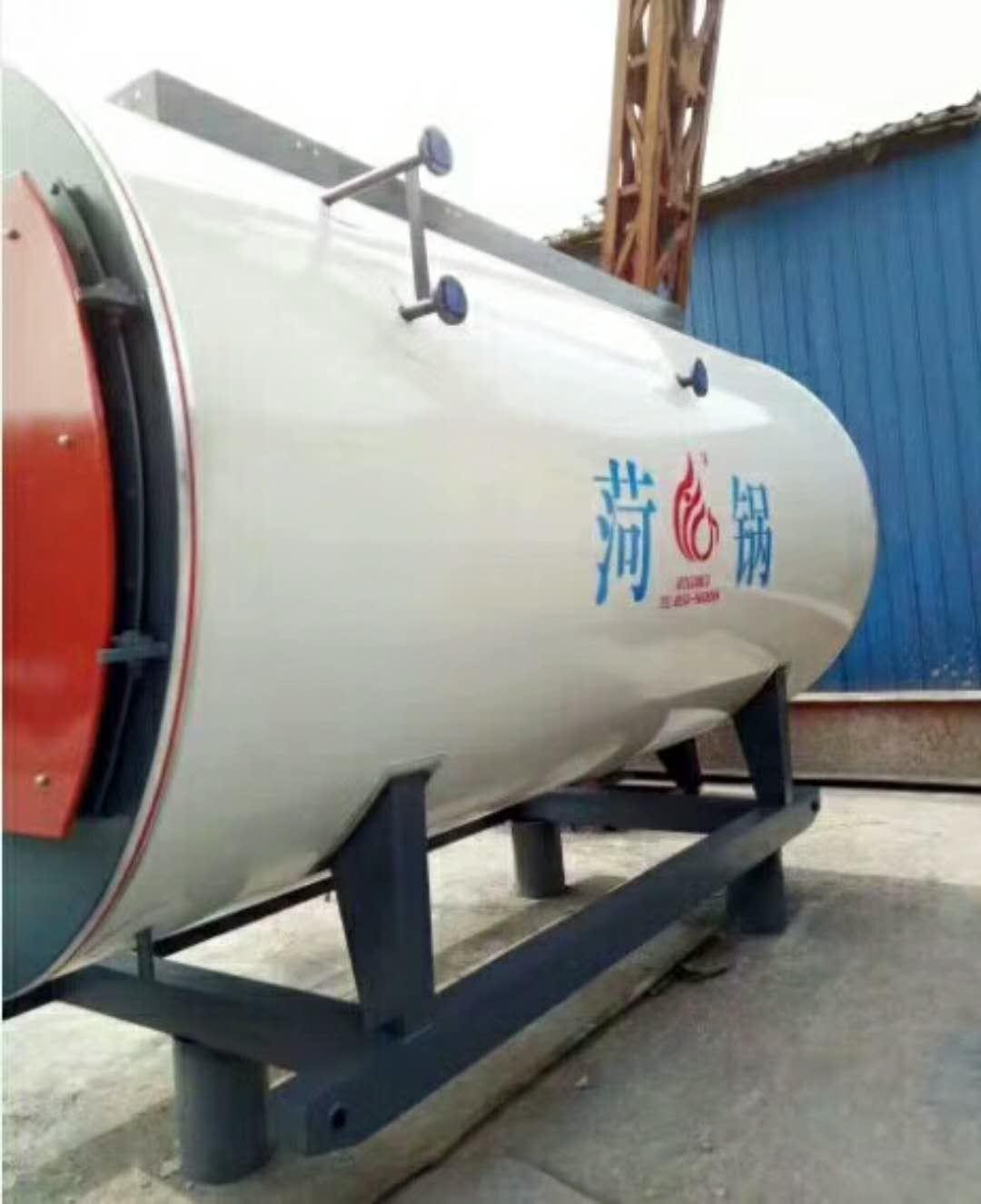

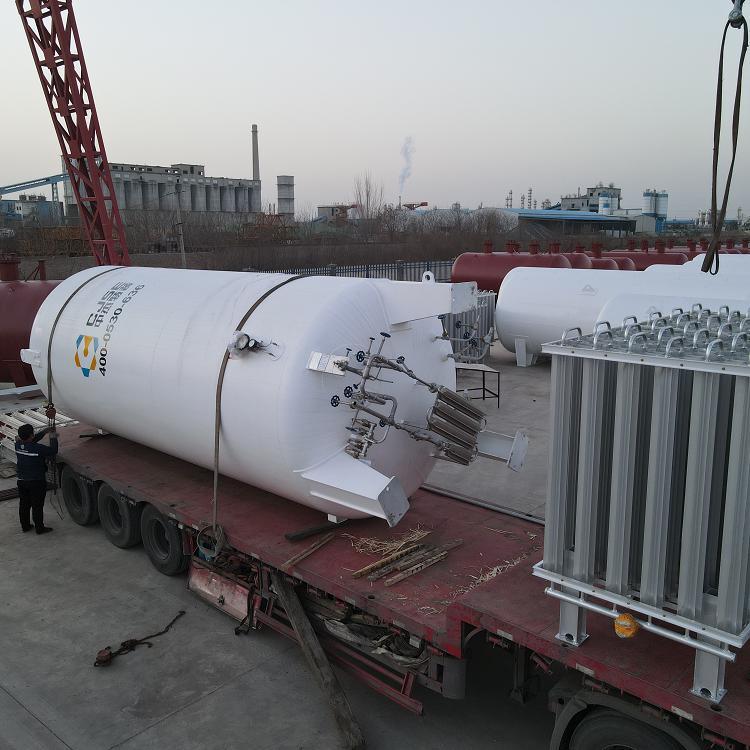


















Shandong Zhongjie Special Equipment (formerly Heze Boiler Factory Co., Ltd.) was established in 2001, located at No. 2218 Jinnan Road, Development Zone, Heze City, with a registered capital of 50 million yuan and total assets of 500 million yuan. The company has 7 business centers: boilers, deep-freeze containers, pressure vessels, central air conditioning, engineering installation, international trade, and Internet of Things. It has three factory sites on Jinnan Road, East Changjiang Road, and Bohai Road, covering a total of 200,000 square meters, with the main workshop spanning 83,000 square meters. It currently employs 710 people, including 247 engineers and technicians, and 82 intermediate-level technicians. In December 2016, it was recognized as a "High-tech Enterprise" by the Science and Technology Department. In June 2021, it was identified as a "Specialized and New Enterprise in Shandong Province" by the Ministry of Industry and Information Technology. In June 2022, it was recognized as a "Gazelle Enterprise in Shandong Province" and in August 2022, it was identified as a "Specialized and New Small Giant Enterprise" by the Ministry of Industry and Information Technology.
Daily inspection of liquid nitrogen storage tanks primarily includes the following aspects:
Visual Inspection: Check for any obvious damage, deformation, or corrosion on the tank's exterior, including the tank walls, valves, pipes, and joints.
Sealability Inspection: Check the sealing performance of the storage tank, including inspecting for leaks at valve and pipeline connections, and verifying the proper operation of the tank's exhaust valve and safety valve.
Pressure Check: Verify that the tank's pressure gauge is functioning properly and that the pressure is within the normal range to ensure the tank operates normally.
Level Check: Monitor the liquid nitrogen tank's level to ensure it remains within the normal range, preventing issues caused by either excessive or insufficient levels.
Insulation Layer Inspection: Check for any damage or detachment in the tank's insulation layer to ensure proper insulation and minimize evaporation losses of liquid nitrogen.
Leak Inspection: Check for signs of liquid nitrogen leakage around the storage tank, including frost, ice, or liquid nitrogen stains on the ground.
Safety Equipment Inspection: Verify that the safety equipment of the storage tank, such as leak detectors, alarm systems, and safety valves, is functioning properly to ensure the tank's safety.
Clean Inspection: Regularly clean the interior of the tank to remove accumulated impurities and dirt, maintaining the tank's cleanliness and hygiene.
Above are the essential daily inspections for liquid nitrogen tanks. Specific inspection items should be adjusted and supplemented according to the tank's model, usage, and relevant standards. During the inspection process, strict adherence to operational procedures and safety requirements is necessary to ensure the safe operation of the tank.
During the degreasing process of high vacuum pipelines in low-temperature liquid storage tanks, the following steps can be taken:
Preparation: Ensure that the defatting equipment and tools are clean and ready for use. Check the pipeline system's connections and sealing, ensuring there are no leaks.
Cleaning Pipelines: Utilize suitable cleaning agents and tools to clean the pipes, removing surface dirt and grease. Methods such as mechanical brushing, high-pressure water jetting, or chemical cleaning can be employed.
De-greasing Process: Select an appropriate de-greaser and inject it into the pipeline system. The de-greaser can be an organic solvent or an alkaline solution, the choice depending on the pipeline material and the type of dirt. Ensure that the de-greaser thoroughly covers the inner wall of the pipeline and maintains a certain contact time.
Flush pipeline: Drain the degreaser from the pipeline system and flush with clean water to remove any remaining degreaser and dirt. During the flushing process, high-pressure water or gas can be used for rinsing to ensure the interior of the pipeline is clean.
Drying Pipe: Evaporate or expel moisture inside the pipe using drying equipment or a ventilation system to ensure the interior pipe wall is dry. Drying can be accomplished with hot air or nitrogen.
Inspection and Testing: After degreasing, inspect and test the pipelines to ensure cleanliness and sealing integrity. Visual inspection, pressure testing, or other relevant tests can be conducted.
Note that during the degreasing process of high vacuum pipelines for low-temperature liquid storage tanks, it is essential to adhere to relevant safety operation procedures and guidelines. Ensure that operators possess the necessary safety awareness and operational skills to prevent accidental incidents.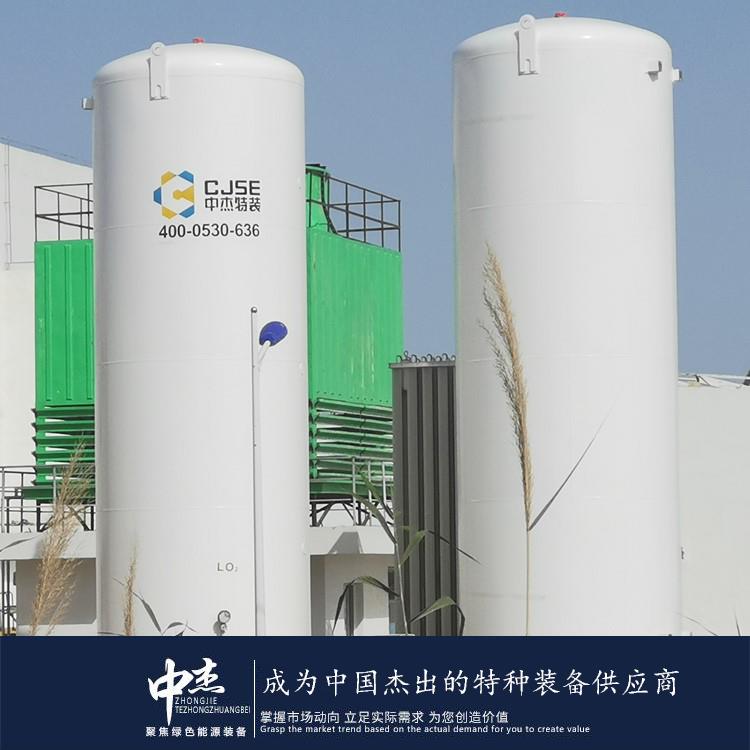
The reasons for not allowing a liquid oxygen tank to be left empty for long periods mainly include:
Evaporation Loss of Liquid Oxygen: Liquid oxygen has a low boiling point, and if left unused for long periods, it will continually evaporate, resulting in a loss of liquid oxygen within the storage tank. The evaporation rate of liquid oxygen is rapid, with daily evaporation amounts potentially reaching several percent of the tank's capacity. Prolonged disuse can lead to waste of liquid oxygen.
Safety Risk: Liquid oxygen is a strong oxidizer with high flammability and explosive properties. Prolonged empty storage of liquid oxygen tanks increases the opportunity for contact with the surrounding environment, thereby increasing the risk of accidental fires and explosions.
Risk of Storage Tank Damage: Long-term emptying of liquid oxygen storage tanks may lead to internal oxidation reactions, accelerating corrosion and damage to the tank. Tank damage can affect its sealing performance and structural integrity, increasing the risk of leaks and safety accidents.
Therefore, to ensure the safe storage and effective use of liquid oxygen, the liquid oxygen tank should be regularly maintained and serviced to avoid long-term empty storage. When the tank is not in use, appropriate measures should be taken, such as sealing the tank and reducing oxygen evaporation, to minimize liquid oxygen loss and safety risks.
The use of liquid oxygen tanks requires particular attention to the following safety matters:
Training: Operators of liquid oxygen tanks must receive training on the properties of liquid oxygen, safe operating procedures, and emergency response measures. Only trained personnel are authorized to handle liquid oxygen tanks.
Safety Operating Procedures: Establish and adhere to the safety operating procedures for liquid oxygen tanks, including proper operational procedures, protective measures, and emergency response plans. Ensure operators follow the procedures to minimize accident risks.
Protection Measures: When using liquid oxygen tanks, necessary protective measures must be taken, such as wearing protective gloves and suits. Avoid direct contact with liquid oxygen to prevent frostbite.
Leakage Control: Regularly inspect the liquid oxygen tanks for leaks and equip with leak detection and alarm systems. In the event of a leak, immediate measures should be taken to control the leak and proceed with repairs.
Fire Prevention Measures: Liquid oxygen has a high oxygen content and is prone to cause fires. Measures such as setting up fire barriers around liquid oxygen storage tanks and using fire-retardant coatings are taken to prevent fires from occurring and spreading.
Static protection: The accumulation of static electricity in liquid oxygen tanks may cause sparks, increasing the risk of fire. Measures such as using static-conductive materials and anti-static equipment should be taken to reduce the accumulation and release of static electricity.
Ventilation Requirements: Ensure adequate ventilation within the enclosed space of the liquid oxygen storage tank to expel vapors produced by the evaporation of liquid oxygen.
Our company attaches great importance to technological innovation and research and development, boasting one city-level enterprise technology center in Heze City. We have established testing facilities for non-destructive testing, physical and chemical testing, welding testing, hydrostatic testing, etc., and are equipped with over 600 pieces of various instruments and equipment, including CNC machine tools, X-ray flaw detectors, digital ultrasonic flaw detectors, mechanical property testing machines, chemical analyzers, spectrometers, tensile testing machines, and plasma welding machines. The key products we have developed, such as temperature and pressure vessel welding, biomass boiler emission reduction, and waste heat recovery, have successively been included in multiple Shandong Provincial Department of Industry and Information Technology science and technology innovation projects, key projects of Shandong Province, and Heze City innovative and excellent projects, etc. We have cumulatively obtained 27 authorized utility models, 16 authorized inventions, participated in drafting 2 standards, 2 industry standards, and registered 15 trademarks. The technical team of our company, in collaboration with Professor Yajiang Li from Shandong University, has developed deep cryogenic container processing technology, utilizing the international plasma arc + filler wire argon arc welding (PAW-GTAW) technology, which has been appraised as reaching an international level in deep cryogenic container manufacturing after provincial-level scientific and technological achievement assessment. Choose Zhongjietech for a partnership that will create brilliance together!
WeChat Official Account

Scan to follow Official Account



















