


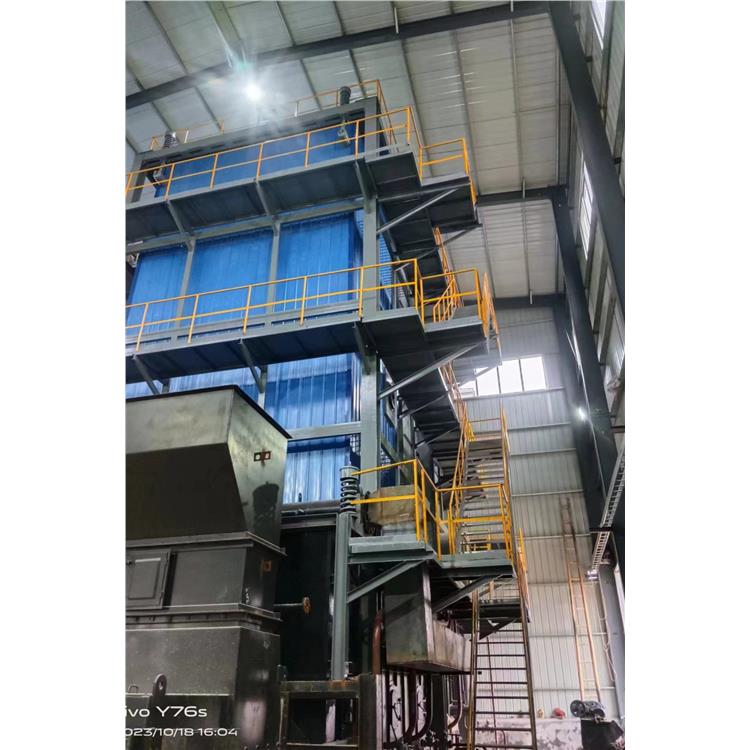

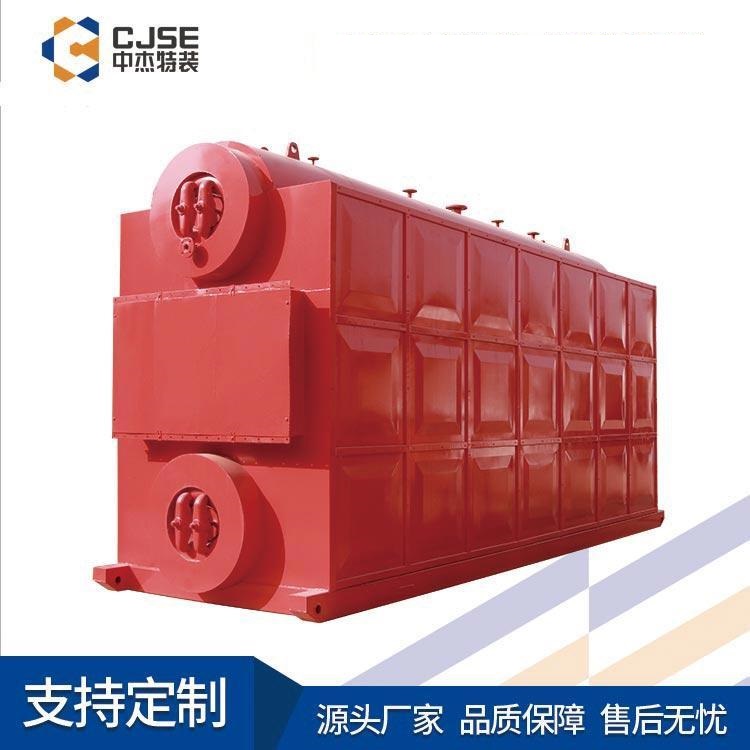
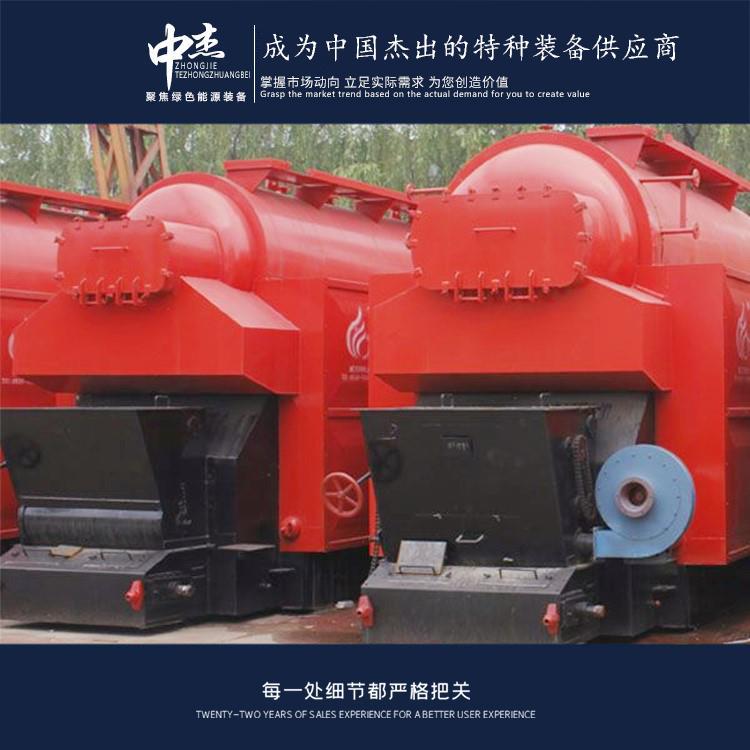


















Shandong Zhongjie Special Equipment's main products include: fuel (gas) boilers, organic heat carrier boilers, biomass boilers, waste heat boilers, and other boiler products; vacuum insulation cryogenic pressure vessels such as LNG tanks, oxygen/nitrogen/argon tanks, CO2 tanks; pressure vessel products such as denitrification engineering equipment, heat storage and energy storage equipment, complete chemical equipment sets; central air conditioning and ventilation equipment such as ground (water) source heat pumps, air source units, water-cooled screw units, and air-cooled modular units. Planned products include large-scale energy centers, LNG transport vehicles, LNG tank containers, and other green energy equipment.
Yes, the biomass boiler market is expected to continue expanding. The following are some factors driving the growth of the biomass boiler market:
Rising Demand for Renewable Energy: As the demand for renewable energy continues to grow, biomass, as a type of renewable energy, holds broad application prospects. Government and corporate support and promotion of renewable energy will drive the expansion of the biomass boiler market.
Environmental Awareness Rising: Biomass boilers have lower carbon emissions and environmental impact compared to traditional fossil fuel boilers. As environmental awareness increases, more and more users are opting for biomass boilers to minimize environmental impact.
Policy Support: Many regions have implemented policies and measures to support the development of renewable energy, including tax incentives and energy regulations. These policies are expected to drive the growth of the biomass boiler market.
Energy Security Needs: Biomass, as a native renewable energy source, can reduce dependence on imported energy and enhance energy security. In regions with scarce resources, the demand for biomass boilers will be even more pronounced.
Technological advancement and cost reduction: With ongoing technological progress and falling costs, biomass boilers have seen improved performance and efficiency, making them more competitive and viable.
In summary, the biomass boiler market is poised for continuous expansion, driven by factors such as the increasing demand for renewable energy, rising environmental awareness, policy support, energy security needs, as well as technological advancements and cost reductions.
Biomass boilers feature the following characteristics:
Renewable Energy: Biomass boilers utilize biomass fuels such as wood chips, straw, etc., which are renewable. Compared to traditional fossil fuels, these fuels offer lower carbon emissions and environmental friendliness.
Diverse fuel options: Biomass boilers are adaptable to various biomass fuels such as wood chips, straw, and husks, demonstrating strong fuel versatility. This allows biomass boilers to be widely used in different regions and industries.
Energy Utilization: Biomass boilers utilize advanced combustion technology and heat recovery systems, achieving high energy efficiency. By optimizing the combustion process and heat recovery, energy efficiency can be maximized and energy consumption minimized.
Flexible operating modes: Biomass boilers can be operated flexibly according to actual needs, such as manual control, automatic control, or remote monitoring, etc. This allows biomass boilers to meet requirements in various scenarios and provide a stable energy supply.
Superior environmental performance: Biomass boilers produce relatively fewer emissions during combustion, resulting in less environmental impact. Through reasonable combustion control and flue gas treatment facilities, the content of emissions can be further reduced to meet higher environmental protection standards.
Wide Application Range: Biomass boilers are extensively used in industries, agriculture, greenhouses, HVAC, and other fields. They provide a stable energy supply to meet the needs of various industries and sectors.
In summary, biomass boilers feature renewable energy, diverse fuel options, efficient energy utilization, flexible operation, superior environmental performance, and wide applicability, making them a sustainable and eco-friendly thermal energy supply solution.
Biomass boiler combustion offers the following energy-saving features compared to traditional fuel boilers:
Combustion: The combustion technology and design of biomass boilers enable the combustion of biomass fuel. Compared to traditional fuel boilers, biomass boilers have higher combustion efficiency, allowing for more energy from the fuel to be utilized, thus reducing energy waste.
Heat Recovery Utilization: Biomass boilers are equipped with a heat recovery system, enabling the reuse of excess heat generated from combustion for heating systems, thereby enhancing energy efficiency. In traditional fuel boilers, flue gas heat is often wasted, but biomass boilers can recover and utilize the heat energy from flue gas, reducing energy waste.
Renewable Energy Utilization: Biomass boilers utilize renewable biomass fuels such as wood chips, straw, and waste crops, reducing reliance on finite fossil fuel resources. Compared to traditional fuel boilers, biomass boilers have a more sustainable fuel source, enabling the sustainable use of energy.
Carbon Emission Reduction: The combustion of biomass fuel results in relatively lower carbon emissions compared to traditional fuel boilers. The use of biomass boilers reduces carbon emissions and is more environmentally friendly, contributing to the reduction of greenhouse gases.
Waste Utilization: Biomass boilers can use agricultural residues like straw and wood waste as fuel, effectively utilizing waste resources and reducing resource waste. Compared to traditional fuel boilers, biomass boilers have a more diverse fuel source and can achieve efficient waste utilization.
Advantages of biomass fuel:
Renewable Energy: Biomass fuel is a renewable energy source with a wide range of sources, including wood, straw, and waste products. Compared to fossil fuels, the supply of biomass fuel is more sustainable.
Eco-friendly and Low Carbon: The amount of carbon dioxide emitted during the combustion of biomass fuel is roughly equivalent to the amount absorbed during its growth, resulting in almost no net increase in carbon dioxide emissions, which has a positive effect on mitigating climate change.
Reduce Waste Management: Biomass fuel can utilize agricultural straw, wood waste, and other waste materials, thereby reducing waste management and emission issues.
High energy utilization efficiency: Biomass fuel has a high calorific value and high combustion efficiency, which can be effectively converted into thermal or electrical energy, providing a reliable energy supply.
Use of biomass boilers:
Heating Systems: Biomass boilers can be used in heating systems such as heating, warm water, and steam supply, and are widely applied in residential areas, industrial factories, and commercial buildings, etc.
Industrial Production: Biomass boilers can provide thermal energy for industrial production, such as in the pulp and paper, food processing, and chemical industries, meeting the thermal energy needs throughout the production process.
Power Generation System: Biomass boilers can be combined with steam turbine generator sets to convert the thermal energy from combustion into electrical power for power supply.
Hot Water Supply: Biomass boilers can be used for hot water supply, such as swimming pools, hot springs, hotels, etc.
Agricultural Utilization: Biomass boilers can utilize agricultural waste such as crop straw to address energy issues in rural areas and provide the required thermal energy for agricultural production.
The use of biomass boilers is environmentally friendly, sustainable, and efficient, effectively utilizing biomass resources, reducing reliance on fossil fuels, lowering carbon emissions, and promoting sustainable development.
Shandong Zhongjie Special Equipment, welcome customers to visit our factory for business talks.
WeChat Official Account

Scan to follow Official Account



















