


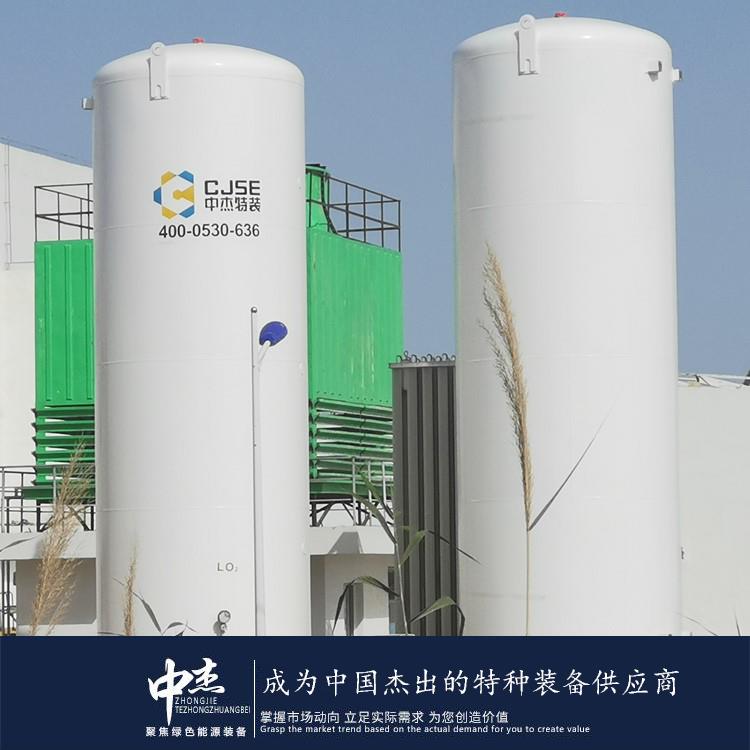

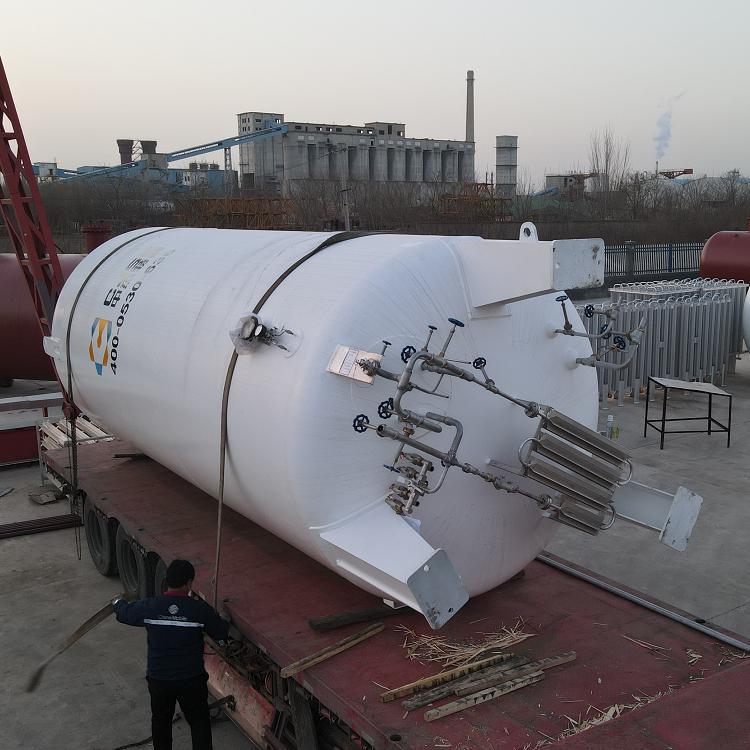
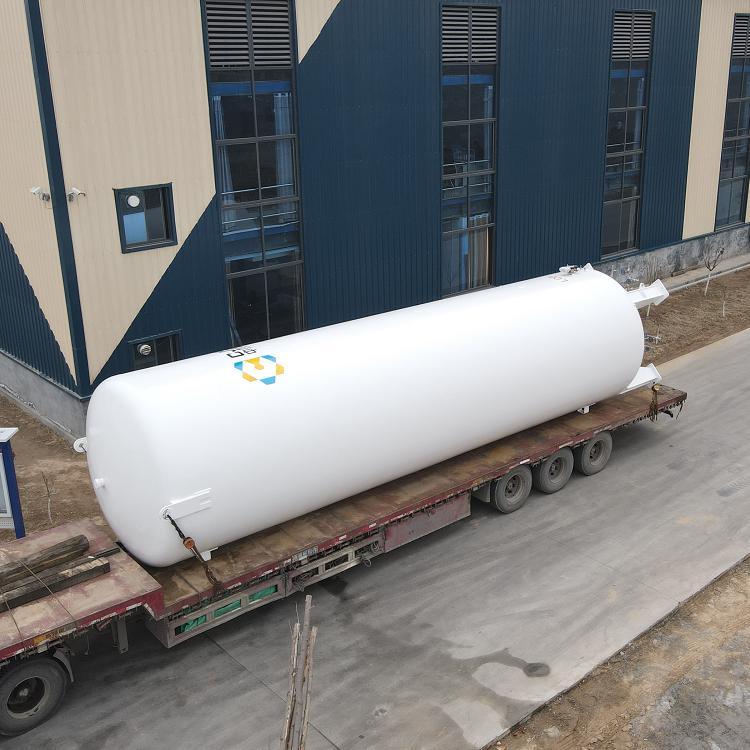


















Shandong Zhongjie Special Equipment's main products include: fuel (gas) boilers, organic heat carrier boilers, biomass boilers, waste heat boilers, and other boiler products; vacuum insulation cryogenic pressure vessels such as LNG tanks, oxygen/nitrogen/argon tanks, and CO2 tanks; pressure vessel products such as denitrification engineering equipment, heat storage and energy storage equipment, and complete chemical equipment; central air conditioning and ventilation equipment such as ground (water) source heat pumps, air source units, water-cooled screw units, and air-cooled modular units. Planned products include large-scale energy centers, LNG transport vehicles, LNG tank containers, and other green energy equipment.
Carbon dioxide storage tanks are categorized into various types and structures based on their design and usage:
- Vertical Tanks: Commonly used carbon dioxide storage tanks, these are cylindrical in shape and vertically positioned. Vertical tanks typically have larger capacities and are used for large-scale storage and supply of carbon dioxide.
- Horizontal Tanks: Another common type, these tanks are rectangular or cylindrical and horizontally positioned. Horizontal tanks are usually used for smaller-scale storage and supply, suitable for limited spaces.
- Spherical Tanks: A specialized type of carbon dioxide storage tank with a spherical shape. These tanks have high strength and pressure-bearing capabilities, suitable for high-pressure storage and transportation of carbon dioxide.
- Vertical Tanks: Smaller capacity carbon dioxide storage tanks with a cylindrical shape and vertical positioning. These are commonly used for small-scale storage and supply, such as commercial and residential use.
- Underground Tanks: A unique structure where carbon dioxide storage tanks are buried underground. Underground tanks save space, reduce visual impact, and offer enhanced safety and environmental protection.
These tanks are typically made of pressure-resistant materials (like carbon steel or stainless steel) and have certain thermal insulation properties, as well as accessories such as safety valves, pressure gauges, and level indicators. The interior usually features baffles or partitions to separate different liquids or gases. Additionally, the tanks are equipped with safety systems such as pressure maintenance systems, leak detection systems, and fire detection systems.
The reasons for regular testing of low-temperature liquid carbon dioxide storage tanks are to ensure their safety performance and normal operation. Due to the tanks being under low temperatures and high pressures, there are certain safety risks such as leaks and structural breaches. Regular testing allows for the early detection of potential issues, enabling appropriate measures to be taken for repairs or maintenance to ensure the tank's safe operation. The specific testing frequency should be determined according to relevant regulations and standards, and it is generally recommended to conduct regular inspections and maintenance. Typically, the intervals for regular testing of low-temperature liquid carbon dioxide storage tanks are from 1 to 3 years, though this may vary based on usage, age, design standards, and other factors. The content of regular testing usually includes visual inspections of the tank, checks of valves and fittings, leak detection, and pressure testing. Additionally, regular checks and maintenance of the insulation layer should be performed to ensure its insulating performance. It is important to note that the specific testing frequency and content should be determined based on local laws, standards, and the manufacturer's recommendations. During testing, the operations should be carried out by qualified personnel, and the results and maintenance records should be documented for tracking and managing the tank's safety performance.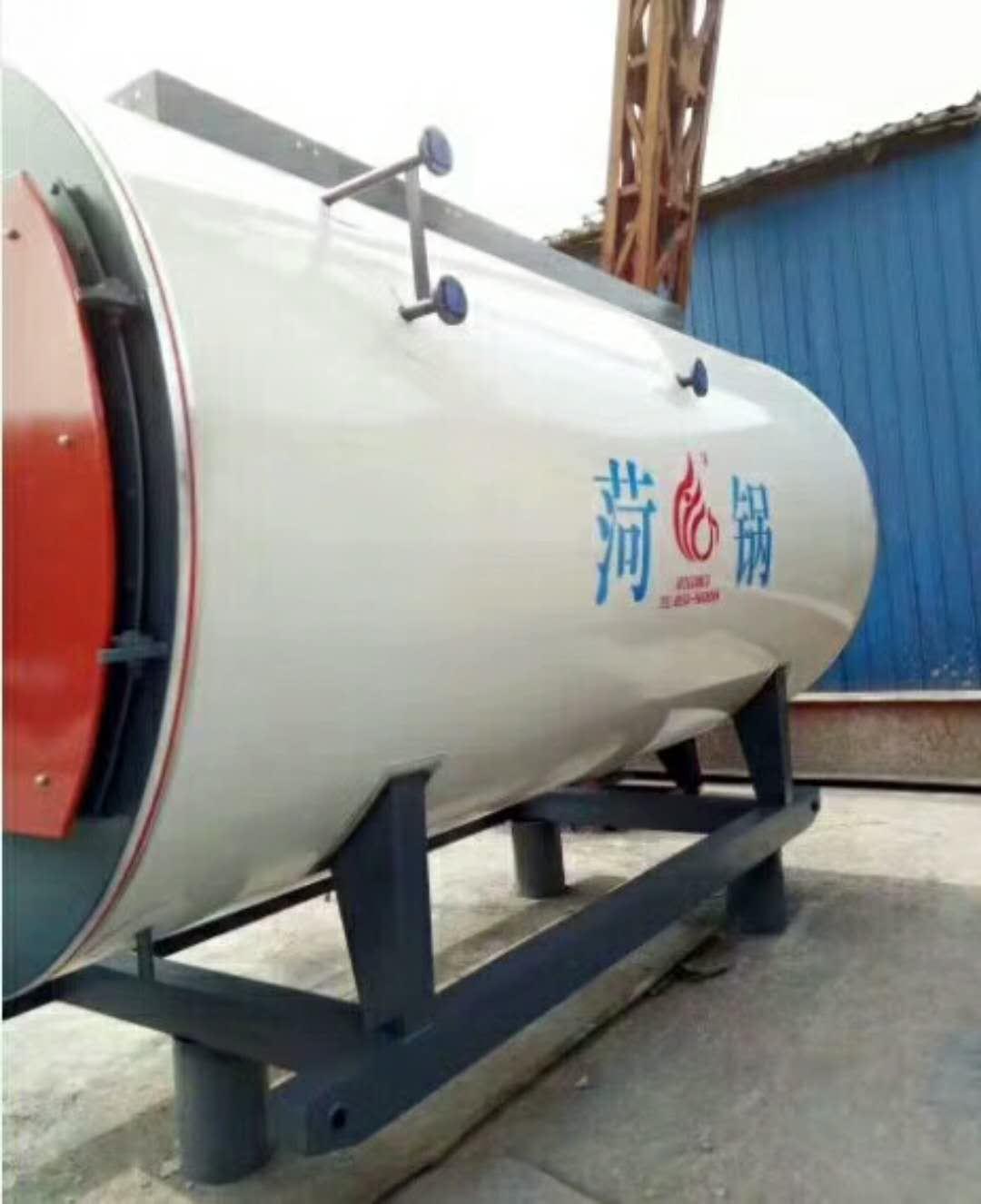
Carbon dioxide tanks offer the following advantages:
- High storage density: CO2 tanks can compress CO2 gas into a liquid state, significantly increasing storage density. Compared to storing it in gas form, liquid CO2 can be stored in smaller tanks, saving space and costs.
- Eco-friendly and renewable: CO2 is an eco-friendly gas, and its increased concentration in the atmosphere can lead to warming and climate change. By storing and utilizing CO2, we can reduce its emissions into the atmosphere, promoting environmental protection and sustainable development.
- Versatile applications: CO2 tanks are widely used in various fields, including the food and beverage industry, manufacturing, fire suppression, and gas supply. CO2 can be used as a preservative, carbonation agent, gas, and fire extinguisher, among other uses, with broad applications and market demand.
- Safe and reliable: During design and manufacturing, CO2 tanks typically use high-strength materials (like carbon steel or stainless steel) and offer excellent pressure resistance and safety. The tanks are usually equipped with safety valves, pressure gauges, and level gauges to ensure safe operation. Additionally, CO2 is non-flammable and non-explosive, making it relatively safe.
These advantages make CO2 tanks an important storage and supply equipment, widely used in multiple industries. However, it is still necessary to follow relevant safety operation procedures and standards when using CO2 tanks to ensure safe operation and use.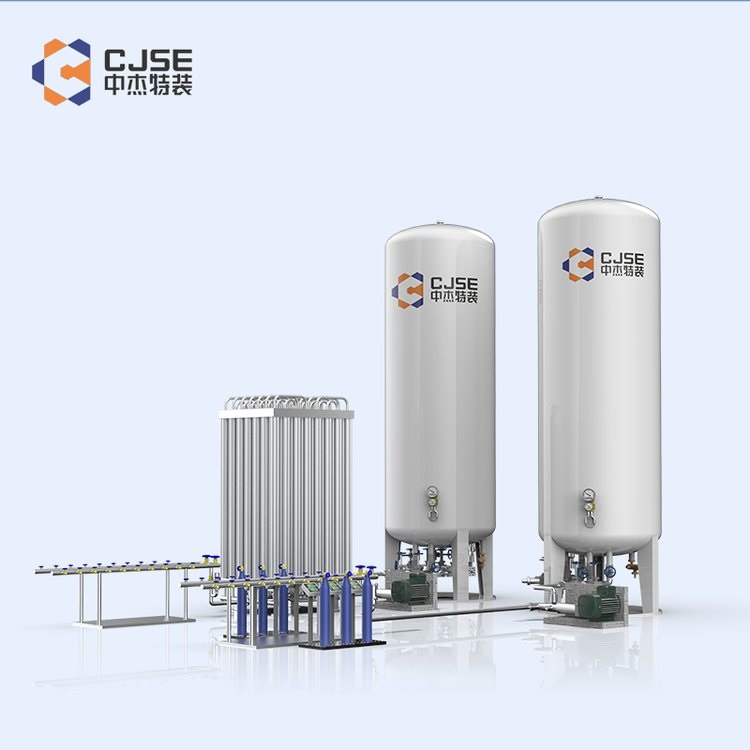
Detailed parameters for carbon dioxide storage tanks can vary based on specific design and usage requirements. Here are some common parameters for carbon dioxide storage tanks:
- Capacity: The capacity of carbon dioxide storage tanks can vary to meet requirements, with common ranges from a few thousand to tens of thousands of liters.
- Pressure: The design working pressure of carbon dioxide storage tanks typically falls between 15-25 MPa (megapascals), with the specific pressure depending on the application and usage needs.
- Material: Carbon dioxide storage tanks are usually made from high-strength materials such as carbon steel or stainless steel. The choice of material depends on the storage environment and requirements.
- Dimensions: The physical dimensions of carbon dioxide storage tanks also vary based on capacity and design. Common shapes include cylindrical, spherical, or cuboid.
- Level Control: Carbon dioxide storage tanks often come with level control systems to monitor and regulate the liquid level of carbon dioxide. Level control systems typically include level sensors and control valves.
- Pressure Control: Internal pressure control systems are usually installed in carbon dioxide storage tanks to monitor and regulate the gas pressure within. Pressure control systems typically include pressure sensors and safety valves.
It should be noted that specific parameters for carbon dioxide storage tanks may differ among manufacturers, application scenarios, and standards. When selecting and using carbon dioxide storage tanks, it is important to follow relevant safety operating procedures and guidelines, and consult with experts to obtain accurate parameter information.
Shandong Zhongjie Special Equipment, welcome customers to our factory for business discussions.
WeChat Official Account

Scan to follow Official Account



















