


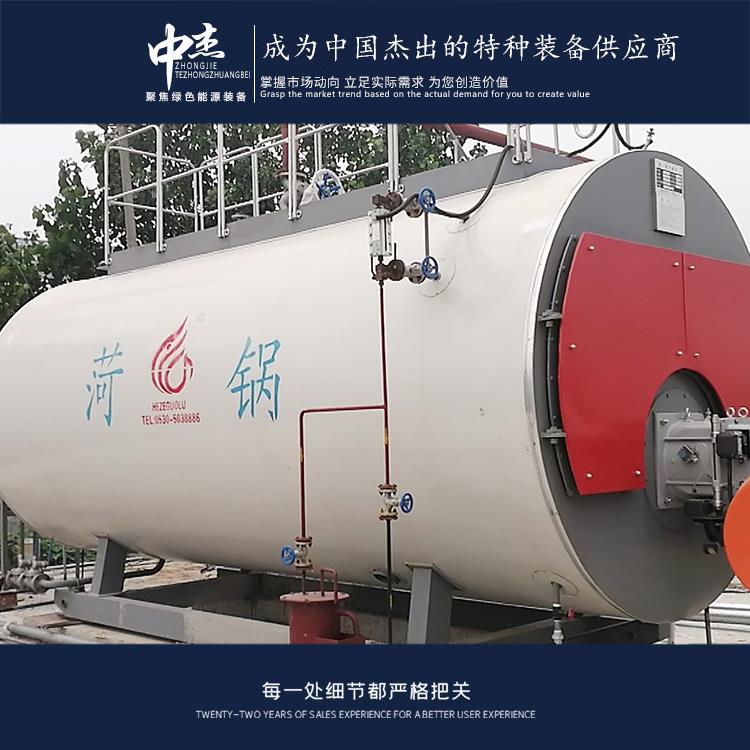

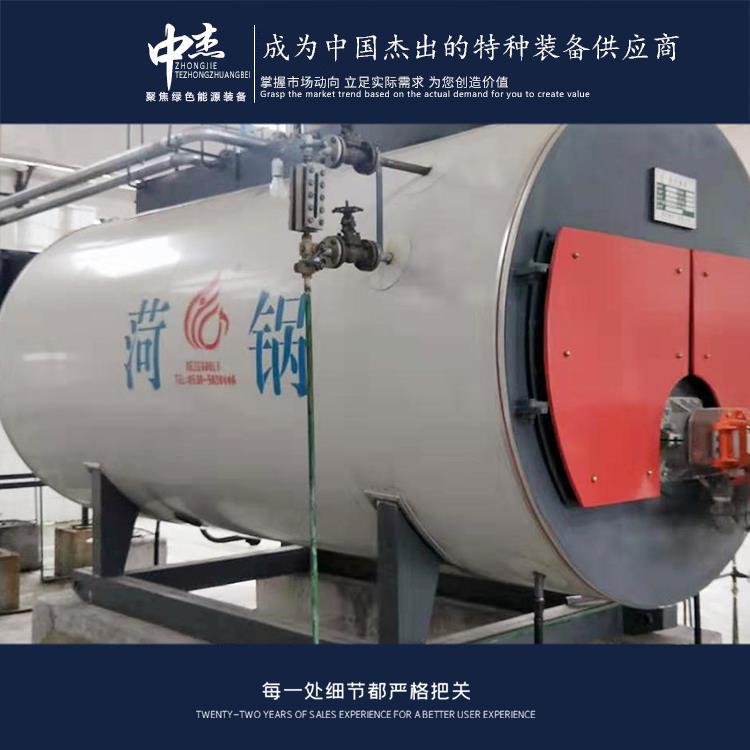
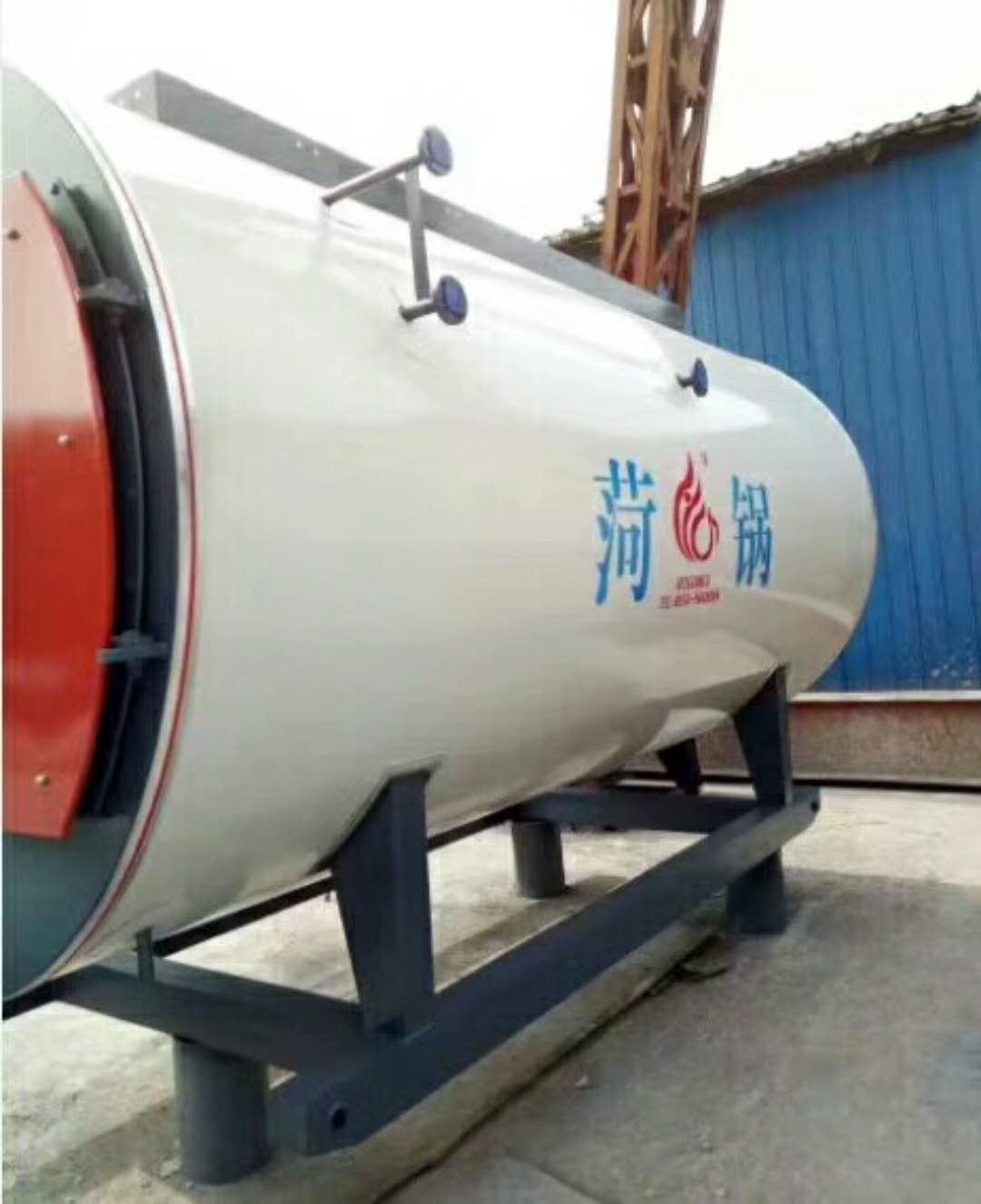


















Shandong Zhongjie Special Equipment Co., Ltd. specializes in the following products: fuel (gas) boilers, organic heat carrier boilers, biomass boilers, waste heat recovery boilers, and other boiler products; vacuum insulation deep-freeze pressure vessels such as LNG tanks, oxygen/nitrogen/argon tanks, and CO2 tanks; pressure vessel products including denitrification engineering equipment, heat storage and energy storage equipment, and complete chemical equipment sets; central air conditioning and ventilation equipment such as ground (water) source heat pumps, air source units, water-cooled screw units, and air-cooled modular units. Planned products include large-scale energy centers, LNG transport vehicles, LNG tank containers, and other green energy equipment.
Prior to starting the heating gas hot water boiler, the following correct procedures must be followed:
- Check the gas supply system: Ensure the gas supply system is operating properly, inspect gas pipes, valves, and pressure regulators, ensuring there are no leaks or blockages in the gas supply.
- Inspect the water system: Check the water circulation system of the heating system, including pumps, valves, and pipes, ensuring the waterways are clear of leaks and blockages.
- Check the electrical system: Inspect the boiler's electrical system, including power connections, controllers, and sensors, ensuring electrical equipment functions normally.
- Check safety devices: Inspect the boiler's safety devices, including safety valves, pressure switches, and water level controllers, ensuring they operate correctly for safe boiler operation.
- Prepare for ignition: According to the boiler's operating instructions, prepare the tools and equipment needed for ignition, including igniters and electrical ignition.
- Open the gas valve: Gradually open the gas valve to ensure a steady gas supply, avoiding gas surges.
- Ignition start-up: Follow the boiler's operating instructions for ignition and start-up. Perform the appropriate operations based on the boiler model and control system to ensure smooth ignition.
- Monitor operational status: After startup, closely monitor the boiler's operational status, including combustion, water level, and pressure, ensuring normal operation without any anomalies.
- Adjust parameters: Adjust the boiler's parameters as needed, including temperature, pressure, and water level, to meet the heating system requirements.
- Regular maintenance: After startup, perform regular maintenance, including cleaning the burner, checking water level and pressure, and replacing worn parts, to ensure normal and safe boiler operation.
- It is recommended to refer to the boiler's operation manual and manufacturer's guidelines before starting the heating gas hot water boiler to ensure correct and safe operation. If necessary, a person can be employed for operation and maintenance.
Steam boiler equipment water treatment refers to the process of treating water in steam boilers to ensure normal operation and extend the lifespan of the equipment. Here are some basic knowledge points about steam boiler equipment water treatment:
Water Quality Requirements: The water quality in steam boilers is of high requirement, usually requiring the removal of impurities, dissolved oxygen, and hardness substances. Impurities and hardness substances can lead to scaling and corrosion on the inner walls of the boiler, while dissolved oxygen can cause corrosion and the formation of bubbles.
Removal of Impurities: Common methods for removing water impurities include sedimentation, filtration, and ion exchange. Sedimentation involves adding chemical agents to make impurities settle, filtration involves removing impurities through a filtering medium, and ion exchange involves resins吸附 and ion exchange to remove impurities from the water.
Hardness Adjustment: The hardness substances in water are mainly calcium and magnesium salts, which can cause scaling on the inner walls of the boiler. Hardness can be adjusted by adding chemical agents or using water softening equipment to prevent scaling issues.
Removal of Dissolved Oxygen: Dissolved oxygen can cause corrosion and the formation of bubbles. It can be removed by adding oxidizing agents or using deaeration equipment.
pH Control: The pH value of the water in steam boilers affects equipment corrosion and scaling. It is usually necessary to control the water pH within an appropriate range, using buffering agents or regulators to adjust the pH.
Regular Testing and Maintenance: Regular water quality testing of the steam boiler equipment should be conducted, including measuring hardness, dissolved oxygen, and pH values, and implementing corresponding water treatment measures and maintenance based on the test results.
Steam boiler equipment water treatment is a critical component in ensuring normal boiler operation and extending equipment lifespan. Rational water treatment measures can effectively prevent scaling, corrosion, and malfunctions on the inner walls of the boiler.
In the burner of a thermal oil furnace, adjusting the air door under low flame conditions is crucial. Here are some common knowledge and precautions:
Function of the air door: The air door is a key component in the burner that controls the supply of combustion air. By adjusting the opening of the air door, the flow of combustion air can be controlled, thereby affecting the oxygen supply and combustion effect during the combustion process.
Adjustment under low flame conditions: Under low flame conditions, the burner needs to maintain a stable combustion to ensure combustion efficiency and heat output. In this case, it is necessary to adjust the opening of the air door appropriately to maintain an adequate supply of combustion air. Typically, the opening of the air door is relatively small during low flame conditions to maintain an appropriate oxygen supply and avoid incomplete combustion or instability.
Ratio of combustion air to fuel: Under low flame conditions, it is essential to ensure that the ratio of combustion air to fuel is appropriate. Excessive combustion air can lead to incomplete combustion and energy waste, while insufficient combustion air can cause instability and the production of harmful gases. By adjusting the opening of the air door, the ratio of combustion air to fuel can be controlled to achieve a stable combustion effect.
Burner tuning and optimization: During the installation and tuning of the burner of a thermal oil furnace, appropriate tuning and optimization are required. Through actual operation and monitoring, adjust the opening of the air door and other parameters to achieve the best combustion effect and energy efficiency performance. This requires...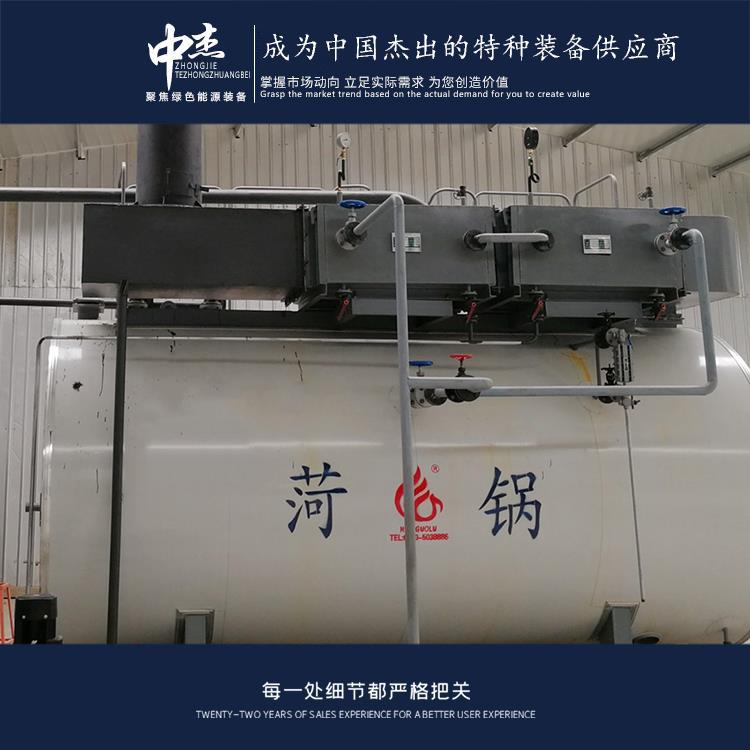
Energy-saving of steam boilers is crucial, mainly due to the following reasons: Energy Costs: Steam boilers typically use fuels (such as coal, gas, oil, etc.) to produce steam, with energy costs accounting for a significant portion of the boiler's operating expenses. Energy-saving measures can reduce energy consumption and lower costs. Environmental Protection: The combustion process of steam boilers generates exhaust gases and dust, causing environmental pollution. Energy-saving can decrease fuel usage, lower emissions, and have a positive impact on environmental protection. Sustainable Development: Energy-saving is a key aspect of sustainable development. By reducing energy consumption and extending the boiler's lifespan, resources can be conserved and waste minimized, achieving sustainable development. Measures for energy-saving include: Improving Boiler Thermal Efficiency: Enhancing the boiler's combustion system, optimizing combustion parameters, and improving heat exchange efficiency can increase boiler thermal efficiency and reduce energy waste. Heat Recovery and Utilization: Utilizing heat recovery systems, the excess heat in the flue gas emitted by the boiler can be recovered and used for heating water or other processes requiring heat, thereby improving energy utilization efficiency. Application of Energy-saving Equipment: Implementing energy-saving equipment such as variable-frequency drives, energy-saving burners, and heat pumps can reduce energy consumption and improve energy efficiency.
Zhongjie Special Equipment upholds the grand vision of "realizing employees' dreams, creating customer value, and striving for the prosperity and strength of our motherland," and is dedicated to the development of the green energy equipment industry. We contribute to society with products and services that offer high value for money!
WeChat Official Account

Scan to follow Official Account



















