


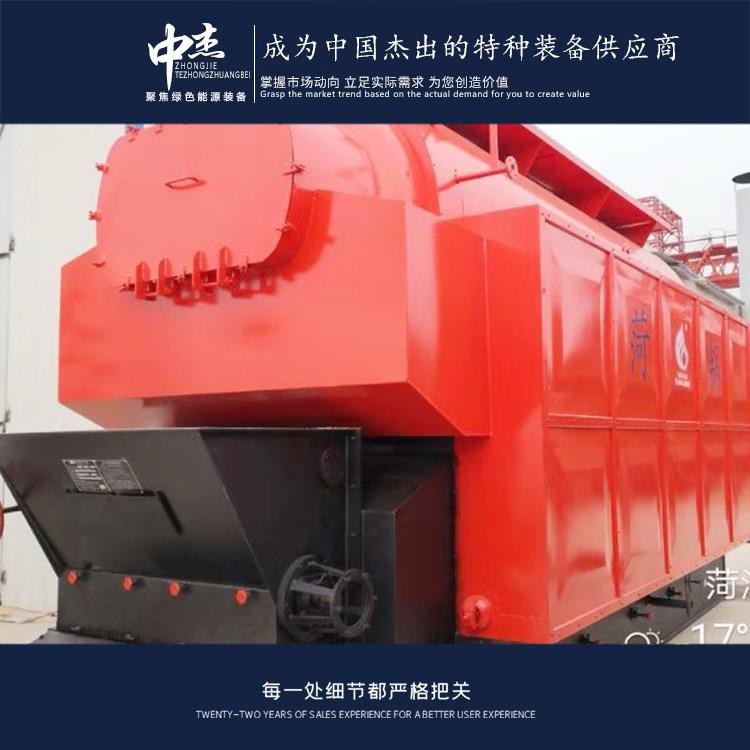

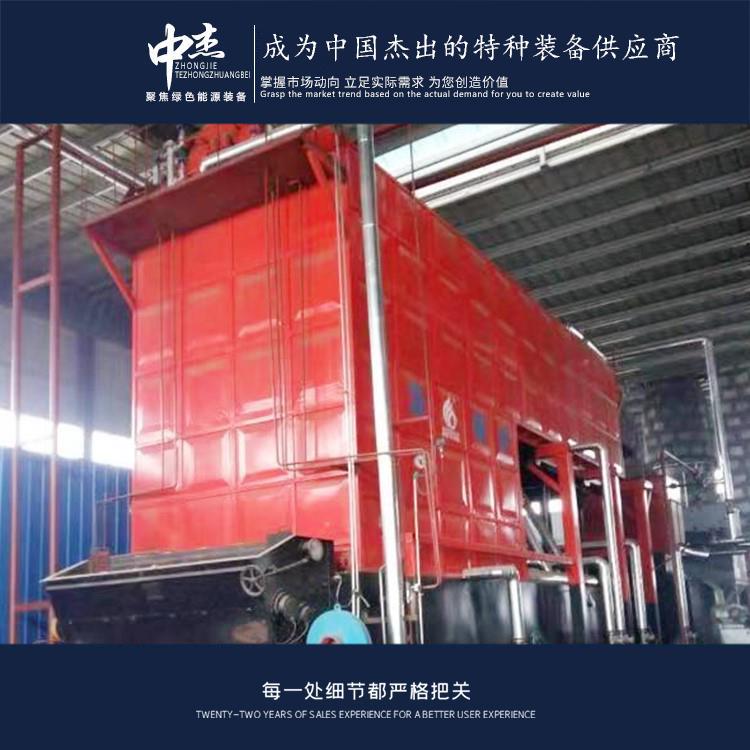
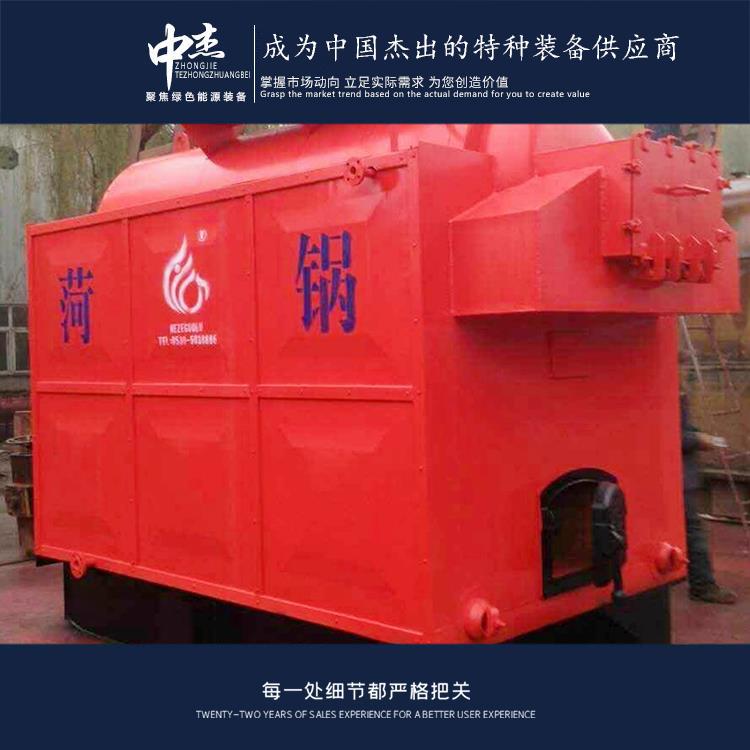


















Shandong Zhongjie Special Equipment's main products include: fuel (gas) boilers, organic heat carrier boilers, biomass boilers, waste heat recovery boilers, and other boiler products; vacuum insulation deep-freeze pressure vessels such as LNG tanks, oxygen/nitrogen/argon tanks, and CO2 tanks; pressure vessel products such as denitrification engineering equipment, heat storage and energy storage equipment, and complete chemical equipment sets; central air conditioning and HVAC equipment like ground (water) source heat pumps, air source units, water-cooled screw units, and air-cooled modular units. Planned products include large-scale energy centers, LNG transport vehicles, LNG tank containers, and other green energy equipment.
Chain biomass boiler is a common type of biomass boiler, with its working principle and process as follows:
Fuel Supply: Biomass fuels (such as wood chips, straw, etc.) are conveyed to the combustion chamber of the chain boiler through the feeding system.
Combustion Process: The fuel is ignited in the combustion chamber while the chain boiler's chain system starts operating. The fuel is gradually pushed forward by the chain movement, simultaneously burning within the chamber. During combustion, the fuel is thoroughly mixed with air, and the heat energy produced is transferred to the boiler's water or other working medium.
Flue Gas Emission: Flue gases produced from combustion are channeled through the flue system of the combustion chamber and discharged into the chimney. During the flue gas emission process, treatment can be conducted using flue gas purification equipment to reduce the emitted particulate matter and gas pollutants.
Heat Recovery: The heat generated from combustion is transferred to water or other working substances through a boiler's heat exchanger, causing them to heat up. After heat recovery, the hot water or steam can be used for heating, hot water supply, or other industrial processes.
Control System: Chain biomass chain boiler typically comes equipped with an automatic control system for monitoring and adjusting parameters such as temperature, pressure, and fuel supply during the combustion process. The control system can automatically adjust according to actual needs to ensure the safe operation and performance of the boiler.
Overall, the biomass chain grate boiler gradually feeds biomass fuel into the combustion chamber through a chain system for burning. The heat energy is transferred to water or other working substances via a heat exchanger, achieving heat recovery and utilization. This boiler boasts high combustion efficiency and strong fuel adaptability, and is widely used in heating, industrial heating, and other fields.
The phenomenon of damaged economizer tubes in biomass boilers may include the following situations:
Pipe Corrosion: Flue gas produced by biomass combustion contains certain acidic substances, which may lead to corrosion of the economizer pipes. Long-term corrosion can result in the thinning of pipe wall thickness, the formation of holes and cracks.
Pipe Blockage: During biomass combustion, flue gas may contain some ash and particulate matter, which may settle and accumulate in the economizer pipe, leading to blockage. Blockage can affect the flow of flue gas and reduce heat exchange efficiency.
Pipe Fatigue: The varying operating temperatures and pressures in biomass boilers can lead to long-term thermal expansion and contraction, resulting in fatigue damage to the economizer pipes, such as cracks and deformations.
For the aforementioned issues, the following solutions can be adopted:
Enhanced Corrosion Protection: Apply anti-corrosion coatings internally on economizer pipes or manufacture them from corrosion-resistant materials to minimize corrosion occurrence.
Regular cleaning and maintenance: Regularly clean and maintain the economizer to prevent the accumulation of ash and particulate matter within the pipes, which can lead to blockages. Methods such as mechanical cleaning and water flushing can be employed.
Enhanced Monitoring and Inspection: Regularly inspect economizers, including thickness measurements of pipes and crack detection, to promptly identify issues and implement repair measures.
Optimize Operating Parameters: Reasonably adjust the operating parameters of the biomass boiler, such as combustion temperature and air volume, to minimize damage to the economizer.
Dust removal technology for coal-fired boilers is designed to reduce particulate emissions during the combustion process, protecting the environment and improving air quality. Here are several common dust removal techniques for coal-fired boilers:
Mechanical Dust Collectors: Mechanical dust collectors are among the common dust removal equipment, separating particulate matter from flue gas through physical principles. Common types include gravity dust collectors, inertial dust collectors, bag dust collectors, etc. The working principle of mechanical dust collectors is to utilize the inertia, gravity, or filtering effect of particles to separate them from the flue gas.
Electrostatic Precipitator: An electrostatic precipitator charges particulates in flue gas using an electric field, then collects the charged particles using the force of the electric field. There are two types of electrostatic precipitators: dry and wet. Dry electrostatic precipitators are suitable for high-temperature flue gas, while wet electrostatic precipitators are suitable for flue gas with high humidity.
Wet-type Dust Collector: Wet-type dust collectors utilize water spray or other liquids to humidify particulates in flue gas, followed by separating the humidified particles from the flue gas through gravity or inertial forces. Suitable for the treatment of flue gas with high humidity and sticky particulates.
Electrostatic Precipitator: An electrostatic precipitator utilizes the force of an electric field to charge particles in flue gas, then collects the charged particles by the action of the electric field. Suitable for the treatment of high-temperature flue gas and fine particles.
Dust and Desulfurization Integrated Technology: This integrated technology combines the dust removal and desulfurization processes, achieving integrated treatment by sharing equipment and jointly processing flue gas. It can reduce the footprint of equipment, lower investment and operational costs.
Above are common coal-fired boiler dust removal technologies, with different dust removal techniques suitable for various flue gas and particulate matter characteristics. In practical application, an appropriate combination of dust removal technologies can be selected based on specific circumstances to achieve the goal of reducing particulate matter emissions.
Biomass boilers typically include the following main components:
Combustion chamber: The area used for burning biomass fuel, providing the space and oxygen required for combustion.
Grate: A metal grid located at the bottom of the combustion chamber, used to support fuel and facilitate the flow of gases and slag during the combustion process.
Combustion System: Includes fuel supply system, air supply system, and ignition system, designed for controlling the supply of fuel and air to achieve the combustion process.
Flue Gas Treatment System: Includes flue gas purification equipment such as dust collectors, desulfurization, and denitrification units, designed to purify flue gases produced by combustion and reduce environmental pollution.
Boiler piping system: Includes water pipes, steam pipes, and flue gas pipes, used for transferring heat and flue gas.
Heat Exchanger: Used to transfer the thermal energy produced by combustion to the working medium, such as water or steam, for energy conversion.
Control System: Includes automatic control equipment, sensors, and instruments for monitoring and controlling the boiler's operating status, ensuring safety and operation.
Equipment: Includes water supply systems, waste discharge systems, ash and slag handling systems, and fuel storage systems, etc., for providing the necessary functions for boiler operation.
These units collectively form the basic structure of biomass boilers, enabling the combustion and energy conversion process of biomass fuel. The specific units and configurations may vary depending on the type, scale, and application requirements of the boiler.
Shandong Zhongjie Special Equipment, welcome customers to our factory for business discussions.
WeChat Official Account

Scan to follow Official Account



















