


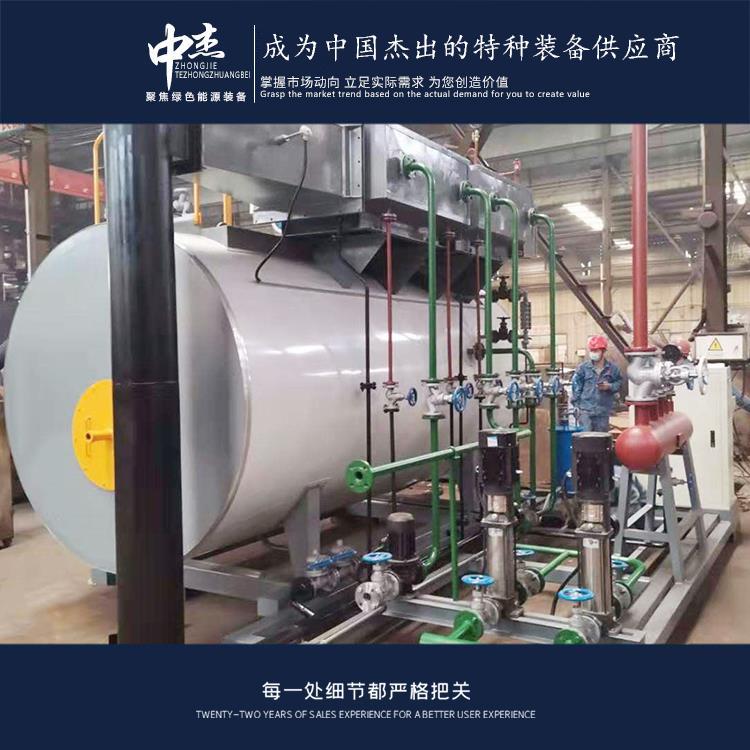

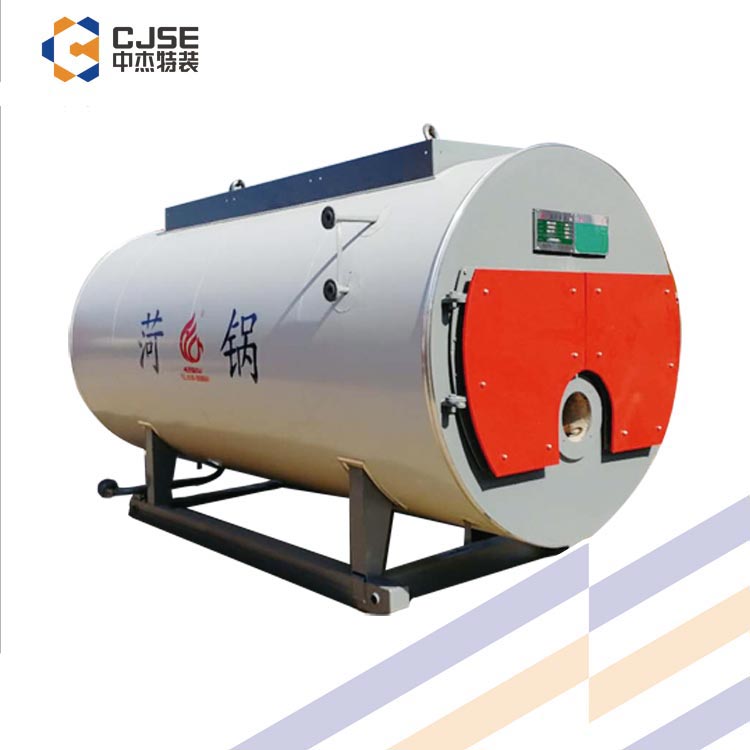
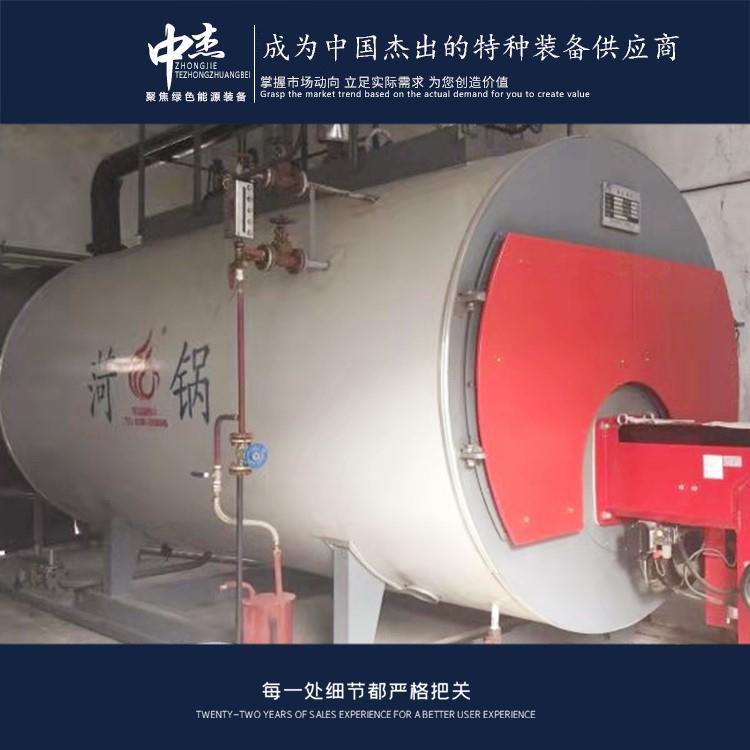


















Shandong Zhongjie Special Equipment (formerly Heze Boiler Factory Co., Ltd.) holds an A-grade boiler manufacturing license, an A2-grade pressure vessel manufacturing license, an A2-grade pressure vessel design license, a B-grade boiler installation license, and GB2/GB3-grade pressure pipeline installation licenses, as well as a mechanical and electrical equipment installation contracting license. It is a member of the China Boiler and Water Treatment Association, the China Chemical Equipment Association, and the council unit of the Shandong Equipment Manufacturing Association. The company has also passed certifications for the ISO9001 Quality Management System, ISO14001 Environmental Management System, OHSAS18001 Occupational Health and Safety Management System, and the American ASME/U2 certification.
The flow rate standard for heat transfer oil in the oil pipes of a thermal oil furnace typically varies based on specific application and equipment requirements, without a unified fixed value. However, generally speaking, the flow rate of heat transfer oil in the pipes should be maintained within a reasonable range to ensure the normal operation of the equipment and the effectiveness of heat transfer. Excessive flow rate of heat transfer oil may lead to issues such as increased system pressure loss and pump power consumption, increased friction loss in the pipes resulting in energy loss, and increased system noise and vibration. Low flow rate of heat transfer oil may cause problems such as insufficient heat transfer, affecting the thermal efficiency of the equipment, prolonged stay of heat transfer oil in the pipes leading to oxidation and thermal decomposition, affecting the service life of the heat transfer oil, and the formation of carbon deposits in the pipes, increasing pipe resistance and affecting fluid flow. Therefore, when designing and operating a thermal oil furnace system, it is necessary to consider specific equipment parameters, the properties of the heat transfer oil, and pipeline layout, among other factors, to determine the appropriate flow rate of heat transfer oil. Typically, the flow rate should be between 0.5-2.0 m/s, but the specific value needs to be adjusted and optimized based on the actual situation. In practice, the flow rate of heat transfer oil can be controlled by monitoring and adjusting the pump flow rate and pipe resistance to meet the thermal energy requirements and operational needs of the equipment.
Hot water boilers and steam boilers are two common types of boilers, with some differences in working principles, application scenarios, and operating parameters:
Working Principle: Hot water boilers provide heat by heating water and then circulating it through the heating system. Steam boilers produce steam by heating water and then distribute it to the heating system.
Operating Temperature and Pressure: The operating temperature of hot water boilers is typically between 60℃ and 100℃, with lower pressure. Steam boilers usually operate at temperatures between 100℃ and 200℃, with higher pressures, typically between 0.7MPa and 2.5MPa.
Heating Methods: Hot water boilers use circulating pumps to distribute hot water through the heating system, primarily through conduction and convection. Steam boilers deliver steam through steam pipes to the heating system, primarily through steam convection.
Application Scenarios: Hot water boilers are suitable for heating, bathing, swimming pool heating, and other situations where hot water is needed in industrial processes. Steam boilers are used in industrial processes requiring steam, such as power plants, chemical factories, and textile mills.
Equipment Structure: Hot water boilers are generally simpler and smaller in structure, with less floor space. Steam boilers are typically more complex, larger in structure, and require more floor space.
It should be noted that hot water and steam boilers may overlap in certain special application scenarios, such as industrial processes that require both hot water and steam. Therefore, when selecting the type of boiler, it is necessary to consider the specific requirements and application scenarios comprehensively.
Before lighting the boiler, the preparation steps for the steam boiler operation include the following:
- Clean the boiler: First, clean the internal and external dirt and impurities from the boiler. Remove ash, sediment, and dirt to ensure the efficiency of combustion and heat exchange.
- Check fuel supply: Inspect the fuel supply system to ensure a smooth supply. Check the fuel storage tank,输送管道 and filter, clearing blockages and replacing damaged parts.
- Inspect the burner: Check the operating status and cleanliness of the burner. Clean the burner nozzle and flame sensor to ensure normal operation.
- Check the gas system: For gas boilers, inspect the gas supply system. Check the gas pipeline, valves, and pressure regulators to ensure safe and stable gas supply.
- Check water level and pressure: Inspect the boiler's water level and pressure. Ensure the water level is within the normal range, pressure is stable, and meets requirements. Add water and adjust pressure if necessary.
- Check safety devices: Inspect the boiler's safety devices such as safety valves, pressure switches, and water level controllers. Ensure these safety devices operate normally to ensure the safe operation of the boiler.
- Prepare ignition tools: Prepare the tools and equipment needed for ignition, such as an igniter rod, lighter, etc. Ensure these tools function properly and are safe.
- While performing the above preparation tasks, follow relevant operational procedures and safety requirements to ensure the safety and effectiveness of the work. If unsure about how to carry out the preparation tasks, consult an expert or the boiler manufacturer for advice.
The management system for gas heat-conducting oil furnace equipment mainly includes the following aspects:
1. Equipment Safety Management System: Establish and improve the safety management system for gas heat-conducting oil furnace equipment, clarify responsibilities and authorities, and ensure the safe operation of the equipment. This includes safety operation procedures, emergency response plans, equipment inspection and maintenance schedules, etc.
2. Equipment Maintenance Management System: Establish a maintenance management system for equipment, clarifying maintenance responsibilities and plans. This includes regular equipment inspections, maintenance, and repairs to ensure the normal and safe operation of the equipment.
3. Equipment Operation Management System: Establish an equipment operation management system, clarifying operation procedures and requirements. This includes start-up, shutdown, adjustment, and monitoring processes to ensure the safety and operation of the equipment.
4. Equipment Accident Management System: Establish an equipment accident management system, clarifying reporting, investigation, and handling procedures for accidents. This includes reporting requirements for equipment accidents, responsibility追究, analysis of causes, and improvement measures to reduce accidents and minimize losses.
5. Equipment Training and Assessment System: Establish a training and assessment system for equipment to ensure operators possess the necessary skills and knowledge. This includes operation training, safety training, and technical training, along with regular assessments and evaluations of operators.
6. Equipment Record and Management System: Establish a record and management system for equipment to record operational conditions, maintenance records, accident records, etc. This includes equipment record management, filling and preserving maintenance records, and organizing and analyzing accident records for equipment management and issue tracing.
The above are some basic contents of the management system for gas heat-conducting oil furnace equipment incidents. Specific management systems need to be formulated and improved based on actual conditions. At the same time, relevant laws and regulations and standards must be adhered to to ensure the safety and environmental performance of the equipment.
Shandong Zhongjie Special Equipment, welcome customers to visit our factory for business discussions.
WeChat Official Account

Scan to follow Official Account



















