


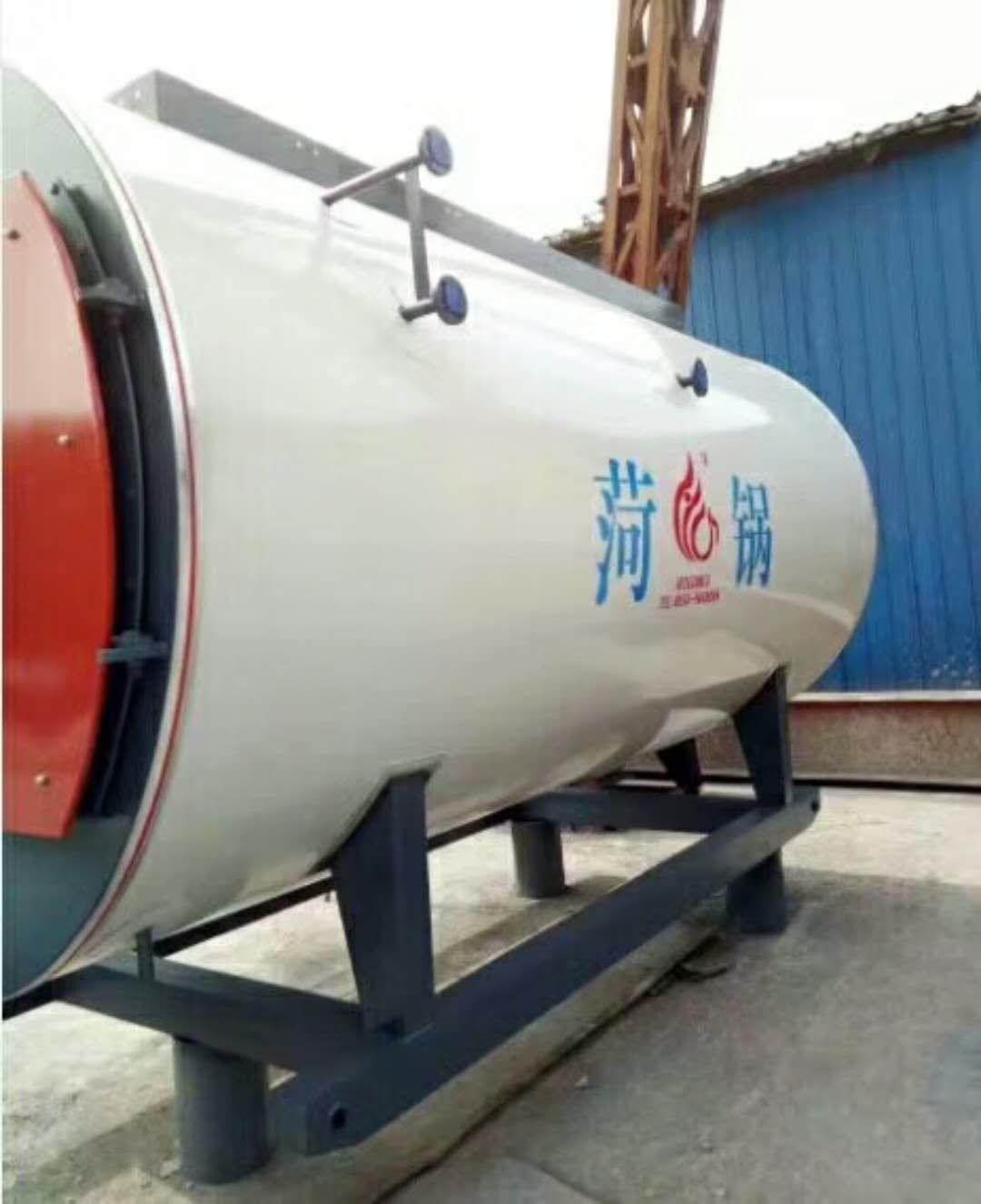

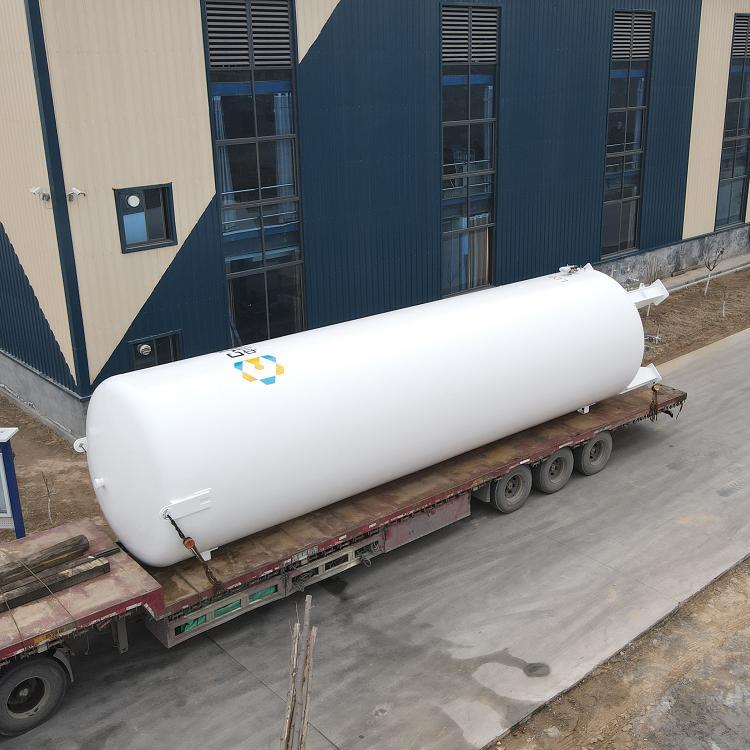


















Shandong Zhongjie Special Equipment (formerly Heze Boiler Factory Co., Ltd.) holds an A-grade boiler manufacturing license, an A2-grade pressure vessel manufacturing license, an A2-grade pressure vessel design license, a B-grade boiler installation license, and GB2/Class, GC2/Class pressure pipeline installation licenses, as well as a qualification for electromechanical equipment installation contracting. It is a member of the China Boiler and Water Treatment Association, the China Chemical Equipment Association, and a council member of the Shandong Equipment Manufacturing Association. The company has also passed certifications for ISO9001 Quality Management System, ISO14001 Environmental Management System, OHSAS18001 Occupational Health and Safety Management System, and the U.S. ASME/U2 certification.
The temperature difference between the interior and exterior of a low-temperature liquid storage tank depends on multiple factors, including the tank's design, insulation performance, the temperature of the liquid, and the ambient temperature. Generally, the temperature inside the low-temperature liquid storage tank is much lower than that of the external environment.
Low-temperature liquid storage tanks are commonly used for storing liquefied nitrogen, oxygen, argon, and other low-temperature liquids. These liquids have very low boiling points, usually below -100 degrees Celsius. To maintain the low temperature of the liquids, the storage tank needs to have good insulation properties to minimize heat transfer and evaporation loss.
Low-temperature liquid storage tanks typically offer a smaller temperature variance. Generally, the internal temperature of the tank can be maintained near the boiling point of the liquid, usually several tens of degrees lower than the ambient temperature. The specific temperature variance depends on the tank's design, insulation properties, and the characteristics of the liquid.
Note that the temperature differences in low-temperature liquid storage tanks may change over time. As time passes, the insulation material's performance may be affected by wear or aging, leading to increased temperature differences. Therefore, regular inspection and maintenance of the tank's insulation are crucial to ensure its effective and stable insulating performance.
Low-temperature industrial gas filling stations are facilities used to fill liquid low-temperature industrial gases (such as liquid oxygen, liquid nitrogen, liquid argon, etc.) into gas storage tanks. Here are some basic facts about low-temperature industrial gas filling stations:
Tank Type: Low-temperature industrial gas tanks typically use double-walled vacuum insulated tanks, with the inner wall for storing liquid gas and the outer wall for insulation to reduce heat transfer and evaporation losses of the liquid gas.
Filling Equipment: Low-temperature industrial gas storage tank filling stations include liquid-gas filling pumps, filling pipelines, flowmeters, pressure sensors, and other equipment. The liquid-gas filling pumps are used to extract liquid gas from storage tanks or gas storage tanks and fill it into the target storage tank.
Filling Process: The operational procedure at the filling station typically includes the following steps: Preparations (checking equipment, preparing filling medium), Equipment Connection (connecting filling pumps, pipes, etc.), Equipment Activation (starting the filling pump, adjusting flow and pressure), Filling Operation (filling liquid gas into the target storage tank), Monitoring and Control (monitoring parameters such as pressure and flow during the filling process to ensure safety and quality), and Completion of Operation (shutting down equipment, cleaning the work area).
Safety Measures: Strict adherence to relevant safety operating procedures and standards is required during the operation of low-temperature industrial gas filling stations. Operators must undergo training to understand the properties and safety considerations of liquid gases. Additionally, filling stations should be equipped with safety equipment such as pressure sensors and safety valves to ensure safety during the filling process.
Quality Control: During the filling process, quality control at the filling station is essential, including monitoring the flow, pressure, and temperature of the filling medium to ensure accuracy and quality of the filling.
Note that the operation of low-temperature industrial gas storage tank filling stations must be conducted by trained personnel and strictly adhere to the relevant operational procedures and safety measures. Additionally, the design and manufacture of the filling station should comply with applicable standards and regulations to ensure the safety and reliability of the equipment.
The standard specifications for liquid oxygen storage tanks may vary by region. Here are examples of some common standards:
U.S. Standards: The American National Standards Institute (ANSI) and the American Petroleum Institute (API) have issued a series of standards for liquid oxygen storage tanks, such as ANSI/API Standard 2510 "Design and Construction of Liquid Oxygen Storage Tanks" and ANSI/API Standard 2510A "Supplement to the Design and Construction of Liquid Oxygen Storage Tanks."
European Standards: The European Committee for Standardization (CEN) has issued a series of standards for liquid oxygen storage tanks, including EN 13458 "Liquid Oxygen Storage Tanks. Design and Construction" and EN 14015 "Vertical Welded Steel Fixed Storage Tanks. Design and Construction."
Chinese Standards: The China National Committee for Certification and Accreditation (SAC) has issued a series of standards for liquid oxygen storage tanks, such as GB/T 18442 "Design Specification for Liquid Oxygen Storage Tanks" and GB/T 18443 "Construction and Acceptance Specification for Liquid Oxygen Storage Tanks."
These standards typically cover requirements for design, manufacturing, installation, operation, maintenance, and inspection of liquid oxygen storage tanks. They encompass provisions for the tank's structure, materials, safety valves, insulation, leak control, fire protection measures, and safety distances to ensure the safety and reliability of the tanks.
When designing, manufacturing, and using liquid oxygen storage tanks, it is essential to adhere to applicable standards and regulations and collaborate with local regulatory authorities and personnel to ensure compliance with relevant safety requirements and laws.
Nitrogen filling for liquid nitrogen storage tanks involves injecting nitrogen gas into the tank to increase the internal nitrogen concentration and pressure, thereby meeting certain safety and operational requirements. Here are some precautions to consider when nitrogen filling liquid nitrogen storage tanks:
Safe Operation: Prior to conducting nitrogen charging on a liquid nitrogen tank, it is mandatory that operators possess relevant safety knowledge and skills. Operators should wear appropriate personal protective equipment, such as safety goggles, gloves, and protective clothing.
Nitrogen Quality: Utilize high-purity nitrogen for inerting operations to ensure the quality and purity of the nitrogen. Low-purity nitrogen may contain impurities or oxygen, which could adversely affect the liquid nitrogen within the storage tank.
Nitrogen Inerting Speed Control: During the nitrogen inerting process, the speed of nitrogen inerting should be controlled to avoid being too fast or too slow. Too fast of a nitrogen inerting speed can lead to excessive internal pressure within the tank, while too slow of a speed can result in extended inerting time.
Pressure Monitoring: During the nitrogen charging process, the internal pressure of the tank should be regularly monitored. Ensure the internal pressure of the tank remains within the safe range and adjust as necessary.
Temperature Control: During the nitrogen charging process, it is important to control the temperature of the storage tank. The low temperature of liquid nitrogen can lead to condensation and frost on the tank and pipelines. Appropriate measures, such as heating or insulation, should be taken to prevent condensation and frost.
Post-nitrogen flushing treatment: After the nitrogen flushing operation is completed, the flushing unit should be promptly turned off, and the tank should be inspected and cleaned. Ensure that there is no residual nitrogen or impurities inside the tank.
Note: Nitrogen charging for liquid nitrogen tanks must be strictly adhered to the relevant safety standards.
Our company attaches great importance to technological innovation and R&D design. We have 1 municipal-level enterprise technology center in Heze City, with testing facilities for non-destructive testing, physical and chemical testing, welding testing, hydrostatic testing, etc. We are equipped with over 600 types of instruments and equipment, including CNC machine tools, X-ray flaw detectors, digital ultrasonic flaw detectors, mechanical property testing machines, chemical analyzers, spectrometers, tensile testing machines, plasma welding machines, and more. The key products and technologies we have developed, such as temperature and pressure vessel welding, biomass boiler emission reduction, and waste heat utilization, have successively been shortlisted for multiple Shandong Provincial Department of Industry and Information Technology science and technology innovation projects, key projects in Shandong Province, and Heze City innovation and excellence projects, etc. We have cumulatively obtained 27 authorized utility model patents, 16 authorized invention patents, participated in drafting 2 standards, 2 industry standards, and registered 15 trademarks. The technical team of our company, in collaboration with Professor Yajiang Li of Shandong University, has developed deep cryogenic container processing technology using the international plasma arc + filler wire tungsten inert gas arc welding (PAW-GTAW) technology. After the provincial-level scientific and technological achievement appraisal, the technology level has reached the international level in the field of deep cryogenic container manufacturing. Choose Zhongjie Special Equipment, and let's create brilliance together!
WeChat Official Account

Scan to follow Official Account



















