


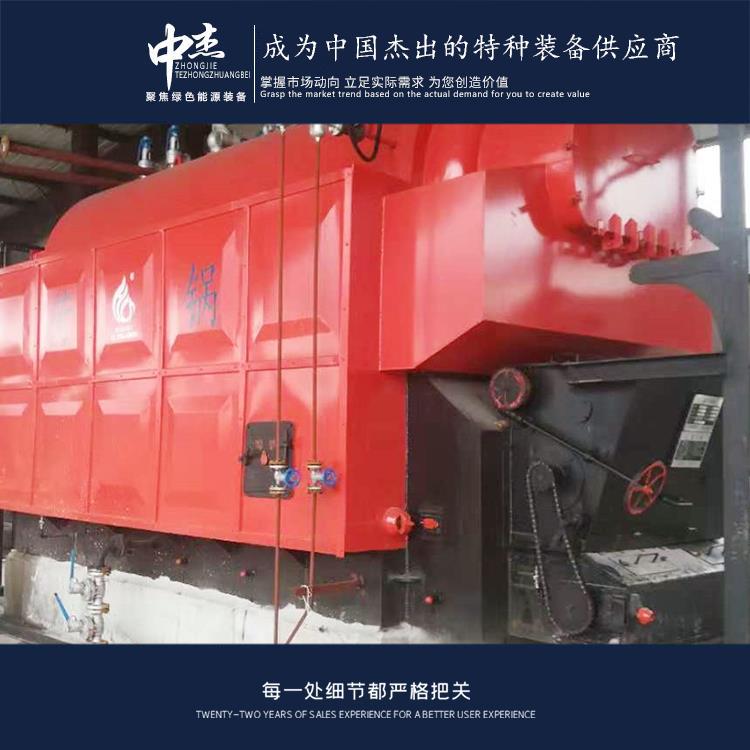

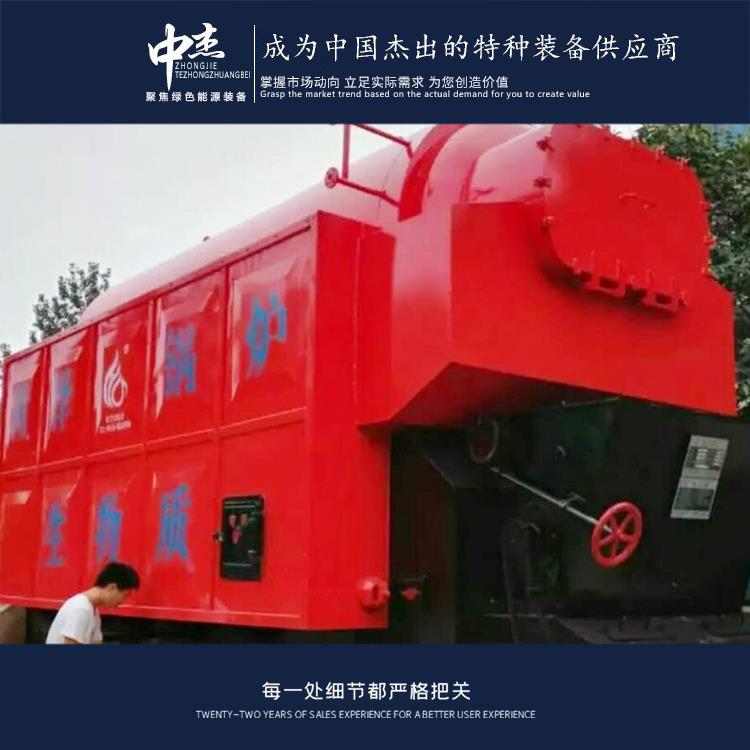


















Shandong Zhongjie Special Equipment (formerly Heze Boiler Factory Co., Ltd.) holds an A-grade boiler manufacturing license, A2-grade pressure vessel manufacturing license, A2-grade pressure vessel design license, B-grade boiler installation license, GB2 and GC2 grade pressure pipeline installation licenses, and equipment and machinery installation contracting qualifications. It is a member of the China Boiler and Water Treatment Association, the China Chemical Equipment Association, and the council unit of the Shandong Equipment Manufacturing Association, and has passed certifications for ISO9001 Quality Management System, ISO14001 Environmental Management System, OHSAS18001 Occupational Health and Safety Management System, and the U.S. ASME/U2 certification.
Developing biomass boiler heating is an effective measure to combat air pollution. Here are some relevant suggestions:
Replace high-polluting energy sources: Swap traditional coal boilers with biomass boilers to reduce emissions of air pollutants from coal combustion. The combustion of biomass fuel produces fewer pollutants, resulting in less pollution to the atmosphere.
Enhance combustion efficiency: By optimizing the combustion process of biomass boilers, we enhance combustion efficiency, reduce fuel waste, and minimize pollutant emissions. Adjust combustion parameters, such as combustion temperature and duration, to achieve a more complete combustion.
Regulate Pollutant Emissions: Utilize pollutant control technologies such as flue gas desulfurization, flue gas denitration, and particulate matter capture to reduce emissions. Install flue gas purification equipment to effectively remove pollutants like nitrogen oxides and particulates generated during the combustion process.
Enhanced Monitoring and Management: Establish and improve a monitoring system to oversee the operational status and pollutant emissions of biomass boilers. Strengthen the management of biomass boilers to ensure regular maintenance and equipment checks.
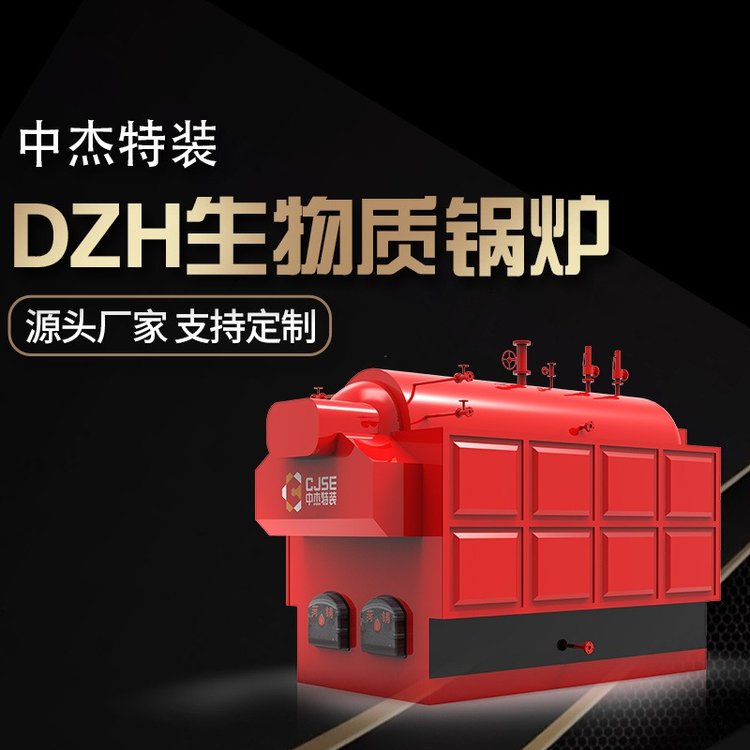
The DZH steam boiler is a manually-fired solid fuel boiler featuring the following technical characteristics:
Burning Method: The DZH steam boiler utilizes a manual burning method, where the operator manually feeds fuel and adjusts the combustion process. This method is relatively simple and flexible, suitable for small to medium-sized applications.
Multiple Fuel Adaptability: The DZH steam boiler has strong fuel adaptability, capable of burning solid fuels such as wood chips, straw, etc. This feature allows the DZH steam boiler to be widely used in various regions and under different fuel resource conditions.
Furnace Structure: The DZH steam boiler features a double-layer furnace structure, with a partition between the combustion chambers. This design enhances the temperature and combustion efficiency within the chambers, thereby improving thermal efficiency.
Flue Gas Channel: The DZH steam boiler features a spiral flue tube design for its flue gas channel, which increases the contact area between flue gas and water, enhancing heat exchange efficiency. Additionally, a flue gas reversal chamber is incorporated within the channel, allowing the flue gas to flow repeatedly within the furnace, thereby increasing its residence time and improving combustion efficiency.
Safety Protection: The DZH steam boiler is equipped with various safety devices such as pressure controllers, water level controllers, and overheat protectors, ensuring safe operation of the boiler.
Compact Structure: The DZH steam boiler features a compact design with minimal floor space, making it ideal for installation in limited areas.
Overall, the DZH steam boiler boasts strong fuel adaptability, flexible operation, and high thermal efficiency, making it suitable for small to medium-sized solid fuel steam demand scenarios.
The utilization of waste heat from biomass boilers is a crucial method to enhance energy efficiency and reduce energy consumption and emissions. Below are some common applications and analyses of waste heat utilization technologies in biomass boilers:
Eco-friendly Air Preheater: The flue gas produced by biomass boiler combustion contains a large amount of heat energy. The eco-friendly air preheater can recover and utilize the excess heat in the flue gas, preheat the air entering the boiler, and improve combustion efficiency. Through heat recovery, fuel consumption can be reduced and flue gas emissions can be minimized.
Economizer: An economizer is a device used to recover excess heat from flue gases by transferring the heat to the boiler feed water, thus increasing the feed water temperature and reducing fuel consumption. The application of an economizer can effectively lower the flue gas temperature of the boiler and improve its thermal efficiency.
Waste Heat Boiler from Biomass Boiler Flue Gas: This is a device that utilizes the waste heat from the flue gas of biomass boilers to generate steam or hot water. By converting the waste heat in the flue gas into usable thermal energy, it achieves the reuse of energy and improves the energy utilization efficiency.
Direct烟气Utilization: The excess heat from biomass boiler flue gas can be directly used for heating or drying processes, reducing the demand for other energy sources. For instance, the flue gas can be transported through chimneys or pipes to the location requiring heating, utilizing the heat energy of the flue gas directly.
Flue Gas Waste Heat Recovery System: The flue gas waste heat recovery system recovers and utilizes the excess heat from biomass boiler flue gas to supply other equipment or systems, such as air conditioning, heating, and hot water, etc. This allows for comprehensive energy utilization and improves overall energy efficiency.
To prevent incidents of secondary combustion at the tail end of biomass boilers, the following operational measures can be taken:
Reasonably adjust combustion parameters: Ensure the stability and completeness of the combustion process, avoiding fuel accumulation and recombustion in the tail section. Reasonably control combustion temperature, air flow, and combustion time to maintain a smooth and thorough combustion process.
Enhance combustion chamber mixing and air flow distribution: Optimize the combustion chamber structure and combustion system design to ensure thorough fuel and air mixing, preventing fuel accumulation and secondary combustion at the rear. Reasonably design the air flow distribution within the combustion chamber to ensure uniform fuel combustion.
Regularly clean the furnace chamber and flue: Regularly remove ash and soot buildup from the furnace chamber to maintain cleanliness. Clean the flue and waste heat recovery equipment to prevent particle accumulation and ash in the flue gases, reducing the risk of re-burning.
Install Flue Gas Recirculation Unit: Install a flue gas recirculation unit at the rear of the boiler to reignite the exhaust flue gas, enhancing combustion efficiency, and reducing the likelihood of secondary combustion at the rear.
Enhance operational monitoring and maintenance: Regularly monitor and maintain biomass boilers to promptly identify and address any anomalies. Monitor combustion parameters, flue gas emissions, and temperature to ensure the boiler operates smoothly.
Ensure safety training and operational procedures: Conduct safety training for operators, enhancing their understanding of biomass boiler operation and safety.
Chongjie Special Equipment upholds the great vision of "realizing the dreams of our employees, creating value for our customers, and striving for the prosperity and strength of our motherland," focusing on the development of the green energy equipment industry and contributing to society with high-quality products and services at competitive prices!
WeChat Official Account

Scan to follow Official Account



















