


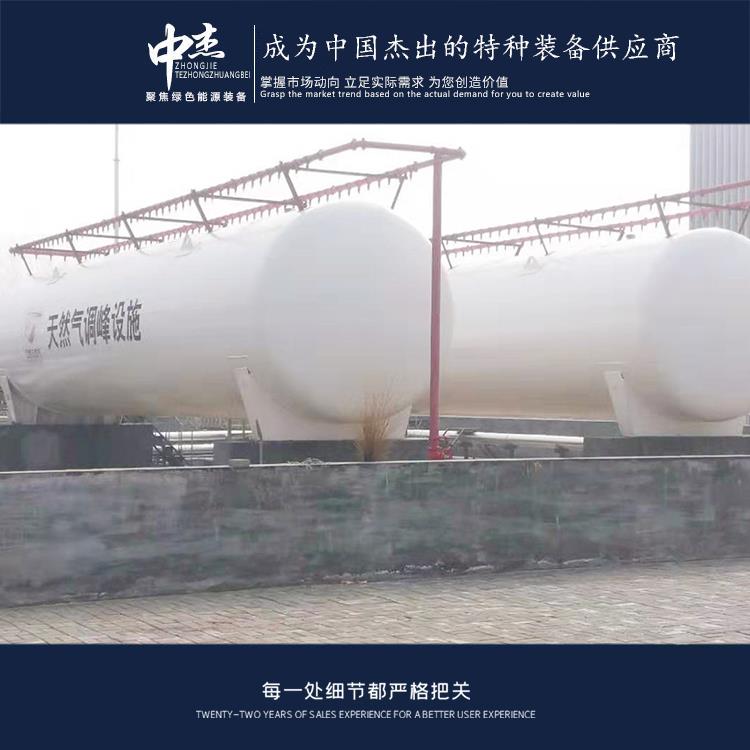

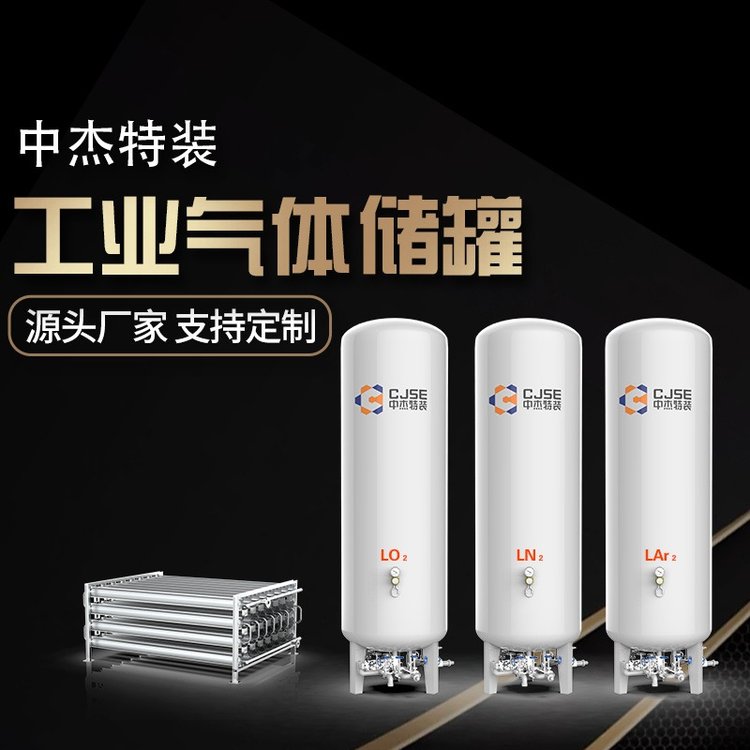
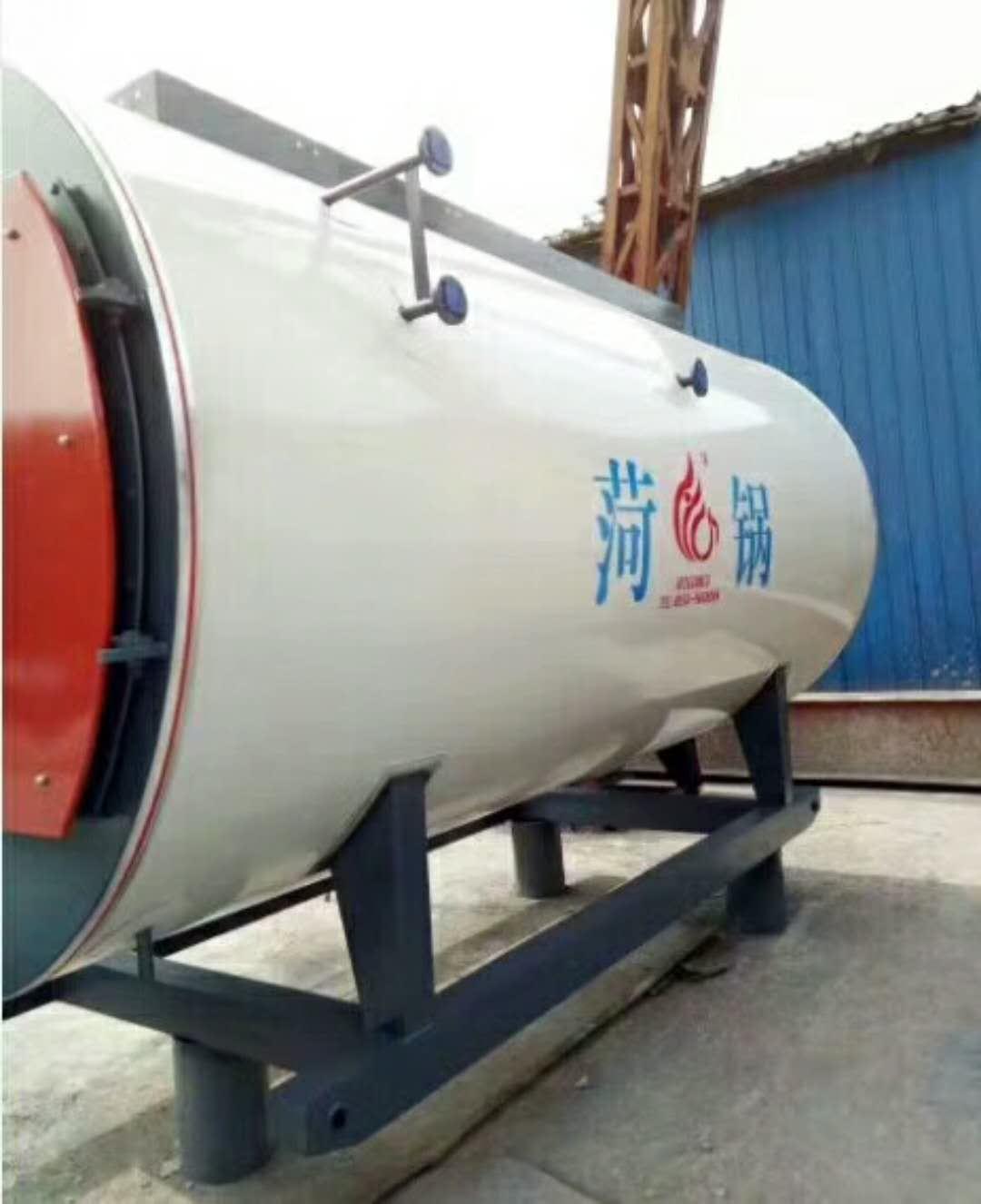


















Shandong Zhongjie Special Equipment (formerly Heze Boiler Factory Co., Ltd.) holds an A-grade boiler manufacturing license, an A2-grade pressure vessel manufacturing license, an A2-grade pressure vessel design license, B-grade boiler installation, and GB2/Class, GC2/Class pressure pipeline installation licenses, as well as a mechanical and electrical equipment installation contracting qualification. It is a member of the China Boiler and Water Treatment Association, the China Chemical Equipment Association, and the理事 unit of the Shandong Equipment Manufacturing Association. The company has also passed the ISO9001 Quality Management System, ISO14001 Environmental Management System, OHSAS18001 Occupational Health and Safety Management System certifications, and the American ASME/U2 certification.
Standard specifications for liquid oxygen storage tanks may vary by region. Here are examples of some common standards:
- U.S. Standards: The American National Standards Institute (ANSI) and the American Petroleum Institute (API) have issued a series of standards for liquid oxygen storage tanks, such as ANSI/API Standard 2510 "Design and Construction of Liquid Oxygen Storage Tanks" and ANSI/API Standard 2510A "Supplementary to the Design and Construction of Liquid Oxygen Storage Tanks."
- European Standards: The European Committee for Standardization (CEN) has issued a series of standards for liquid oxygen storage tanks, including EN 13458 "Liquid Oxygen Storage Tanks. Design and Construction" and EN 14015 "Vertical Welded Steel Fixed Storage Tanks. Design and Construction."
- Chinese Standards: The Standardization Administration of the People's Republic of China (SAC) has issued a series of standards for liquid oxygen storage tanks, such as GB/T 18442 "Design Specifications for Liquid Oxygen Storage Tanks" and GB/T 18443 "Construction and Acceptance Specifications for Liquid Oxygen Storage Tanks."
These standards typically cover requirements for design, manufacturing, installation, operation, maintenance, and inspection of liquid oxygen storage tanks. They encompass provisions for the tank's structure, materials, safety valves, insulation, leak control, fire protection measures, and safety distances to ensure the safety and reliability of the storage tanks.
When designing, manufacturing, and using liquid oxygen storage tanks, applicable standards and specifications should be followed, and cooperation with local regulatory authorities and personnel should be sought to ensure compliance with relevant safety requirements and regulations.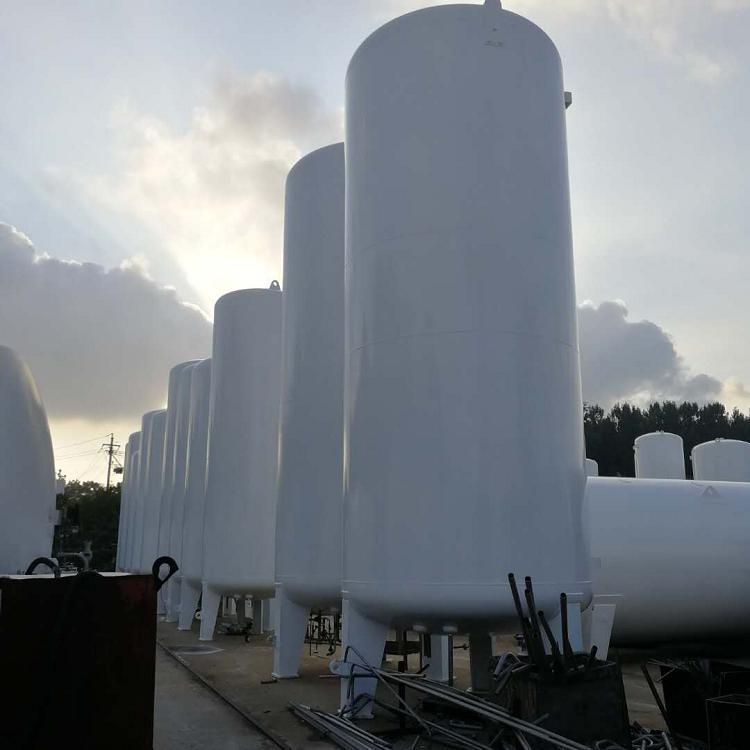
Low-temperature industrial gas filling stations are equipment used to fill liquid low-temperature industrial gases (such as liquid oxygen, liquid nitrogen, liquid argon, etc.) into gas storage tanks. Below is some basic knowledge about low-temperature industrial gas filling stations:
Tank Type: Low-temperature industrial gas tanks commonly use double-walled vacuum insulated tanks, with the inner wall for storing liquefied gas and the outer wall for insulation to reduce heat transfer and evaporation loss of the liquid gas.
Filling Equipment: Low-temperature industrial gas storage tank filling stations include liquid-gas filling pumps, filling pipelines, flowmeters, pressure sensors, and other equipment. The liquid-gas filling pump is used to extract liquid gas from storage tanks or gas holders and fill it into the target storage tank.
Filling Process: The operational procedure at the filling station typically includes the following steps: Preparation (checking equipment, preparing filling medium), Equipment Connection (connecting filling pumps, pipes, etc.), Equipment Activation (starting the filling pump, adjusting flow and pressure), Filling Operation (filling liquid gas into the target storage tank), Monitoring and Control (monitoring parameters such as pressure and flow during the filling process to ensure safety and quality), and Completion (shutting down equipment, cleaning the work area).
Safety Measures: In the operation of low-temperature industrial gas storage tank filling stations, strict adherence to relevant safety operating procedures and standards is required. Operators should receive training to understand the properties and safety precautions of liquefied gases. Additionally, filling stations should be equipped with safety equipment such as pressure sensors and safety valves to ensure safety during the filling process.
Quality Control: During the filling process, quality control at the filling station is necessary, which includes monitoring parameters such as flow rate, pressure, and temperature of the filling medium to ensure accuracy and quality of the filling.
It should be noted that the operation of low-temperature industrial gas storage tank filling stations must be carried out by trained personnel and strictly adhere to the relevant operational procedures and safety measures. Furthermore, the design and manufacture of the filling station must comply with the applicable standards and specifications to ensure the safety and reliability of the equipment.
The medical oxygen steel cylinder filling area, in addition to the liquid oxygen storage tank, includes the following components:
Oxygen Compressor: Oxygen compressors are used to compress gaseous oxygen into high-pressure oxygen. These compressors are typically made with special materials and design to ensure safe handling and compression of oxygen.
Oxygen Purification System: The oxygen purification system is designed to remove impurities and contaminants from oxygen, ensuring the purity and quality of the supplied oxygen. The system typically includes filters, adsorbents, and molecular sieves.
Oxygen Storage System: In addition to liquid oxygen tanks, the oxygen filling area may also include a gaseous oxygen storage system, which is used for temporary storage and supply of gaseous oxygen. The gaseous oxygen storage system typically consists of high-pressure oxygen cylinders or gas storage tanks.
Filling Equipment: Filling equipment is used to transfer oxygen from liquid oxygen storage tanks or gaseous oxygen storage systems into medical oxygen steel cylinders. The filling equipment typically includes filling machines, filling pipelines, and filling control systems.
Oxygen Quality Monitoring System: The oxygen quality monitoring system is used to monitor the quality and purity of oxygen being filled. Quality checks and surveillance are conducted on the filled oxygen through an oxygen analyzer or other detection equipment.
Safety Facilities: The filling plant area should be equipped with corresponding safety facilities, such as fire alarm systems, oxygen leak detection systems, ventilation systems, etc., to ensure the safety and protective measures during the filling process.
It is important to note that the design and equipment configuration of the medical oxygen cylinder filling area must comply with relevant regulations, standards, and specifications. During the filling process, strict adherence to operational procedures and safety requirements is essential to ensure the safe supply of oxygen.
Liquid Argon Storage Tank is a specialized equipment designed for storing liquid argon, featuring the following parameters, functions, and characteristics:
Parameters:
Storage Capacity: The capacity of liquid argon tanks can be customized according to requirements, usually available in various sizes such as 500L, 1000L, 2000L, and so on.
Working Pressure: The working pressure of liquid argon tanks is typically atmospheric or slightly above atmospheric pressure.
Storage Temperature: Liquid argon tanks are typically stored at -196 degrees Celsius, which is the boiling point of argon, maintaining its liquid state.
Feature:
Liquid Argon Storage: Liquid argon tanks are primarily used for storing liquid argon, maintaining its liquid state at low temperatures for supply and usage.
Insulation: The liquid argon storage tank employs insulation materials and structural design to minimize heat conduction and retention, maintaining the low-temperature state of liquid argon.
Safety Control: The liquid argon storage tank is equipped with safety devices such as pressure relief valves and level alarms to ensure safe operation and use.
Features:
High Purity Supply: Liquid argon tanks provide high purity liquid argon supply to meet the needs of applications such as cryogenic storage, gas shielded welding, semiconductor manufacturing, etc.
Long-term Storage: Liquid argon tanks are designed for long-term storage of liquid argon, extending its service life. By controlling the tank's internal temperature and the performance of the insulation layer, the evaporation and oxidation of the liquid argon are slowed down.
Broad Applications: Liquid Argon Storage Tanks are widely used in industries such as refrigeration, semiconductor manufacturing, and scientific research.
Eco-friendly Energy-saving: Liquid argon tanks facilitate efficient storage and utilization of liquid argon, reducing energy waste and environmental pollution.
In summary, liquid argon tanks are designed for storing liquid argon, thermal insulation, and safety.
Zhongjie Special Equipment upholds the grand vision of "realizing employees' dreams, creating customer value, and striving for the prosperity and strength of our motherland," and is dedicated to the development of the green energy equipment industry. We offer society high-quality and cost-effective products and services!
WeChat Official Account

Scan to follow Official Account



















