


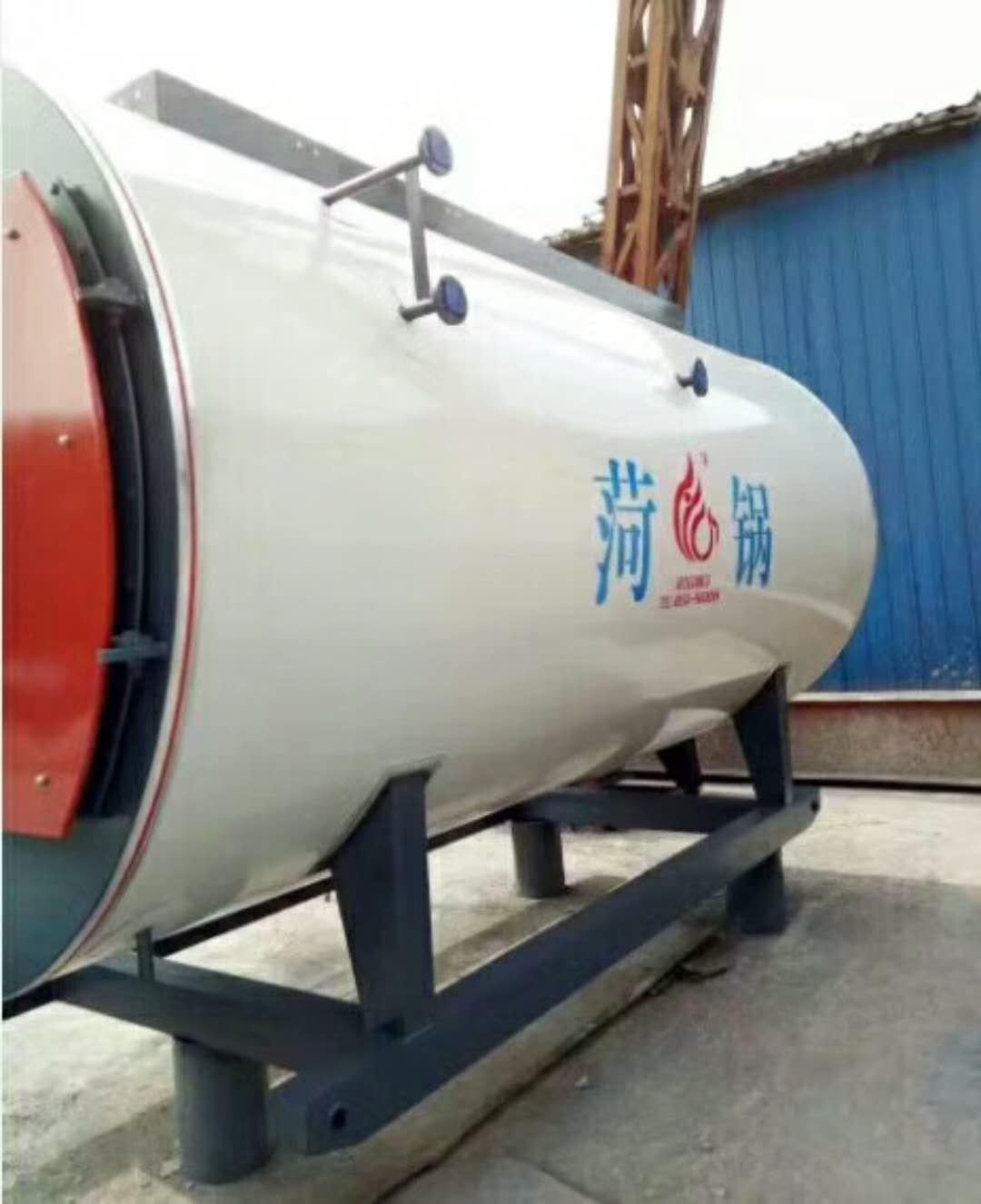

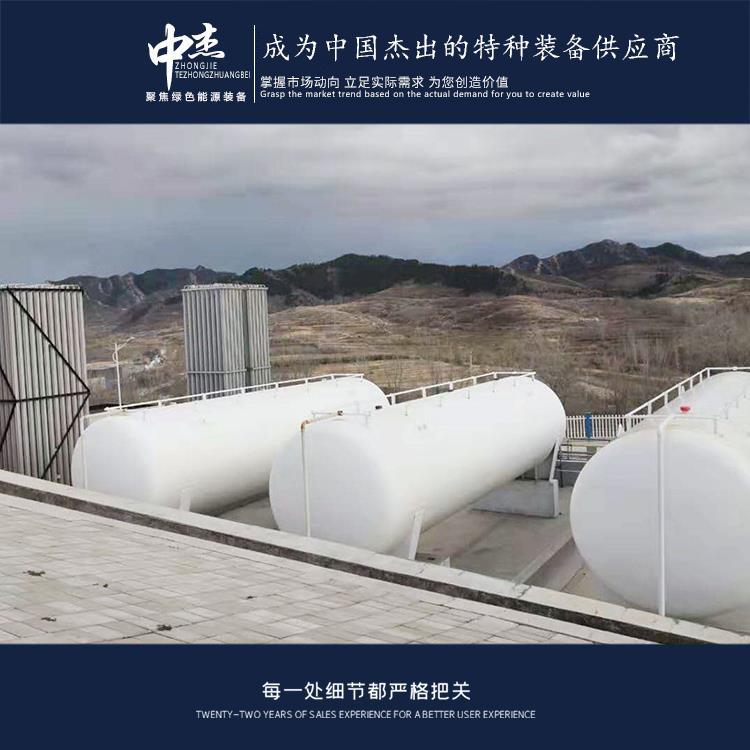
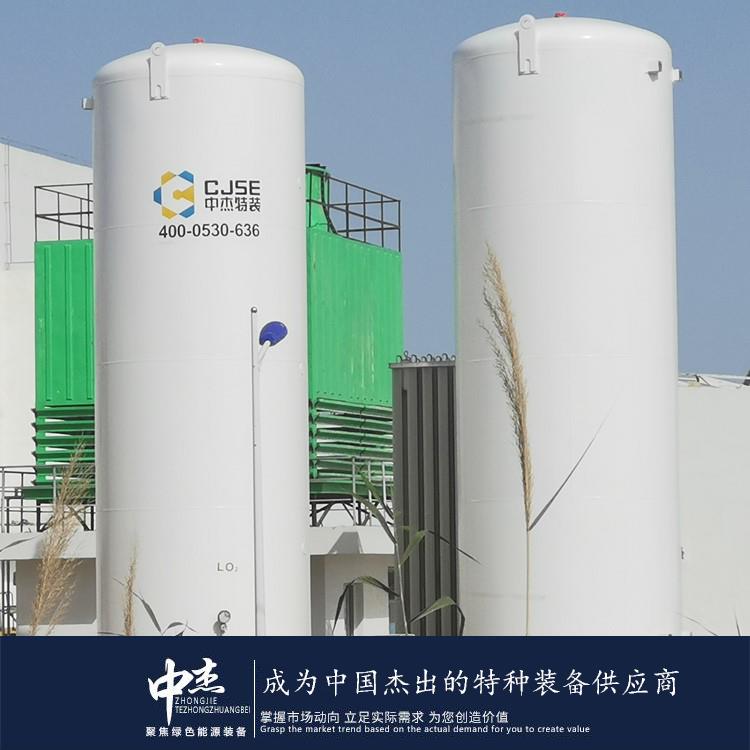


















Shandong Zhongjie Special Equipment's main products include: fuel (gas) boilers, organic heat carrier boilers, biomass boilers, waste heat boilers, and other boiler products; vacuum insulation cryogenic pressure vessels such as LNG tanks, oxygen/nitrogen/argon tanks, and CO2 tanks; pressure vessel products such as denitrification engineering equipment, heat storage and energy storage equipment, and complete chemical equipment; central air conditioning and HVAC equipment such as ground (water) source heat pumps, air source units, water-cooled screw units, and air-cooled modular units. Planned products include large-scale energy centers, LNG transport vehicles, LNG tank containers, and other green energy equipment.
Liquid oxygen tanks are used for storing and supplying liquid oxygen as fuel and an oxidizer, playing a crucial role in launch propulsion systems and other applications. Industrial Production: Liquid oxygen is used as an oxidizer in industrial production for processes such as combustion, oxidation, and oxygen supply. Liquid oxygen tanks are used to store and supply liquid oxygen to meet the demands of industrial processes like metal cutting, welding, and chemical reactions. Equipment: Liquid oxygen tanks are utilized in equipment to supply oxygen, such as oxygen therapy, oxygen inhalation, and operating rooms. These tanks provide high-purity oxygen while maintaining a low temperature, fulfilling the equipment's oxygen requirements. Laboratory Research: Liquid oxygen tanks are used in scientific research and laboratories to provide liquid oxygen as experimental materials and reagents. The low temperature and high purity of liquid oxygen make it widely applicable in laboratories for fields like materials science, chemical reactions, and biomedical research. In summary, liquid oxygen tanks are vital in various fields, including industrial production, equipment, and laboratory research, providing storage and supply functions for liquid oxygen at the application sites.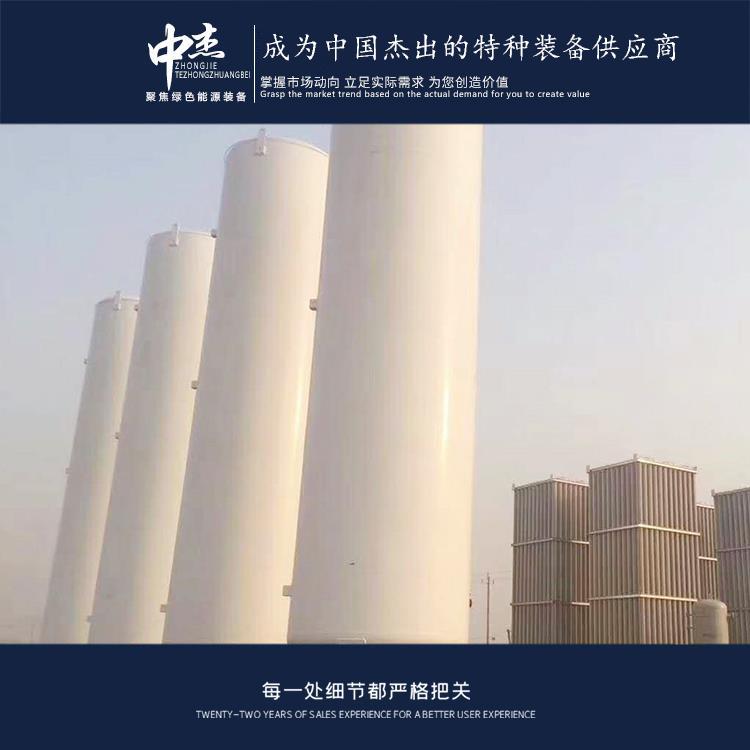
Carbon dioxide storage tanks and liquid oxygen storage tanks are containers used for storing different gases; they have some differences in their physical properties:
Physical State: Carbon dioxide is a gas at room temperature and pressure, and it needs to be at low temperatures and high pressures to become a liquid. Liquid oxygen is a liquid at room temperature, and it needs to be at low temperatures to solidify.
Boiling and freezing points: The boiling point of carbon dioxide is -78.5 degrees Celsius, and its freezing point is -56.6 degrees Celsius. The boiling point of liquid oxygen is -183 degrees Celsius, and its freezing point is -218.8 degrees Celsius. The boiling and freezing points of liquid oxygen are significantly lower than those of carbon dioxide.
Density: The density of liquid oxygen is high, approximately 1.14 grams per cubic centimeter. The density of carbon dioxide is lower, around 0.00198 grams per cubic centimeter. The density of liquid oxygen is about 570 times that of carbon dioxide.
Pressure: Liquid oxygen has a high pressure, typically ranging from tens to hundreds of MPa. Carbon dioxide has a lower pressure, usually in the range of a few MPa.
Safety: Liquid oxygen has a high oxygen content, which is prone to cause fires and explosions. Carbon dioxide also poses asphyxiation risks at certain concentrations.
Note that carbon dioxide and liquid oxygen are both highly flammable and explosive substances. Strict adherence to relevant safety operating procedures and standards, along with necessary safety measures, is required for storage and use to ensure the tank's safety and stability.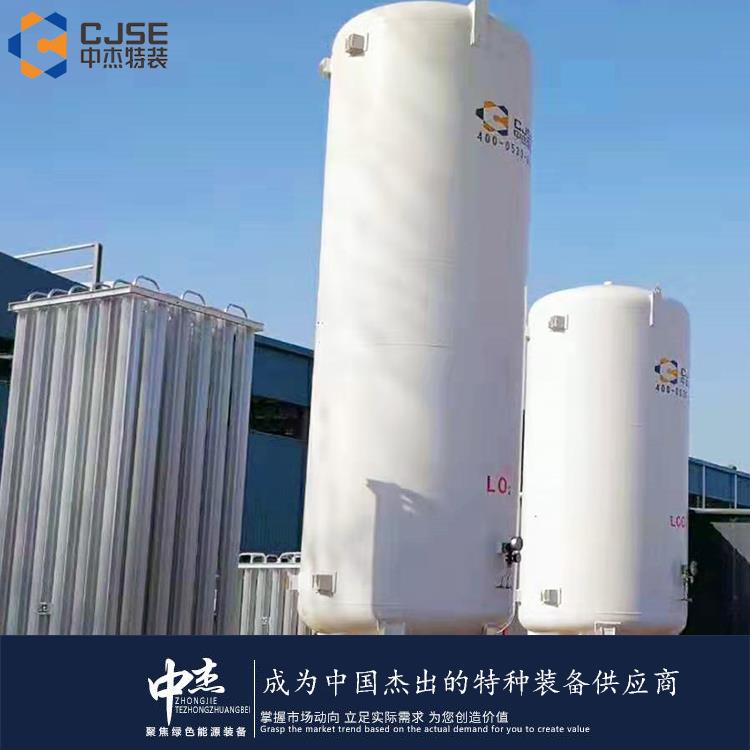
The operational and protective procedures for the use of low-temperature liquid nitrogen storage tanks should include the following:
Staff Training: All operators must undergo safety training for liquid nitrogen storage tanks, familiarize themselves with the properties, hazards, and proper operation methods as well as emergency response procedures.
Protective Gear: Operators must wear appropriate protective gear, including gloves, protective suits, and non-slip shoes, to safeguard themselves from the low temperatures of liquid nitrogen and other hazards.
Ventilation Requirements: Ensure adequate ventilation in the operational area of the liquid nitrogen storage tank to expel gases produced by the evaporation of liquid nitrogen. Avoid excessive oxygen concentration to minimize the risk of fire and explosion.
Leak Control: Tanks must be equipped with leak detection and alarm systems to promptly identify and control the leakage of liquid nitrogen. Upon detection of a leak, immediate action should be taken to contain the source of the leak and initiate repairs.
Fire Prevention Measures: Liquid nitrogen has a low boiling and freezing point, which is prone to cause fires. Measures such as setting up fire barriers around liquid nitrogen storage tanks and using fire-resistant coatings are taken to prevent fires from occurring and spreading.
Electrostatic Protection: Electrostatic buildup in liquid nitrogen tanks may cause sparks, increasing the risk of fire. Measures such as using electrostatic conductive materials and anti-static equipment should be taken to reduce the accumulation and release of static electricity.
Regular Inspections and Maintenance: Conduct regular checks on the condition of liquid nitrogen tanks and related equipment, including valves, pipelines, pressure gauges, etc. Ensure that the equipment is in perfect condition without any damage, and promptly repair or replace any damaged parts.
Waste Gas Treatment: Nitrogen liquid storage tanks produce waste gas during operation, which necessitates appropriate waste gas treatment measures to prevent potential harm to the environment and human health.
Emergency Response Plan: Develop an emergency response plan for liquid nitrogen tanks, including procedures for handling leakage accidents, emergency rescue measures, and the process for notifying relevant departments. Operators
In the degreasing process of high-vacuum pipelines in low-temperature liquid storage tanks, the following steps can be taken:
Preparation: Ensure that the defatting equipment and tools are clean and ready for use. Check the pipeline system's connections and seals, ensuring there are no leaks.
Pipe Cleaning: Utilize suitable cleaning agents and tools to clean the pipes, removing surface dirt and grease. Methods such as mechanical brushing, high-pressure water jetting, or chemical cleaning can be employed.
De-greasing Process: Select an appropriate de-greaser and inject it into the pipeline system. The de-greaser can be an organic solvent or an alkaline solution, the choice depending on the pipeline material and type of dirt. Ensure the de-greaser thoroughly covers the inner pipeline wall and maintains a certain contact time.
Flush pipes: Drain the degreaser from the pipeline system and flush with clean water to remove any remaining degreaser and dirt. During the flushing process, high-pressure water or gas can be used for scrubbing to ensure the cleanliness of the pipe interior.
Drying Pipeline: Utilize drying equipment or ventilation systems to evaporate or expel moisture within the pipeline, ensuring the interior wall remains dry. Drying can be achieved using hot air or nitrogen.
Inspection and Testing: After degreasing, inspect and test the pipes to ensure their cleanliness and seal integrity. Visual inspection, pressure testing, or other relevant tests can be conducted.
Be mindful that when descaling high-vacuum pipelines of low-temperature liquid storage tanks, adhere to the relevant safety operating procedures and guidelines. Ensure that operators are equipped with the necessary safety awareness and operational skills to prevent accidents.
Shandong Zhongjie Special Equipment, welcome customers to visit our factory for business discussions.
WeChat Official Account

Scan to follow Official Account



















