


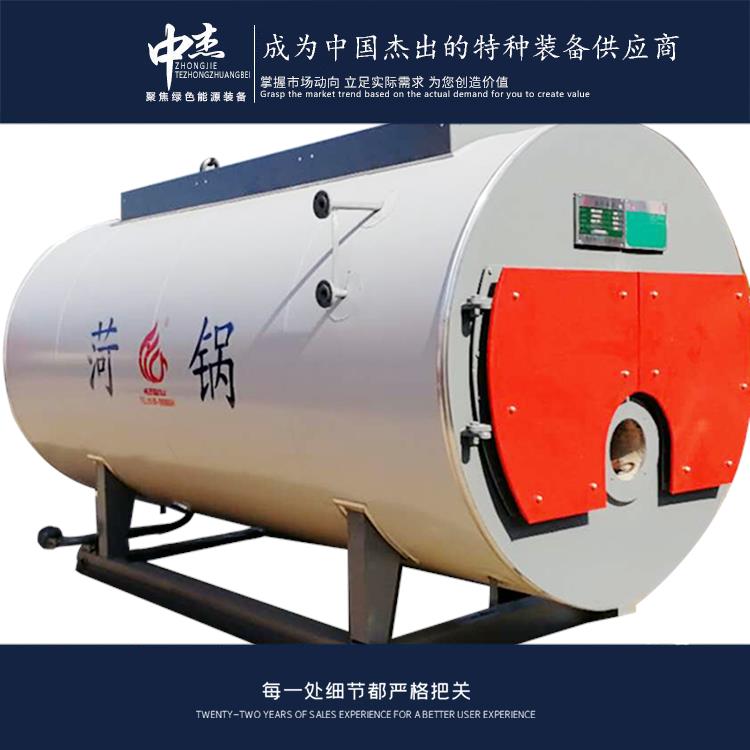

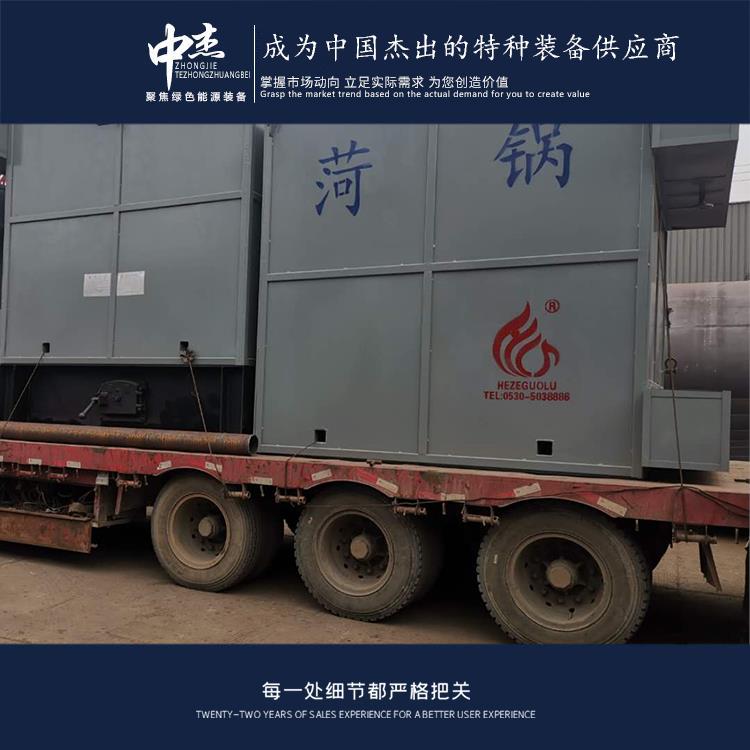
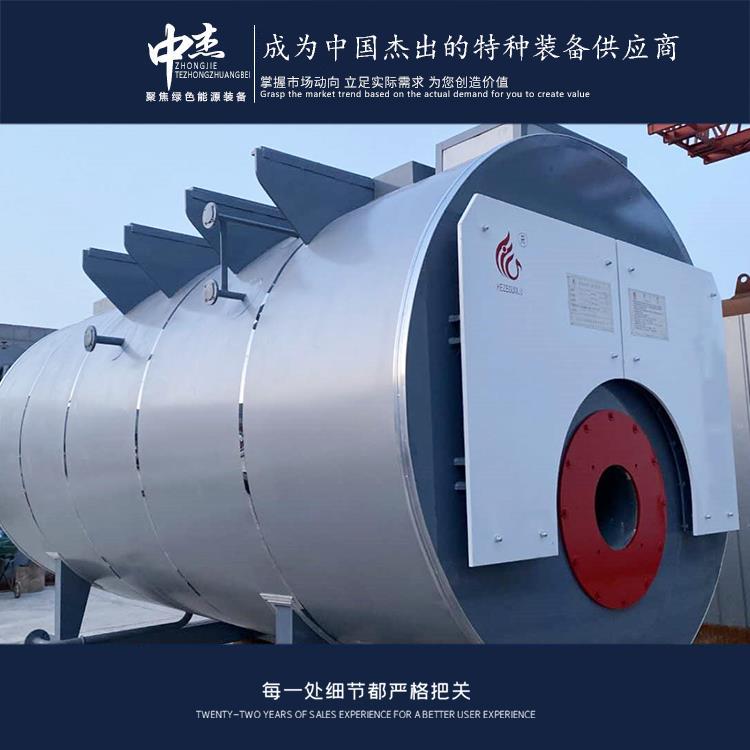


















Shandong Zhongjie Special Equipment (formerly Heze Boiler Factory Co., Ltd.) was established in 2001, located at No. 2218 Jinnan Road, Development Zone, Heze City. With a registered capital of 50 million yuan and total assets of 500 million yuan, the company has seven business centers: boilers, deep-freezing containers, pressure vessels, central air conditioning, engineering installation, international trade, and Internet of Things. It operates three factory sites on Jinnan Road, East Changjiang Road, and Bohai Road, covering a total area of 200,000 square meters, with the main workshop spanning 83,000 square meters. The company currently employs 710 staff, including 247 engineering technicians and 82 middle-level technicians. In December 2016, it was recognized as a "High-Tech Enterprise" by the Science and Technology Department. In June 2021, it was identified as a "Specialized and New Enterprise in Shandong Province" by the Ministry of Industry and Information Technology. In June 2022, it was recognized as a "Gazelle Enterprise in Shandong Province," and in August 2022, it was named a "Specialized and New Small Giant Enterprise" by the Ministry of Industry and Information Technology.
Hot water boilers and steam boilers are two common types of boilers, differing in their working principles, application scenarios, and operating parameters:
Working Principle: Hot water boilers provide heat by heating water, which is then circulated into the heating system. Steam boilers, on the other hand, generate steam by heating water, which is then distributed to the heating system.
Operating Temperature and Pressure: Hot water boilers typically operate at temperatures between 60°C and 100°C, with lower pressure. Steam boilers usually operate at temperatures between 100°C and 200°C, with higher pressure, generally between 0.7MPa and 2.5MPa.
Heating Method: Hot water boilers circulate hot water through a pump into the heating system, with heat transfer primarily occurring through convection. Steam boilers distribute steam through steam pipes into the heating system, with heat transfer primarily through steam conduction.
Application Scenarios: Hot water boilers are suitable for heating, bathing, swimming pool heating, and other scenarios where hot water is needed in industrial production processes. Steam boilers are used in industrial applications requiring steam, such as power plants, chemical factories, and textile mills.
Equipment Structure: Hot water boilers are generally simpler and have a smaller structure and footprint. Steam boilers are typically more complex, with a larger structure and greater footprint.
It's important to note that hot water and steam boilers may overlap in certain specialized applications, such as industrial processes that require both hot water and steam. Therefore, when selecting a boiler type, it's crucial to consider specific needs and application scenarios.
Proper selection of a thermal oil furnace requires considering the following aspects:
1. Heat Load Requirement: First, determine the required heat load for the thermal oil furnace, which is the thermal energy needed. Establish the rated power and heat load range based on actual needs, ensuring sufficient thermal energy supply.
2. Operating Temperature and Pressure: The operating temperature and pressure range of the thermal oil furnace must match the actual application. Select the appropriate temperature and pressure range according to process requirements and working environment to ensure stable operation.
3. Thermal Oil Type: Choose the appropriate thermal oil type based on process requirements and working environment. Common types include silicone thermal oil, organic thermal oil, and mineral oil thermal oil, each with different operating temperature ranges and characteristics. Select based on actual needs.
4. Equipment Quality and Reputation: Select a supplier with a good reputation for quality thermal oil furnaces. Ensure the manufacturing process and material quality are reliable, providing stable and reliable performance and after-sales service.
5. Safety and Environmental Protection: The safety and environmental protection of the thermal oil furnace are crucial considerations. Choose a furnace with safety protection devices and environmental certifications to ensure personnel and equipment safety during operation.
6. Economy and Energy Efficiency: Consider the economic and energy efficiency of the thermal oil furnace. Select a furnace with high energy efficiency and energy-saving features to reduce energy consumption and operating costs.
Considering these factors and selecting the appropriate thermal oil furnace based on actual needs can ensure the stable operation of the equipment.
Steam boiler equipment water treatment refers to the process of treating water in steam boilers to ensure normal operation and extend the lifespan of the equipment. Below are the basic principles of steam boiler equipment water treatment:
Water Quality Requirements: The water quality in steam boilers is of high standard, usually requiring the removal of impurities, dissolved oxygen, and hardness substances. Impurities and hardness substances can lead to scaling and corrosion on the inner walls of the boiler, while dissolved oxygen can cause corrosion and the formation of bubbles.
Removal of Impurities: Common methods for removing water impurities include sedimentation, filtration, and ion exchange. Sedimentation involves adding chemicals to make impurities settle, filtration removes impurities through filtering media, and ion exchange uses resins to adsorb and exchange ions to remove impurities from the water.
Adjusting Hardness: The hardness substances in water are mainly calcium and magnesium salts, which can cause scaling on the inner walls of the boiler. Hardness can be adjusted by adding chemicals or using water softening equipment to prevent scaling issues.
Removing Dissolved Oxygen: Dissolved oxygen can cause corrosion and bubble formation. It can be removed by adding oxidizing agents or using deaeration equipment.
Controlling pH: The pH level of water in steam boilers affects equipment corrosion and scaling. It is usually necessary to control the pH level within an appropriate range, using buffers or regulators to adjust the pH.
Regular Testing and Maintenance: Regular water quality testing of the steam boiler equipment should be conducted, including measuring hardness, dissolved oxygen, and pH levels. Appropriate water treatment measures and maintenance should be carried out based on the test results.
Steam boiler equipment water treatment is a critical step in ensuring normal boiler operation and extending equipment lifespan. Rational water treatment measures can effectively prevent scaling, corrosion, and malfunctions on the inner walls of the boiler.
Gas boiler temperature control methods usually include the following:
Manual Adjustment: The temperature of a gas boiler is controlled by manually operating valves or regulators. Adjust the valve opening or regulator settings as needed to achieve the desired temperature.
Automatic Adjustment: Gas boilers can be equipped with an automatic control system that uses sensors and controllers for automatic temperature regulation. Sensors detect the boiler's temperature and send signals to the controller, which then automatically adjusts the gas supply and burner status within a set temperature range to maintain the desired temperature.
Proportional Control: The temperature regulation of a gas boiler can also be done using proportional control. Adjust the valve or regulator opening based on temperature changes to maintain a proportional relationship between gas supply and burner status.
PID Control: PID control is a commonly used temperature regulation method. The PID controller adjusts the gas supply and burner status based on temperature deviations, rates of change, and integral values to achieve temperature control.
It is important to note that different gas boilers may use different temperature control methods. The specific control method and operation should be determined according to the boiler model and control system. When adjusting the temperature, follow safety operating procedures to ensure normal operation and safety performance of the boiler.
Our company attaches great importance to technological innovation and research and development. We have 1 municipal-level enterprise technology center in Heze City, equipped with testing facilities such as non-destructive testing, physical and chemical testing, welding testing, hydrostatic testing, and more. We possess over 600 pieces of equipment, including CNC machine tools, X-ray flaw detectors, digital ultrasonic flaw detectors, mechanical property testing machines, chemical analyzers, spectrometers, tensile testing machines, plasma welding machines, and more. The key products and technologies we have developed, such as temperature and pressure vessel welding, biomass boiler emissions reduction, and waste heat utilization, have successively been included in multiple Shandong Provincial Department of Industry and Information Technology science and technology projects, key provincial projects, and Heze City innovation and excellence projects. We have accumulated 27 authorized utility models, 16 authorized inventions, participated in drafting 2 standards, 2 industry standards, and registered 15 trademarks. The technical team of our company, in collaboration with Professor Yajiang Li of Shandong University, has developed deep cryogenic container processing technology using the internationally recognized plasma arc + filler wire tungsten inert gas (PAW-GTAW) welding technology. This technology has been appraised as reaching an international level in deep cryogenic container manufacturing after provincial-level scientific and technological achievement evaluation.
Choose ZJET customized solutions, let's create brilliance together!
WeChat Official Account

Scan to follow Official Account



















