


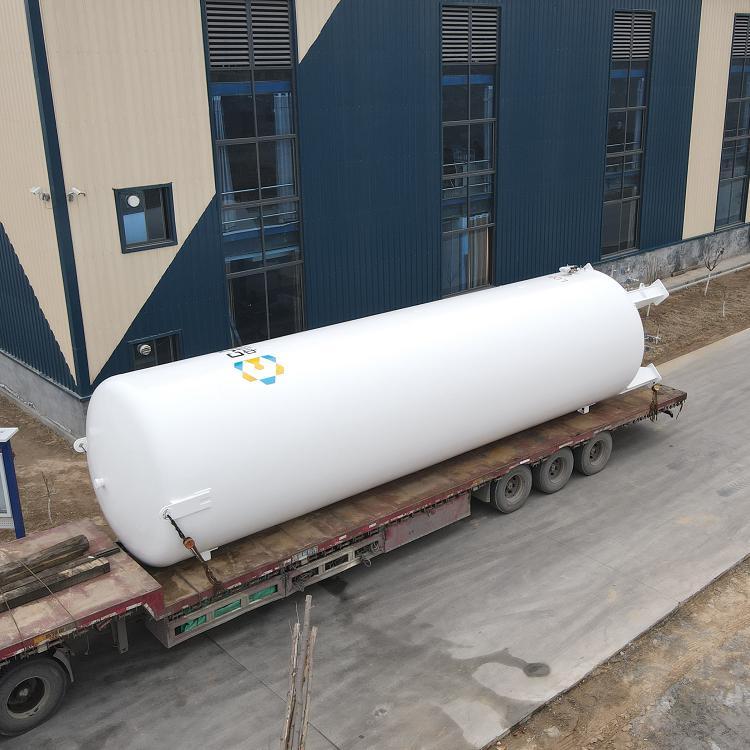

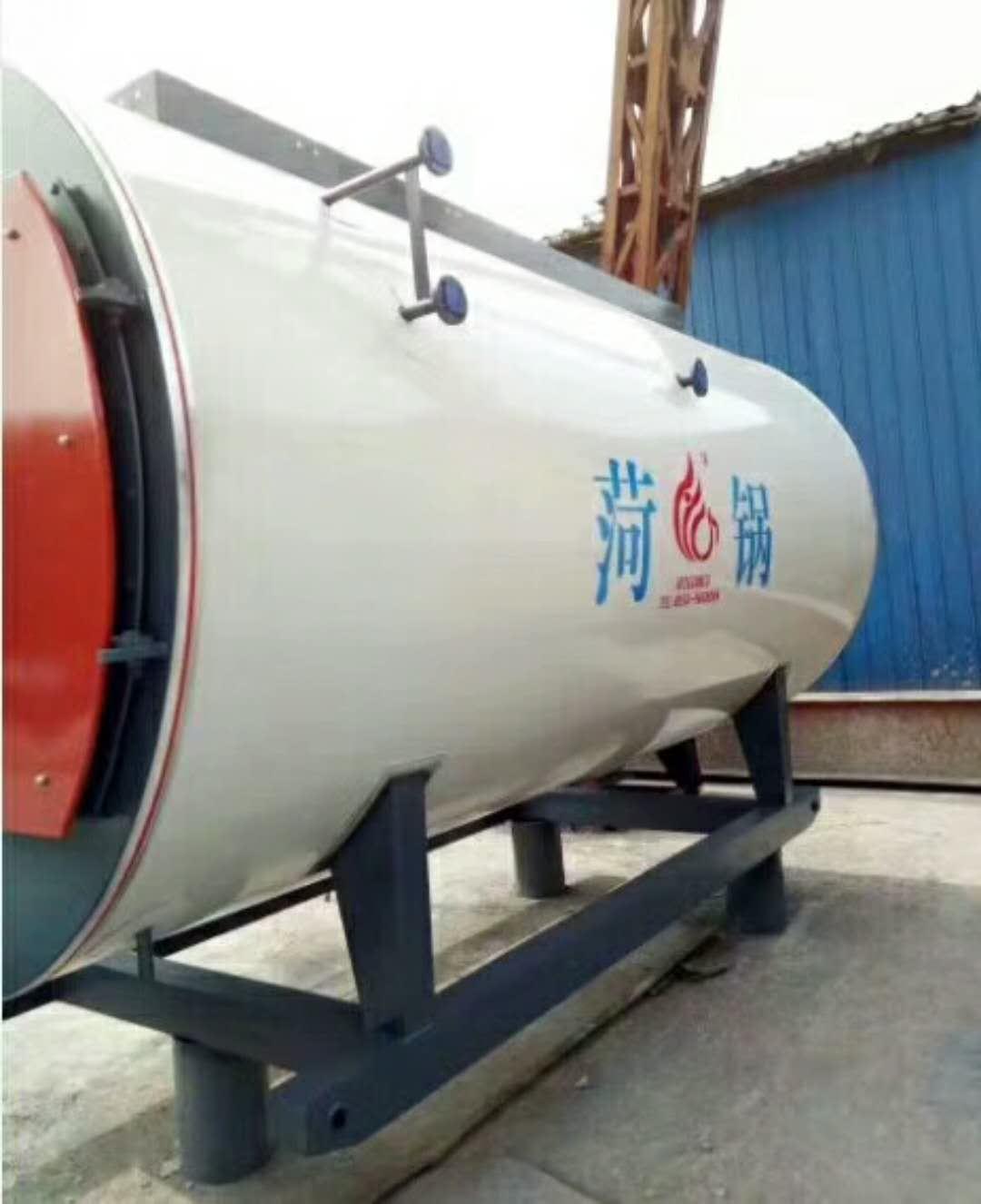
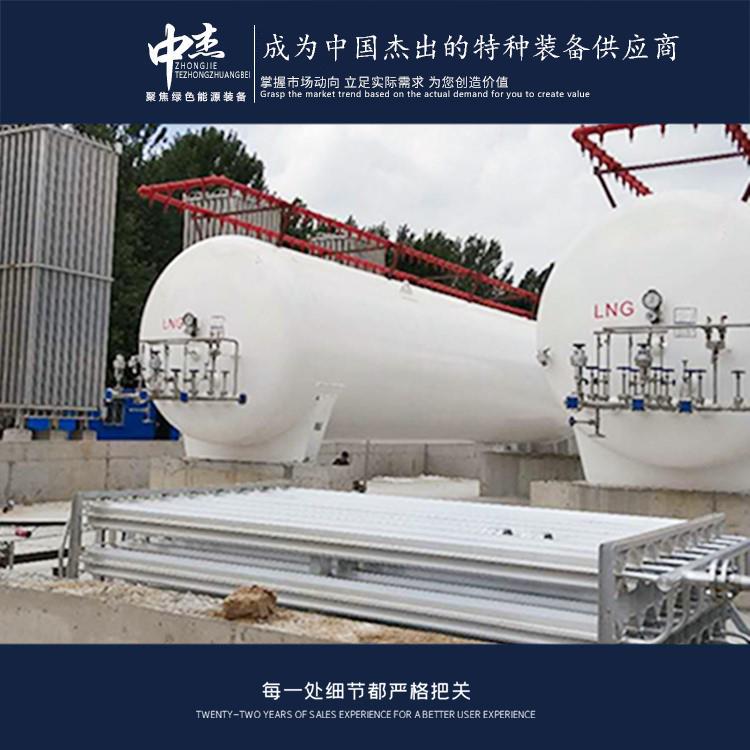


















Shandong Zhongjie Special Equipment (formerly Heze Boiler Factory Co., Ltd.) holds an A-grade boiler manufacturing license, A2-grade pressure vessel manufacturing license, A2-grade pressure vessel design license, B-grade boiler installation license, and GB2/Class, GC2/Class pressure pipeline installation license, as well as equipment and machinery installation contracting qualifications. It is a member of the China Boiler and Water Treatment Association, the China Chemical Equipment Association, and the council unit of the Shandong Equipment Manufacturing Association, and has passed certifications for ISO9001 Quality Management System, ISO14001 Environmental Management System, OHSAS18001 Occupational Health and Safety Management System, and the U.S. ASME/U2 certification.
Low-temperature liquid storage tanks are equipment used for storing low-temperature liquids, commonly employed for storing liquid oxygen, liquid nitrogen, liquid argon, and other low-temperature liquids. These fluids are in a gaseous state at room temperature but are cooled to a liquid state at low temperatures for more efficient storage and use. These storage tanks are typically made of high-strength materials like stainless steel or aluminum alloy to withstand the demands of low temperatures and high pressures. They usually have an insulating layer inside to minimize evaporation and maintain the low-temperature state. Applications of low-temperature liquid storage tanks include but are not limited to the following areas: They are widely used in rocket fuel and propulsion systems, such as liquid oxygen, liquid nitrogen, and liquid hydrogen storage tanks, for storing and supplying low-temperature liquids as fuel and oxidizers to propel and operate the rockets. Industrial Production: These tanks are used in industrial production for storing and supplying low-temperature liquids like liquid oxygen, liquid nitrogen, and liquid argon. These liquids serve as coolants, raw materials for gas separation, and reactants in chemical reactions, among other uses. Medical Applications: Low-temperature liquid storage tanks are used in medical fields to store and supply liquid oxygen for oxygen therapy, oxygen inhalation, and operating rooms. Laboratory Research: In scientific research and laboratories, these tanks provide low-temperature liquids as coolants and cryogenic media. They are used for cooling laboratory equipment, material research, superconductivity, and low-temperature physics, among other applications. In summary, low-temperature liquid storage tanks are widely utilized in aerospace, industrial production, and laboratory research for storing and supplying low-temperature liquids to meet the needs of various fields.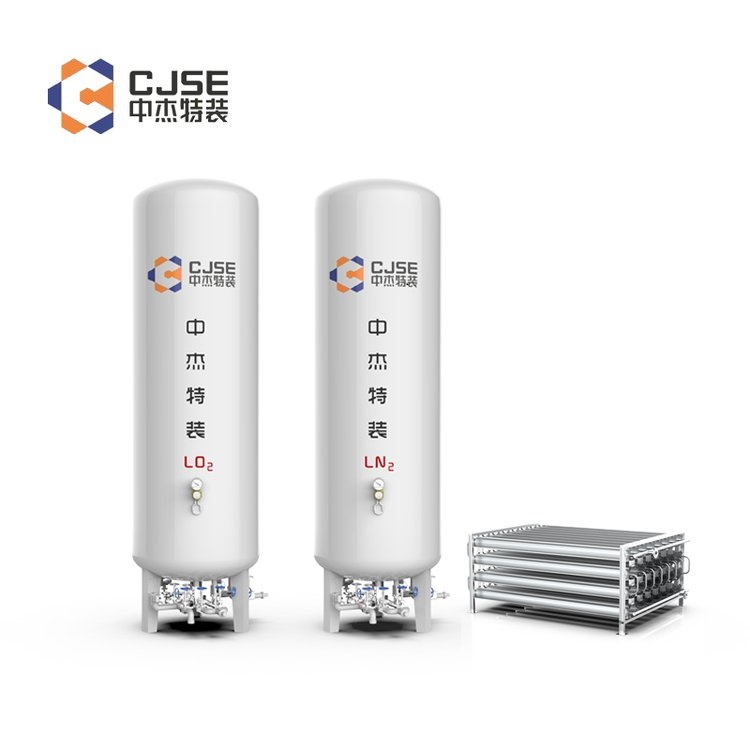
Nitrogen purge in liquid nitrogen tanks refers to the process of injecting nitrogen gas into the tank to increase the concentration and pressure of nitrogen inside, in order to meet certain safety requirements and operational objectives. Here are some precautions to consider when nitrogen purging liquid nitrogen tanks:
Safe Operation: Prior to conducting nitrogen purge operations on a liquid nitrogen tank, it is mandatory that the operators possess relevant safety knowledge and operational skills. Operators should wear appropriate personal protective equipment, such as protective goggles, gloves, and protective clothing, etc.
Nitrogen Quality: High-purity nitrogen is used for inerting operations to ensure the quality and purity of the nitrogen. Nitrogen of low purity may contain impurities or oxygen, which could have adverse effects on the liquid nitrogen within the storage tank.
Nitrogen purge speed control: During the nitrogen purge process, the purge speed should be controlled to avoid being too fast or too slow. Excessive nitrogen purge speed may lead to overly high internal pressure within the tank, while a too slow purge speed may result in extended purge time.
Pressure Monitoring: During the nitrogen purge process, the internal pressure of the storage tank should be regularly monitored. Ensure that the internal pressure of the tank remains within the safe range and adjust as necessary.
Temperature Control: During the nitrogen flushing process, it is important to monitor and control the temperature of the storage tank. The low temperature of liquid nitrogen can lead to condensation and frost on the tank and pipes. Appropriate measures such as heating or insulation should be taken to prevent condensation and frost from occurring.
Post-nitrogen flushing treatment: After the nitrogen flushing operation is completed, the flushing unit should be promptly turned off, and the tank should be inspected and cleaned. Ensure that there is no residual nitrogen or impurities inside the tank.
Note: The nitrogen charging operation for liquid nitrogen tanks must be strictly adhered to the relevant safety standards.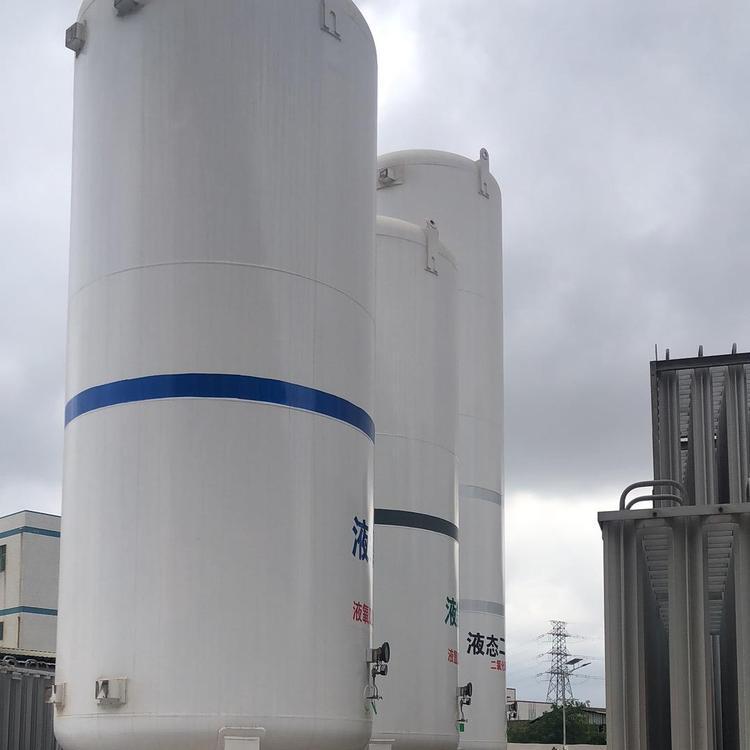
The standard specifications for liquid oxygen storage tanks may vary by region. Here are examples of some common standards:
American Standards: The American National Standards Institute (ANSI) and the American Petroleum Institute (API) have issued a series of standards for liquid oxygen storage tanks, such as ANSI/API Standard 2510 "Design and Construction Specifications for Liquid Oxygen Storage Tanks" and ANSI/API Standard 2510A "Supplement to Design and Construction Specifications for Liquid Oxygen Storage Tanks."
European Standards: The European Committee for Standardization (CEN) has issued a series of standards for liquid oxygen storage tanks, including EN 13458 "Liquid Oxygen Storage Tanks. Design and Construction" and EN 14015 "Vertical Welded Steel Fixed Storage Tanks. Design and Construction."
Chinese Standards: The Standardization Administration of the People's Republic of China (SAC) has issued a series of standards for liquid oxygen storage tanks, such as GB/T 18442 "Design Specifications for Liquid Oxygen Storage Tanks" and GB/T 18443 "Construction and Acceptance Specifications for Liquid Oxygen Storage Tanks."
These standards typically include requirements for design, manufacturing, installation, operation, maintenance, and inspection of liquid oxygen storage tanks. They cover provisions related to the tank's structure, materials, safety valves, insulation layers, leak control, fire precautions, safety distances, and more, to ensure the safety and reliability of the liquid oxygen storage tanks.
When designing, manufacturing, and using liquid oxygen storage tanks, it is essential to adhere to applicable standards and regulations, and to collaborate with local regulatory agencies and individuals to ensure the tanks meet relevant safety requirements and regulations.
Liquid Argon Storage Tanks are equipment used for storing and transporting liquid argon. Their application scope and characteristics are as follows:
Application Scope:
Industrial Applications: Liquid Argon Storage Tanks are widely used in industrial sectors such as metal processing, electronics manufacturing, semiconductor production, etc.
Application: Liquid argon tanks are used in the field for cryogenic storage of biological samples, cells, tissues, and vaccines.
Lab Applications: Liquid argon tanks are used in scientific research laboratories for low-temperature experiments, cryogenic preservation, and sample processing, etc.
Features:
Low-temperature Performance: As liquid argon has a boiling point of -185.7°C, the liquid argon storage tank must have excellent low-temperature insulation properties to maintain the低温 state of liquid argon.
High-sealed performance: Liquid argon storage tanks must have good sealing properties to prevent evaporation loss of liquid argon and the entry of external air.
Safety: Liquid argon is a flammable and explosive substance, thus the liquid argon storage tank must be equipped with safety valves, leak detectors, and other safety equipment to ensure safe operation.
High Capacity: The capacity of liquid argon storage tanks ranges from a few liters to several thousand liters, allowing for selection of an appropriate capacity based on demand.
Cautionary Notes:
Protective Gear: When handling liquid argon tanks, it is mandatory to wear appropriate protective gear, including gloves, protective suits, and non-slip shoes, to safeguard against the low temperatures of liquid argon and other hazards.
Ventilation Requirements: Please specify
Shandong Zhongjie Special Equipment, welcome customers to visit our factory for business discussions.
WeChat Official Account

Scan to follow Official Account



















