


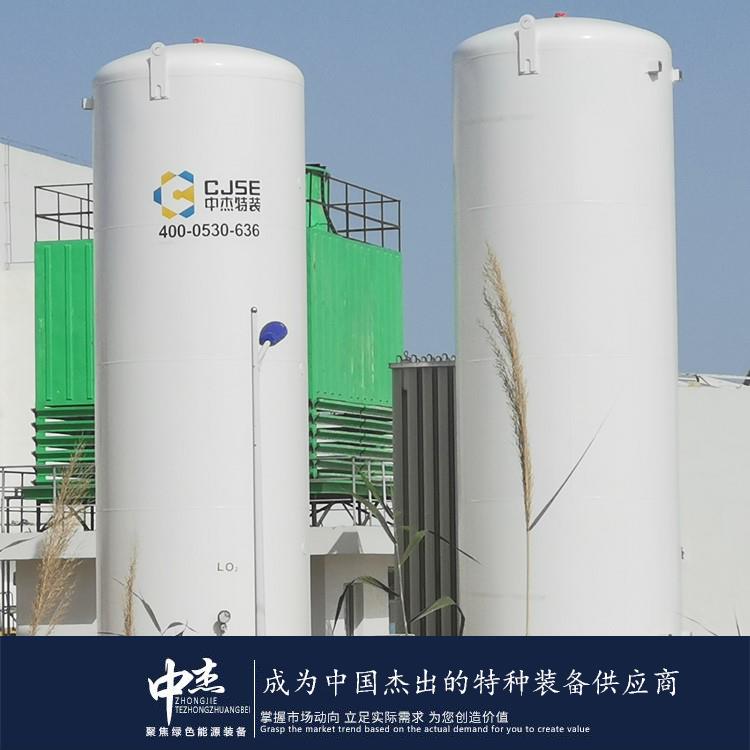

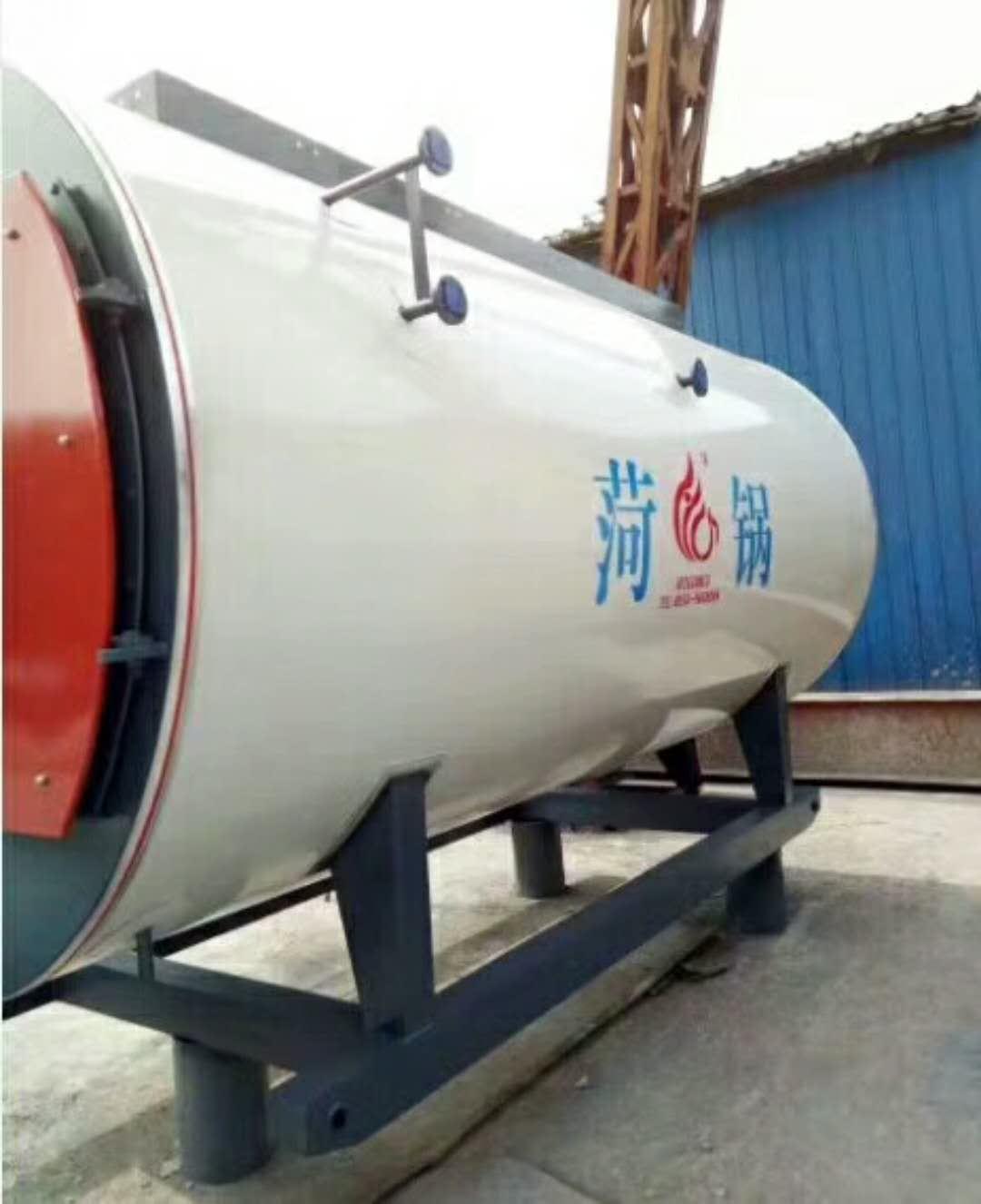
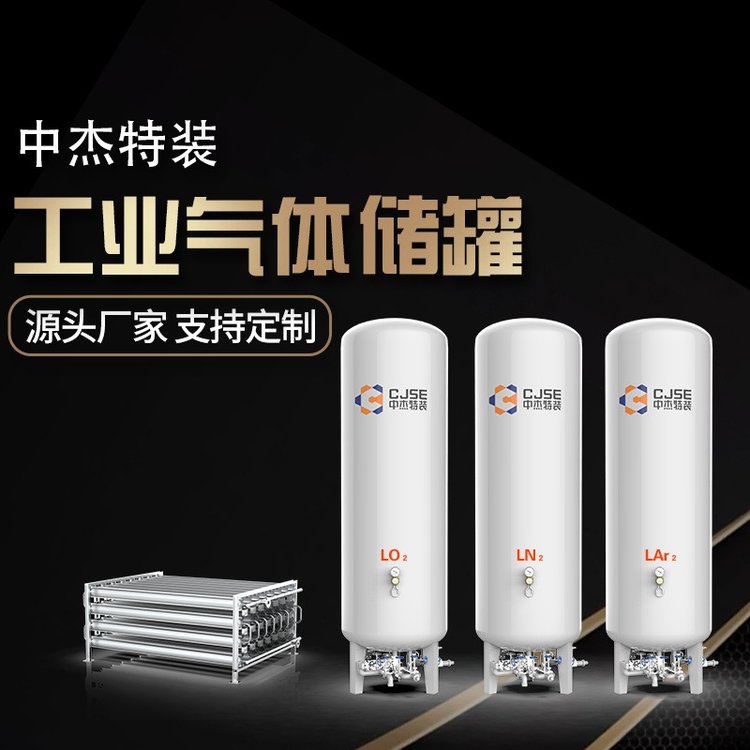


















Shandong Zhongjie Special Equipment (formerly Heze Boiler Factory Co., Ltd.) holds an A-grade boiler manufacturing license, an A2-grade pressure vessel manufacturing license, an A2-grade pressure vessel design license, a B-grade boiler installation license, and GB2/GB3-class and GC2-class pressure pipeline installation licenses, as well as equipment and machinery installation contracting qualifications. It is a member of the China Boiler and Water Treatment Association, the China Chemical Equipment Association, and the director unit of the Shandong Equipment Manufacturing Association. The company has also passed ISO9001 Quality Management System, ISO14001 Environmental Management System, OHSAS18001 Occupational Health and Safety Management System certifications, and the American ASME/U2 certification.
The dimensions and structures of carbon dioxide storage tanks can vary depending on specific application and capacity requirements. Here are some common sizes and structures of carbon dioxide storage tanks:
Sizes: The size of carbon dioxide storage tanks can range from small to large, varying with capacity. Common size ranges include thousands to tens of thousands of liters.
Structure: Carbon dioxide storage tanks typically feature a double-walled design, with the inner wall for storing liquid carbon dioxide and the outer wall for insulation. The inner wall is usually made of stainless steel or aluminum alloy, offering excellent corrosion resistance.
Insulation: To maintain the low temperature of the liquid carbon dioxide, the outer wall of the tank usually has an insulation layer to reduce heat conduction and maintain低温. Insulation can be in multi-layer structures like polyester foam, glass wool, etc.
Pressure Relief Devices: Carbon dioxide storage tanks are commonly equipped with pressure relief devices, such as safety valves, to control internal tank pressure. The set pressure of the pressure relief devices should meet relevant requirements and be regularly inspected and maintained.
Connection Pipes: The connection between the tank and pipes usually employs suitable methods, such as flange connections or threaded connections. The connection pipes should comply with relevant standards and specifications to ensure secure and leak-proof connections.
Support Structure: Large carbon dioxide storage tanks often require a support structure to bear their weight. Support structures can be made of steel or concrete, ensuring the stability and safety of the tank.
It should be noted that the specific dimensions and structures of carbon dioxide storage tanks may vary depending on different applications and requirements. When selecting and using carbon dioxide storage tanks, considerations should be based on the specific needs.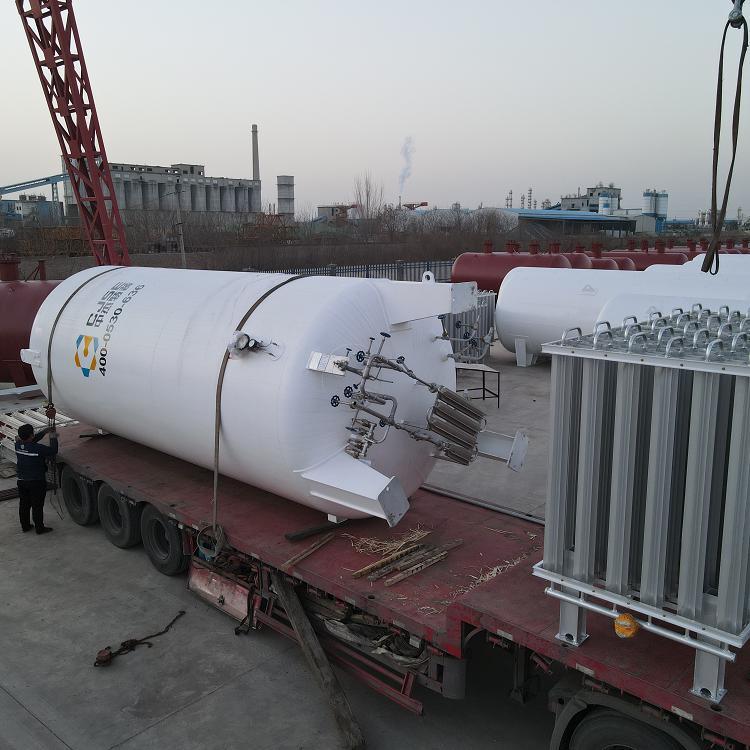
Daily inspections and maintenance of carbon dioxide storage tanks can be conducted in the following steps:
1. Visual Inspection: Check for any obvious damage, corrosion, or oil leakage signs on the tank's exterior. Pay attention to any abnormalities in the tank shell, valves, and pipeline connections.
2. Internal Inspection: If access to the tank interior is permitted, conduct an internal check. Inspect the lining, valves, and pipelines for corrosion, scale buildup, or blockages.
3. Valve and Pipeline Inspection: Check the tank's inlet and outlet valves and pipeline connections for normal operation, leaks, or loose fittings. Ensure valve operation is smooth and reliable.
4. Pressure Relief Device Inspection: Verify that the tank's pressure relief device (such as the safety valve) is functioning properly. Confirm that the set pressure of the pressure relief device meets the requirements.
5. Measurement and Control System Inspection: Check if the tank's level, pressure, and temperature measurement and control systems are functioning normally. Calibrate and test the accuracy of measurement equipment.
6. Cleaning and Draining: Regularly clean the interior of the tank to remove accumulated impurities and sediments. Also, periodically drain the tank's internal liquid and gas impurities.
7. Maintenance and Repair: Perform necessary maintenance and repair work based on the inspection results. Repair damaged components, replace worn-out seals, etc., to ensure the tank operates normally.
8. Record and Report: Record the inspection and maintenance process, including the inspection date, contents, identified issues, and measures taken. Submit inspection reports to relevant departments or management personnel as needed.
The above steps are general guidelines for daily inspections and maintenance of carbon dioxide storage tanks. Specific operations should be tailored to the tank's characteristics and requirements. When conducting inspections and maintenance, follow relevant safety operating procedures and have personnel perform the operations.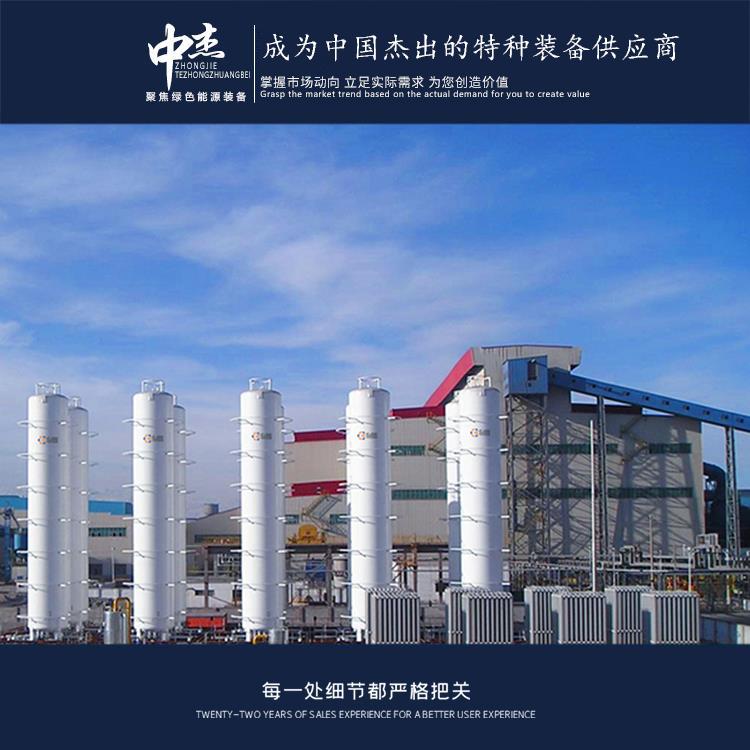
Carbon dioxide storage tanks offer the following advantages:
- High storage density: CO2 storage tanks can compress CO2 gas into a liquid state, significantly increasing storage density. Compared to storing it in a gaseous state, liquid CO2 can be stored in a smaller tank, saving space and costs.
- Environmental friendly and renewable: CO2 is an environmentally friendly gas, and its increased concentration in the atmosphere contributes to warming and climate change. By storing and utilizing CO2, we can reduce its emissions into the atmosphere, promoting environmental protection and sustainable development.
- Various application fields: CO2 storage tanks are widely used in multiple industries, including food and beverage, manufacturing, fire suppression, and gas supply. CO2 serves as a preservative, carbonation agent, gas, and fire extinguisher, among other uses, with broad applications and market demand.
- Safe and reliable: During design and manufacturing, CO2 storage tanks typically use high-strength materials (such as carbon steel or stainless steel) with excellent pressure resistance and safety. The tanks are usually equipped with safety valves, pressure gauges, and level indicators to ensure safe operation. Additionally, CO2 is a non-flammable and non-explosive gas, making it relatively safe.
These advantages make carbon dioxide storage tanks an essential storage and supply equipment, widely applied across various industries. However, it is crucial to follow relevant safety operation procedures and standards when using CO2 storage tanks to ensure safe operation and usage.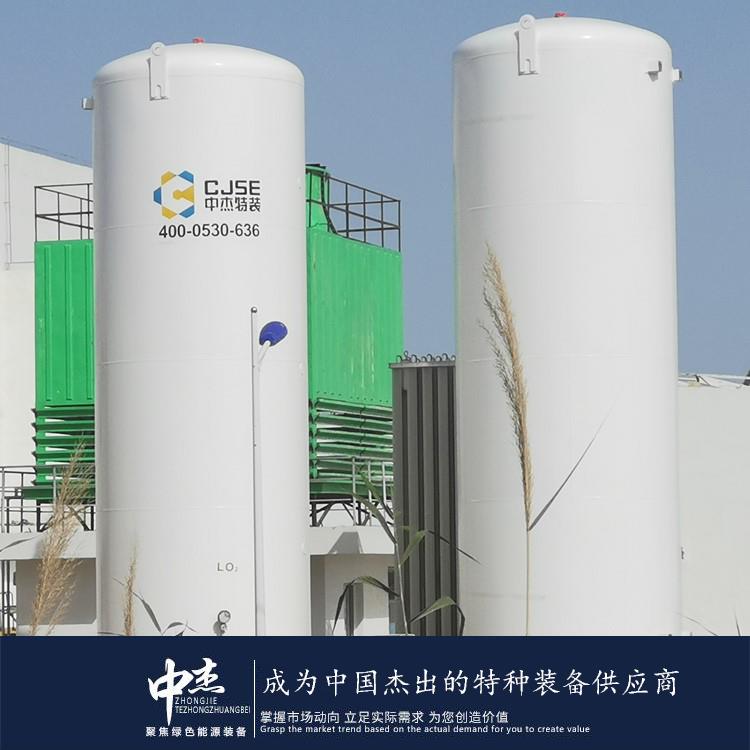
Carbon dioxide cylinder hydrostatic testing is a common quality inspection method used to verify the cylinder's sealing and pressure resistance. Below are the general steps for conducting a hydrostatic test on a carbon dioxide cylinder:
Preparation: Ensure the cylinder is clean inside and is empty. Check the cylinder's valves, pipes, and joints to ensure they are sealed properly.
Filling with Water: Fill the cylinder with water, using tap water or other clean sources. Ensure the water is evenly filled to avoid air bubbles or dead spots.
Applying Pressure: Use a pressure pump or other pressure equipment to gradually increase the water pressure until it reaches the predetermined test pressure. The test pressure is typically determined based on the cylinder's design requirements and relevant standards.
Pressure Holding: Maintain the test pressure for a period, usually 15-30 minutes. During this time, observe for any leakage from the cylinder, and check for leaks at the valves and joints.
Pressure Release: Release the water pressure inside the cylinder, ensuring it is done slowly and evenly to avoid sudden pressure release causing shocks.
Inspection and Evaluation: After pressure release, inspect the cylinder's exterior and interior for any leakage. Evaluate the test results to ensure the cylinder's sealing and pressure resistance meet the requirements.
Note that when conducting hydrostatic testing, it is essential to follow relevant safety operation procedures and standards to ensure safety and reliability during the process. Depending on the cylinder's design and usage requirements, other types of tests can be conducted, such as gas pressure testing and ultrasonic inspection, to comprehensively evaluate the cylinder's quality and performance. Seek advice and guidance from a consultant.
Our company places great importance on technological innovation and research and development, boasting 1 city-level enterprise technology center in Heze City. We have established testing facilities for non-destructive testing, physical and chemical testing, welding testing, hydrostatic testing, etc., and equipped with over 600 types of instruments and equipment including CNC machine tools, X-ray flaw detectors, digital ultrasonic flaw detectors, mechanical property testing machines, chemical analyzers, spectrometers, tensile testing machines, plasma welding machines, and more. The key products and technologies we have developed, such as temperature-pressure vessels for welding, biomass boiler emission reduction, and waste heat utilization, have successively been selected for multiple Shandong Provincial Department of Industry and Information Technology science and technology innovation projects, Shandong key projects, and Heze City innovative and excellent projects. We have cumulatively obtained 27 authorized utility models, 16 authorized inventions, participated in drafting 2 standards, 2 industry standards, and registered 15 trademarks. The technical team of our company, in collaboration with Professor Li Yajiang of Shandong University, has developed deep cryogenic vessel processing technology, utilizing the internationally recognized plasma arc + wire filling argon arc welding (PAW-GTAW) technology, and has been appraised at the provincial level for its scientific and technological achievements, reaching an international level in the field of deep cryogenic vessel manufacturing. Choose Zhongjieteqiang, and let's create brilliance together!
WeChat Official Account

Scan to follow Official Account



















