


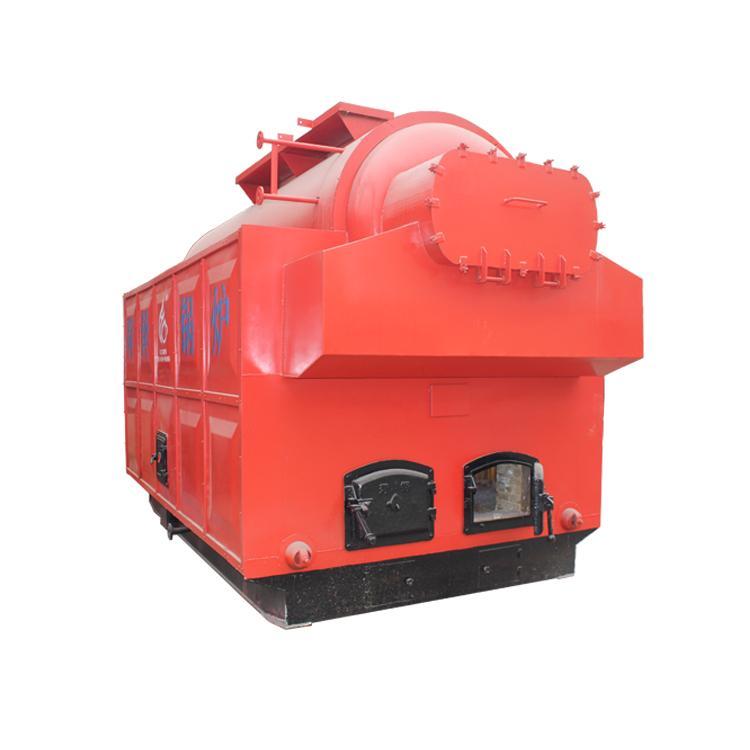

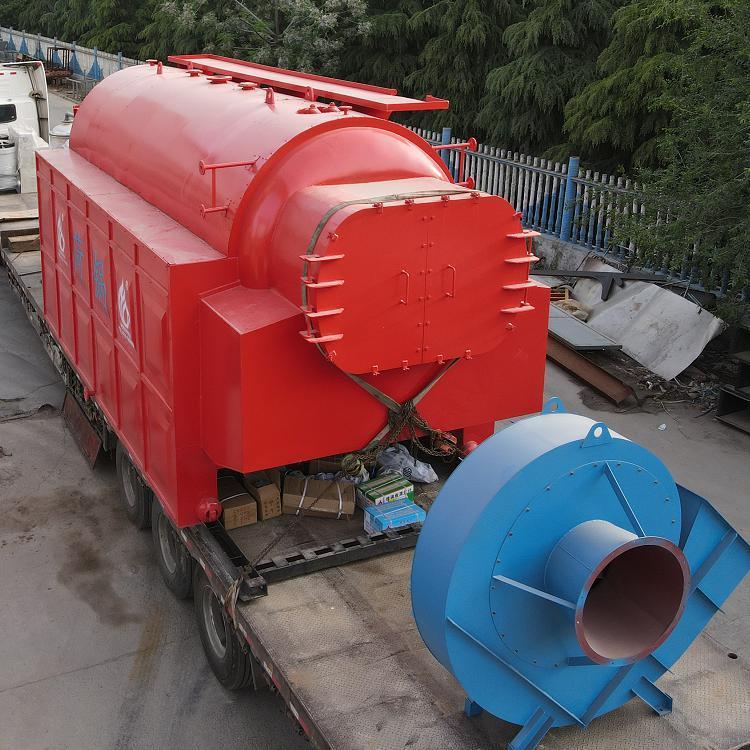
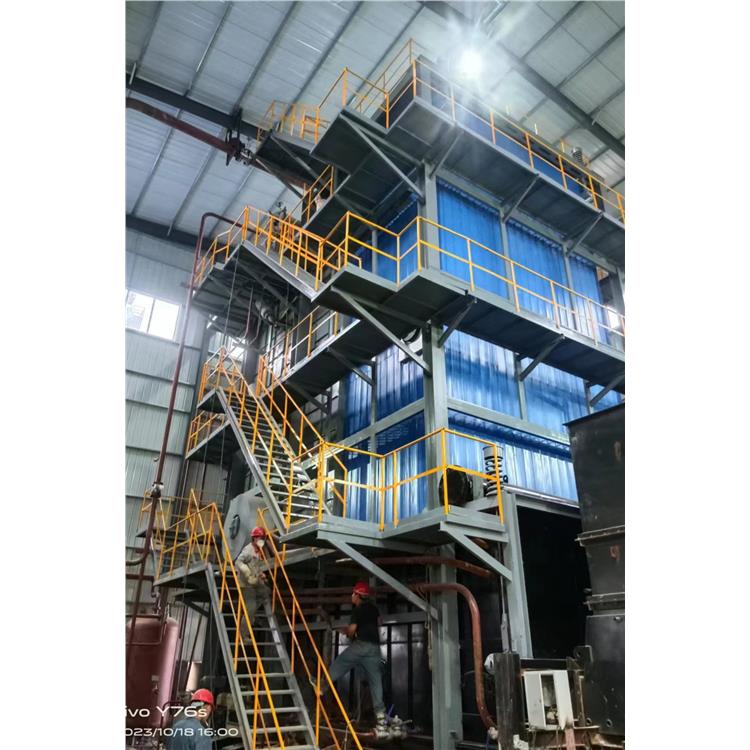


















Shandong Zhongjie Special Equipment (formerly Heze Boiler Factory Co., Ltd.) was established in 2001, located at No. 2218 Jinnan Road, Development Zone, Heze City, with a registered capital of 50 million yuan and total assets of 500 million yuan. The company has 7 business centers: boilers, deep-freeze containers, pressure vessels, central air conditioning, engineering installation, international trade, and Internet of Things. It has three factory sites on Jinnan Road, East Changjiang Road, and Bohai Road, covering a total of 200,000 square meters, with the main workshop spanning 83,000 square meters. It currently employs 710 people, including 247 engineers and technicians, and 82 intermediate-level technicians. In December 2016, it was recognized as a "High-tech Enterprise" by the Science and Technology Department. In June 2021, it was identified as a "Specialized and New Enterprise in Shandong Province" by the Ministry of Industry and Information Technology. In June 2022, it was recognized as a "Gazelle Enterprise in Shandong Province" and in August 2022, it was identified as a "Specialized and New Small Giant Enterprise" by the Ministry of Industry and Information Technology.
To prevent fouling issues in biomass boilers, the following measures can be taken:
Choose the right fuel: Opt for high-quality, moderately moist biomass fuel to avoid using overly wet or excessively contaminated fuel, which helps reduce the risk of coking.
Control fuel supply speed: Regulate the speed of fuel supply to avoid too fast or too slow delivery, ensuring complete combustion of fuel and reducing the likelihood of coking.
Maintain an appropriate combustion temperature: Keep the combustion temperature at an appropriate level, avoiding both too low and too high temperatures. Too low temperatures can lead to coking, while too high temperatures may cause incomplete combustion.
Regulate Air Supply: Properly control the air supply volume to ensure complete fuel combustion, avoiding excessive air entering the combustion chamber to reduce the risk of coking.
Regular cleaning and maintenance: Regularly clean the ash and carbon deposits in the combustion chamber to maintain the boiler's cleanliness and prevent the occurrence of slagging issues.
Install焦结监测device: Install a焦结monitoringdevice to continuously monitor the焦结condition within the combustion chamber, and take timely measures to address it, preventing the further progression of焦结issues.
Above are some common measures to prevent biomass boiler fouling. Specific preventive measures should be adjusted and optimized based on the specific conditions and operational requirements of the boiler.
Controlling the fouling of biomass boilers is a crucial measure to ensure the normal operation of the boiler and extend its lifespan. Here are some common methods for controlling fouling in biomass boilers:
Select fuel wisely: Opt for high-quality, appropriately moist biomass fuel, avoiding overly wet or excessively impure fuel to minimize the likelihood of coking.
Regulate Combustion Temperature: Reasonably control the combustion temperature of biomass boilers to avoid excessively high temperatures, reducing the fuel's residence time in the furnace and lowering the risk of slagging.
Enhanced Furnace Cleaning: Regularly clean the furnace to remove ash and dust inside, maintaining a clear passage and reducing the likelihood of coking.
Control Excessive Air Supply: Reasonably regulate the air supply during the combustion process of biomass boilers to prevent excessive air from entering the furnace, reducing the risk of fuel oxidation and coking.
Regular Ash Blowing: Conduct regular ash blowing for biomass boiler components such as economizers and superheaters to remove ash and slag, maintaining heat exchange efficiency and reducing the likelihood of scale formation.
Enhanced Monitoring and Inspection: Regularly monitor and inspect biomass boilers, including parameters such as furnace temperature, flue gas composition, and furnace pressure, to promptly identify any anomalies and take appropriate actions.
These measures can help control the fouling issue in biomass boilers, maintain normal boiler operation, and extend the service life of the boiler. Additionally, based on specific circumstances, other appropriate measures can be taken in conjunction with actual operating experience and technical requirements.
The extinguishing process and maintenance methods for the fully automatic biomass boiler are as follows:
Extinguishing Process:
Cease Fuel Supply: Prior to extinguishing the biomass boiler, stop the fuel supply first to ensure the fuel supply pipeline is closed.
Turn off the burner: Switch the burner's switch or the extinguish button on the control panel to the off position to stop the burner from operating.
Wait for Cooling: Allow the boiler to cool to a safe temperature, which usually takes some time. Do not operate during this period to avoid accidents.
Shut off power: After the boiler has completely cooled down, turn off the power switch of the boiler to ensure the boiler is de-energized.
Maintenance Instructions:
Clean combustion chamber: Regularly clean the combustion chamber to remove ash and dirt generated during the combustion process. Use appropriate tools and cleaning agents for cleaning to ensure the chamber remains clear and clean.
Heat Exchanger Cleaning: Regularly clean heat exchangers, particularly those on the flue side. During the combustion process, flue gases may contain particulates and slag, which can adhere to the heat exchanger surface, affecting heat transfer efficiency. Employing appropriate cleaning methods, such as mechanical or chemical cleaning, can reduce the accumulation of dirt.
Inspect and Replace Critical Components: Regularly inspect and replace critical components such as burners, valves, and sensors. Ensure these parts operate and perform normally to avoid malfunctions and safety hazards.
Water Treatment: Proper water treatment for boiler feed water to prevent impurities and sediments from depositing inside the boiler. Methods such as water softening, deoxygenation, and scaling removal can be employed to maintain the cleanliness and stability of the water supply.
Please provide the Chinese content that needs to be translated into American English.
Biofuel boiler furnace ash blowing refers to the cleaning operation of the combustion area within the furnace by means of an ash blowing device. The purpose of ash blowing is to remove the ash and slag inside the furnace, maintain the unobstructed flow of the combustion area, and enhance the combustion efficiency and operational stability of the boiler.
The ash blowing operation in furnace generally consists of two methods: mechanical ash blowing and pulse ash blowing.
Mechanical Ash Blowing: Mechanical ash blowing involves using mechanical devices, such as rotary ash blowers and chain ash blowers, to clean the combustion area within the furnace. The mechanical ash blower rotates or moves periodically, removing ash and soot from the combustion area.
Pulse Cleaning: Pulse cleaning involves using high-pressure gas or compressed air to jet the air flow into the combustion area of the furnace through nozzles, creating shock and vibration to remove ash and soot. Pulse cleaning is characterized by its effective and rapid ash removal.
The impact of the furnace ash blowing operation on biomass boilers is primarily reflected in the following aspects:
Clean combustion area: Furnace ash blowing removes ash and slag from the combustion zone, maintaining the area's unobstructed flow, which is conducive to complete fuel combustion and enhances combustion efficiency.
Reduce smoke gas resistance: Furnace ash blowing can burn the slag and accumulated ash in the combustion area, reducing the resistance in the smoke gas passage, which is conducive to the smooth discharge of smoke gas and improves the heat exchange efficiency of the boiler.
Our company attaches great importance to technological innovation and R&D design, boasting one municipal-level enterprise technology center in Heze City. We have established testing facilities for non-destructive testing, physical and chemical testing, welding testing, hydrostatic testing, and more. We are equipped with over 600 pieces of various equipment, including CNC machine tools, X-ray flaw detectors, digital ultrasonic flaw detectors, mechanical property testing machines, chemical analyzers, spectrometers, tensile testing machines, plasma welding machines, and more. The key products and technologies we have developed, such as temperature and pressure vessel welding, biomass boiler emission reduction, and waste heat utilization, have successively been selected for multiple Shandong Provincial Department of Industry and Information Technology science and technology innovation projects, key projects in Shandong Province, and Heze City innovation and excellence projects. We have cumulatively obtained 27 authorized utility model patents, 16 authorized invention patents, participated in drafting 2 standards, 2 industry standards, and registered 15 trademarks. The technical team of our company, in collaboration with Professor Yajiang Li of Shandong University, has jointly developed deep cryogenic container processing technology, utilizing the international plasma arc + filler wire tungsten inert gas arc welding (PAW-GTAW) technology. After being appraised as a provincial-level scientific and technological achievement, the technology level has reached an international standard in the field of deep cryogenic container manufacturing. Choose Zhongjie Special Equipment, and let's create brilliance together!
WeChat Official Account

Scan to follow Official Account



















