


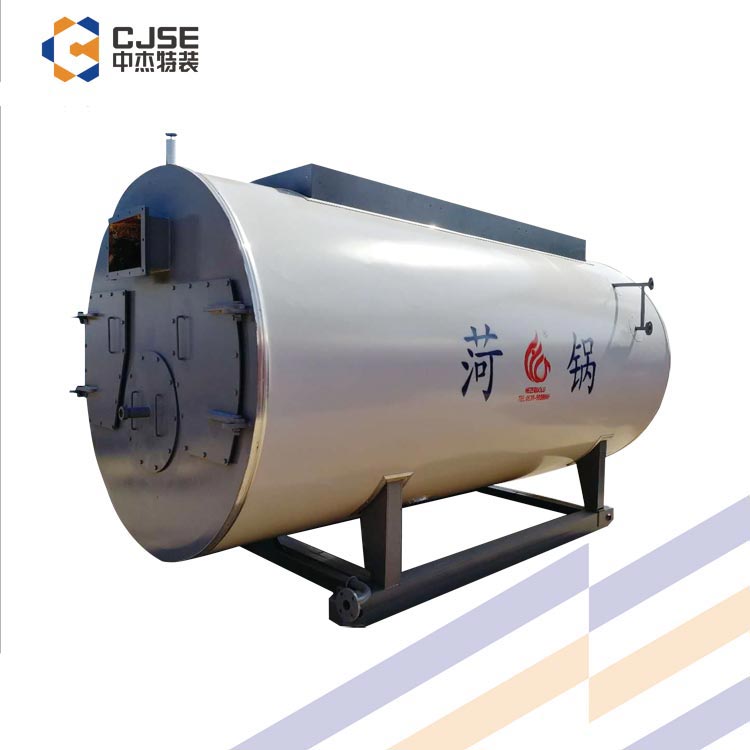

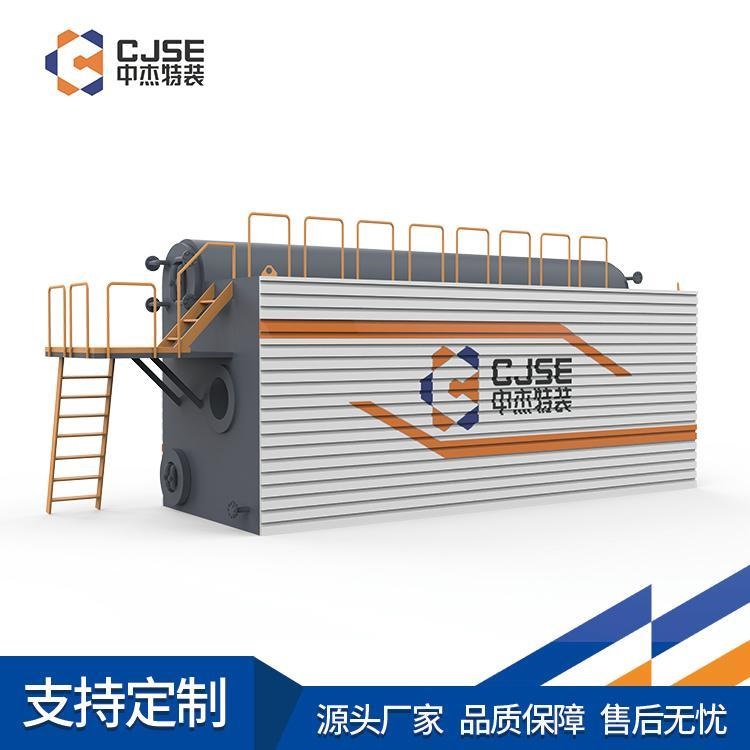
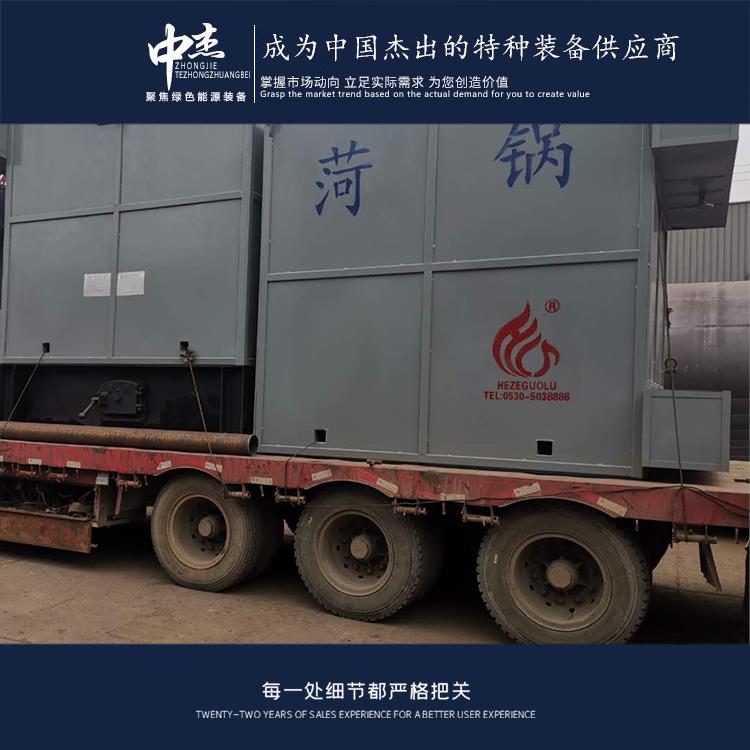


















Shandong Zhongjie Special Equipment (formerly Heze Boiler Factory Co., Ltd.) was established in 2001, located at No. 2218 Jinnan Road, Economic and Technological Development Zone, Heze City. With a registered capital of 50 million yuan and total assets of 500 million yuan, the company has seven business centers: boilers, deep-freeze containers, pressure vessels, central air conditioning, engineering installation, international trade, and Internet of Things. It has three factory sites on Jinnan Road, East Changjiang Road, and Bohai Road, covering a total area of 200,000 square meters, with the main workshop spanning 83,000 square meters. It currently employs 710 staff, including 247 engineers and technicians, and 82 intermediate-level technicians. In December 2016, it was recognized as a "High-tech Enterprise" by the Science and Technology Department. In June 2021, it was identified as a "Specialized and New Enterprise in Shandong Province" by the Ministry of Industry and Information Technology. In June 2022, it was recognized as a "Gazelle Enterprise in Shandong Province" and in August 2022, as a "Specialized and New Small Giant Enterprise" by the Ministry of Industry and Information Technology.
Industrial boiler thermal deaeration is a commonly used deaeration method, featuring:
- Deaeration: Thermal deaeration involves heating the boiler feed water to release dissolved oxygen from the water using heat. As the water temperature rises during the thermal deaeration process, the solubility of oxygen decreases, allowing for the effective removal of oxygen from the water.
- No Chemicals Required: Unlike other deaeration methods, thermal deaeration does not require the use of chemicals, thereby avoiding environmental pollution and equipment corrosion caused by chemicals. It also reduces operating costs and complexity.
- Automated Control: Thermal deaeration can be achieved through an automated control system, which adjusts the feed water temperature and flow rate based on the boiler's operating status and water quality to achieve optimal deaeration results.
- Wide Application Range: Thermal deaeration is suitable for various types of industrial boilers, including coal-fired, gas-fired, and oil-fired boilers, among others. Whether for small or large boilers, thermal deaeration can be used for deaeration treatment.
- Boosts Boiler Efficiency: Removing dissolved oxygen from the water can reduce corrosion and oxidation reactions within the boiler, extending its lifespan. Additionally, reducing oxygen presence can enhance the boiler's thermal efficiency and lower energy consumption.
- Note: While thermal deaeration effectively removes oxygen from the water, it may not address other water quality issues such as hardness and alkalinity. Therefore, in practical applications, it is necessary to consider the water quality characteristics and boiler requirements to select an appropriate deaeration method.
When designing a fuel-gas boiler room, pay attention to the following aspects:
- Safety Considerations: Ensure the design of the boiler room complies with relevant safety standards and regulations. Consider fire risks and set up appropriate firewalls, fire doors, and fire isolation facilities. Ensure good ventilation in the boiler room and install suitable ventilation equipment and flue systems to expel harmful gases produced by combustion.
- Space and Layout: Plan the space and layout of the boiler room based on the number and size of the boilers. Ensure there is sufficient space for operation, maintenance, and cleaning. Arrange the boilers, fuel storage equipment, flue systems, and pipeline layouts for ease of operation and maintenance.
- Fuel Supply and Storage: Consider the requirements for fuel supply and storage. Ensure the safety and reliability of fuel supply pipelines and equipment, avoiding leaks and contamination. Plan the capacity and location of fuel storage equipment reasonably to ensure adequate fuel supply and compliance with relevant safety requirements.
- Emission and Waste Gas Treatment: Consider the emissions and treatment of waste gases produced by combustion. Set up appropriate flue systems and smoke gas treatment equipment to reduce the impact of waste gas emissions on the environment. Ensure the design and layout of the flue system are reasonable and can effectively expel smoke and waste gases.
- Control and Monitoring Systems: Design appropriate control and monitoring systems to ensure the safety and operation of the boilers. This includes monitoring and control equipment for parameters such as temperature, pressure, and flow, as well as alarm and automatic shutdown devices. Ensure that operators can promptly understand the operating status of the boiler and take necessary actions.
The key to maintaining a hot water boiler is regular maintenance and inspections. Here are some common maintenance steps and precautions:
Clean the burner and flue: Regularly clean the burner and flue to remove soot and dirt, maintaining combustion and heat exchange efficiency. Use cleaning tools and equipment as per the operation manual.
Check water level and pressure: Regularly inspect the water level and pressure of the hot water boiler to ensure safe operation within the specified range. Refill water and adjust pressure to avoid issues caused by low or high water levels.
Inspect water quality: Conduct regular water quality tests to check hardness, alkalinity, oxygen content, and other indicators. Take appropriate water treatment measures based on test results, such as descaling and replenishing missing chemicals, to prevent scale and corrosion damage to the boiler.
Check safety devices: Regularly inspect the safety devices of the hot water boiler, including safety valves, pressure switches, and water level controllers, to ensure normal operation and safe boiler operation.
Inspect the electrical system: Regularly check the electrical system of the boiler, including power connections, controllers, and sensors, to ensure proper operation of electrical equipment and avoid electrical failures.
Regularly drain: Regularly drain the sludge and impurities from the boiler to avoid their impact on the boiler. Develop a reasonable drainage plan based on the boiler's usage and water quality conditions.
Keep records and monitor: Record the boiler's operating parameters, maintenance records, and fault situations, and regularly monitor and analyze them to identify and address issues promptly.
Train operators: Ensure that operators are adequately trained.
Steam boiler equipment water treatment refers to the process of treating water in steam boilers to ensure normal operation and extend the lifespan of the equipment. Below are the basic principles of steam boiler equipment water treatment:
Water Quality Requirements: The water quality in steam boilers is of high demand, usually requiring the removal of impurities, dissolved oxygen, and hardness substances. Impurities and hardness substances can cause scaling and corrosion on the boiler inner walls, while dissolved oxygen can lead to corrosion and the formation of bubbles.
Removal of Impurities: Common methods for removing impurities from water include sedimentation, filtration, and ion exchange. Sedimentation involves adding chemicals to make impurities settle, filtration removes impurities through filtering media, and ion exchange uses resins to adsorb and exchange ions to remove impurities from the water.
Hardness Adjustment: The hardness substances in water are mainly calcium and magnesium salts, which can cause scaling on the boiler inner walls. Hardness can be adjusted by adding chemicals or using water softening equipment to prevent scaling issues.
Removal of Dissolved Oxygen: Dissolved oxygen can cause corrosion and bubble formation, which can be removed by adding oxidants or using deoxygenation equipment.
pH Control: The pH value of the water in steam boilers affects equipment corrosion and scaling. It is usually necessary to maintain the water pH within an appropriate range using buffers or regulators.
Regular Testing and Maintenance: Regular water quality testing of the steam boiler equipment should include measuring hardness, dissolved oxygen, and pH levels, and implementing appropriate water treatment measures and maintenance based on the test results.
Steam boiler equipment water treatment is a critical aspect for ensuring normal boiler operation and extending equipment lifespan. Proper water treatment measures can effectively prevent scaling, corrosion, and equipment failures on the boiler inner walls.
Zhong Jie Special Equipment adheres to the great vision of "realizing employees' dreams, creating value for customers, and striving for the prosperity and strength of our motherland," wholeheartedly dedicated to the development of green energy equipment. We offer society high-value products and services!
WeChat Official Account

Scan to follow Official Account



















