


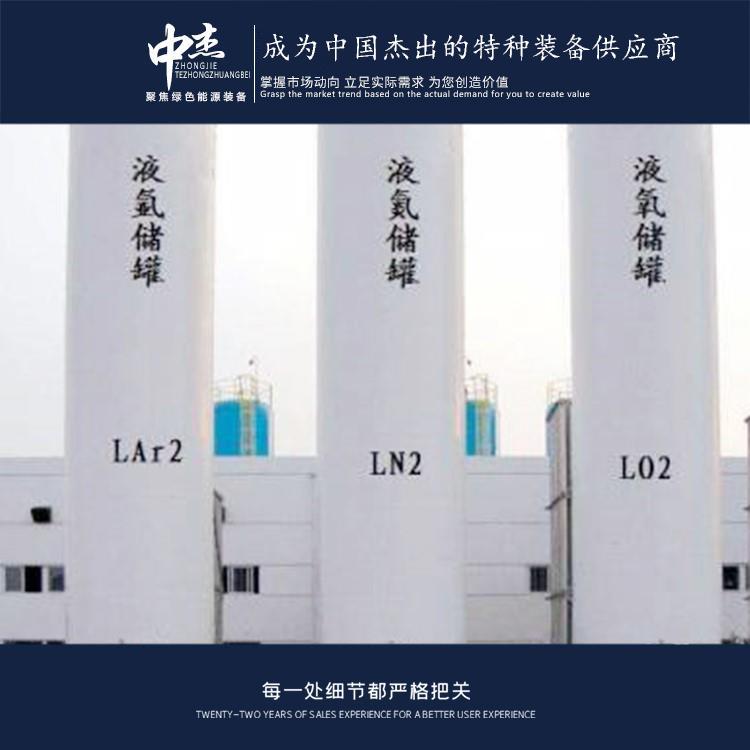

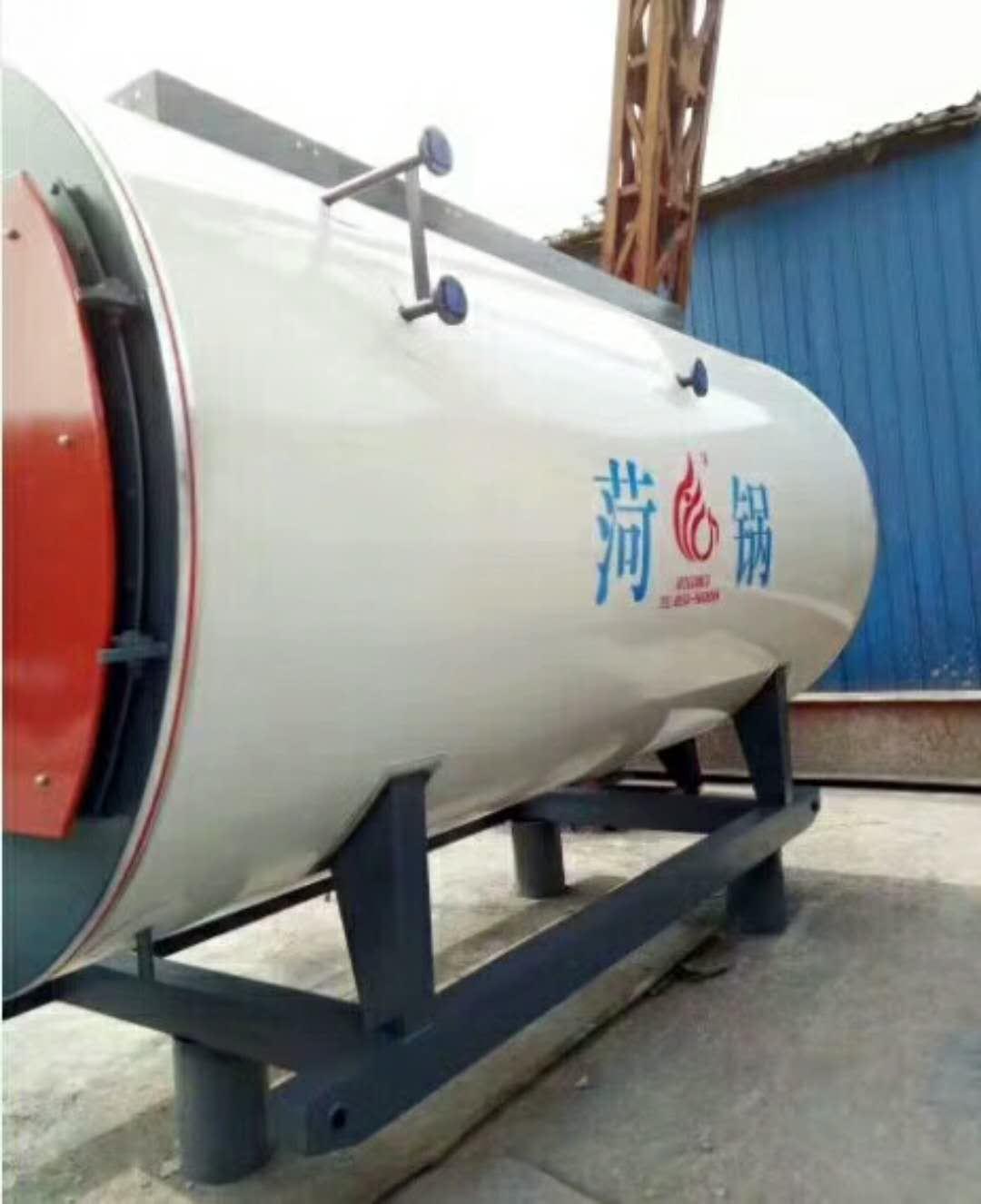
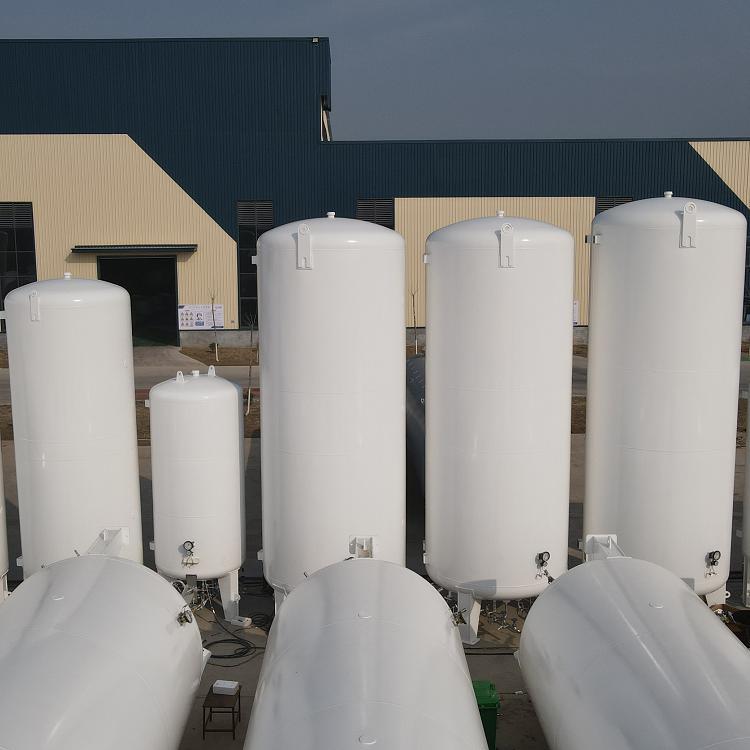


















Shandong Zhongjie Special Equipment (formerly Heze Boiler Factory Co., Ltd.) holds an A-grade boiler manufacturing license, an A2-grade pressure vessel manufacturing license, an A2-grade pressure vessel design license, a B-grade boiler installation license, and GB2/Class and GC2/Class pressure pipeline installation licenses, as well as a qualification for electromechanical equipment installation contracting. It is a member of the China Boiler and Water Treatment Association, the China Chemical Equipment Association, and the council unit of the Shandong Equipment Manufacturing Association. The company has also passed certifications for the ISO9001 Quality Management System, ISO14001 Environmental Management System, OHSAS18001 Occupational Health and Safety Management System, and the American ASME/U2 certification.
Under China's "Regulations for Safety Supervision of Pressure Vessel Technology," carbon dioxide storage tanks are classified as Category II pressure vessels. According to these regulations, pressure vessels are categorized as follows:
- Category I pressure vessels: Pressure vessels with working pressures of 10 MPa (megapascals) or higher, such as steam boilers and pressure vessels.
- Category II pressure vessels: Pressure vessels with working pressures between 0.1 MPa and 10 MPa, such as air compressors and liquefied gas storage tanks.
- Category III pressure vessels: Pressure vessels with working pressures between 0.05 MPa and 0.1 MPa, such as storage tanks.
- Category IV pressure vessels: Pressure vessels with working pressures below 0.05 MPa, such as gas cylinders.
Based on this classification, carbon dioxide storage tanks typically have working pressures above 0.1 MPa, thus falling under Category II pressure vessels. It's important to note that specific classification criteria may vary due to different regional regulations and standards. When using and managing carbon dioxide storage tanks, it is necessary to comply with the corresponding legal and standard requirements.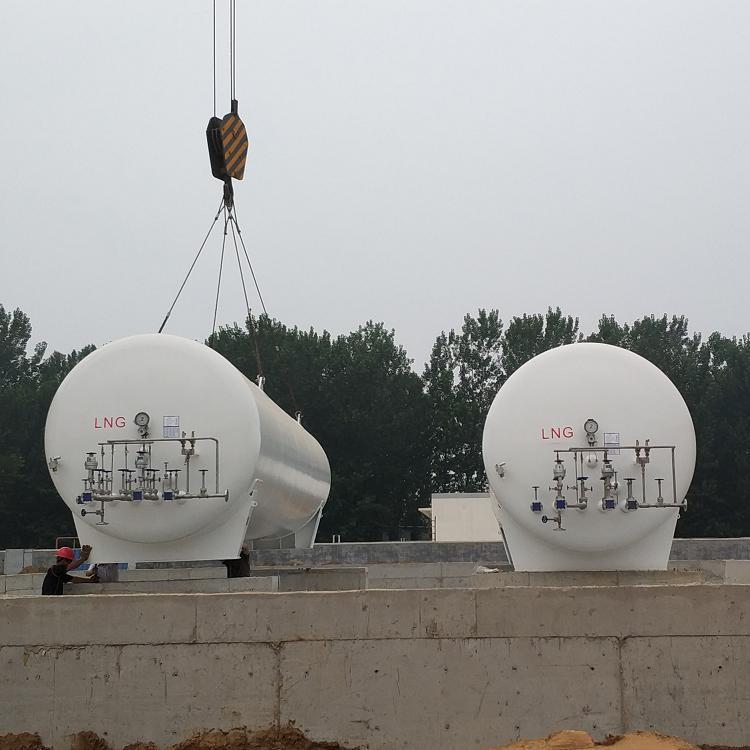
Carbon dioxide storage tanks are equipment designed for storing and transporting carbon dioxide gas, with their operation based on the principles of pressure vessels and the physical properties of carbon dioxide. Pressure Vessel Principle: Carbon dioxide storage tanks are pressure vessels capable of withstanding internal gas pressure. They are typically made from high-strength materials like steel. The tank's design and structure can withstand high pressure, ensuring safe storage and transport of the gas. Compressed Gas Storage: Carbon dioxide is a gas at room temperature but can be compressed into a liquid under high pressure. Storage tanks utilize high pressure to compress the gas into a liquid, achieving a higher storage density. Liquid carbon dioxide occupies less volume, allowing for more gas to be stored. Level Control: The storage tanks are equipped with level control systems to monitor and control the liquid level of carbon dioxide. These systems usually include level sensors and control valves, ensuring the tank's level remains within a safe range. Pressure Control: The tanks also have pressure control systems to monitor and control the internal gas pressure. These systems often include pressure sensors and safety valves, ensuring the pressure within the tank stays within safe limits, preventing damage or safety risks due to excessive or insufficient pressure. Through these principles, carbon dioxide storage tanks can safely store and transport carbon dioxide gas to meet the needs of various fields, such as food processing, beverage manufacturing, and fire suppression. When using carbon dioxide storage tanks, it is essential to follow relevant safety operating procedures and guidelines to ensure safe operation and use.
Dry ice is a solid form of carbon dioxide gas produced under high pressure. It has several applications including:
- Refrigeration of food and pharmaceuticals: Dry ice is widely used for the transportation and storage of food and pharmaceuticals. Its low temperature and rapid cooling speed effectively maintain the freshness and quality of the products.
- Special effects and stage performances: Dry ice is also extensively used in special effects and stage performances. When it comes into contact with environmental heat, it quickly turns into gas, producing a large amount of white smoke, creating a mysterious and dramatic atmosphere.
- Cleaning and disinfection: Dry ice can also be used for cleaning and disinfection. Upon contact with surfaces, the physical impact from the temperature drop and the process of sublimation can effectively remove dirt, bacteria, and viruses without leaving residues.
- Laboratories and scientific research: Dry ice finds applications in laboratories and scientific research as well. It can be used for freezing samples, creating low-temperature experimental environments, and making cold traps and condensers.
It is important to note that safety should be a priority when using dry ice, avoiding direct contact with skin and eyes, and not using it in confined spaces to prevent the accumulation of carbon dioxide, which can lead to oxygen deficiency.
二氧化碳储罐的检验频率应根据当地的法规、标准和制造商的建议来确定。一般来说,以下几个因素会影响二氧化碳储罐的检验频率: 法规和标准要求:不同和地区可能有不同的法规和标准,规定了储罐的检验要求和频率。例如,美国的DOT标准要求液化气体储罐每5年进行一次外部检验和每10年进行一次内部检验。 制造商建议:储罐的制造商通常会提供关于检验频率的建议。这些建议基于储罐的设计、材料和使用寿命等因素,可以作为制定检验计划的参考。 使用环境和条件:储罐的使用环境和条件也会影响检验频率。例如,如果储罐暴露在腐蚀性环境中或经常受到机械应力,可能需要更频繁的检验。 一般来说,液化气体储罐的外部检验通常是通过目视检查、超声波检测、磁粉检测等方法进行的,以评估储罐的外部状况和可能存在的缺陷。内部检验可能需要排空储罐,并通过内部检查、厚度测量、焊缝检测等方法来评估储罐的内部状况。 重要的是,储罐的检验应由经过培训和有经验的人员进行,并严格按照相关的法规、标准和制造商的建议进行。定期的检验和维护可以确保储罐的安全性和可靠性,减少事故的风险。
Zhongjie Special Equipment adheres to the great vision of "realizing employees' dreams, creating customer value, and striving for the prosperity and strength of our motherland," and is dedicated to the development of the green energy equipment industry. We offer society high-quality products and services at competitive prices!
WeChat Official Account

Scan to follow Official Account



















