


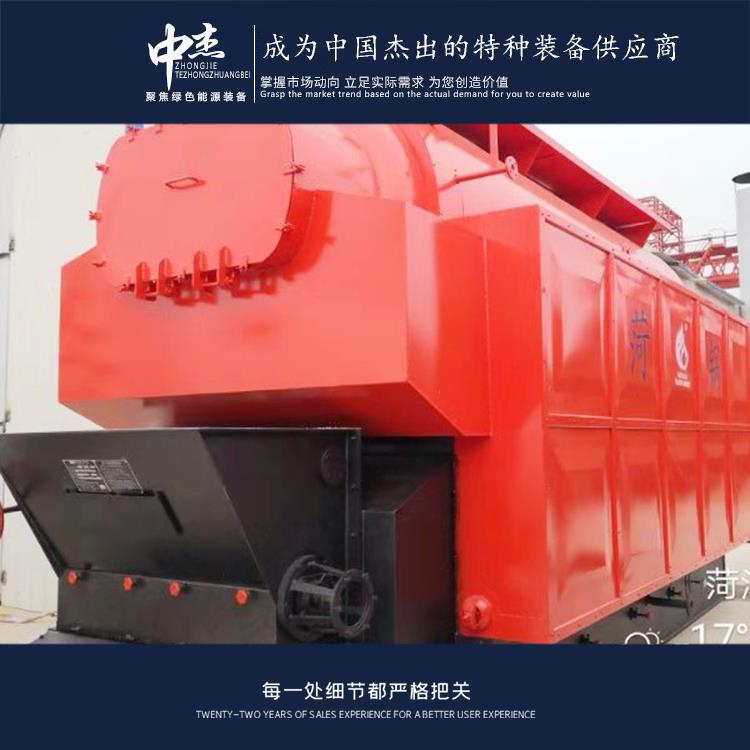

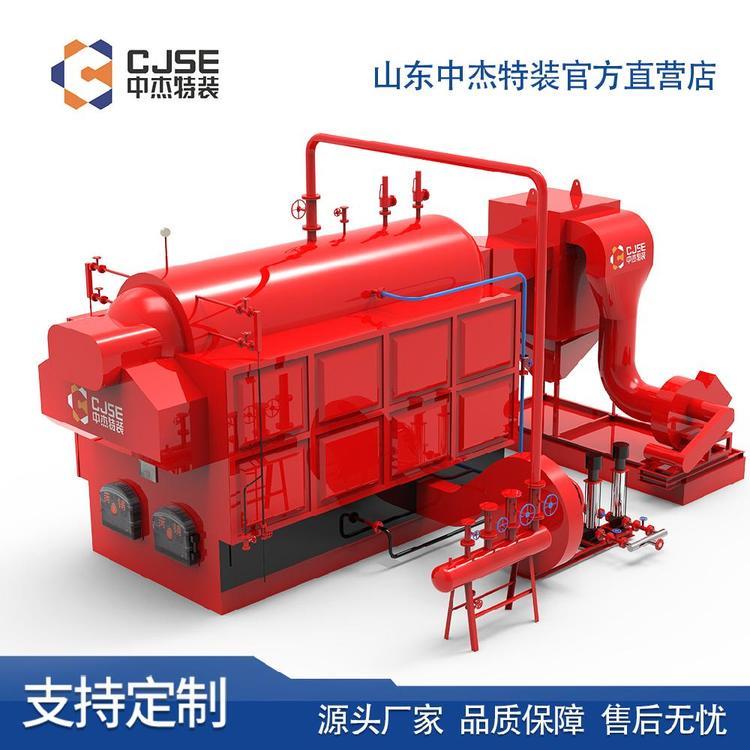
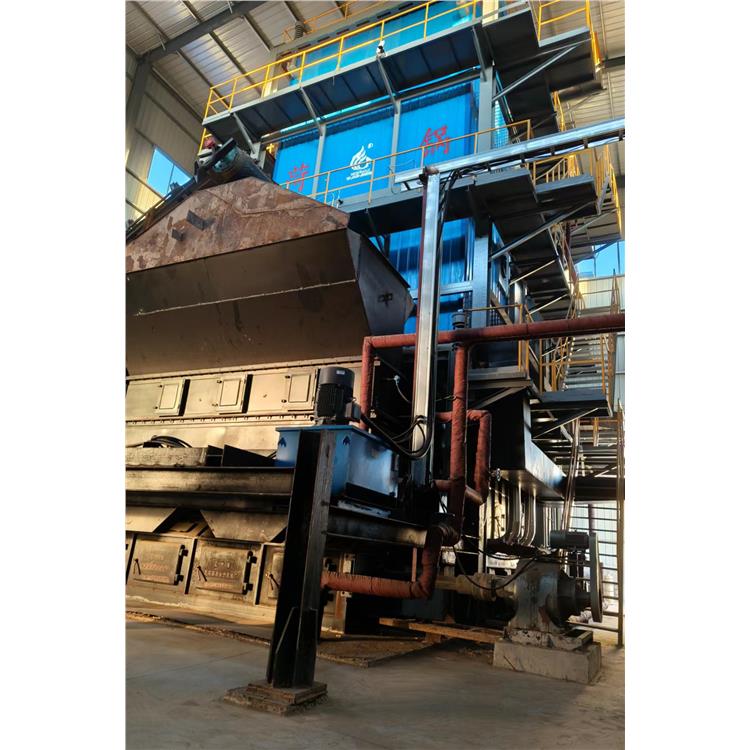


















Shandong Zhongjie Special Equipment (formerly Heze Boiler Factory Co., Ltd.) holds an A-grade boiler manufacturing license, A2-grade pressure vessel manufacturing license, A2-grade pressure vessel design license, B-grade boiler installation and GB2, GC2 class pressure pipeline installation licenses, as well as equipment and machinery installation contracting qualifications. It is a member of the China Boiler and Water Treatment Association, the China Chemical Equipment Association, and the Council Member of the Shandong Equipment Manufacturing Association. The company has also passed the ISO9001 Quality Management System certification, ISO14001 Environmental Management System certification, OHSAS18001 Occupational Health and Safety Management System certification, and the U.S. ASME/U2 certification.
The combustion process of biomass boilers typically includes the following steps:
Supply Fuel: Biomass fuel such as wood chips, straw, wheat straw, fruit shells, etc., is supplied into the combustion chamber. Fuel can be fed into the combustion chamber automatically through the feeding system or manually.
Ignition: Ignite the fuel in the combustion chamber. Ignition can be achieved through an electric spark igniter, ignition fuel, or other ignition devices.
Initial Ignition: Fuel begins to burn after ignition, initiating a combustion reaction. During the initial combustion phase, volatile components in the fuel start to release, producing combustible gases.
Vaporization and combustion: The volatile content of the fuel vaporizes at high temperatures, forming combustible gases such as and . These combustible gases mix with oxygen in the combustion chamber, undergoing combustion reactions to release heat energy.
Combustion Adjustment: By adjusting fuel supply, oxygen supply, and combustion chamber temperature, the stability and efficiency of the combustion process are controlled. Automatic control systems can be used to regulate and optimize the combustion.
Flue Gas Emission: During the combustion process, flue gas is discharged from the boiler through the chimney or flue gas exhaust system. The flue gas may contain pollutants such as soot, carbon dioxide, and nitrogen oxides, which require treatment by corresponding emission control equipment.
The combustion process of biomass boilers requires a reasonable fuel supply, oxygen supply, and combustion adjustment to achieve stable and environmentally friendly combustion effects. Different types of biomass boilers may have varying combustion methods and equipment, but they generally follow similar combustion principles.
Hot water boilers feature the following main characteristics:
Energy-saving: The combustion technology and heat exchanger design used in the hot water boiler achieve high energy conversion and utilization, improving energy efficiency and reducing energy consumption and operational costs.
Environmental Emission Reduction: The hot water boiler employs advanced combustion technology and flue gas purification equipment during the combustion process, effectively controlling and reducing emissions of pollutants, thus protecting the environment and human health.
Safety-Reliable: The hot water boiler is equipped with comprehensive safety protection devices and control systems, capable of real-time monitoring and controlling the boiler's operating status to ensure safe and reliable operation and prevent accidents.
Temperature control intelligence: The temperature control system and intelligent control equipment equipped with the hot water boiler enable temperature control and energy consumption management, enhancing system stability and comfort.
Multi-energy supply: Hot water boilers can accommodate various energy sources, including gas, oil, biomass, solar energy, etc., achieving energy diversity and sustainable development.
Flexible Installation: The hot water boiler features versatile installation methods and structural design, allowing for customization and setup according to different locations and requirements, catering to the needs of both architectural and industrial sites.
Stable: The heat exchangers and combustion systems in the hot water boiler enable it to quickly reach the set temperature and maintain a stable supply of hot water, meeting the user's demand for hot water.
Ease of Maintenance: The maintenance and upkeep of the hot water boiler are relatively straightforward, with a clear equipment structure that facilitates cleaning and repairs, reducing downtime and maintenance costs.
These features make the hot water boiler an ideal equipment for supplying hot water, widely used in residential areas, industrial plants, commercial buildings, and other locations, providing users with environmentally friendly, safe, and comfortable hot water supply.
Advantages of biomass fuel:
Renewable Energy: Biomass fuel is a renewable energy source with a wide range of sources, including wood, straw, and waste, making its supply more sustainable compared to fossil fuels.
Environmental and Low-Carbon: The amount of carbon dioxide emitted during the combustion of biomass fuel is roughly equivalent to the amount absorbed during its growth, resulting in almost no net increase in carbon dioxide emissions, which has a positive effect on mitigating climate change.
Reduce Waste Management: Biomass fuel can utilize agricultural straw, wood waste, and other waste materials, reducing waste management and emissions issues.
High energy utilization efficiency: Biomass fuel has a high calorific value and high combustion efficiency, which can be effectively converted into thermal or electrical energy, providing a reliable energy supply.
The use of biomass boilers:
Heating Systems: Biomass boilers can be used in heating systems such as heating, warm water, and steam supply, widely applied in residential areas, industrial factories, and commercial buildings, etc.
Industrial Production: Biomass boilers can provide thermal energy for industrial production, such as in the pulp and paper, food processing, and chemical industries, meeting the thermal energy needs throughout the production process.
Power Generation System: Biomass boilers can be combined with steam turbine generator sets to convert the thermal energy produced by combustion into electrical energy for power supply.
Hot Water Supply: Biomass boilers can be used for hot water supply, such as for swimming pools, hot springs, hotels, and other similar facilities.
Agricultural Utilization: Biomass boilers can utilize agricultural waste like straw from crops, addressing energy needs in rural areas and providing the required thermal energy for agricultural production.
The use of biomass boilers is environmentally friendly, sustainable, and efficient, effectively utilizing biomass resources, reducing dependence on fossil fuels, lowering carbon emissions, and promoting sustainable development.
The control of water level during the operation of biomass boilers is crucial, primarily to ensure the safe and normal operation of the boiler. The following are general methods for water level control:
Water Level Gauge Monitoring: Biomass boilers are typically equipped with water level gauges to monitor the water level inside the boiler. These gauges can be glass tube, electrical, or pressure gauges, among others. The readings from the water level gauge provide real-time insights into the water level within the boiler.
Water Level Controller: Biomass boilers typically come equipped with a water level controller for automatic water level regulation. The controller adjusts the water level inside the boiler by controlling the operation of devices like feed water pumps or drain valves, based on the set water level range.
Water Level Control: When the water level in the boiler is too low, the water level controller sends a signal to start the feed pump, replenishing water into the boiler to maintain the level within a safe range. Water level control requires adjustments based on the actual needs of the boiler and the changes in water level.
Wastewater Control: When the boiler water level is too high, the water level controller sends a signal to activate the drain valve, expelling excess water to maintain the level within a safe range. The wastewater control must also be adjusted according to the actual needs of the boiler and changes in water levels.
Alarm Protection: Should the boiler water level exceed the high limit or fall below the low limit, the water level controller will emit an alarm signal to alert the operator to take action. Additionally, the boiler should be equipped with a water level protection device, which will automatically shut off the burner's gas supply when an abnormal water level is detected, ensuring the safety of the boiler.
Be mindful that the control of water levels must be based on the specific design of the boiler and the operating manual to ensure proper and safe operation. Additionally, regular inspections and maintenance of devices like the water level gauge and controller are essential to ensure their normal functioning and accuracy.
ZJ Special Equipment adheres to the great vision of "realizing employees' dreams, creating customer value, and striving for the prosperity and strength of our motherland," focusing on the development of green energy equipment industry, and dedicating high-value products and services to society!
WeChat Official Account

Scan to follow Official Account



















