


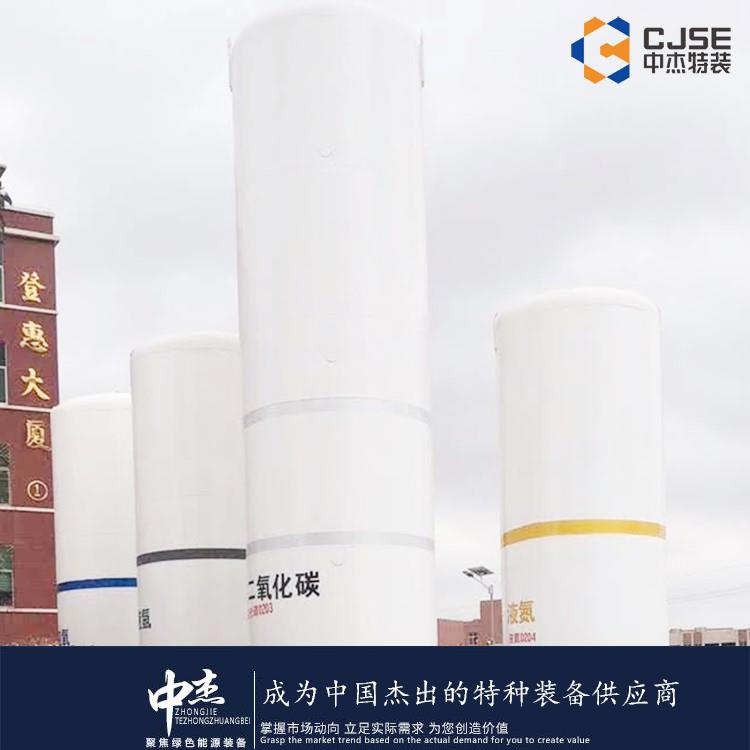

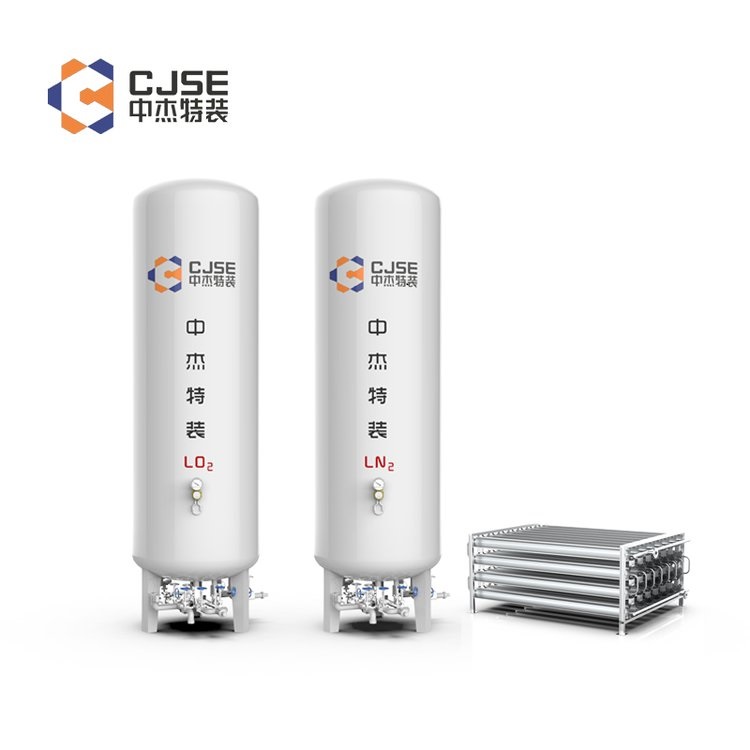
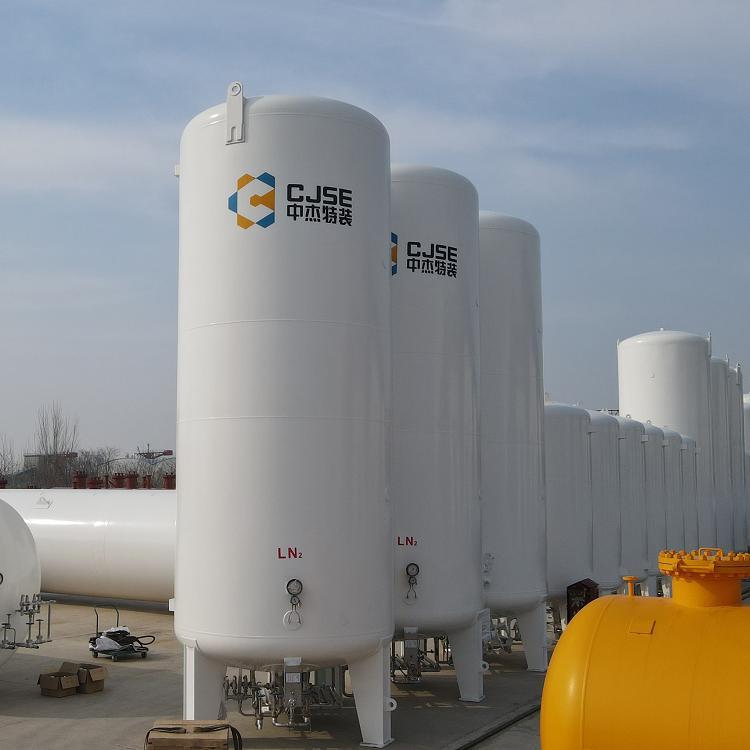


















Shandong Zhongjie Special Equipment's main products include: fuel (gas) boilers, organic heat carrier boilers, biomass boilers, waste heat boilers, and other boiler products; vacuum insulation cryogenic pressure vessels such as LNG tanks, oxygen-nitrogenargon tanks, CO2 tanks; pressure vessel products like denitration engineering equipment, heat storage and energy storage equipment, complete chemical equipment; central air conditioning and ventilation equipment such as ground (water) source heat pumps, air source units, water-cooled screw units, and air-cooled modular units. Planned products include large-scale energy centers, LNG transport vehicles, LNG tank containers, and other green energy equipment.
Carbon Dioxide Applications in the New Energy Field
Carbon Capture and Storage (CCS): This is a technology to reduce carbon dioxide emissions by capturing carbon dioxide from industrial emission sources and storing it in underground reservoirs to prevent it from entering the atmosphere. This helps in reducing greenhouse gas emissions and mitigating climate change.
Carbon Utilization: Carbon dioxide can be utilized to produce valuable chemicals and fuels. For instance, through carbon dioxide catalytic conversion technology, carbon dioxide can be converted into fuels like ethanol, which are either combustible or chemical raw materials. This carbon utilization technology aids in reducing reliance on traditional fossil fuels and promotes the development of sustainable energy.
Carbon Dioxide Batteries: This is a new battery technology that uses carbon dioxide as the battery's electro material. By converting carbon dioxide into electrical energy, carbon dioxide batteries can serve as a sustainable energy storage solution, contributing to the advancement of electric vehicles and renewable energy.
Carbon Dioxide Photocatalysis: This is a technology that utilizes solar energy to convert carbon dioxide into useful chemicals. By using photocatalysts, carbon dioxide and water can be converted into combustible gases or organic compounds, thereby achieving the resource utilization of carbon dioxide.
These applications aim to reduce carbon dioxide emissions, improve energy efficiency, and promote the development of sustainable energy. However, these technologies are still in continuous development and research, requiring further technological breakthroughs and practical verification.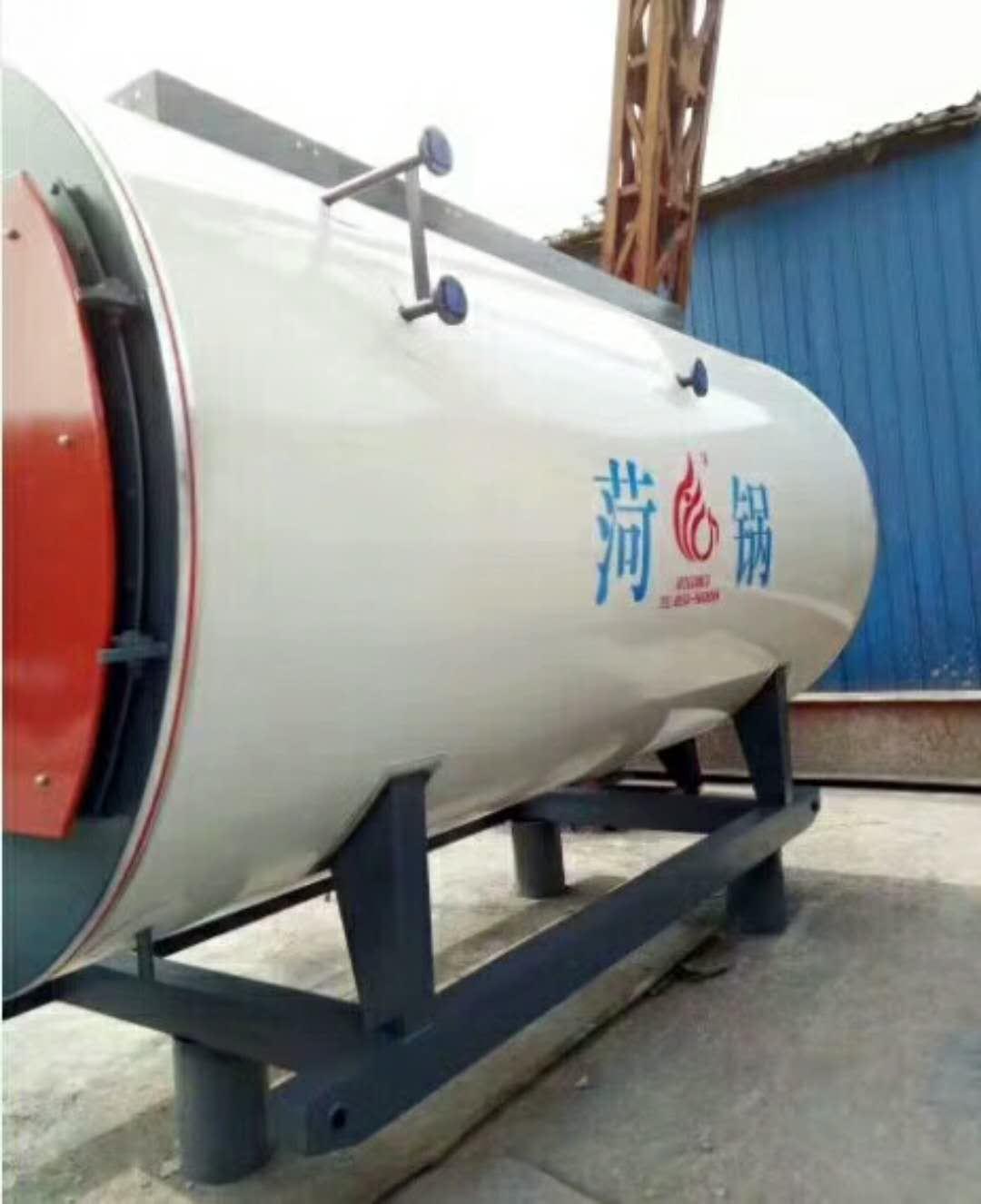
During routine inspections of carbon dioxide storage tanks, follow these steps:
- Visual Inspection: Check for any visible damage, corrosion, or oil leakage on the tank's exterior. Pay attention to the tank shell, valves, and pipe connections for any anomalies.
- Valve and Pipe Inspection: Verify that the tank's inlet and outlet valves and pipe connections are functioning properly, with no leaks or loose fittings. Ensure valves operate smoothly and reliably.
- Pressure Relief Device Inspection: Check that the tank's pressure relief devices (e.g., safety valves) are functioning correctly. Confirm that the set pressure of the relief devices meets requirements.
- Level Measurement System Inspection: Assess the accuracy and reliability of the level measurement system. Calibrate the level sensors to ensure accurate level readings.
- Pressure and Temperature Inspection: Check that the tank's pressure and temperature sensors are working properly. Verify the accuracy of pressure and temperature measurements.
- Safety Equipment Inspection: Examine the tank's safety equipment, such as safety valves, pressure sensors, and temperature sensors, to ensure proper operation. Confirm that their set parameters are in compliance.
- Fire Protection Equipment Inspection: Ensure that fire protection equipment around the tank is in good condition and that extinguishers, sprinkler systems, etc., are functioning correctly.
- Liquid and Gas Quality Inspection: Confirm that the quality of carbon dioxide liquid and gas in the tank meets requirements, with no impurities or contaminants.
- Record and Report: Document the date of inspection, the items inspected, any issues found, and the actions taken. Submit inspection reports to relevant departments or management as needed.
These are general steps for routine inspections of carbon dioxide storage tanks. Specific procedures should be tailored to the tank's characteristics and requirements. When conducting inspections, adhere to relevant safety operating procedures and have trained personnel perform the operations.
Carbon dioxide storage tanks offer the following advantages: High storage density: Carbon dioxide storage tanks can compress CO2 gas into a liquid state, significantly increasing storage density. Compared to storing it in gaseous form, liquid CO2 can be stored in smaller tanks, saving space and costs. Environmental and renewable: Carbon dioxide is an environmentally friendly gas, and its increased concentration in the atmosphere can lead to warming and climate change. By storing and utilizing CO2, we can reduce its emissions into the atmosphere, promoting environmental protection and sustainable development. Wide range of applications: Carbon dioxide storage tanks are widely used in various fields, including the food and beverage industry, industry, fire suppression, and gas supply. CO2 can be used as a food preservative, beverage carbonating agent, gas, and extinguishing agent, with broad applications and market demand. Safe and reliable: During design and manufacturing, CO2 storage tanks typically use high-strength materials (such as carbon steel or stainless steel) with good pressure resistance and safety. The tanks are usually equipped with safety valves, pressure gauges, level indicators, and other accessories to ensure safe operation. Additionally, CO2 is a non-flammable, non-explosive gas, making it relatively safe. These advantages make carbon dioxide storage tanks a crucial storage and supply equipment, widely used in multiple industries. However, it is still necessary to follow relevant safety operation procedures and standards when using carbon dioxide storage tanks to ensure safe operation and use.
To maintain the stability of carbon dioxide storage tanks, several details should be considered:
- Foundation Design: The foundation design of the tank must comply with relevant standards and regulations, and possess sufficient strength and stability. The foundation should take into account the weight, pressure, and geological conditions of the tank, ensuring it can be securely placed on the foundation.
- Cushioning and Fastening Devices: Appropriate cushioning, such as rubber pads or steel plates, should be installed between the tank and the foundation to reduce friction and vibration. Additionally, use fastening devices like bolts or welding to secure the tank to the foundation, preventing movement and tilting.
- Leveling the Site: The site where the tank is installed should be kept level, without any significant slope or unevenness. If the site is sloped or uneven, adjustments and corrections should be made to ensure the tank's stability.
- Anti-seismic Measures: In regions prone to earthquakes, additional anti-seismic measures are required, such as setting up seismic supports and enhancing the tank's seismic resistance to improve stability.
- Regular Inspections: Regularly inspect the tank's fastening devices and connection points to ensure they are intact. Any loosening, wear, or damage should be repaired or replaced promptly.
- Load Distribution: Evenly distribute loads above the tank, such as platforms or pipelines, to balance the weight distribution of the tank and reduce the impact of uneven loads on stability.
- Safety Distance: The tank should maintain adequate safety distances from other equipment, buildings, and fire sources to prevent accidental collisions or fires from affecting the tank's stability.
It should be noted that the installation of carbon dioxide...
Our company places great emphasis on technological innovation and R&D design. We have one municipal-level enterprise technology center in Heze City, equipped with testing facilities for non-destructive testing, physical and chemical testing, welding testing, hydrostatic testing, etc. We have over 600 various instruments and equipment, including CNC machine tools, X-ray flaw detectors, digital ultrasonic flaw detectors, mechanical property testing machines, chemical analyzers, spectrometers, tensile testing machines, plasma welding machines, and more. The key products we have developed, such as thermal pressure vessel welding, biomass boiler emission reduction, and waste heat utilization, have successively been shortlisted for multiple Shandong Provincial Department of Industry and Information Technology science and technology innovation projects, key projects of Shandong Province, and Heze City innovation and excellence projects. We have accumulated a total of 27 authorized utility models, 16 authorized inventions, participated in drafting 2 standards, 2 industry standards, and registered 15 trademarks. The technical team of our company, in collaboration with Professor Li Yajiang of Shandong University, has developed deep cryogenic container processing technology using the international plasma arc + wire filling tungsten inert gas arc welding (PAW-GTAW) technology. After the provincial-level scientific and technological achievement appraisal, the technology level has reached an international standard in the field of deep cryogenic container manufacturing. Choose Zhongjie Special Equipment, and let's create brilliance together!
WeChat Official Account

Scan to follow Official Account



















