


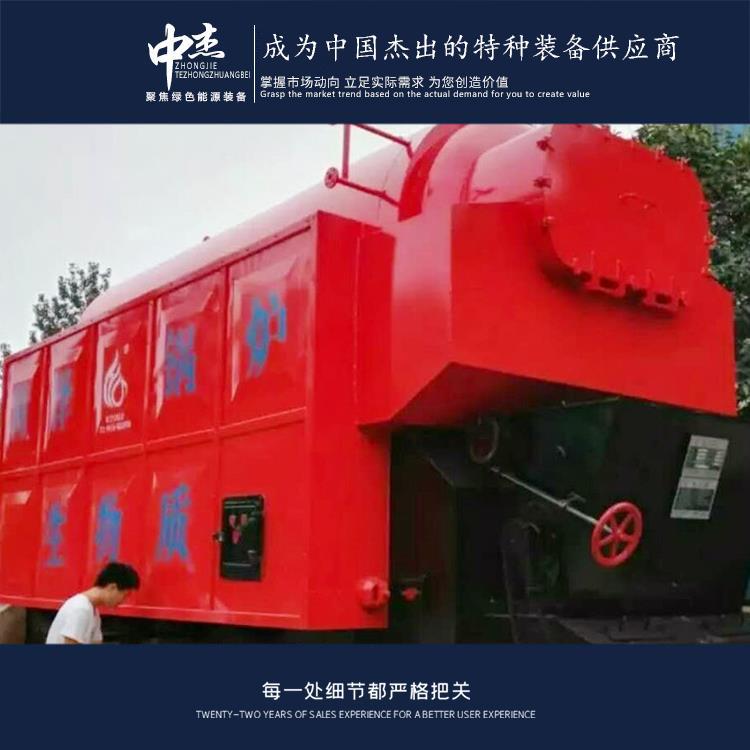

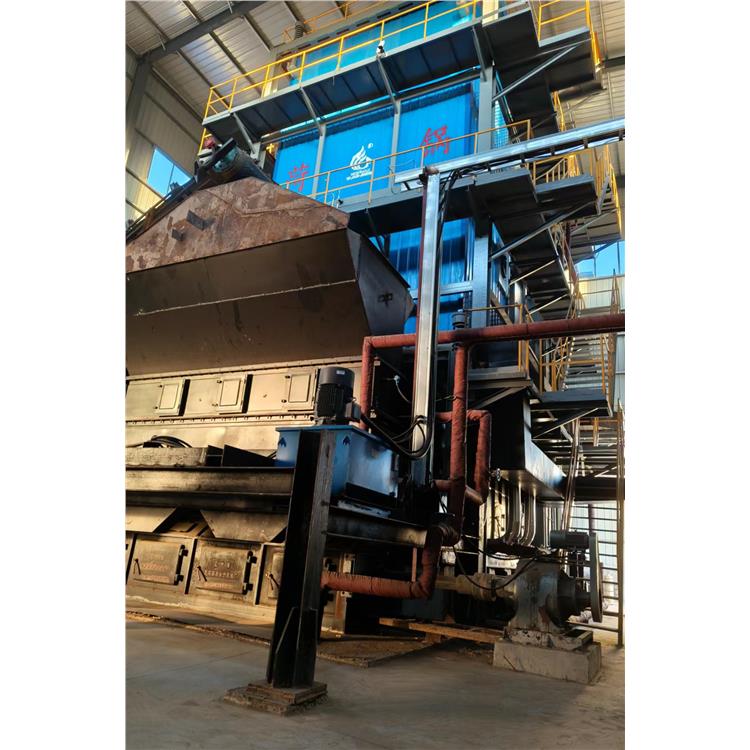
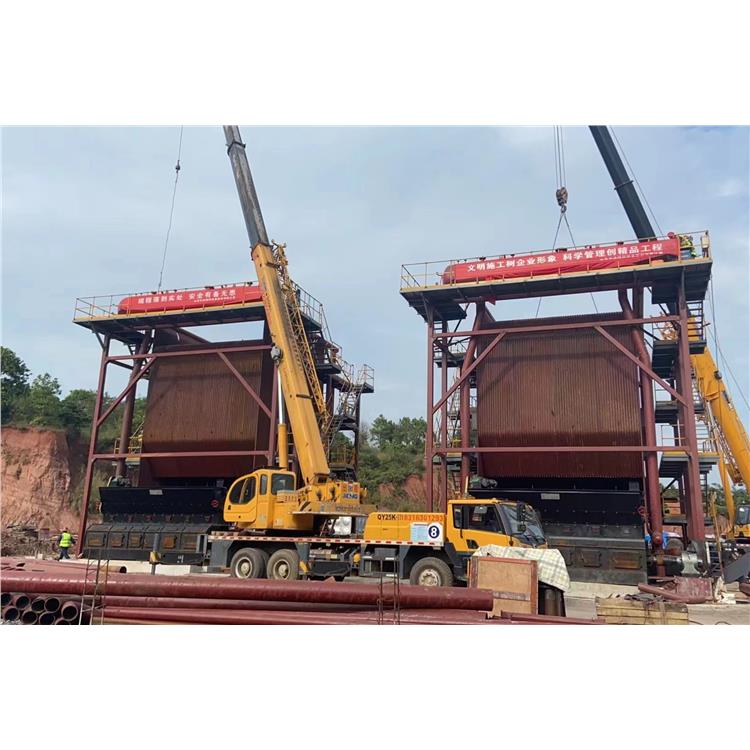


















Shandong Zhongjie Special Equipment (formerly Heze Boiler Factory Co., Ltd.) was established in 2001, located at No. 2218 Jinnan Road, Development Zone, Heze City. With a registered capital of 50 million yuan and total assets of 500 million yuan, the company has 7 business centers: boilers, deep-freeze containers, pressure vessels, central air conditioning, engineering installation, international trade, and Internet of Things. It has three factory sites on Jinnan Road, East Changjiang Road, and Bohai Road, covering a total of 200,000 square meters, with the main workshop spanning 83,000 square meters. It currently employs 710 people, including 247 engineers and technicians and 82 intermediate-level technicians. In December 2016, it was recognized as a "High-tech Enterprise" by the Science and Technology Department. In June 2021, it was identified as a "Specialized and New Enterprise in Shandong Province" by the Ministry of Industry and Information Technology. In June 2022, it was recognized as a "Gazelle Enterprise in Shandong Province" and in August 2022, as a "Specialized and New Small Giant Enterprise" by the Ministry of Industry and Information Technology.
When using biomass boilers, it is important to adhere to the following safety precautions:
Familiarize with the Operation Manual: Before using the biomass boiler, carefully read and familiarize yourself with the operation manual to understand the boiler's usage, precautions, and safety requirements.
Regular inspections and maintenance: Conduct regular checks on all components and equipment of the biomass boiler to ensure proper operation. Promptly clean the combustion chamber, flue, and ash, maintaining the boiler's cleanliness and unobstructed flow.
Note fuel quality: Select biomass fuel, avoiding damp, contaminated, or harmful fuel. Ensure the fuel meets quality requirements to prevent damage to the boiler and the environment.
Regulate the combustion process: Reasonably control the combustion of biomass boilers to ensure stable and efficient burning. Adhere to the correct ignition and shutdown procedures to avoid incomplete combustion or overheating issues.
Prevent overheating and overpressure: Monitor and control the temperature and pressure of biomass boilers to avoid overheating and overpressure situations. Install and maintain safety valves, pressure gauges, and thermometers, etc., to ensure safe boiler operation.
Prevent Gas Leaks: Regularly inspect and maintain the gas pipelines and valves of biomass boilers to ensure good sealing and prevent gas leaks. In case of gas leaks, take immediate action to stop operation and promptly repair.
Prevent Fires: Keep biomass boiler areas clean and tidy, and prevent堆积 and ignition sources from being near the boiler. Install and maintain fire alarms and extinguishing equipment to enhance fire safety.
Training and Awareness Enhancement: Conduct necessary training for operators to enhance their operational skills and safety awareness for biomass boilers. Ensure operators are aware of and adhere to relevant safety regulations and operational procedures.
Here are some safety tips for biomass boiler operation. Adhering to these tips ensures the safe operation of biomass boilers.
Biomass boilers may experience issues like ash accumulation and slagging during prolonged operation. These problems can affect the boiler's combustion efficiency and safety. Here are methods to handle ash accumulation and slagging in biomass boilers:
Regular Cleaning: Regularly cleaning the ash and carbon deposits from the boiler is crucial for preventing scaling and slagging. A cleaning schedule can be established based on the boiler's usage, including the combustion chamber, flue, and heat exchanger sections. Appropriate tools and cleaning agents should be used during the cleaning process to ensure the removal of ash and carbon deposits.
Adjust combustion parameters: Properly adjusting the combustion parameters of biomass boilers can reduce the occurrence of ash accumulation and slagging. For instance, adjusting combustion temperature, oxygen supply, and combustion time to enhance combustion efficiency and minimize ash and slag formation.
Additives Usage: During biomass combustion, special additives such as ash and slag inhibitors, and coking inhibitors can be added. These additives can reduce the formation of ash and carbon buildup, enhancing the boiler's cleanliness and combustion efficiency. The use of additives should be based on specific circumstances and manufacturer recommendations.
Regular Inspections and Maintenance: Regularly inspect and maintain all components of the biomass boiler, including burners, fans, flues, and heat exchangers, to promptly identify and address issues like ash accumulation and fouling. During inspections, you can clear clogged parts and repair damaged ones, ensuring the boiler operates smoothly.
Note that dealing with biomass boiler ash and slagging issues requires a case-by-case approach. Consult with boiler maintenance personnel or manufacturers for more detailed and accurate advice. Additionally, regular cleaning and maintenance are crucial measures to prevent ash and slagging problems.
The combustion process of biomass boilers typically includes the following steps:
Supply Fuel: Biomass fuel such as wood chips, straw, wheat straw, fruit shells, etc., is supplied to the combustion chamber. Fuel can be loaded into the chamber automatically or manually via a fuel supply system.
Ignition:点火 occurs within the combustion chamber to ignite the fuel. Ignition can be achieved through an electric spark ignition device, ignition fuel, or other ignition mechanisms.
Initial Ignition: After lighting, the fuel begins to burn and produces combustion reactions. During the initial combustion stage, volatile components in the fuel start to release, generating combustible gases.
Vaporization and combustion: The volatile content of the fuel vaporizes at high temperatures, forming combustible gases such as and . These combustible gases mix with oxygen in the combustion chamber, undergo combustion reactions, and release heat energy.
Combustion Adjustment: By adjusting fuel supply, oxygen supply, and combustion chamber temperature, etc., the stability and efficiency of the combustion process are controlled. Automatic control systems can be utilized to achieve combustion regulation and optimization.
Smoke Emission: During the combustion process, smoke generated is expelled from the boiler through the chimney or smoke exhaust system. The smoke may contain pollutants such as soot, carbon dioxide, and nitrogen oxides, which require treatment through appropriate emission control equipment.
The combustion process of biomass boilers requires a reasonable fuel supply, oxygen supply, and combustion adjustment to achieve stable and environmentally friendly combustion effects. Different types of biomass boilers may have varying combustion methods and equipment, but generally adhere to similar combustion principles.
A fully automatic biomass boiler refers to a biomass boiler equipped with a fully automatic control system. Here are some points to note:
Regular Maintenance: Although the fully automatic biomass boiler is equipped with an automatic control system, regular maintenance is still necessary. This includes cleaning the combustion chamber, heat exchanger, flue, etc., inspecting and replacing worn-out parts, to ensure the normal operation of the boiler.
Water Treatment: The quality of water in biomass boilers is crucial for their normal operation. Regularly inspect and treat water quality, including water hardness, alkalinity, and impurities in the water. Take appropriate water treatment measures based on the water quality to prevent scale and corrosion, and protect the boiler's heat exchangers and pipes.
Fuel Quality Control: The quality of fuel for biomass boilers is crucial for combustion efficiency and stable operation. Select appropriate quantities of biomass fuel and conduct proper quality control, including moisture content and particle size. Ensure the fuel quality meets the boiler's requirements to avoid incomplete combustion and blockages.
Regular cleaning of the combustion system: The combustion system of a fully automatic biomass boiler requires regular cleaning, including the combustion chamber, burners, and burner nozzles. Accumulation of soot, sediment, and dirt can maintain the free flow of the combustion system, preventing issues such as incomplete combustion and unstable flames.
Regular System Inspections: The control system of fully automatic biomass boilers requires regular inspections and tests to ensure proper operation. This includes checking the accuracy of sensors and the stability of controllers. Promptly identify and resolve issues with the control system to ensure stable boiler operation.
Maintain records and monitoring: Document operational parameters and fault conditions of all active biomass boilers, and conduct monitoring and analysis. Identify and resolve issues promptly to prevent faults from occurring or escalating.
The above are some precautions when using fully automatic biomass boilers. Through reasonable maintenance, quality control, and operation, the stable operation and work of the boiler can be ensured.
Our company attaches great importance to technological innovation and R&D design. We have 1 municipal-level enterprise technology center in Heze City, with testing facilities for non-destructive testing, physical and chemical tests, welding tests, hydrostatic tests, etc. We are equipped with over 600 instruments and equipment, including CNC machine tools, X-ray flaw detectors, digital ultrasonic flaw detectors, mechanical property testing machines, chemical analyzers, spectrometers, tensile testing machines, plasma welding machines, and more. Our key products, such as temperature-pressure vessels for welding, biomass boiler emission reduction, and waste heat recovery, have been selected for multiple Shandong Provincial Department of Industry and Information Technology Science and Technology Innovation projects, key provincial projects, and Heze City Innovation and Excellence projects. We have cumulatively obtained 27 authorized utility models, 16 authorized inventions, participated in drafting 2 standards, 2 industry standards, and registered 15 trademarks. The technical team, in collaboration with Professor Yijiang Li of Shandong University, has developed deep-chill container processing technology using the international plasma arc + flux-cored arc welding (PAW-GTAW) technique, which has reached an international level in deep-chill container manufacturing, as certified by the provincial science and technology achievement assessment. Choose Zhongjie Special Equipment, let's create brilliance together!
WeChat Official Account

Scan to follow Official Account



















