


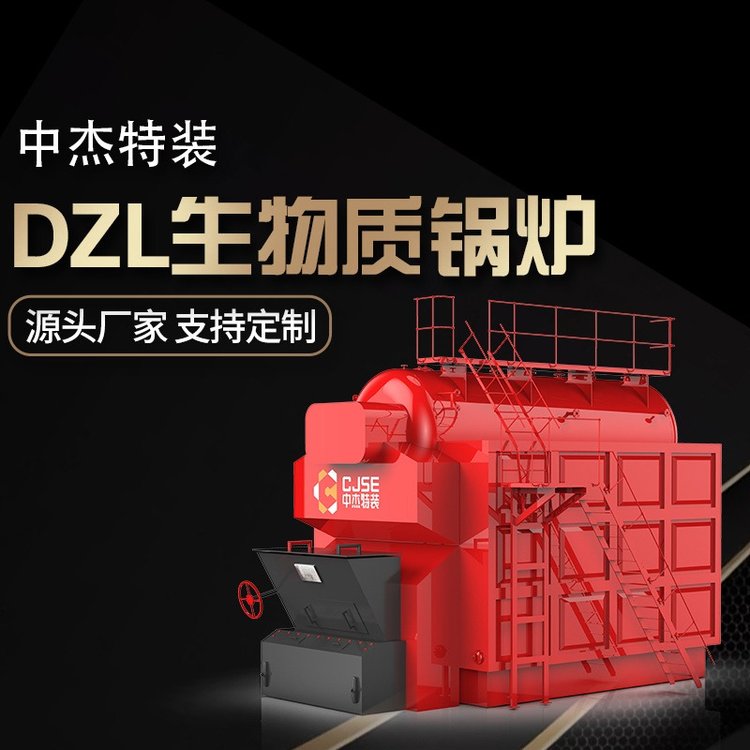

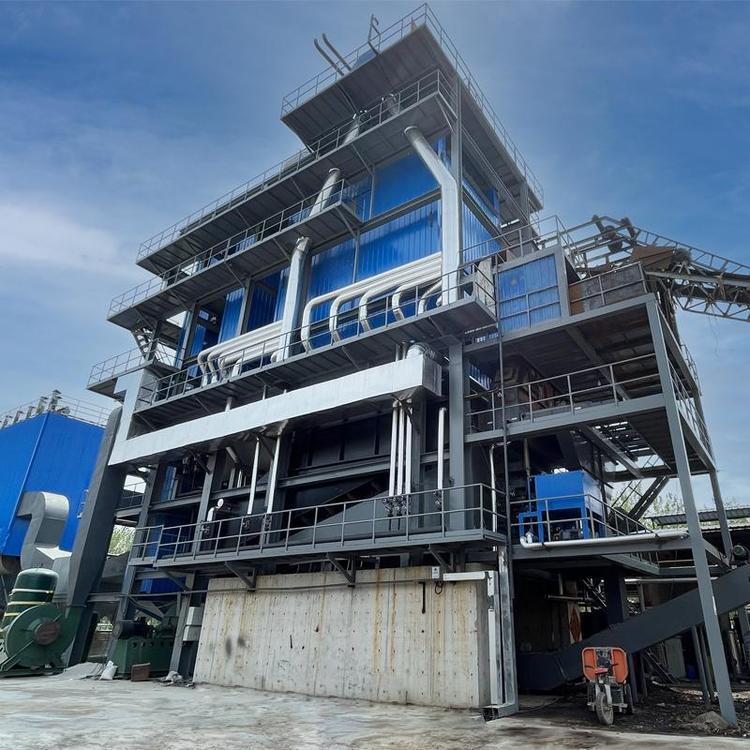
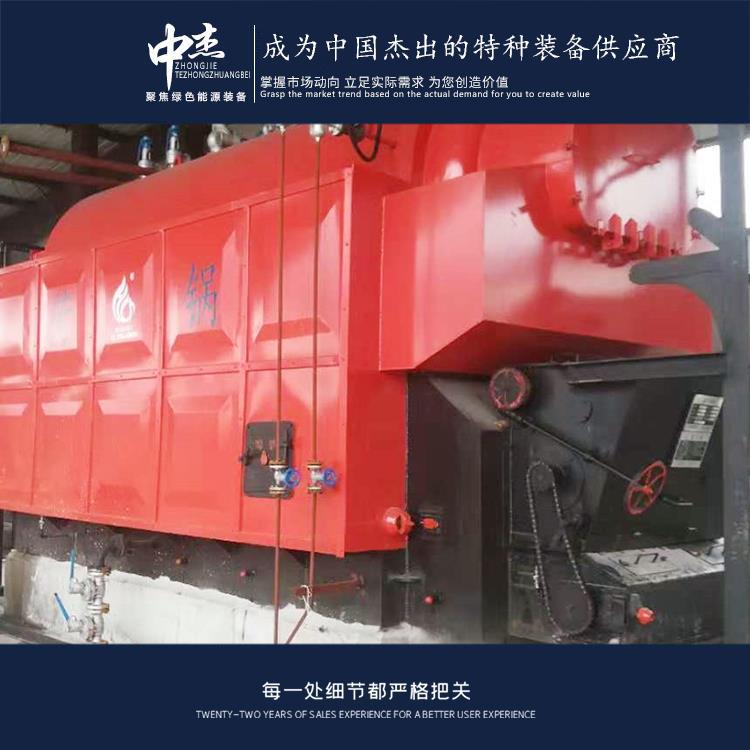


















Shandong Zhongjie Special Equipment (formerly Heze Boiler Factory Co., Ltd.) holds an A-grade boiler manufacturing license, an A2-grade pressure vessel manufacturing license, an A2-grade pressure vessel design license, a B-grade boiler installation license, and GB2/Class, GC2/Class pressure pipeline installation licenses, as well as a mechanical and electrical equipment installation contracting qualification. It is a member of the China Boiler and Water Treatment Association, the China Chemical Equipment Association, and the council member of the Shandong Equipment Manufacturing Association. The company has also passed the ISO9001 Quality Management System, ISO14001 Environmental Management System, OHSAS18001 Occupational Health and Safety Management System certifications, and the American ASME/U2 certification.
To adapt biomass boilers to the market, consider the following aspects:
Technological Innovation: Continuously innovate in technology to enhance the combustion efficiency, heat recovery efficiency, and environmental performance of biomass boilers. For example, the adopted combustion system, flue gas purification technology, and automatic control system improve the energy efficiency and operational convenience of the boiler.
Diverse Product Range: We develop a variety of biomass boiler products to meet market demands and cater to different user needs. Consideration is given to boilers of various scales, fuel adaptability, and application scenarios, providing a wider selection.
Reduced: Through technological improvements and production optimization, we have lowered the manufacturing costs of biomass boilers, making them more competitive. Additionally, we have optimized the fuel supply chain and transportation methods to reduce fuel costs and enhance market competitiveness.
Establish a comprehensive after-sales service system: Offer timely after-sales support, including installation and debugging, maintenance, and troubleshooting, to enhance users' trust and satisfaction in biomass boilers.
Enhance market promotion and publicity: Strengthen the promotion and advertising of biomass boilers through means such as advertising, exhibitions, and technical training, to enhance users' awareness and understanding of biomass boilers.
Policy Support: Actively seek government policy support and incentives to promote the popularization and application of biomass boilers, enhancing market demand.
In summary, through measures such as technological innovation, product diversification, cost reduction, improved after-sales service, market promotion, and policy support, biomass boilers can adapt to the market, meet user needs, and promote the sustainable development of biomass energy.
Biomass boilers promote environmental protection in the following aspects:
Renewable Energy Utilization: Biomass boilers utilize biomass fuels such as wood chips, straw, wheat straw, fruit shells, etc., which are renewable resources. Compared to fossil fuels, biomass fuels emit less carbon dioxide during combustion, resulting in a smaller impact on climate change.
Reducing greenhouse gas emissions: The carbon dioxide produced during the combustion process of biomass boilers can be reabsorbed through the regeneration process of biomass, creating a closed loop. This reduces greenhouse gas emissions, contributing positively to mitigating climate change.
Low Pollution Emissions: The combustion process of biomass boilers results in relatively low emissions of pollutants in the flue gas. Through reasonable combustion adjustment and supplementary pollution control equipment such as dust collectors and nitrogen oxide control devices, emissions of particulates and nitrogen oxides in the flue gas can be further reduced.
Recycling Waste Materials: Biomass boilers can utilize waste and by-products as fuel sources, such as crop straw and wood processing waste. This approach promotes the recycling of waste materials, thereby reducing the issues related to waste accumulation and disposal.
Enhanced Energy Efficiency: The combustion process of biomass boilers can be improved through technologies like heat recovery and waste heat utilization, enhancing energy utilization efficiency. This aids in reducing energy consumption and diminishing reliance on traditional energy sources.
Overall, biomass boilers, as a renewable energy utilization technology, offer advantages such as low carbon and pollution emissions, as well as waste recycling, which positively promote environmental protection and sustainable development.
The phenomenon of damaged economizer tubes in biomass boilers may include the following situations:
Pipe Corrosion: Flue gases produced by biomass combustion contain certain acidic substances, which may lead to corrosion of economizer pipes. Long-term corrosion can result in the thinning of pipe wall thickness, the formation of holes and cracks.
Pipe Blockage: During biomass combustion, flue gas may contain some ash and particulate matter, which may settle and accumulate in the economizer pipe, leading to blockage. Blockage can affect the flow of flue gas and reduce heat exchange efficiency.
Pipe fatigue: The operating temperatures and pressures of biomass boilers fluctuate significantly, leading to long-term thermal expansion and contraction that can cause fatigue damage to economizer pipes, such as cracking and deformation.
For the aforementioned issues, the following solutions can be adopted:
Enhanced Corrosion Protection Measures: Apply corrosion-resistant coatings or use materials that are resistant to corrosion when manufacturing the economizer pipes to minimize corrosion occurrence.
Regular cleaning and maintenance: Regularly clean and maintain the economizer to prevent the accumulation of ash and particulates in the pipes, which can lead to blockages. Methods such as mechanical cleaning and water flushing can be employed.
Enhanced Monitoring and Inspection: Regularly inspect economizers, including thickness measurements of pipes and crack detection, to promptly identify issues and implement repair measures.
Optimize operational parameters: Reasonably adjust the operational parameters of biomass boilers, such as combustion temperature and air volume, to minimize damage to the economizer.
The dust removal technology for coal-fired boilers aims to reduce particulate emissions during the combustion process, protecting the environment and improving air quality. Here are several common dust removal techniques for coal-fired boilers:
Mechanical Dust Collectors: Mechanical dust collectors are a common type of dust removal equipment, which separates particulate matter from flue gas using physical principles. Common types include gravity dust collectors, inertial dust collectors, bag dust collectors, etc. The working principle of mechanical dust collectors is to utilize the inertia, gravity, or filtering effect of particles to separate them from the flue gas.
Electrostatic Precipitator: An electrostatic precipitator uses an electric field to charge the particulate matter in flue gas, then collects the charged particles using the electric field force. Electrostatic precipitators are divided into two types: dry-type and wet-type. Dry-type electrostatic precipitators are suitable for high-temperature flue gas, while wet-type electrostatic precipitators are suitable for flue gas with high humidity.
Wet Dust Collector: The wet dust collector humidifies particulates in flue gas using spray water or other liquids, then separates the humidified particulates from the flue gas through gravity or inertial force. It is suitable for the treatment of flue gas with high humidity and sticky particulates.
Electrostatic Precipitator: An electrostatic precipitator charges particulates in flue gas using an electric field, and then collects the charged particles by the force of the electric field. Suitable for treating high-temperature flue gas and fine particulates.
Integrated dedusting technology: The integrated dedusting technology combines the two processes of dedusting and dust removal into one, achieving integrated treatment by sharing equipment and jointly processing flue gas. This technology can reduce the land area required for equipment, lower investment and operating costs.
Above are common coal-fired boiler dust removal technologies. Different dust removal technologies are suitable for different flue gas and particulate matter characteristics. In practical applications, an appropriate combination of dust removal technologies can be selected based on specific circumstances to achieve the goal of reducing particulate matter emissions.
Our company attaches great importance to technological innovation and R&D design. We have one municipal-level enterprise technology center in Heze City, equipped with testing facilities for non-destructive testing, physical and chemical testing, welding testing, hydrostatic testing, etc. We have over 600 types of equipment, including CNC machine tools, X-ray flaw detectors, digital ultrasonic flaw detectors, mechanical property testing machines, chemical analyzers, spectrometers, tensile testing machines, plasma welding machines, and more. The key products we have developed, such as temperature and pressure vessel welding, biomass boiler emission reduction, and waste heat utilization, have successively been selected for multiple Shandong Provincial Department of Industry and Information Technology science and technology innovation projects, Shandong Provincial key projects, and Heze City innovation and excellence projects. We have accumulated 27 authorized utility models, 16 authorized inventions, participated in drafting 2 standards, 2 industry standards, and registered 15 trademarks. Our technical team, in collaboration with Professor Yajiang Li from Shandong University, has developed deep cryogenic container processing technology using the international plasma arc + filler wire tungsten inert gas arc welding (PAW-GTAW) technology. This technology has been appraised as reaching international standards in the field of deep cryogenic container manufacturing at the provincial level. Choose Zhongjie Special Equipment, and let's create brilliance together!
WeChat Official Account

Scan to follow Official Account



















