


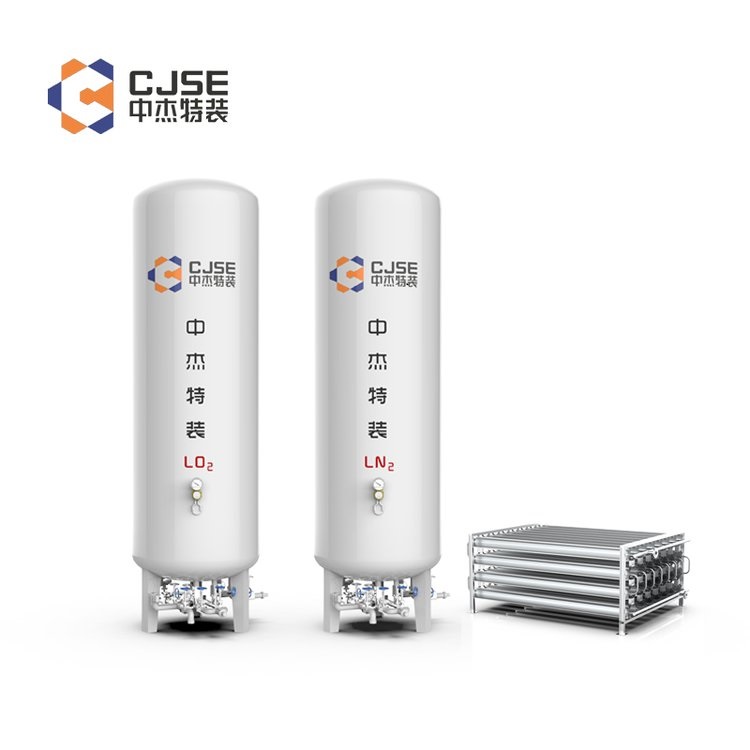


















Shandong Zhongjie Special Equipment's main products include: fuel (gas) boilers, organic heat carrier boilers, biomass boilers, waste heat recovery boilers, and other boiler products; vacuum insulation cryogenic pressure vessels such as LNG tanks, oxygen/nitrogen/argon tanks, and CO2 tanks; pressure vessel products such as denitrification engineering equipment, heat storage and energy storage equipment, and complete chemical equipment; central air conditioning and HVAC equipment such as ground (water) source heat pumps, air source units, water-cooled screw units, and air-cooled modular units. Planned products include large-scale energy centers, LNG transport vehicles, LNG tank containers, and other green energy equipment.
Common defects in carbon dioxide storage tanks during use include deformation. Here are some reasons that may cause tank deformation: Overpressure: When the internal pressure of the tank exceeds its design pressure, it may lead to deformation. This could be due to operational errors, system failures, or other causes. Temperature Fluctuations: Carbon dioxide tanks expand and contract with temperature changes, and if the temperature changes are too extreme or rapid, it may cause deformation. Internal Corrosion: If there is internal corrosion in the tank, it can damage the structural integrity of the tank, leading to deformation. External Damage: External impacts, compressions, or other physical damages can cause tank deformation. Incorrect Installation or Use: Incorrect installation or use methods may cause uneven stress on the tank, resulting in deformation. Tank deformation can reduce the structural integrity of the tank and even pose risks of leakage or rupture. Therefore, it is important to regularly inspect and maintain the integrity of the tank, as well as follow proper operation and installation procedures. If tank deformation or other defects are suspected, the tank should be immediately stopped from use and professional assistance should be sought for inspection and repair. Do not attempt to repair or continue using a defective tank to ensure operational safety.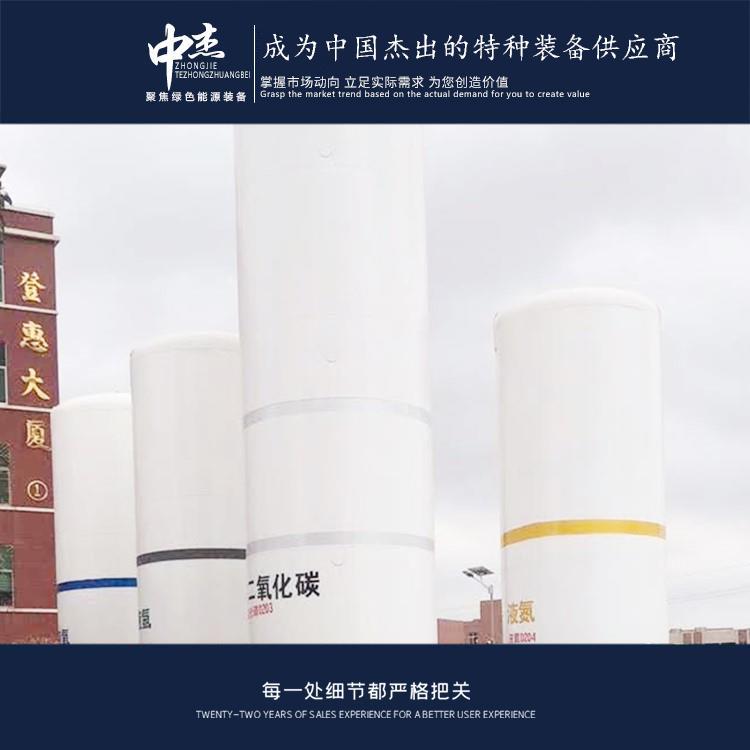
Dry ice is a frozen agent created by directly converting carbon dioxide gas into a solid under high pressure. It has several applications:
For freezing food and pharmaceuticals: Dry ice is widely used for the transportation and storage of food and pharmaceuticals. Due to its low temperature and rapid cooling speed, it can effectively maintain the freshness and quality of food and medicines.
Special effects and stage performances: Dry ice is also extensively used in special effects and stage performances. When it comes into contact with heat in the environment, it rapidly turns into gas, producing a large amount of white smoke, creating a mysterious and dramatic atmosphere.
Cleaning and disinfection: Dry ice can also be used for cleaning and disinfection. When it comes into contact with surfaces, the combination of temperature reduction and the physical impact of the sublimation process can effectively remove dirt, bacteria, and viruses without leaving residues.
Laboratories and scientific research: Dry ice is also applied in laboratories and scientific research. It can be used for freezing samples, preparing low-temperature experimental environments, and manufacturing cold traps and condensers, among other things.
It is important to note that safety should be a priority when using dry ice. Avoid direct contact with skin and eyes, and do not use it in enclosed spaces to prevent the accumulation of carbon dioxide, which can lead to oxygen deficiency.
When storing carbon dioxide tanks, the following requirements must be adhered to for safety and effectiveness: Ventilation: Tanks should be stored in well-ventilated areas to prevent the accumulation of carbon dioxide gas. Ensure there is sufficient air circulation around the tank to avoid gas buildup and asphyxiation risks. Fire and Explosion Prevention: Keep tanks away from fire sources, high-temperature areas, and flammable materials. Avoid open flame operations near the tank to prevent fire and explosion risks. Sunlight Avoidance: Store tanks in locations shielded from direct sunlight to prevent overheating and pressure increase. Direct sunlight can raise tank temperatures, increasing the risk of leaks and explosions. Mechanical Damage Avoidance: Keep tanks away from machinery and heavy objects to avoid collisions and damage. Mechanical damage can cause tank leaks or ruptures, leading to safety incidents. Labeling and Warning Signs: Clearly label tanks with information such as the type of gas stored and pressure. Set up warning signs around the tank to remind personnel of its presence and related safety precautions. Regular Inspections: Conduct regular inspections of the tank's exterior, valves, and fittings to ensure they are undamaged. Take prompt corrective actions if any abnormalities are found. Storage Capacity Control: Control the storage capacity of the tank to prevent exceeding the rated capacity. Exceeding the rated capacity can lead to excessive tank pressure, increasing safety risks. Storage Records: Keep records of the tank's usage, including filling dates, quantities, and inspection records. Regularly inspect and maintain the tank, and retain relevant records. Note that specific storage requirements may vary depending on tank type and application. When storing carbon dioxide tanks, operate in accordance with relevant regulations and standards, and consult with experts to ensure safety and effectiveness.
Common drawbacks of corrosion in pressure vessels during use include: Chemical media: Certain chemical media are corrosive, such as acids, alkalis, salts, etc. When these media come into contact with the vessel material, corrosion may occur. Humidity and moisture: High humidity environments or long-term exposure to moisture can lead to corrosion on the vessel surface. Particularly in the presence of oxygen, the rate of corrosion may increase. Rusting: When the protective layer on the vessel surface (such as coatings or plating) is damaged or destroyed, rusting may occur. Rusting can damage the surface of the vessel and may lead to further corrosion. Electrochemical corrosion: When different metals or metals and non-metals come into contact, an electrochemical corrosion battery may form. This type of corrosion can cause localized corrosion on the surface of the vessel. Welding defects: Defects such as weld pores and cracks may be introduced during the welding process. These defects may become starting points for corrosion. Corrosion can weaken the structural integrity of the vessel, increasing the risk of leakage or rupture. Therefore, regular inspection and maintenance of the corrosion prevention layer, coating, or plating on pressure vessels are important. If corrosion issues are found, timely measures should be taken for repair or replacement of damaged parts. Additionally, selecting appropriate materials and corrosion prevention measures, as well as correct operation and maintenance methods, can reduce the risk of corrosion in pressure vessels. Adhering to relevant safety operating procedures and standards ensures the safe operation of pressure vessels.
Shandong Zhongjie Special Equipment, welcome customers to visit our factory for business discussions.
WeChat Official Account

Scan to follow Official Account



















