


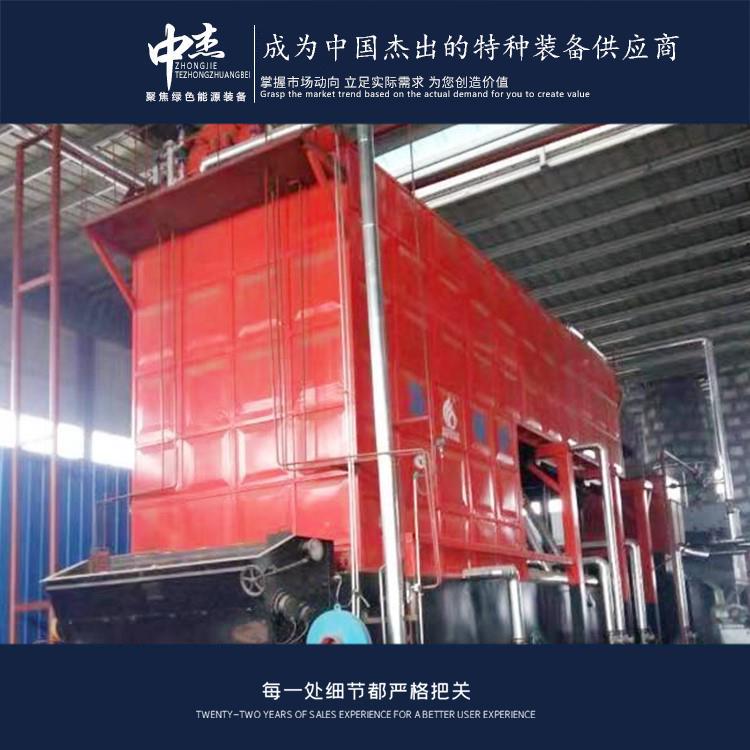

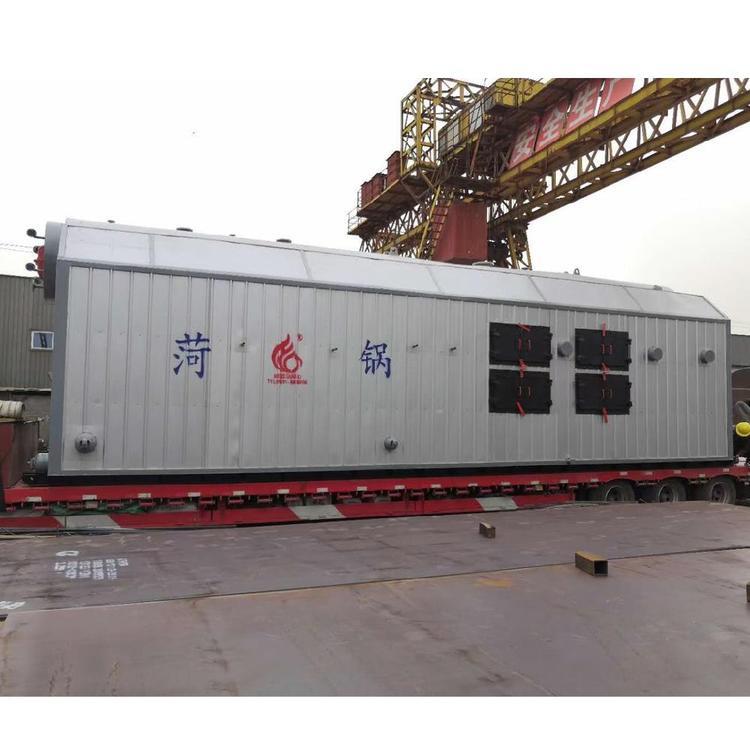


















Shandong Zhongjie Special Equipment (formerly Heze Boiler Factory Co., Ltd.) was established in 2001, located at No. 2218 Jinnan Road, Development Zone, Heze City, with a registered capital of 50 million yuan and total assets of 500 million yuan. The company has 7 business centers: boilers, deep-freeze containers, pressure vessels, central air conditioning, engineering installation, international trade, and Internet of Things. It has three factory sites on Jinnan Road, East Changjiang Road, and Bohai Road, covering a total of 200,000 square meters, with the main workshop area being 83,000 square meters. It currently employs 710 people, including 247 engineering and technical personnel and 82 intermediate-level technicians. In December 2016, it was recognized as a "High-Tech Enterprise" by the Science and Technology Department. In June 2021, it was identified as a "Specialized and New Enterprise in Shandong Province" by the Ministry of Industry and Information Technology. In June 2022, it was recognized as a "Gazelle Enterprise in Shandong Province" and in August 2022, it was identified as a "Specialized and New Small Giant Enterprise" by the Ministry of Industry and Information Technology.
There are many factors that can affect the thermal efficiency of biomass boilers, and the following is an analysis of some common factors:
Fuel Quality: The quality of biomass fuel directly affects the combustion process and thermal efficiency. Characteristics such as fuel moisture, ash content, and volatile matter content can impact the stability and efficiency of combustion. A higher quantity of fuel can enhance combustion efficiency and reduce energy loss.
Combustion System: The design and operational status of the combustion system significantly impact thermal efficiency. A well-designed combustion system ensures complete combustion and utilization of fuel. Adjustments to parameters such as combustion air volume, combustion temperature, and combustion time can optimize the combustion process and enhance thermal efficiency.
Excess Air: Excess air can lead to incomplete fuel combustion and energy waste. Properly controlling the air supply during the combustion process and preventing excess air from entering the furnace can improve combustion efficiency.
Temperature Control: Proper temperature control of the boiler is crucial for heat efficiency. Rational management of parameters such as water temperature and steam temperature can prevent extreme temperatures, thereby improving heat efficiency.
Cleaning and Maintenance: Regularly clean and maintain boiler equipment, removing ash and soot from the furnace chamber to maintain heat exchange efficiency, reduce thermal resistance and heat loss.
Flue Gas Waste Heat Recovery: By utilizing waste heat recovery devices such as economic air preheaters and economizers, the residual heat in flue gas can be reclaimed, thereby enhancing the boiler's thermal efficiency.
Boiler design and equipment selection: Rational boiler design and selection of equipment, such as burners, high
Biofuel hot water boilers may produce scale during use, affecting the boiler's heat transfer and efficiency. Here are some methods to reduce scale:
Fuel Selection: Choose high-quality biomass fuel such as wood chips and straw, etc. Avoid using fuel with excessive impurities and ash to reduce the generation of dirt.
Combustion Adjustment: Properly adjust combustion parameters such as fuel supply, oxygen supply, and combustion temperature. Both excessively high and low combustion temperatures can lead to the formation of soot. Maintaining an appropriate combustion temperature helps reduce soot formation.
Clean Combustion Chamber: Regularly clean the combustion chamber to remove ash and soot generated during the combustion process. Use appropriate tools and cleaning agents to ensure the chamber remains clear and clean.
Heat Exchanger Cleaning: Regularly clean heat exchangers, particularly those on the flue side. During the combustion process, flue gases may contain particles and slag that adhere to the surface of the heat exchanger, affecting heat transfer efficiency. Appropriate cleaning methods, such as mechanical or chemical cleaning, can reduce the accumulation of dirt.
Water Treatment: Perform appropriate water treatment for boiler feed water to prevent impurities and sediments from accumulating inside the boiler. Methods such as water softening, oxygen removal, and scale inhibition can be employed to maintain the cleanliness and stability of the water supply.
Regular Maintenance: Regularly maintain and inspect the boiler, including cleaning and replacing critical components. Early detection and treatment of soiling issues can prevent further accumulation of soiling and impact on the normal operation of the boiler.
Please note that the specific methods for reducing soiling may vary depending on the model and manufacturer of the biomass hot water boiler. It is recommended to refer to the manufacturer's operating manual and guidelines for the appropriate soiling reduction measures based on the specific situation.
Current biomass boilers encounter some issues in practical applications:
Fuel supply instability: The supply of biomass fuel is subject to seasonal and regional limitations, leading to unstable fuel supply for biomass boilers. This may result in the inability of biomass boilers to operate continuously or necessitate frequent fuel switching, increasing operational costs and management challenges.
Low combustion efficiency: Due to the characteristics of biomass fuel and the complexity of the combustion process, the combustion efficiency of biomass boilers is relatively low. Some fuels have high volatile and ash content, which may produce excessive ash and particulate matter during combustion, reducing combustion efficiency and heat energy utilization.
NOx Emission Issue: Biomass boilers produce a high amount of nitrogen oxides (NOx) during the combustion process, which has a certain impact on the environment. Controlling and reducing NOx emissions is an important issue for biomass boilers.
Combustion Equipment Wear: High ash content in biomass fuel leads to abrasion and clogging of the combustion equipment during the burning process. This can result in reduced equipment lifespan and necessitate frequent maintenance and cleaning.
Ash residue from combustion: Ash residue produced by biomass boiler combustion requires proper handling and disposal. Improper treatment may lead to environmental pollution and harm.
Lack of unified technical standards and specifications: Currently, there is a lack of unified technical standards and specifications for biomass boilers.
The dust removal technology for coal-fired boilers is designed to reduce particulate emissions during the combustion process, protecting the environment and improving air quality. Here are several common dust removal technologies for coal-fired boilers:
Mechanical Dust Collectors: Mechanical dust collectors are one of the common dust removal equipment, which separates particulate matter from flue gas through physical principles. Common types of mechanical dust collectors include gravity dust collectors, inertial dust collectors, bag dust collectors, etc. The working principle of mechanical dust collectors is to utilize the inertia, gravity, or filtration effect of particulates to separate them from the flue gas.
Electrostatic Precipitator: An electrostatic precipitator uses an electric field to charge particles in flue gas, then collects the charged particles by the force of the electric field. There are two types of electrostatic precipitators: dry and wet. Dry electrostatic precipitators are suitable for high-temperature flue gas, while wet electrostatic precipitators are suitable for flue gas with high humidity.
Wet-type Dust Collector: Wet-type dust collectors utilize spray water or other liquids to wet the particulate matter in flue gas, which is then separated from the gas through gravity or inertial force. Suitable for the treatment of flue gas with high humidity and sticky particulates.
Electrostatic Precipitator: An electrostatic precipitator uses electrostatic force to charge the particles in flue gas, then collects the charged particles through the action of the electrostatic force. Suitable for the treatment of high-temperature flue gas and fine particles.
Dust and Desulfurization Integration Technology: The dust and desulfurization integration technology combines the two processes of dust removal and desulfurization into one, achieving integrated treatment by using shared equipment and jointly processing flue gas. This technology can reduce the footprint of equipment, lower investment and operational costs.
Above are common coal-fired boiler dust removal technologies. Different dust removal technologies are suitable for different flue gas and particulate matter characteristics. In practical applications, an appropriate combination of dust removal technologies can be selected based on specific conditions to achieve the goal of reducing particulate matter emissions.
Zhongjie Special Equipment adheres to the great vision of "realizing employees' dreams, creating customer value, and striving for the prosperity and strength of our motherland," and is dedicated to the development of the green energy equipment industry. We commit to society with high-quality, cost-effective products and services!
WeChat Official Account

Scan to follow Official Account



















