


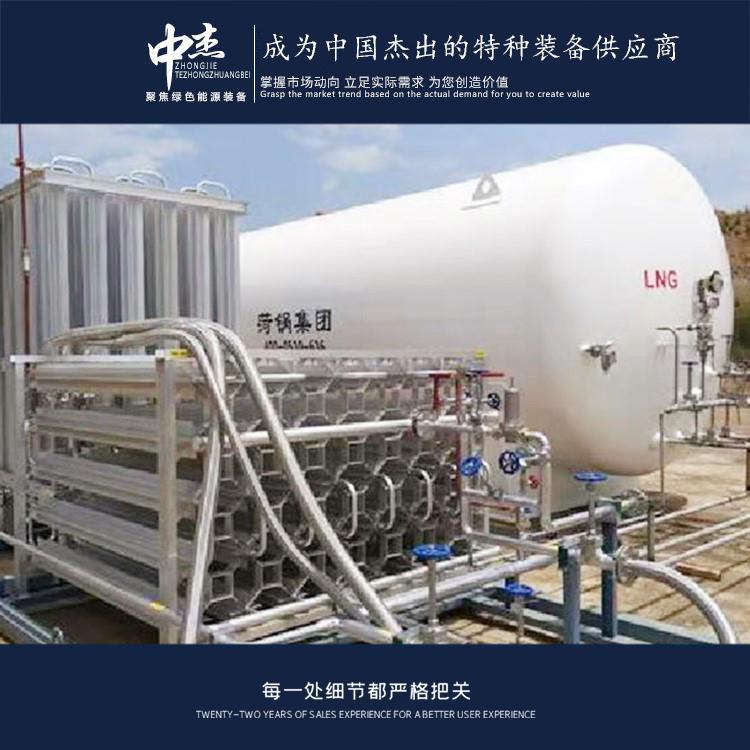


















Shandong Zhongjie Special Equipment (formerly Heze Boiler Factory Co., Ltd.) holds an A-grade boiler manufacturing license, an A2-grade pressure vessel manufacturing license, an A2-grade pressure vessel design license, a B-grade boiler installation license, and GB2/Class, GC2/Class pressure pipeline installation licenses, as well as an electromechanical equipment installation contracting qualification. It is a member of the China Boiler and Water Treatment Association, the China Chemical Equipment Association, and the council member of the Shandong Equipment Manufacturing Association. The company has also passed the ISO9001 Quality Management System, ISO14001 Environmental Management System, OHSAS18001 Occupational Health and Safety Management System certifications, and the ASME/U2 certification.
Chongjie Special Equipment Co., Ltd. is a company engaged in the production of low-temperature liquid storage tanks. They offer low-temperature liquid storage tanks in various specifications and capacities, including liquid nitrogen tanks, liquid oxygen tanks, liquid argon tanks, and more.
The Zhongjie liquid storage tanks are constructed with high-quality materials and advanced manufacturing techniques, ensuring the tank's strength and sealing integrity. The internal design incorporates special insulation materials and structure, effectively reducing liquid evaporation losses.
The medium-temperature liquid storage tank from Zhongjie is characterized by the following features:
High Safety: Tanks are made of materials with excellent pressure resistance and sealing properties, capable of safely storing low-temperature liquids.
Low Evaporation Loss: Insulation materials and structural design inside the tank effectively reduce the evaporation loss of liquids, enhancing the tank's economic efficiency.
Multiple specification and capacity options: Zhongjie offers a variety of specifications and capacities for low-temperature liquid storage tanks to meet different customer needs.
Customized Design: Zhongjie can offer customized design and manufacturing services according to specific customer requirements, to cater to various application scenarios.
Quantitative Manufacturing Process: Zhongjie is equipped with advanced manufacturing equipment and a skilled technical team, ensuring the quality and performance of the storage tanks.
In summary, Zhongjie Special Equipment's low-temperature liquid storage tanks offer high safety, low evaporation loss, and a variety of specifications, making them suitable for storage and transportation needs of low-temperature liquids.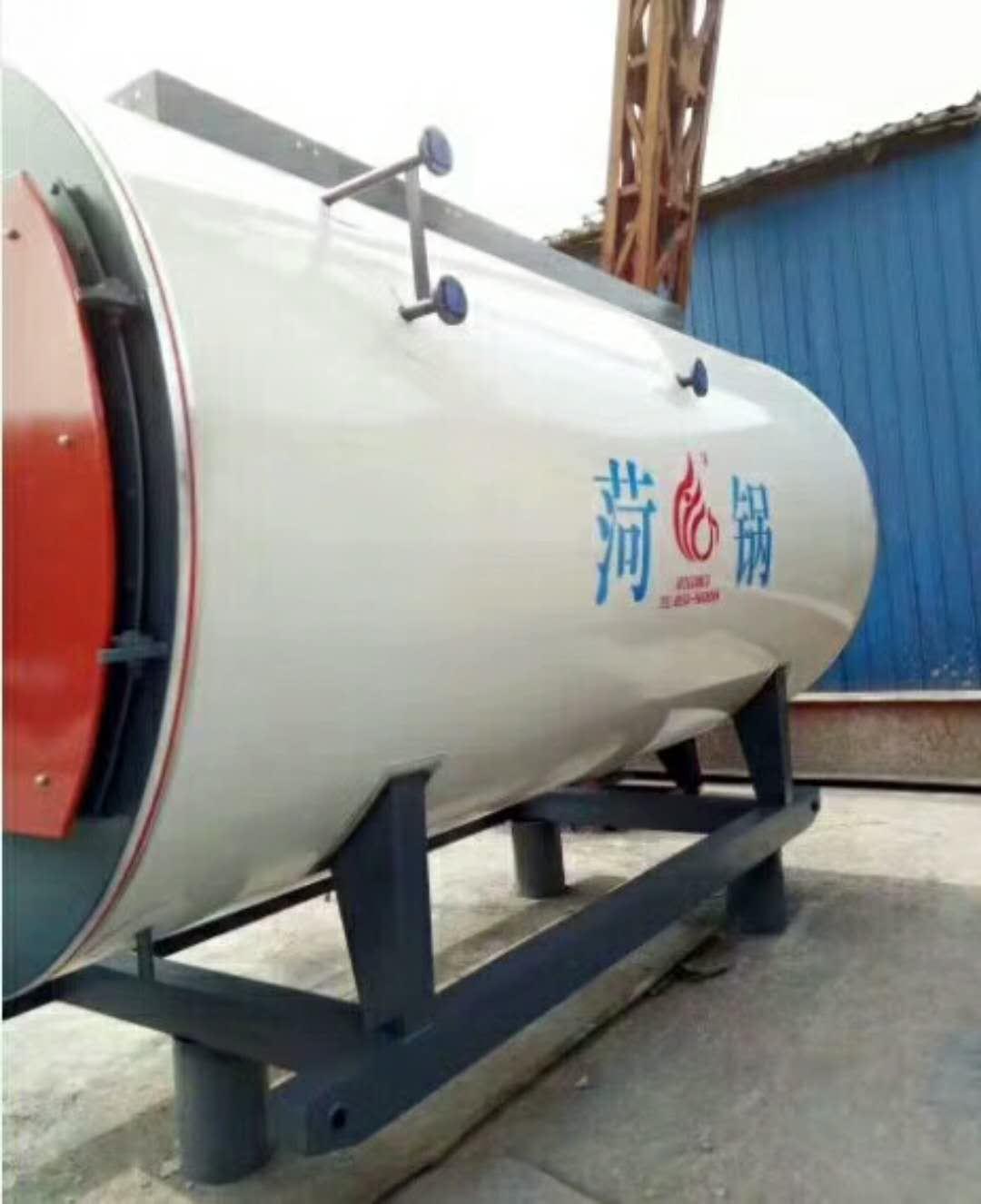
Maintenance and upkeep are crucial for ensuring the safety of low-temperature storage tanks. Here are some common maintenance measures:
Regular Inspections: Conduct regular inspections of low-temperature storage tanks, including checks of the exterior, internal structure, and anti-corrosion coatings. Look for cracks, corrosion, wear, and other issues, and promptly identify and repair potential safety hazards.
Cleaning and De-icing: Regularly clean the exterior surface and internal structure of the low-temperature storage tank to remove accumulated dirt and ice layers. The buildup of ice can lead to structural damage and corrosion; cleaning and de-icing can extend the lifespan of the tank.
Level Monitoring: Regularly monitor the liquid level in low-temperature storage tanks to ensure it stays within the safe range. Excessive or insufficient levels can lead to overpressure or vacuum in the tank, increasing safety risks.
Leak Detection: Install a leak detection system to regularly check for leaks in low-temperature storage tanks. Leaks can lead to the release and evaporation of liquids or gases, increasing safety risks.
Corrosion Protection Measures: Implement appropriate corrosion protection measures, such as coating protection and corrosion-resistant coatings, to safeguard the metallic structure of low-temperature storage tanks from corrosion damage.
Emergency Fault Handling: Establish an emergency fault handling mechanism to promptly address and repair issues with low-temperature storage tanks, in order to prevent accidents from occurring or escalating.
Training and Development of Personnel: Train and develop operators and maintenance staff to ensure they possess the relevant knowledge and skills for the correct operation and maintenance of low-temperature storage tanks.
Note that maintenance should be tailored to the specific type of tank and operating conditions, adhering to relevant local laws, regulations, and standards. During maintenance, it is recommended to consult with engineers or guidance from relevant institutions to ensure the tank's safety and reliability.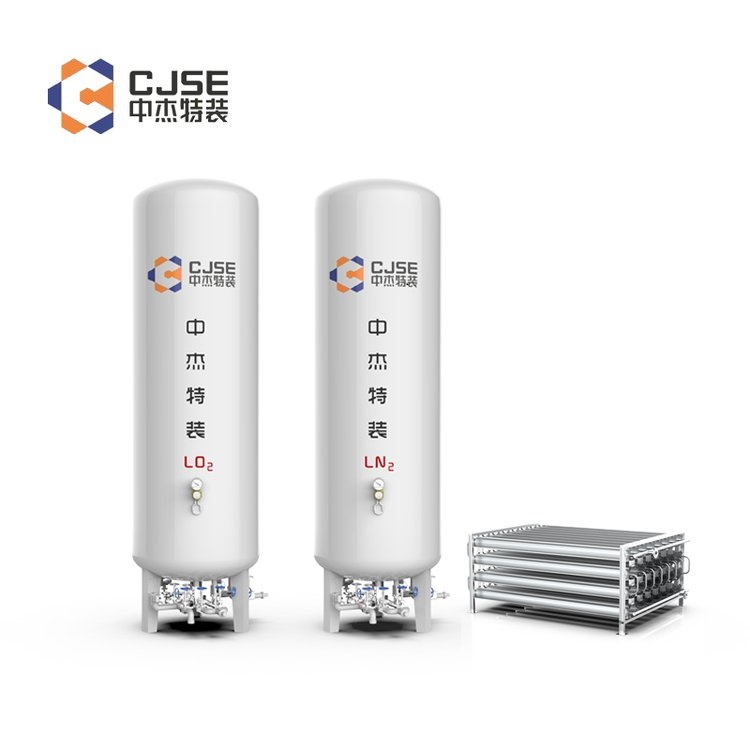
To prevent the danger caused by static electricity in liquid oxygen storage tanks, the following measures can be taken:
Ensure proper grounding for liquid oxygen storage tanks and related equipment. Grounding helps release static electricity to the ground, reducing the likelihood of static buildup. Metal components such as tanks and pipelines should be connected to a reliable grounding system.
Static dissipative materials: Utilize static dissipative materials to reduce the accumulation of static electricity. For instance, apply conductive coatings or materials to the insulation layer of liquid oxygen storage tanks and pipelines to discharge static electricity to the ground.
Anti-static Equipment: Utilize anti-static equipment, such as static-conductive piping and hoses, to minimize the accumulation and release of static electricity. These devices assist in grounding static electricity, reducing the occurrence of static sparks.
Static grounding wire: Install static grounding wires on liquid oxygen storage tanks and related equipment to discharge static electricity to the ground. These grounding wires should be connected to a reliable grounding system and be inspected and maintained regularly.
Static Eliminator: Use a static eliminator to neutralize static electricity. Static eliminators work by releasing opposite charges to counteract static, reducing the accumulation of static and the occurrence of sparks.
Electrostatic Safety Training: Conduct electrostatic safety training for personnel using liquid oxygen storage tanks to enhance their awareness and prevention of electrostatic hazards. The training content can include the principles of electrostatic formation, preventive measures, and emergency response procedures.
It should be noted that the static control measures for liquid oxygen storage tanks should be designed and implemented by personnel, adhering to relevant safety operating procedures and standards. During operation, strict adherence to the prescribed operating procedures is required to prevent the generation of static sparks, ensuring the tank's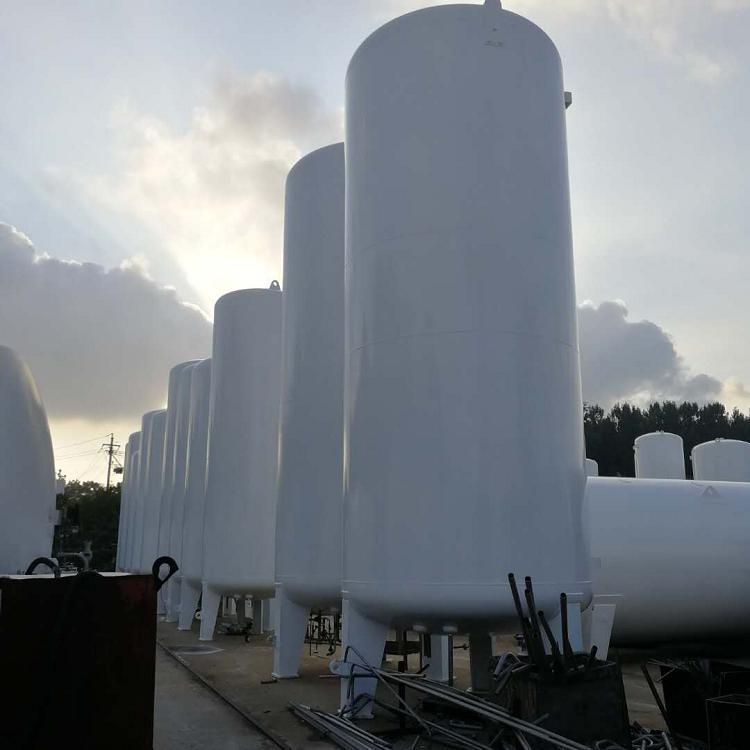
The application of strain hardening in austenitic stainless steel on low-temperature pressure vessels is a common method, which can enhance the material's strength and durability. Here is some information regarding the application of strain-hardened austenitic stainless steel on low-temperature pressure vessels:
Principle of Strain Hardening: Strain hardening is achieved by introducing plastic deformation into the material, which alters the crystal structure, thereby increasing the material's strength. In Austenitic stainless steel, strain can be introduced through methods such as cold working (e.g., cold rolling, cold drawing) or heat treatment (e.g., solution treatment and cold deformation), which results in dislocations and grain boundary slips in the crystal structure, enhancing the material's strength.
Low Temperature Application Advantages: Austenitic stainless steel exhibits excellent corrosion resistance and low-temperature toughness in cold environments. Strain hardening can further enhance the strength and durability of austenitic stainless steel, enabling it to perform in low-temperature pressure vessels. Under low-temperature conditions, strain hardening effectively resists plastic deformation and fracture of the material, improving its tensile strength and impact resistance.
Application Cases: Strain-hardened austenitic stainless steel is widely used in low-temperature pressure vessels. For instance, in liquid nitrogen, liquid oxygen, and liquid argon tanks, among other low-temperature containers, strain-hardened austenitic stainless steel is commonly used as a structural material. These vessels must withstand high pressure and impact loads at low temperatures; strain-hardening enhances the material's strength and durability, ensuring safe operation of the containers.
It should be noted that the strain hardening of austenitic stainless steel must be carried out at the appropriate temperature and deformation conditions to avoid excessive deformation and material embrittlement. When designing and manufacturing low-temperature pressure vessels, it is essential to reasonably select and apply the strain hardening of austenitic stainless steel based on specific engineering requirements and material characteristics.
Our company attaches great importance to technological innovation and R&D design. We possess 1 municipal-level enterprise technology center in Heze City, with testing facilities for non-destructive testing, physical and chemical testing, welding testing, hydrostatic testing, etc. We are equipped with over 600 various instruments and equipment, including CNC machine tools, X-ray flaw detectors, digital ultrasonic flaw detectors, mechanical property testing machines, chemical analyzers, spectrometers, tensile testing machines, plasma welding machines, and more. The key products and technologies we have developed, such as welding for temperature and pressure vessels, emissions reduction in biomass boilers, and waste heat utilization, have successively been selected for multiple Shandong Provincial Department of Industry and Information Technology Science and Technology Innovation projects, Shandong Provincial Key Projects, and Heze City Innovation and Excellence projects. We have cumulatively obtained 27 authorized utility models, 16 authorized inventions, participated in drafting 2 standards, 2 industry standards, and registered 15 trademarks. The technical team of our company, in collaboration with Professor Yajiang Li of Shandong University, has jointly developed deep cryogenic container processing technology, utilizing the international plasma arc + wire filling argon arc welding (PAW-GTAW) technology. After provincial-level scientific and technological achievement evaluation, the technology level has reached international standards in the field of deep cryogenic container manufacturing. Choose ZJ Special Equipment, let's create brilliance together!
WeChat Official Account

Scan to follow Official Account



















