




















Shandong Zhongjie Special Equipment (formerly Heze Boiler Factory Co., Ltd.) was established in 2001, located at No. 2218 Jinnan Road, Economic and Technological Development Zone, Heze City. With a registered capital of 50 million yuan and total assets of 500 million yuan, the company has seven business centers: boilers, deep-freeze containers, pressure vessels, central air conditioning, engineering installation, international trade, and Internet of Things. It has three factory sites on Jinnan Road, East Changjiang Road, and Bohai Road, covering a total of 200,000 square meters. The main workshop spans 83,000 square meters. The company currently employs 710 people, including 247 engineers and technicians and 82 intermediate-level technicians. In December 2016, it was recognized as a "High-tech Enterprise" by the Science and Technology Department. In June 2021, it was identified as a "Specialized and New Enterprise in Shandong Province" by the Ministry of Industry and Information Technology. In June 2022, it was recognized as a "Gazelle Enterprise in Shandong Province" and in August 2022, as a "Specialized and New Small Giant Enterprise" by the Ministry of Industry and Information Technology.
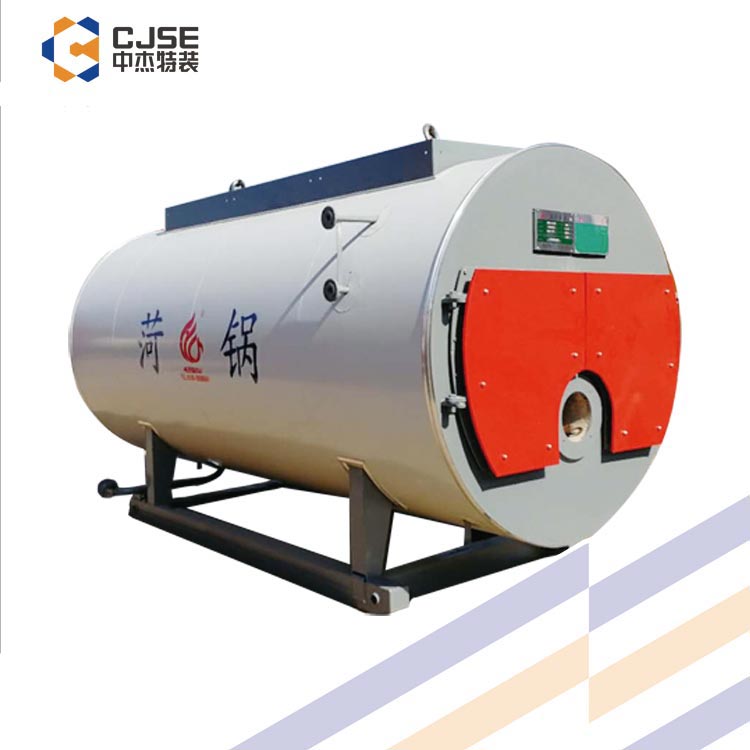
Based on the provided information, I cannot accurately determine the heating area for a 40-ton gas-fired hot water boiler or the gas pressure for an atmospheric pressure gas boiler. The determination of these parameters requires considering multiple factors, including the boiler's design specifications, the type and quality of the gas, and the heating system requirements. The heating area is typically calculated based on the size of the building or industrial production facility to be heated and the heat load. Common calculation methods include heat load calculations based on the building's floor area, the climate conditions of the region, and indoor temperature requirements. The gas pressure depends on the type of gas and the design of the gas supply system. Different types of gas (such as natural gas, etc.) have different pressure requirements for supply. The gas pressure also needs to consider factors such as the distance of the gas pipeline, pipeline diameter, and pipeline material. Therefore, to accurately determine the heating area for the 40-ton gas-fired hot water boiler and the gas pressure for the atmospheric pressure gas boiler, it is recommended to consult the boiler manufacturer or engineer, who will calculate and design based on the specific situation.
Hot water boilers and steam boilers are two common types of boilers, with some differences in their working principles, application scenarios, and operational parameters:
Working Principle: Hot water boilers provide heat energy by heating water, which is then circulated through the heating system. Steam boilers generate steam by heating water, which is then distributed to the heating system.
Operating Temperature and Pressure: Hot water boilers typically operate at temperatures between 60℃ and 100℃, with lower pressure. Steam boilers usually operate at temperatures between 100℃ and 200℃, with higher pressure, generally ranging from 0.7MPa to 2.5MPa.
Heating Methods: Hot water boilers circulate hot water through the heating system using a circulating pump, with heating primarily occurring through conduction and convection. Steam boilers distribute steam through steam pipes to the heating system, with heating primarily through steam conduction.
Application Scenarios: Hot water boilers are suitable for heating, bathing, swimming pool heating, and other scenarios where hot water is required in industrial production processes. Steam boilers are used in industrial applications that require steam, such as power plants, chemical factories, and textile mills.
Equipment Structure: Hot water boilers are usually simpler and have a smaller structure, with less floor space required. Steam boilers are typically more complex, with a larger structure and more floor space needed.
It's important to note that hot water and steam boilers may overlap in certain special application scenarios, such as when both hot water and steam are needed in some industrial production processes. Therefore, when choosing a boiler type, it's necessary to consider specific requirements and application scenarios.
WNS Low Nitrogen Condensing Hot Water Boilers offer the following advantages:
- Low Nitrogen Emissions: Utilizing low nitrogen combustion technology, the WNS Low Nitrogen Condensing Hot Water Boilers significantly reduce NOx emissions through optimized combustion processes and burner design. This helps to minimize environmental pollution.
- High Thermal Efficiency: With condensing technology, these boilers improve energy utilization by recovering heat from flue gases. The thermal efficiency of condensing hot water boilers typically exceeds 90%, surpassing traditional hot water boilers. This contributes to energy savings and reduced operating costs.
- Safety and Reliability: Equipped with advanced control systems and safety devices, these boilers offer excellent safety performance. They come with multiple safety features, including overheat protection, overpressure protection, and water level protection, which automatically monitor and control the boiler's operation for safe operation.
- Versatility: WNS Low Nitrogen Condensing Hot Water Boilers are suitable for various applications, including industrial, commercial, and residential use. They can adapt to different thermal load demands and offer strong flexibility. Additionally, they can be integrated with other systems, such as solar hot water systems and ground source heat pump systems, to further enhance energy efficiency.
- Easy Operation and Maintenance: The operation and maintenance of WNS Low Nitrogen Condensing Hot Water Boilers are straightforward.
Steam boilers produce a certain amount of wastewater during operation, which requires effluent treatment. Here are the general steps for steam boiler effluent discharge: Preparation: Before discharging, ensure the steam boiler is shut down and the pressure inside the boiler has been reduced to a safe level. Open the Drain Valve: Locate the appropriate drain valve according to the design of the steam boiler and open it. The drain valve is typically found on the bottom or near the bottom of the boiler's drain pipe. Discharge Wastewater: Once the drain valve is open, wastewater will flow out of the drain pipe. Depending on the situation, you can use a drain pump or gravity to expel the wastewater. Observe the Wastewater: During the discharge process, observe the wastewater's color, turbidity, and odor to determine if there are any abnormalities, such as sediment, impurities, or异味. Close the Drain Valve: After the wastewater has been discharged or the predetermined effluent target is reached, close the drain valve. Clean the Drain System: Regularly clean the drain system to prevent blockages or accumulation of debris, ensuring the system remains clear. Note that the specific steps and frequency of steam boiler effluent discharge may vary depending on the model, operating conditions, and requirements of the boiler. Therefore, it's advisable to refer to the boiler's operation manual or consult with experts for correct and safe operation.
Our company attaches great importance to technological innovation and research and development. We have 1 municipal-level enterprise technology center in Heze City, equipped with testing facilities for non-destructive testing, physical and chemical testing, welding testing, hydrostatic testing, etc. We have over 600 various instruments and equipment, including CNC machine tools, X-ray flaw detectors, digital ultrasonic flaw detectors, mechanical property testing machines, chemical analyzers, spectrometers, tensile testing machines, plasma welding machines, and more. Our key products and technologies, such as welding for temperature and pressure vessels, biomass boiler emissions reduction, and waste heat utilization, have successively been shortlisted for multiple Shandong Provincial Department of Industry and Information Technology scientific and technological innovation projects, key provincial projects, and Heze City innovative and excellent projects. We have cumulatively obtained 27 authorized utility models, 16 authorized inventions, participated in drafting 2 standards, 2 industry standards, and registered 15 trademarks. Our technical team, in collaboration with Professor Yajiang Li of Shandong University, has developed deep cryogenic vessel processing technology using the internationally recognized plasma arc + filler wire tungsten inert gas arc welding (PAW-GTAW) technique. This technology has been appraised as reaching international standards in the field of deep cryogenic vessel manufacturing at the provincial level.
Choose Jete's ready-to-wear, let's create brilliance together!
WeChat Official Account

Scan to follow Official Account



















