


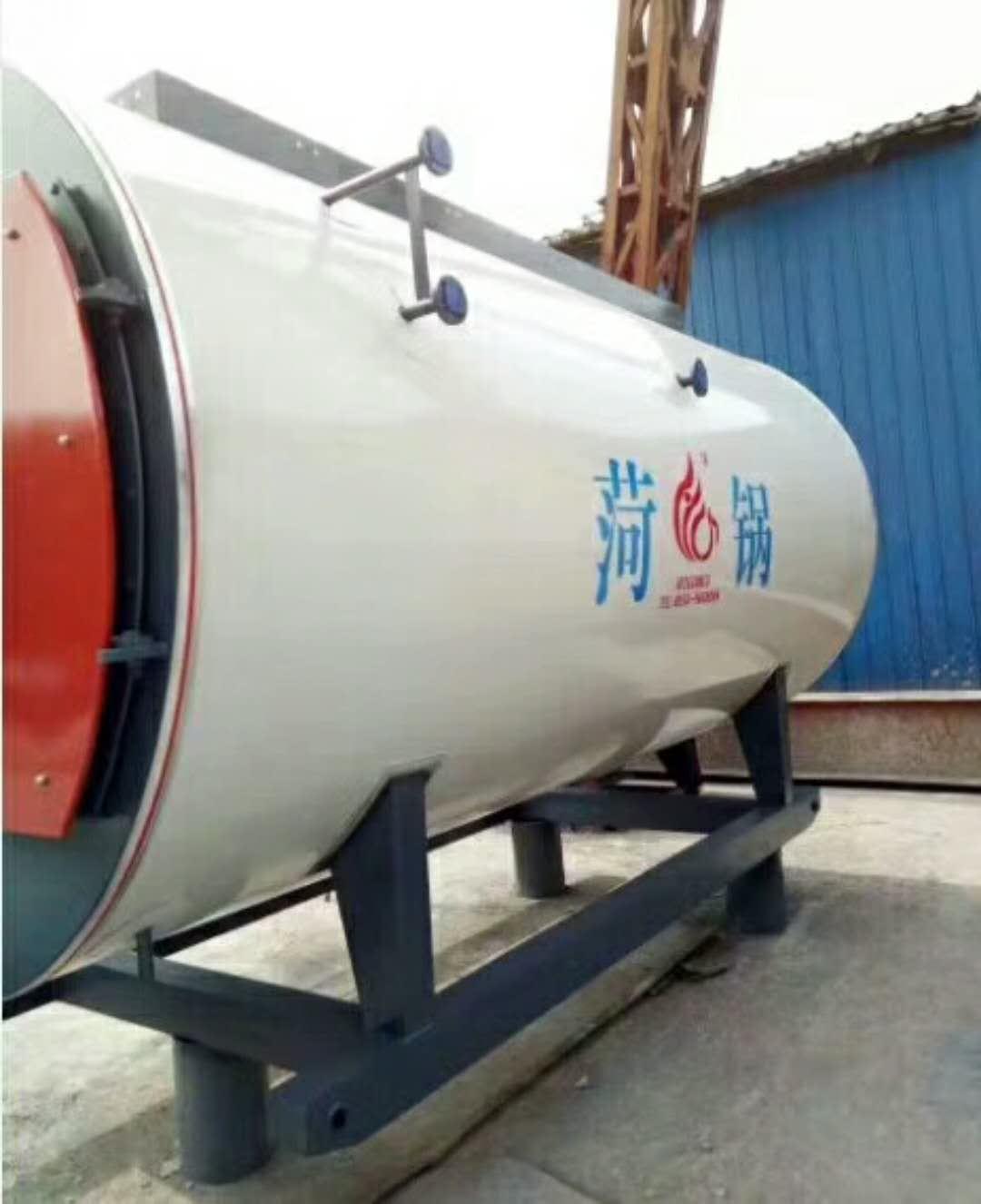


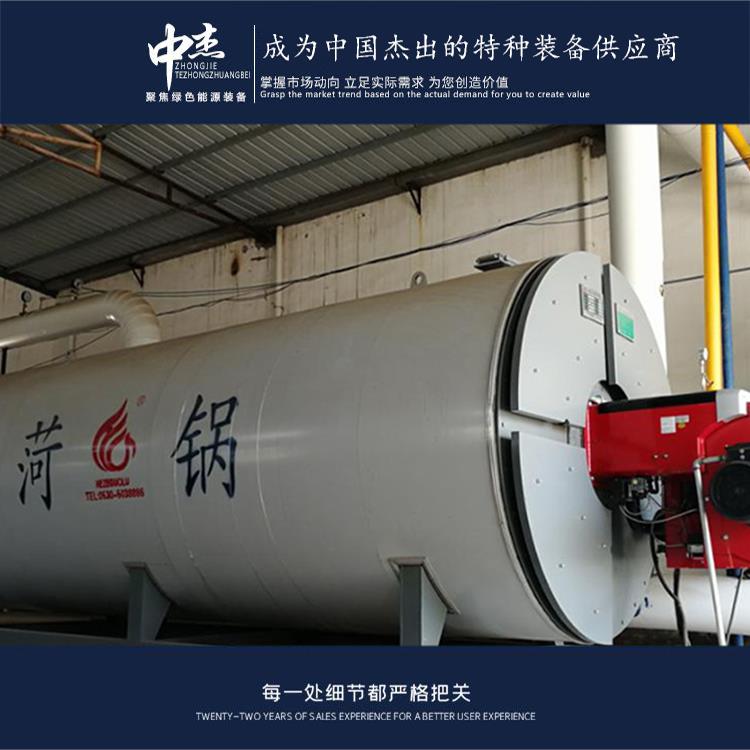


















Shandong Zhongjie Special Equipment Co., Ltd. (formerly Heze Boiler Factory Co., Ltd.) was established in 2001 and is located at No. 2218 Jinnan Road, Economic Development Zone, Heze City. With a registered capital of 50 million yuan and total assets of 500 million yuan, the company operates 7 major business centers: boilers, cryogenic containers, pressure vessels, central air conditioning, engineering installation, international trade, and Internet of Things. It has three manufacturing sites on Jinnan Road, East Changjiang Road, and Bohai Road, covering a total area of 200,000 square meters, with the main workshop spanning 83,000 square meters. It currently employs 710 staff, including 247 engineers and technicians, and 82 intermediate-level technical personnel. In December 2016, it was recognized as a "High-Tech Enterprise" by the Science and Technology Department. In June 2021, it was named a "Specialized and New Enterprise of Shandong Province" by the Industrial and Information Technology Department. In June 2022, it was identified as a "Gazelle Enterprise of Shandong Province" and in August 2022, it was recognized as a "Specialized and New Small Giant Enterprise" by the Ministry of Industry and Information Technology.
Steam boilers produce a certain amount of wastewater during operation, which requires effluent treatment. Here are the general steps for steam boiler effluent discharge:
Preparation: Before discharging, ensure the steam boiler is shut down and the pressure inside the boiler has been reduced to a safe level.
Open the drain valve: Locate the appropriate drain valve according to the steam boiler's design and open it. The drain valve is typically found on the bottom or near the bottom of the boiler's drain pipe.
Discharge wastewater: Once the drain valve is open, wastewater will flow out of the drain pipe. Depending on the need, use a drain pump or gravity to expel the wastewater.
Observe the wastewater: During the discharge process, observe the wastewater's color, turbidity, and odor to determine if there are any abnormalities, such as sediments, impurities, or odd smells.
Close the drain valve: After the wastewater has been discharged or the predetermined effluent target has been reached, close the drain valve.
Clean the drain system: Regularly clean the drain system to prevent blockages or accumulation of debris, ensuring the drain system remains clear.
Note that the specific steps and frequency for steam boiler effluent discharge may vary depending on the model, usage conditions, and operational requirements of the boiler. Therefore, it is advisable to refer to the boiler's operation manual or consult with experts for proper and safe operation.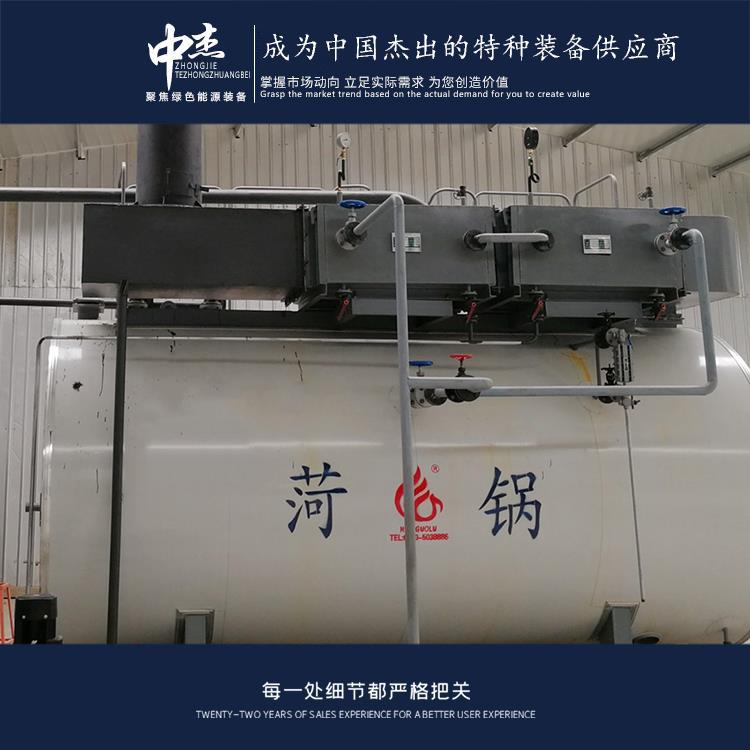
A condensing steam boiler is an energy-saving boiler equipment with the following working principle and features:
Working Principle:
- Steam Generation: The condensing steam boiler produces high-temperature flue gas by burning gas, which then exchanges heat with the water pipes inside the boiler, heating the water into steam.
- Steam Condensation: After steam is generated, it enters the condenser where it exchanges heat with the condensing medium (usually cold water or recycled water), releasing heat from the steam and condensing it into water.
- Flue Gas Reuse: The flue gas after condensation still contains a certain amount of heat, which can be recovered and reused by a flue gas reuse device to improve the boiler's thermal efficiency.
Features:
- Energy-saving: The condensing steam boiler utilizes the principle of steam condensation to fully utilize the heat in the steam, enhancing the efficiency of heat energy utilization and saving energy consumption.
- Low Emissions: Due to the recovery of most of the heat during the flue gas condensation process, the flue gas temperature is lower, resulting in relatively low emissions of pollutants, minimizing environmental impact.
- Compact Structure: The condensing steam boiler typically features a compact structural design, occupying less space, making it suitable for places with limited space.
- Fast Start-up: The condensing steam boiler has the characteristics of fast start-up and shutdown, allowing for flexible adjustments and operation based on actual needs.
- Wide Application Range: The condensing steam boiler is suitable for heating and steam requirements in industrial production processes, such as power plants, chemical factories, textile mills, etc.
It should be noted that maintenance and regular maintenance of the condenser and flue gas reuse device are required during the operation of the condensing steam boiler to ensure its normal operation and performance.
In textile processing factories, common types of boilers include the following:
Steam Boilers: Steam boilers are one of the most commonly used types in textile processing factories. They produce high-pressure, high-temperature steam, used for thermal treatment, dyeing, boiling, and other processes in textile manufacturing. Steam boilers offer advantages such as rapid heating, high stability, and efficiency.
Hot Water Boilers: Hot water boilers are suitable for low-temperature textile processes like washing and drying. They provide a stable supply of hot water with high temperature control accuracy and low energy consumption.
Hot Air Furnaces: Hot air furnaces are used for drying processes in textile manufacturing. They transfer heat energy to textiles through the hot air generated by combustion, achieving rapid drying. Hot air furnaces have the advantages of fast heating and high thermal efficiency.
When selecting the appropriate boiler type for a textile processing factory, consider the following factors:
Process Requirements: Determine the required heat medium (steam, hot water, hot air) and parameters such as working temperature and pressure based on the specific process needs of the factory.
Energy Costs and Efficiency: Consider the energy consumption and efficiency of different boiler types, choosing one that meets processing requirements and has high energy utilization efficiency.
Environmental Requirements: Pay attention to the emission standards and environmental performance of the boiler, selecting a type that meets environmental requirements.
Maintenance and Operation: Evaluate the ease of maintenance and operation of the boiler, ensuring it is suitable for the factory's operational needs.
To ensure proper safety procedures for industrial boilers, attention should be given to the following aspects:
- Adhere to laws and regulations: Understand and comply with relevant laws, regulations, and standards, including those governing boiler safety management and standards for boiler use and maintenance. Ensure compliance with legal requirements throughout the process.
- Establish a comprehensive management system: Develop a robust industrial boiler safety management system, clearly defining responsibilities and authorities, and standardizing operational procedures and safety measures. Create operational guidelines and emergency response plans to ensure orderly safety procedures.
- Training and education: Provide training and education for personnel involved in industrial boiler safety procedures, enhancing their safety awareness and skill levels. This includes training for boiler operators, maintenance staff, and managers.
- Regular inspections and maintenance: Conduct regular inspections and maintenance of industrial boilers to ensure proper equipment operation and safety performance. This includes checking and maintaining critical components such as the combustion system, water level control, safety valves, and pressure gauges.
- Safety equipment and gear: Equip necessary safety equipment and gear, such as safety valves, pressure gauges, water level indicators, and burners, ensuring their proper functioning and effectiveness.
- Regular inspections and evaluations: Conduct regular inspections and evaluations of industrial boilers to ensure compliance with safety requirements. This includes regular pressure tests, water quality inspections, and combustion efficiency assessments.
- Safety records and documentation: Establish a comprehensive safety records and documentation management system, recording operational conditions, maintenance logs, and accident reports for industrial boilers. Update and preserve relevant safety information promptly.
- Regular drills and emergency response training: Organize regular safety drills and emergency response training to improve the ability to respond to emergencies and the efficiency of emergency handling.
These are some basic points for ensuring proper safety procedures for industrial boilers; specific operations should be carried out according to actual conditions and relevant requirements.
Our company attaches great importance to technological innovation and R&D, boasting one municipal-level enterprise technology center in Heze City. We have established testing facilities for non-destructive testing, physical and chemical testing, welding testing, hydrostatic testing, etc., and are equipped with over 600 pieces of various instruments and equipment, including CNC machine tools, X-ray flaw detectors, digital ultrasonic flaw detectors, mechanical property testing machines, chemical analyzers, spectrometers, tensile testing machines, and plasma welding machines. The key products we have developed, such as temperature and pressure vessel welding, biomass boiler emissions reduction, and waste heat utilization, have successively been included in multiple Shandong Provincial Department of Industry and Information Technology science and technology innovation projects, key provincial projects, and Heze City innovation and excellence projects. We have cumulatively obtained 27 authorized utility model patents, 16 authorized invention patents, participated in drafting 2 standards, 2 industry standards, and registered 15 trademarks. Our technical team, in collaboration with Professor Yajiang Li of Shandong University, has developed deep cryogenic container processing technology using the internationally recognized plasma arc + filler wire tungsten inert gas (PAW-GTAW) welding technology, which has been appraised as reaching international standards in the field of deep cryogenic container manufacturing at the provincial level.
Choose ZJET for your custom solutions, let's create brilliance together!
WeChat Official Account

Scan to follow Official Account



















