



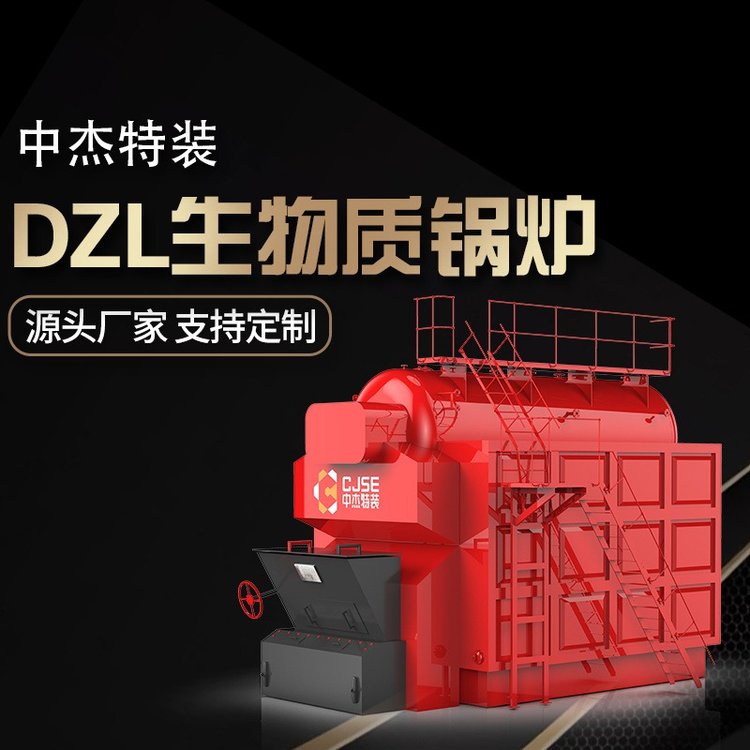
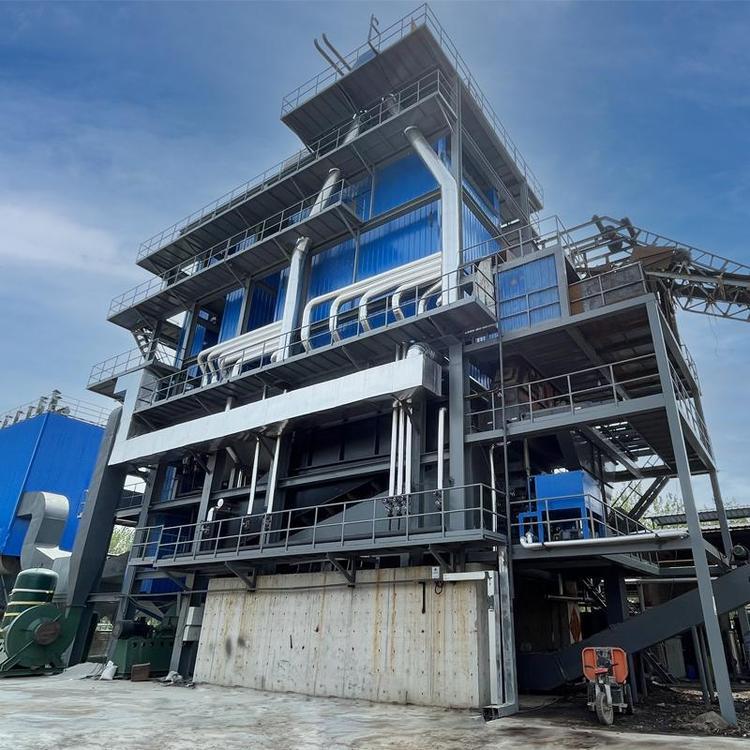


















Shandong Zhongjie Special Equipment (formerly Heze Boiler Factory Co., Ltd.) holds an A-grade boiler manufacturing license and A2-grade pressure vessel manufacturing license, A2-grade pressure vessel design license, B-grade boiler installation and GB2, GC2 class pressure pipeline installation licenses, as well as equipment and machinery installation contracting qualifications. It is a member of the China Boiler and Water Treatment Association, the China Chemical Equipment Association, and a board member of the Shandong Equipment Manufacturing Association. The company has also passed ISO9001 Quality Management System, ISO14001 Environmental Management System, OHSAS18001 Occupational Health and Safety Management System certifications, and the American ASME/U2 certification.
Horizontal biomass steam boilers have the following performance advantages:
Low footprint: The horizontal design of the boiler results in a lower overall height, occupying less floor space, making it suitable for use in areas with limited space.
High thermal efficiency: The horizontal biomass steam boiler utilizes advanced combustion technology and heat exchange design, maximizing the thermal energy of biomass fuel, enhancing thermal efficiency, and reducing energy consumption.
Combustion Stability: The horizontal biomass steam boiler utilizes a combustion system that ensures even and stable fuel combustion, minimizing fluctuations and instability during the combustion process.
Easy Operation and Maintenance: The horizontal biomass steam boiler is designed with ease of operation and maintenance in mind, featuring manholes and inspection doors for convenient internal inspection, cleaning, and maintenance.
Environmental Protection and Energy Saving: Biomass fuel is a renewable energy source. The use of horizontal biomass steam boilers can reduce dependence on traditional fossil fuels and decrease emissions of carbon dioxide and other pollutants, offering excellent environmental protection properties.
Versatile Adaptability: Horizontal biomass steam boilers are suitable for various biomass fuels such as wood chips, straw, etc., and possess strong fuel adaptability.
In summary, the horizontal biomass steam boiler features a small footprint, high thermal efficiency, stable combustion, and easy operation and maintenance.
Coking in biomass boilers refers to the phenomenon where ash and other impurities in the fuel settle and form slag inside the furnace during the combustion process. Coking can adversely affect the normal operation and thermal efficiency of biomass boilers. The following are the hazards of coking and corresponding measures:
Reducing thermal efficiency: Coking can lead to carbon accumulation on the inner walls of the furnace and the heat exchange area, increasing thermal resistance and reducing the efficiency of heat conduction, thereby lowering the boiler's thermal efficiency. A decrease in thermal efficiency results in energy waste and increased operating costs.
Measures: Regularly clean the slag and carbon accumulation from the furnace chamber to maintain the cleanliness of the inner wall, enhancing heat exchange efficiency.
Impacting combustion stability: Coking can lead to unevenness during the combustion process, resulting in reduced combustion stability and potential issues such as incomplete combustion and unstable flames.
Measures: Reasonably adjust combustion parameters such as combustion temperature and air flow to maintain stability in the combustion process.
Increased equipment wear and maintenance costs: Coking can lead to carbon accumulation on the inner walls of the furnace and in the flue pipes, thereby increasing the wear and maintenance costs of the equipment.
Measures: Regularly clean and maintain boiler equipment to prevent the formation of scale and carbon deposits.
Increased Environmental Pollution: Ash accumulation can lead to a rise in pollutants emitted during the combustion process, impacting the environment.
Measures: Reasonably control the combustion process to ensure complete and thorough combustion, reducing the emission of pollutants.
In summary, measures to prevent biomass boiler fouling include regular cleaning and maintenance of equipment, reasonable adjustment of combustion parameters, and control
When installing biomass boilers, pay attention to the following aspects:
Safety Distance: Biomass boilers should maintain adequate safety distances from other equipment, buildings, etc., to prevent fires and accidents.
Ventilation and Exhaust: Biomass boilers require an effective ventilation and exhaust system to ensure that flue gases produced during the combustion process are promptly discharged, preventing indoor accumulation and health hazards.
Fuel Storage: Biomass boilers require appropriate fuel storage facilities, such as fuel silos or storage areas. The fuel storage area should be dry, well-ventilated, and fire prevention measures should be in place to prevent spontaneous combustion and fires.
Pipe Connections: The pipe connections for biomass boilers must be sturdy and reliable to ensure the normal operation of fuel supply, flue gas discharge, and water circulation. Suitable sealing materials should be used at the pipe connection points to prevent leaks and energy loss.
Control System: The control system of the biomass boiler should be reliable and stable, capable of accurate control and adjustment of parameters such as temperature, pressure, and fuel supply. The control system should be equipped with safety protection functions, such as overheat protection and low water level protection.
Regular Maintenance: Biomass boilers require regular maintenance and care, including cleaning the combustion chamber, inspecting pipes and valves, and clearing the flue and dust removal equipment. Regular maintenance ensures the normal operation and combustion of biomass boilers.
Compliance Requirements: When installing biomass boilers, it is essential to adhere to relevant laws, regulations, and standards, such as safety production regulations and environmental protection requirements. Ensure that the installation of biomass boilers complies with regulations to guarantee safety and environmental protection.
Above are some precautions to be aware of when installing biomass boilers to ensure safe and environmentally friendly operation. During the installation process, be
The Zhongjie special-purpose biomass boiler body boasts the following technical advantages:
Our combustion technology: The Zhongjie biomass boiler utilizes advanced combustion technologies such as fluidized bed combustion and chain grate combustion, enabling the combustion of biomass fuel. It boasts high combustion efficiency and high thermal energy utilization, reducing energy waste.
Multiple Fuel Compatibility: The Zhongjie biomass boiler is adaptable to a variety of biomass fuels such as wood chips, straw, and waste crops, demonstrating strong fuel versatility. Suitable fuels can be chosen based on actual conditions to achieve diversified energy utilization.
Heat Exchanger Design: The heat exchanger for Zhongjie's biomass boiler is designed to maximize the thermal energy in flue gas, enhancing heat efficiency. The material and structural design of the heat exchanger are optimized for effective heat conduction and exchange.
The control system: The control system of the Zhongjie biomass boiler, equipped with advanced technology, ensures precise control and adjustment of parameters such as temperature, pressure, and fuel supply. It features safety protection functions like overheat protection and low water level protection, guaranteeing the safe operation of the boiler.
Low Emission Environmental Protection: The Zhongjie customized biomass boiler employs combustion and purification technologies that effectively control emissions generated during the combustion process, such as particulate matter and nitrogen oxides. It boasts lower carbon dioxide and environmental pollutant emissions.
High reliability and stability: The materials and processes used in ZJET's customized biomass boilers offer excellent durability and stability. Rigorous quality control and testing ensure the boiler's high reliability and long-term stable operation.
Our company attaches great importance to technological innovation and research and development, boasting one municipal-level enterprise technology center in Heze City. We have established testing facilities for non-destructive testing, physical and chemical testing, welding testing, hydrostatic testing, etc. Equipped with over 600 types of equipment, including CNC machine tools, X-ray flaw detectors, digital ultrasonic flaw detectors, mechanical property testing machines, chemical analyzers, spectrometers, tensile testing machines, plasma welding machines, and more, our key products such as temperature-pressure vessels for welding, biomass boiler emission reduction, and waste heat recovery have been selected for multiple Shandong Provincial Department of Industry and Information Technology science and technology projects, Shandong key projects, and Heze City innovative excellence projects. We have accumulated 27 authorized utility models, 16 authorized inventions, participated in drafting 2 standards, 2 industrial standards, and registered 15 trademarks. The technical team, in collaboration with Professor Li Yajiang of Shandong University, has developed deep cryogenic vessel processing technology using the international plasma arc + filler wire tungsten inert gas arc combination welding (PAW-GTAW) technology, which has been appraised as internationally competitive at the provincial level. Choose Zhongjie Special Equipment, let's create brilliance together!
WeChat Official Account

Scan to follow Official Account



















