



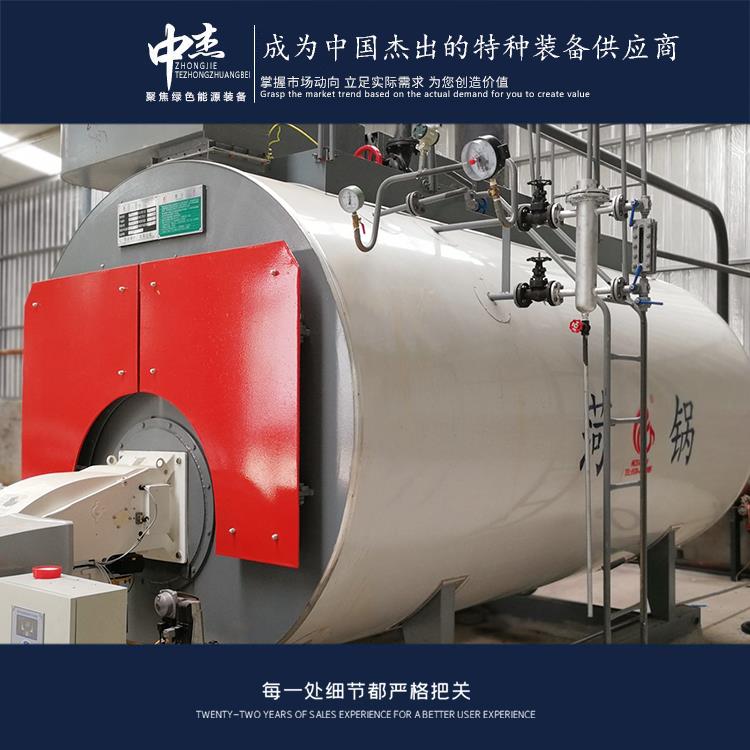


















Shandong Zhongjie Special Equipment Co., Ltd. specializes in the following products: fuel (gas) boilers, organic heat carrier boilers, biomass boilers, waste heat recovery boilers, and other boiler products; vacuum insulated cryogenic pressure vessels such as LNG storage tanks, oxygen/nitrogen/argon storage tanks, and CO2 storage tanks; pressure vessel products including denitrification engineering equipment, heat storage and energy storage equipment, and complete chemical equipment; central air conditioning and ventilation equipment such as ground (water) source heat pumps, air source units, water-cooled screw units, and air-cooled modular units. Planned products include large-scale energy centers, LNG transport vehicles, LNG tank containers, and other green energy equipment.
When designing a fuel-gas boiler room, the following considerations should be taken into account:
Safety Considerations: Ensure the design of the boiler room complies with relevant safety standards and regulations. Assess fire risks and install appropriate firewalls, fire doors, and fire isolation facilities. Ensure proper ventilation and set up suitable ventilation equipment and flue systems to expel harmful gases produced by combustion.
Space and Layout: Plan the space and layout of the boiler room based on the number and size of the boilers. Ensure there is sufficient space for operation, maintenance, and cleaning. Arrange the placement of boilers, fuel storage equipment, flue systems, and pipelines for ease of operation and maintenance.
Fuel Supply and Storage: Consider the requirements for fuel supply and storage. Ensure the safety and reliability of fuel supply pipelines and equipment to prevent leaks and contamination. Plan the capacity and location of fuel storage equipment reasonably to ensure an adequate fuel supply and compliance with safety requirements.
Emission and Exhaust Gas Treatment: Consider the emission and treatment of exhaust gases produced by combustion. Set up appropriate flue systems and exhaust gas treatment equipment to minimize the impact of emissions on the environment. Ensure the design and layout of the flue system effectively expel smoke and exhaust gases.
Control and Monitoring Systems: Design suitable control and monitoring systems to ensure the safety and operation of the boiler. This includes monitoring and control equipment for parameters such as temperature, pressure, and flow, as well as alarm and automatic shutdown devices. Ensure that operators can promptly understand the operating status of the boiler and take appropriate actions.
The necessity of flow control in thermal oil heaters is primarily reflected in the following aspects:
1. Heat Transfer Efficiency: The efficiency of heat transfer in thermal oil heaters is closely related to the flow rate of the thermal oil. An appropriate flow rate ensures that heat is fully transferred in the heat exchanger, enhancing the efficiency of heat utilization. An excessively low flow rate may result in insufficient heat exchange and affect the heat transfer effect; conversely, an overly high flow rate will increase energy consumption and operating costs.
2. Temperature Control: Flow control in thermal oil heaters is also closely linked to temperature control. By adjusting the flow rate of the thermal oil, the temperature inside the furnace can be controlled, ensuring stable operation within the set working temperature range. An excessively low flow rate may lead to excessively high temperatures, while an overly high flow rate may cause temperatures to drop too low, both of which can affect the normal operation of the equipment.
3. System Stability: Appropriate flow rates of thermal oil can improve system stability. Through flow control, the supply and demand of heat can be balanced, preventing overheating or cooling, and maintaining stable system operation. Stable operation helps to extend the service life of the equipment and reduce the frequency of malfunctions and repairs.
4. Safety: Flow control in thermal oil heaters is also closely related to safety. Proper flow control can prevent excessive accumulation of thermal oil in the system, reducing the risk of leaks and explosions. Additionally, flow control ensures that the system pressure remains within a safe range, avoiding overpressure and other safety issues.
In summary, flow control in thermal oil heaters is necessary for improving heat transfer efficiency, temperature control, system stability, and safety. Through reasonable flow control, the operation of the thermal oil heater can be optimized, enhancing energy utilization efficiency, reducing operating costs, and ensuring safe and stable equipment operation.
Gas boiler temperature control methods usually include the following: Manual Adjustment: Adjust the temperature of the gas boiler by manually operating valves or regulators. Adjust the valve opening or regulator settings as needed to achieve the desired temperature. Automatic Adjustment: Gas boilers can be equipped with automatic control systems that use sensors and controllers for automatic temperature regulation. Sensors detect the boiler's temperature and send signals to the controller, which then automatically adjusts the gas supply and burner status within a set temperature range to maintain the desired temperature. Proportional Control: The temperature regulation of gas boilers can also be done through proportional control. Adjust the valve or regulator opening based on temperature changes for proportional regulation, maintaining a certain proportional relationship between gas supply and burner status and temperature. PID Control: PID control is a commonly used temperature regulation method. The PID controller adjusts the gas supply and burner status based on temperature deviations, rates of change, and integral values to achieve temperature control. It is important to note that different gas boilers may use different temperature control methods. The specific control method and operation should be determined according to the boiler model and control system. When adjusting the temperature, follow safety operating procedures to ensure the normal operation and safety of the boiler.
WNS Low-Nitrogen Condensing Hot Water Boilers offer the following advantages: Low Nitrogen Emissions: The WNS Low-Nitrogen Condensing Hot Water Boiler utilizes low-nitrogen combustion technology, optimizing the combustion process and burner design to significantly reduce nitrogen oxide (NOx) emissions. This helps in reducing environmental pollution. High Thermal Efficiency: The WNS Low-Nitrogen Condensing Hot Water Boiler employs condensing technology, recovering heat from flue gases to enhance thermal efficiency. The thermal efficiency of condensing hot water boilers typically exceeds 90%, higher than traditional hot water boilers. This aids in energy conservation and cost reduction. Safety and Reliability: The control systems and safety devices used in the WNS Low-Nitrogen Condensing Hot Water Boiler ensure excellent safety performance. It is equipped with multiple safety protection devices such as overheat protection, overpressure protection, and water level protection, capable of automatically monitoring and controlling the boiler's operating status for safe operation. Flexibility: The WNS Low-Nitrogen Condensing Hot Water Boiler is suitable for various applications, including industrial, commercial, and residential. It can accommodate different thermal load requirements, offering strong flexibility. Additionally, it can be integrated with other systems, such as solar hot water systems and ground source heat pump systems, to further improve energy efficiency. Easy Operation and Maintenance: The operation and maintenance of the WNS Low-Nitrogen Condensing Hot Water Boiler are straightforward.
ZJ Special Equipment upholds the grand vision of "realizing employees' dreams, creating value for customers, and striving for the prosperity and strength of our motherland," wholeheartedly commits to the development of green energy equipment, and dedicates high-value products and services to society!
WeChat Official Account

Scan to follow Official Account



















