



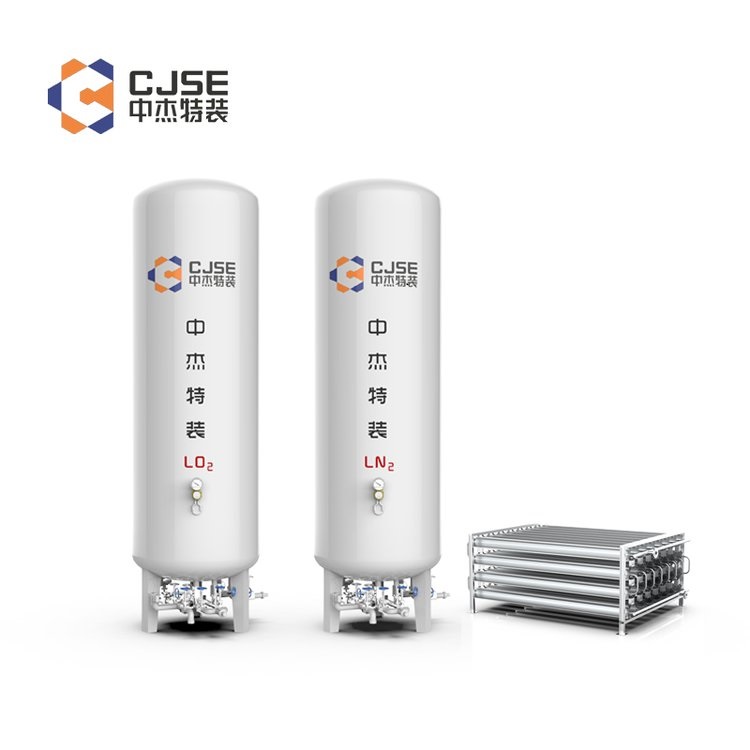
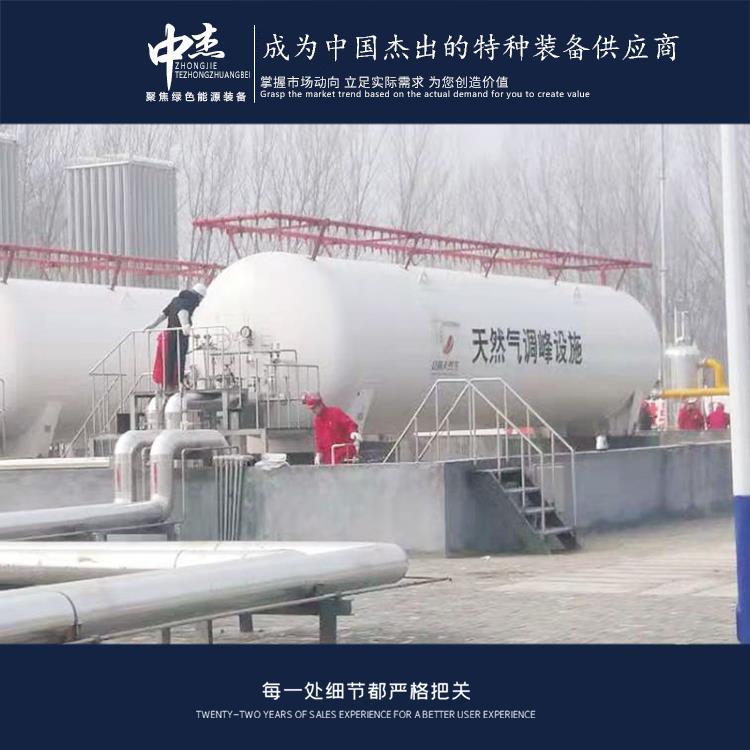


















Shandong Zhongjie Special Equipment's main products include: fuel (gas) boilers, organic heat carrier boilers, biomass boilers, waste heat recovery boilers, and other boiler products; vacuum insulation cryogenic pressure vessels such as LNG tanks, oxygen/nitrogen/argon tanks, and CO2 tanks; pressure vessel products like denitrification engineering equipment, heat storage and energy storage equipment, and complete chemical equipment sets; central air conditioning and HVAC equipment such as ground (water) source heat pumps, air source units, water-cooled screw units, and air-cooled modular units. Planned products include large-scale energy centers, LNG transport vehicles, LNG tank containers, and other green energy equipment.
Under China's "Regulations for the Safe Supervision of Pressure Vessel Technology," carbon dioxide storage tanks are classified as Category II pressure vessels. According to these regulations, pressure vessels are categorized as follows:
- Category I pressure vessels: Those with working pressures of 10 MPa (megapascals) or higher, such as steam boilers and pressure vessels.
- Category II pressure vessels: Those with working pressures of 0.1 MPa or higher but less than 10 MPa, such as air compressors and liquefied gas storage tanks.
- Category III pressure vessels: Those with working pressures of 0.05 MPa or higher but less than 0.1 MPa, such as storage tanks.
- Category IV pressure vessels: Those with working pressures below 0.05 MPa, such as gas cylinders.
Based on this classification, carbon dioxide storage tanks typically have working pressures above 0.1 MPa, thus falling into Category II pressure vessels. It should be noted that specific classification criteria may vary depending on different regional regulations and standards. When using and managing carbon dioxide storage tanks, it is essential to comply with the relevant regulations and standards.
Carbon dioxide tanks fall under the category of pressure vessels. Pressure vessels are sealed containers designed to withstand internal pressure, used for storing and transporting gases, liquids, or mixtures. Carbon dioxide tanks are pressure vessels specifically designed for storing and transporting carbon dioxide, featuring special designs and structures to ensure safe storage and use. Depending on design and application, carbon dioxide tanks can be either vertical or horizontal, with varying capacities and pressure ratings. When using carbon dioxide tanks, it is essential to adhere to relevant regulations and standards to ensure their safe operation and use.
When using carbon dioxide tanks, the following safety procedures must be adhered to ensure safety:
Tank Operator Training: All operators must receive training to understand the characteristics, operational requirements, and safety measures of carbon dioxide tanks. The training should include safe tank operation, leak handling, emergency procedures, etc.
Safety Operating Procedures: Establish and follow relevant safety operating procedures, including tank startup, shutdown, inspection, and maintenance. Operators should operate in accordance with the procedures to ensure safe tank operation.
Leak Handling: Develop a leak handling program including leak detection, emergency shutdown, and isolation of the leak source. Operators should be familiar with the leak handling procedures and be able to respond quickly and correctly to leak incidents.
Fire Prevention Measures: Carbon dioxide is flammable; fire prevention measures must be observed during use. Smoking, open flames, or the placement of flammable materials near the tank are prohibited. Ensure that fire protection equipment around the tank is in good condition and fire drills are conducted regularly.
Waste Gas Emission: Properly discharge waste gases generated during the use of carbon dioxide tanks to avoid accumulation of carbon dioxide in enclosed spaces, which can lead to asphyxiation and safety risks. Ensure the waste gas emission system is unobstructed and operating correctly.
Regular Inspections and Maintenance: Regularly inspect the tank's appearance, seals, valves, and pipeline connections. Repair or replace any abnormalities or damages promptly. Also, regularly inspect and maintain the tank's safety valves, pressure sensors, and other accessories.
Emergency Response Plan: Develop and implement an emergency response plan, including procedures for leak incidents, evacuation, and first aid measures. Operators should be familiar with the emergency response plan and conduct drills regularly.
Monitoring and Alarm Systems: Install and maintain monitoring and alarm systems for the tank.
A carbon dioxide storage tank pressure maintenance system is a system designed to maintain the internal pressure of carbon dioxide storage tanks. Since carbon dioxide is in a gaseous state at room temperature, it needs to be compressed into a liquid to increase storage density. The primary function of the pressure maintenance system is to monitor and regulate the pressure inside the tank, ensuring the CO2 remains within a safe and stable pressure range. The system typically consists of the following components:
Pressure Sensor: Installed inside the tank, it monitors the pressure in real-time and transmits pressure signals to the control system.
Control System: Receives signals from the pressure sensor and controls the system based on preset pressure ranges. When the tank's pressure exceeds or falls below the set range, the control system triggers appropriate control measures.
Pressure Regulating Valve: Adjusts the pressure inside the tank according to the control system's instructions. When pressure is too high, the valve opens to release some gas and lower the pressure. When pressure is too low, the valve closes to prevent further gas release and increase the pressure.
Pressure Storage Device: Usually a pressure vessel used to store additional gas for providing extra pressure support when needed. When the tank's pressure drops, the storage device releases gas to maintain the tank's pressure.
Through the coordinated work of these components, the carbon dioxide storage tank pressure maintenance system ensures the pressure inside the tank remains safe and stable. This is crucial for the tank's normal operation and safety.
Our company places great emphasis on technological innovation and R&D, boasting one municipal-level enterprise technology center in Heze City. We have established testing facilities for non-destructive testing, physical and chemical testing, welding testing, hydrostatic testing, and more. We are equipped with over 600 instruments and equipment, including CNC machine tools, X-ray flaw detectors, digital ultrasonic flaw detectors, mechanical property testing machines, chemical analyzers, spectrometers, tensile testing machines, plasma welding machines, and more. Our key products, such as welding for temperature and pressure vessels, biomass boiler emissions reduction, and waste heat recovery, have successively been included in multiple Shandong Provincial Department of Industry and Information Technology science and technology projects, Shandong key projects, and Heze City innovative and excellent projects. We have accumulated 27 authorized utility models, 16 authorized inventions, participated in drafting 2 standards, 2 industry standards, and registered 15 trademarks. Our technical team, in collaboration with Professor Yajiang Li of Shandong University, has developed deep cryogenic container processing technology using the international plasma arc + filler wire tungsten inert gas (PAW-GTAW) welding technique. This technology has been appraised as reaching international standards in the field of deep cryogenic container manufacturing at the provincial level. Choose Zhongjie Special Equipment, and let's create brilliance together!
WeChat Official Account

Scan to follow Official Account



















