



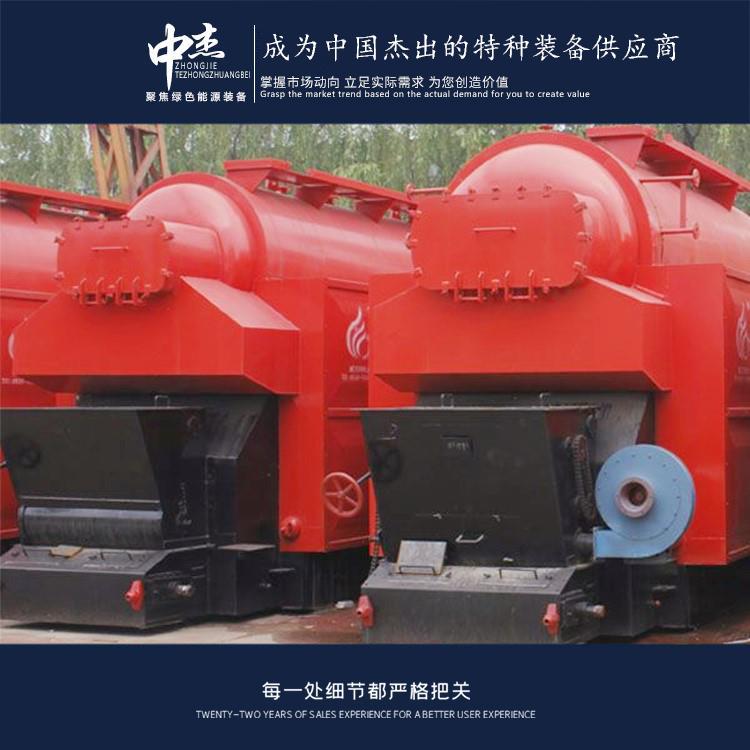
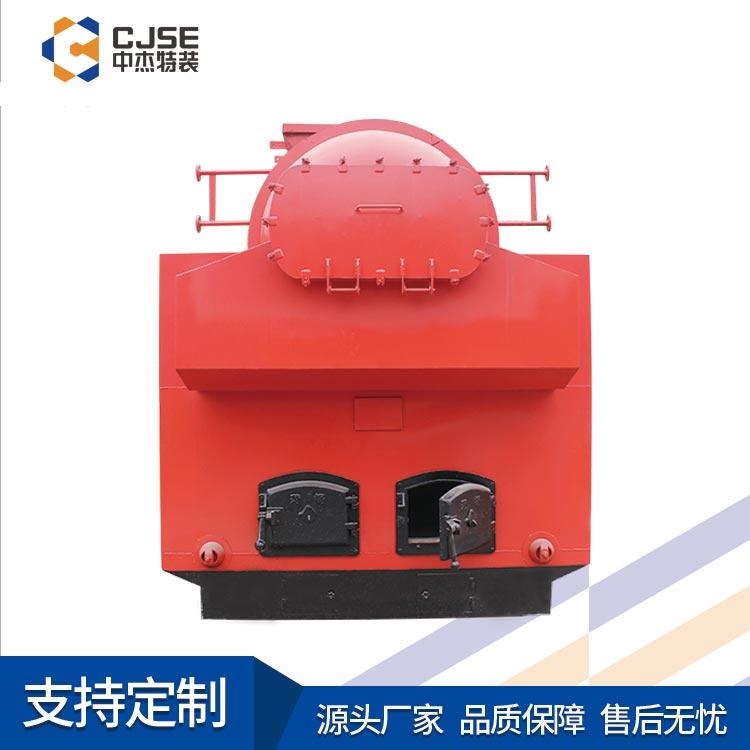


















Shandong Zhongjie Special Equipment (formerly Heze Boiler Factory Co., Ltd.) was established in 2001, located at No. 2218 Jinnan Road, Economic and Technological Development Zone, Heze City. With a registered capital of 50 million yuan and total assets of 500 million yuan, the company has seven business centers: boilers, deep-freeze containers, pressure vessels, central air conditioning, engineering installation, international trade, and the Internet of Things. It operates three factory sites on Jinnan Road, East Changjiang Road, and Bohai Road, covering a total area of 200,000 square meters, with the main workshop spanning 83,000 square meters. It currently employs 710 staff, including 247 engineers and technicians, and 82 intermediate-level technical personnel. In December 2016, it was recognized as a "High-tech Enterprise" by the Science and Technology Department. In June 2021, it was named a "Specialized and New Enterprise in Shandong Province" by the Department of Industry and Information Technology. In June 2022, it was identified as a "Deer Enterprise in Shandong Province" and in August 2022, it was recognized as a "Specialized and New Small Giant Enterprise" by the Ministry of Industry and Information Technology.
Biomass boilers can be broadly categorized into two types based on their application:
Biomass Hot Water Boiler: Biomass hot water boilers are primarily used for heating and hot water supply. They transfer heat energy to water by burning biomass fuel, producing hot water. This type of boiler is widely used in heating and hot water systems in homes, office buildings, schools, hotels, and other locations.
Biomass Steam Boilers: Biomass steam boilers are primarily used for steam supply in industrial production processes. They generate high-pressure steam at high temperatures by burning biomass fuel, which is utilized to power machinery, heating, and processing in various industrial applications. This type of boiler is commonly found in industries such as pulp and paper, food processing, and chemicals.
These two types of biomass boilers differ in principle and design, catering to different application scenarios. Whether for hot water or steam boilers, they both utilize the thermal energy of biomass fuel to harness renewable energy, featuring environmental protection and energy-saving characteristics.
To prevent and mitigate corrosion issues in biomass boilers, the following methods can be adopted:
Regular Cleaning and Maintenance: Regularly clean and remove accumulated dust and dirt inside the boiler to maintain its cleanliness. During the cleaning process, use appropriate cleaning agents and tools to remove internal dirt from the boiler, preventing corrosion from occurring.
Controlling Water Quality: The quality of water in biomass boilers significantly affects corrosion. It is essential to regularly test and adjust the chemical composition of the boiler water to maintain the pH, hardness, and oxygen content within suitable ranges. Water treatment equipment, such as water softeners and oxygen removers, can be employed to enhance water quality.
Prevent Oxygen Corrosion: Oxygen corrosion is one of the common corrosion forms in biomass boilers. It can be reduced by installing an oxygen remover in the boiler's feedwater pipes, which removes oxygen from the water. Additionally, chemical measures such as corrosion inhibitors can also be used to prevent oxygen corrosion.
Control the combustion process: High temperatures during combustion and acidic substances in the flue gas can also lead to corrosion. To control the combustion process, ensure that the combustion temperature and acidic substances in the flue gas are within the appropriate range. This can be achieved by adjusting the combustion air volume, fuel supply, and fuel distribution.
Prevent Local Corrosion: Certain areas of the boiler, such as the furnace and flue, are prone to corrosion. Reinforcement or coating with corrosion-resistant materials can be applied to these areas to extend their service life.
Regular inspections and maintenance: Regularly inspect and maintain biomass boilers to promptly identify and address corrosion issues. Delegate maintenance personnel to conduct regular inspections and maintenance work.
Adjusting the combustion of biomass boilers can be carried out through the following steps:
Establish combustion parameters: Determine appropriate combustion parameters based on the design of the biomass boiler and fuel characteristics, including combustion temperature, oxygen supply, and fuel feed rate.
Adjust combustion temperature: Adjust the combustion temperature based on the fuel characteristics and combustion requirements. Excessive combustion temperature may lead to overburning of fuel and energy waste, while too low combustion temperature may result in incomplete combustion and increased emissions.
Regulate Oxygen Supply: Adjust the oxygen supply based on the oxygen content during the combustion process. Excessive oxygen supply may lead to incomplete fuel combustion and energy waste, while insufficient oxygen supply can result in incomplete combustion and increased emissions.
Adjust fuel supply rate: Adjust the fuel supply rate based on thermal load and fuel characteristics. Excessive fuel supply rate may lead to overburning and energy waste, while an insufficient fuel supply rate may result in incomplete combustion and inadequate heating.
Monitoring and Adjustment: By monitoring critical parameters during the combustion process, such as combustion temperature, oxygen content, and flue gas composition, adjust the combustion parameters in a timely manner to ensure the stability of the combustion process.
Be mindful that adjusting the combustion of biomass boilers requires consideration of the specific kettle
Possible reasons for incomplete combustion in biomass boilers may include the following aspects:
Poor fuel quality: Low-quality biomass fuel, such as high moisture content and uneven particle size, can affect the combustion process. Fuel with high moisture content will reduce combustion temperature and lead to incomplete combustion.
Insufficient air supply: Air is essential during the combustion process. If the air supply is insufficient, the fuel cannot react fully with oxygen, leading to incomplete combustion. Possible causes include a blocked air inlet, fan failure, etc.
Unstable Combustion System: The instability of the combustion system may also lead to incomplete combustion. For example, improper adjustment of the burner, unreasonable design of the combustion chamber, and other factors may affect the stability of the combustion process.
Insufficient combustion temperature: Low combustion temperature can lead to incomplete combustion. Possible causes include improper adjustment of the burner and unstable fuel supply.
Combustion chamber soot accumulation: Soot buildup in the combustion chamber can affect the combustion process, hindering fuel and oxygen contact, leading to incomplete combustion.
Insufficient burn time: Inadequate burn time can also lead to incomplete combustion. If the fuel does not stay long enough in the combustion chamber, it may not burn completely, resulting in unburned fuel residues.
Improper combustion chamber design: An improperly designed combustion chamber, such as one that is too large or too small, hinders the full mixing of fuel and oxygen, leading to incomplete combustion.
Above are some possible causes of incomplete combustion in biomass boilers, which require analysis and resolution based on specific situations. Regular maintenance, rational fuel selection, and optimization of the combustion system, etc.
Zhongjie Special Equipment adheres to the grand vision of "realizing employees' dreams, creating customer value, and striving for the prosperity and strength of our motherland," wholeheartedly devoting itself to the development of green energy equipment. We offer society products and services with high performance and cost-effectiveness!
WeChat Official Account

Scan to follow Official Account



















