


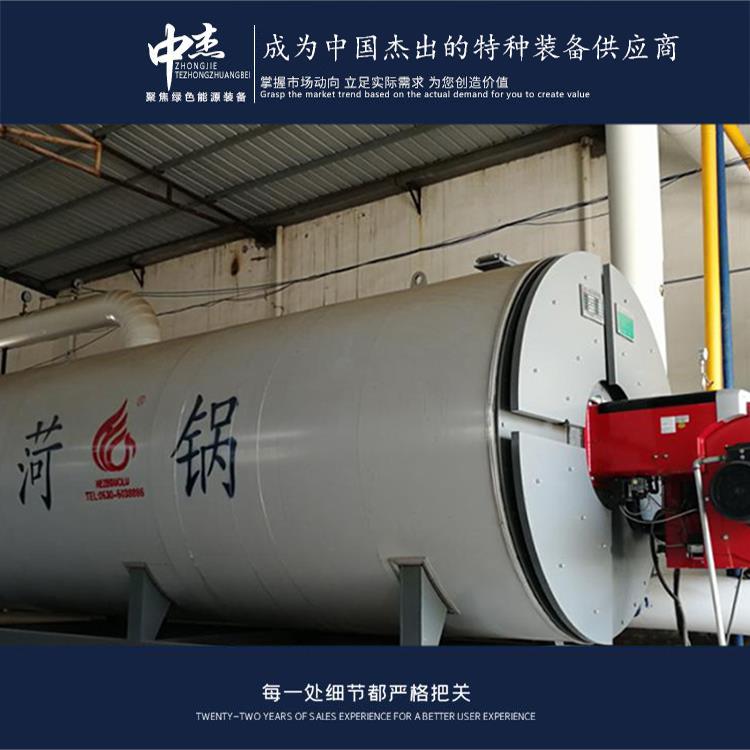


















Shandong Zhongjie Special Equipment (formerly Heze Boiler Factory Co., Ltd.) holds an A-grade boiler manufacturing license, an A2-grade pressure vessel manufacturing license, an A2-grade pressure vessel design license, a B-grade boiler installation license, and GB2/Class and GC2/Class pressure pipeline installation licenses, as well as an equipment and machinery installation contracting qualification. It is a member of the China Boiler and Water Treatment Association, the China Chemical Equipment Association, and the director unit of the Shandong Equipment Manufacturing Association. The company has also passed the ISO9001 Quality Management System, ISO14001 Environmental Management System, OHSAS18001 Occupational Health and Safety Management System certifications, and the American ASME/U2 certification.
To ensure proper safety procedures for industrial boilers, attention should be given to the following aspects:
- Adhere to laws and regulations: Understand and comply with relevant laws, regulations, and standards, including those governing boiler safety management and standards for boiler use and maintenance. Ensure compliance with legal requirements throughout the process.
- Establish a robust management system: Develop a comprehensive industrial boiler safety management system, define responsibilities and authorities, and standardize operational procedures and safety measures. Draft operational guidelines and emergency response plans to ensure orderly safety procedures.
- Training and education: Train and educate personnel involved in industrial boiler safety procedures, enhancing their safety awareness and skill levels. This includes training for boiler operators, maintenance staff, and management personnel.
- Regular inspections and maintenance: Conduct regular inspections and maintenance of industrial boilers to ensure proper operation and safety performance. This includes checking and maintaining key components such as the combustion system, water level control, safety valves, and pressure gauges.
- Safety equipment and facilities: Equip necessary safety equipment and facilities, such as safety valves, pressure gauges, water level indicators, and burners. Ensure the proper operation and effectiveness of these facilities.
- Regular inspections and assessments: Conduct regular inspections and assessments of industrial boilers to ensure compliance with safety requirements. This includes regular pressure tests, water quality inspections, and combustion efficiency evaluations.
- Safety records and documentation: Establish a comprehensive system for safety records and documentation, recording the operation, maintenance, and accident records of industrial boilers. Update and preserve relevant safety information promptly.
- Regular drills and emergency response training: Organize regular safety drills and emergency response training to enhance the ability to respond to emergencies and improve efficiency in emergency handling.
These are some basic points for ensuring proper safety procedures for industrial boilers. Specific operations should be carried out according to actual conditions and relevant requirements.
The inspection of the heat-conducting oil boiler tube plates is to ensure the safe operation of the boiler and to prevent potential issues. The following are general steps for inspecting heat-conducting oil boiler tube plates:
Visual Inspection: Conduct a visual inspection to check for any obvious corrosion, cracks, deformation, or other anomalies on the surface of the tube plate. Pay special attention to checking for cracks or leaks at the welds and connections.
Cleaning the Tube Plate: Clean the surface of the tube plate thoroughly, removing dirt and deposits to facilitate inspection.
Ultrasound Inspection: Use an ultrasound inspection device to inspect the tube plate to detect any possible cracks or other defects. Ultrasound inspection can help determine the integrity and reliability of the tube plate.
Pressure Test: Perform a pressure test to verify the sealing and pressure resistance of the tube plate. Gradually increase the pressure during the test, observe for any leakage, and ensure the tube plate can withstand the design pressure.
Tube Plate Thickness Measurement: Use an ultrasonic thickness gauge to measure the thickness of the tube plate to determine if the thickness meets design requirements. Pay particular attention to the corrosion of the tube plate, ensuring it remains within safe limits.
Weld Inspection: Inspect the welds on the tube plate to ensure the quality of the welds meets relevant standards and specifications. Check the integrity of the welds, the quality of the weld, and whether the welding process meets requirements.
Documentation and Reporting: Document and report the inspection results of the tube plate, including any issues found, corrective measures, and recommendations. These records and reports can serve as references for future maintenance and management.
It should be noted that the inspection of heat-conducting oil boiler tube plates should be carried out by qualified personnel and strictly in accordance with relevant standards and specifications. If any issues or anomalies are found, appropriate repair and maintenance measures should be taken promptly to ensure the safe operation of the boiler.
Steam boilers produce a certain amount of wastewater during operation, which requires effluent treatment. Here are the general steps for steam boiler effluent discharge:
Preparation: Before discharging, ensure the steam boiler is turned off and the pressure inside has been reduced to a safe level.
Open the effluent valve: Locate the appropriate effluent valve based on the steam boiler's design and open it. The effluent valve is usually found on the bottom or near the bottom of the boiler or the effluent pipe.
Discharge wastewater: Once the effluent valve is open, wastewater will flow out of the effluent pipe. Depending on the situation, you can use an effluent pump or gravity discharge to remove the wastewater.
Observe wastewater: During the discharge process, you can inspect the wastewater's color, turbidity, and odor to determine if there are any abnormalities, such as sediment, impurities, or foul smells.
Close the effluent valve: After the wastewater has been discharged or the predetermined effluent goal has been reached, close the effluent valve.
Clean the effluent system: Regularly clean the effluent system to prevent clogs or buildup and ensure the system's unobstructed flow.
Note that the specific steps and frequency for steam boiler effluent discharge may vary depending on the model, usage conditions, and operational requirements. Therefore, when performing steam boiler effluent discharge operations, it's advisable to refer to the boiler's operation manual or consult with experts to ensure proper and safe procedures.
Based on the information provided, I cannot accurately determine the heating area for a 40-ton gas-fired hot water boiler or the gas pressure for an atmospheric pressure gas boiler. Establishing these parameters requires considering multiple factors, including the boiler's design specifications, the type and quality of the gas, and the heating system requirements. The heating area is typically calculated based on the size of the building or industrial facility to be heated and the heat load, which is determined by common methods such as calculating the heat load based on the building's floor area, the climate conditions of the region, and the required indoor temperature. The gas pressure depends on the type of gas and the design of the gas supply system. Different types of gas (such as natural gas, etc.) have different pressure requirements. The gas pressure also needs to consider factors such as the gas pipeline's length, diameter, and material. Therefore, for an accurate determination of the heating area for the 40-ton gas-fired hot water boiler and the gas pressure for the atmospheric pressure gas boiler, it is recommended to consult the boiler manufacturer or engineer, who can calculate and design based on the specific situation.
Shandong Zhongjie Special Equipment, welcome customers to visit our factory for business discussions.
WeChat Official Account

Scan to follow Official Account



















