


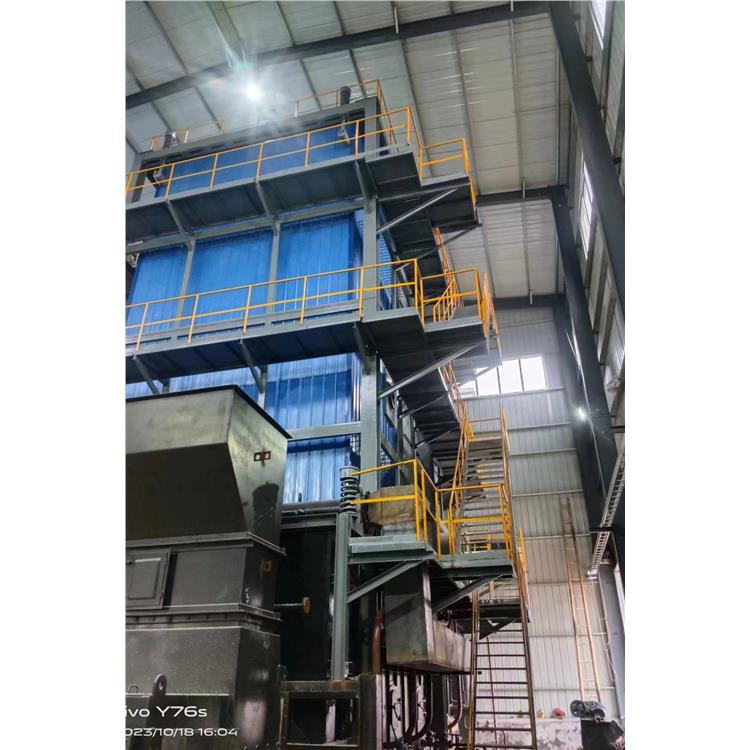

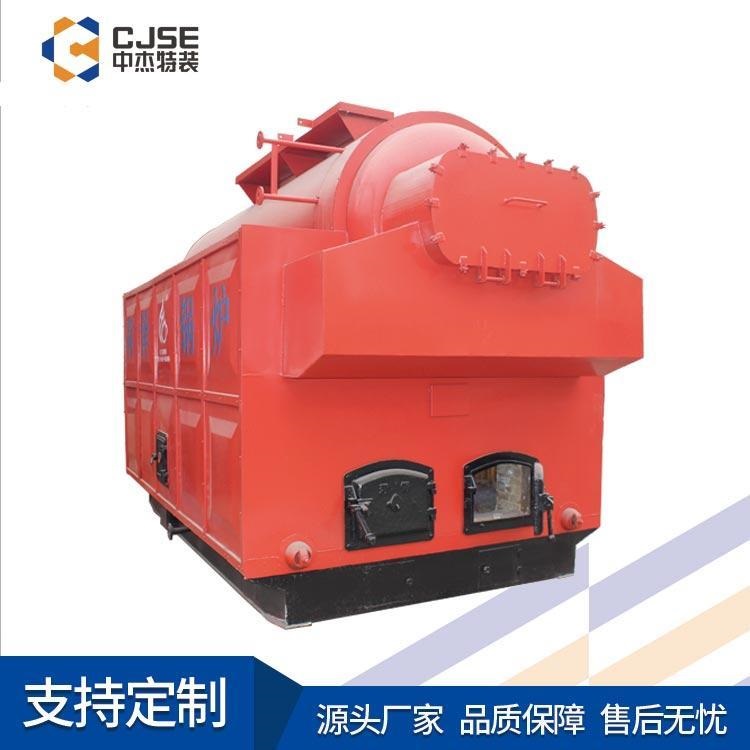
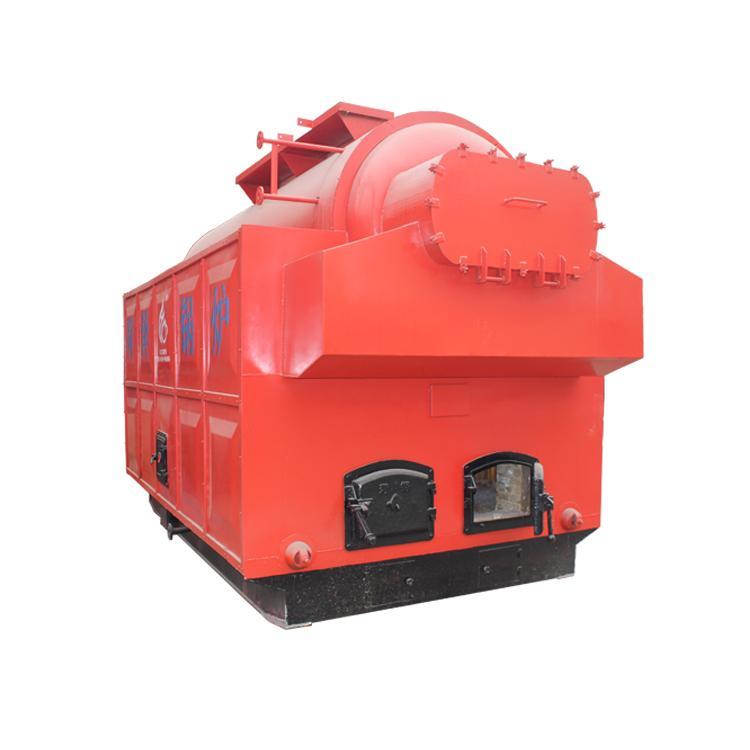


















Shandong Zhongjie Special Equipment specializes in products such as fuel (gas) boilers, organic heat carrier boilers, biomass boilers, waste heat boilers, and other boiler products; vacuum insulation cryogenic pressure vessels like LNG, oxygen-nitrogenargon, and CO2 storage tanks; pressure vessel products including denitration engineering equipment, heat storage and energy storage equipment, and complete chemical equipment; central air conditioning and HVAC equipment such as ground (water) source heat pumps, air source units, water-cooled screw units, and air-cooled modular units. Planned products include large-scale energy centers, LNG transport vehicles, and LNG tank containers, all for green energy equipment.
Chain biomass boiler is a common type of biomass boiler, its working principle and process are as follows:
Fuel Supply: Biomass fuels (such as wood chips, straw, etc.) are transported to the combustion chamber of the chain boiler through the feeding system.
Combustion Process: The fuel is ignited in the combustion chamber while the chain boiler's chain system begins to operate. The fuel is gradually propelled forward by the movement of the chains, simultaneously burning within the combustion chamber. During combustion, the fuel is thoroughly mixed with air, and the heat energy produced is transferred to the boiler's water or other working substance.
Flue Gas Emission: The smoke produced by combustion is channeled through the flue system of the combustion chamber and released into the chimney. During the flue gas emission process, it can be treated with flue gas purification equipment to reduce the emitted particulate matter and gas pollutants.
Heat Recovery: The heat produced by combustion is transferred to water or other working substances through the heat exchanger of the boiler, thereby heating them. After heat recovery, hot water or steam can be used for heating, hot water supply, or other industrial processes.
Control System: Chain biomass chain boiler usually comes with an automatic control system, which monitors and adjusts parameters such as temperature, pressure, and fuel supply during the combustion process. The control system can automatically adjust according to actual needs to ensure the safe and efficient operation of the boiler.
Overall, the biomass chain grate boiler gradually pushes biomass fuel into the combustion chamber through a chain system for burning. The heat energy is transferred to water or other working substances through a heat exchanger, achieving heat recovery and utilization. This boiler boasts high combustion efficiency and strong fuel adaptability, and is widely used in heating, industrial heating, and other fields.
The feed system of biomass pellet fuel boilers typically includes the following components:
Feeding conveying system: Used for transporting biomass pellet fuel from storage areas or supply sources to the boiler fuel storage. The feeding conveying system can utilize screw conveyors, chain conveyors, belt conveyors, etc., with the appropriate conveying method selected based on actual conditions.
Fuel Storage: Used for storing biomass pellet fuel, typically located at the bottom of the boiler. The design of the fuel storage should consider the fuel capacity and stable supply to ensure continuous operation of the boiler.
Feed Control System: Used to regulate the rate and volume of fuel supply to meet the thermal load requirements of the boiler. The feed control system typically includes the start/stop control of the feed conveyor and the adjustment of feed quantity.
Fuel Crushing System (Optional): For larger biomass pellet fuels, crushing may be required to better meet the boiler's combustion requirements. The fuel crushing system typically includes crushers, jaw crushers, and other equipment.
Fuel Pre-treatment System (Optional): For biomass pellet fuels with higher moisture content or impurities, pre-treatment such as drying, screening, and decontamination may be required to enhance combustion efficiency and stability.
When designing and selecting the feed system for biomass pellet fuel boilers, factors such as the fuel characteristics, supply volume, and combustion requirements must be considered. At the same time, ensure the stability, reliability, and safety of the feed system to guarantee the boiler's...
Reducing emissions of nitrogen oxides (NOx) from biomass boilers can be achieved through the following measures:
Combustion Control Technology: Utilizes advanced combustion control techniques, such as low nitrogen combustion technology. By optimizing the combustion process and controlling the combustion temperature and oxygen concentration, the formation of nitrogen oxides is reduced. Methods such as staged combustion and optimized combustion chamber design can be employed to lower combustion temperatures and extend combustion times, thereby decreasing nitrogen oxide emissions.
SNCR Technology: Selective Non-Catalytic Reduction (SNCR) technology involves injecting reductants, such as urea solution, into the combustion process to react with nitrogen oxides and convert them into nitrogen and water. This technique can reduce the formation and emission of nitrogen oxides during combustion.
SCR Technology: Selective Catalytic Reduction (SCR) technology is a nitrogen oxide control method. By injecting urea solution into flue gas and passing it through a catalyst, nitrogen oxides are converted into nitrogen and water. SCR technology achieves nitrogen oxide removal at lower temperatures, suitable for large biomass boilers.
Flue Gas Recirculation (FGR): The Flue Gas Recirculation (FGR) technology recycles a portion of flue gas back into the boiler combustion chamber, reducing combustion temperature and oxygen concentration, thereby minimizing the formation of nitrogen oxides. This technique can control nitrogen oxide emissions by adjusting the recirculation ratio.
Fuel selection and pretreatment: Choosing low nitrogen fuels, such as low nitrogen biomass fuels, can reduce the formation of nitrogen oxides. Additionally, for biomass fuels with high nitrogen content, pretreatment measures such as drying and gasification can be taken to reduce the formation of nitrogen oxides during combustion.
Regular maintenance and cleaning: Regularly maintain and clean biomass boilers to ensure the cleanliness and proper operation of components such as burners and heat exchangers. Cleaning the combustion chamber and heat exchangers can reduce the accumulation of dirt, enhance thermal conductivity efficiency, and lower nitrogen oxide emissions.
By implementing the aforementioned measures comprehensively, nitrogen oxide emissions from biomass boilers can be effectively reduced, achieving both environmental protection and energy-saving goals. Specific measures should be selected based on the characteristics of the boiler, its operating conditions, and emission requirements.
Coal-fired boiler dust removal technology is designed to reduce particulate emissions during the combustion process of coal-fired boilers, protecting the environment and improving air quality. The following are several common coal-fired boiler dust removal techniques:
Mechanical Dust Collectors: Mechanical dust collectors are a common type of dust removal equipment that separates particulates from flue gas using physical principles. Common mechanical dust collectors include gravity collectors, inertial collectors, and bag filters, among others. The working principle of mechanical dust collectors is to utilize the inertia, gravity, or filtration effect of particulates to separate them from the flue gas.
Electrostatic Precipitator: An electrostatic precipitator utilizes the force of an electric field to charge particles in flue gas, and then collects the charged particles by the action of the electric field. There are two types of electrostatic precipitators: dry-type and wet-type. The dry-type electrostatic precipitator is suitable for high-temperature flue gas, while the wet-type electrostatic precipitator is suitable for flue gas with high humidity.
Wet Dust Collectors: Wet dust collectors wet the particulates in flue gas using spray water or other liquids, then separate the wetted particulates from the flue gas through gravity or inertial force. Suitable for treating flue gas with high humidity and sticky particulates.
Electrostatic Precipitator: An electrostatic precipitator utilizes the force of an electric field to charge particulates in flue gas, then collects the charged particles through the action of the electric field. It is suitable for the treatment of high-temperature flue gas and fine particulates.
Dust and desulfurization integrated technology: This technology combines the dust removal and desulfurization processes into one, achieving integrated treatment by sharing equipment and jointly processing flue gas. It can reduce the footprint of equipment, lower investment and operational costs.
Above are common coal-fired boiler dust removal technologies. Different dust removal technologies are suitable for different flue gas and particulate matter characteristics. In practical applications, the appropriate dust removal technology combination can be selected according to specific circumstances to achieve the goal of reducing particulate matter emissions.
Our company highly values technological innovation and R&D, boasting one municipal-level enterprise technology center in Heze City. We have established testing facilities for non-destructive testing, physical and chemical testing, welding testing, hydrostatic testing, and more. We are equipped with over 600 units of various instruments and equipment, including CNC machines, X-ray flaw detectors, digital ultrasonic flaw detectors, mechanical property testing machines, chemical analyzers, spectrometers, tensile testing machines, plasma welding machines, and more. The key products we have developed, such as temperature and pressure vessel welding, biomass boiler emission reduction, and waste heat utilization, have successively been selected for multiple Shandong Provincial Department of Industry and Information Technology science and technology innovation projects, key projects in Shandong Province, and Heze City innovation and excellence projects. We have cumulatively obtained 27 authorized utility models, 16 authorized inventions, participated in drafting 2 standards, 2 industry standards, and registered 15 trademarks. The technical team of our company, in collaboration with Professor Li Yajiang of Shandong University, has developed deep cryogenic container processing technology using the international plasma arc + wire filling argon arc welding (PAW-GTAW) technology. After provincial-level scientific and technological achievement evaluation, the technical level has reached international standards in the field of deep cryogenic container manufacturing. Choose Zhongjie Special Equipment, let's create brilliance together!
WeChat Official Account

Scan to follow Official Account



















