


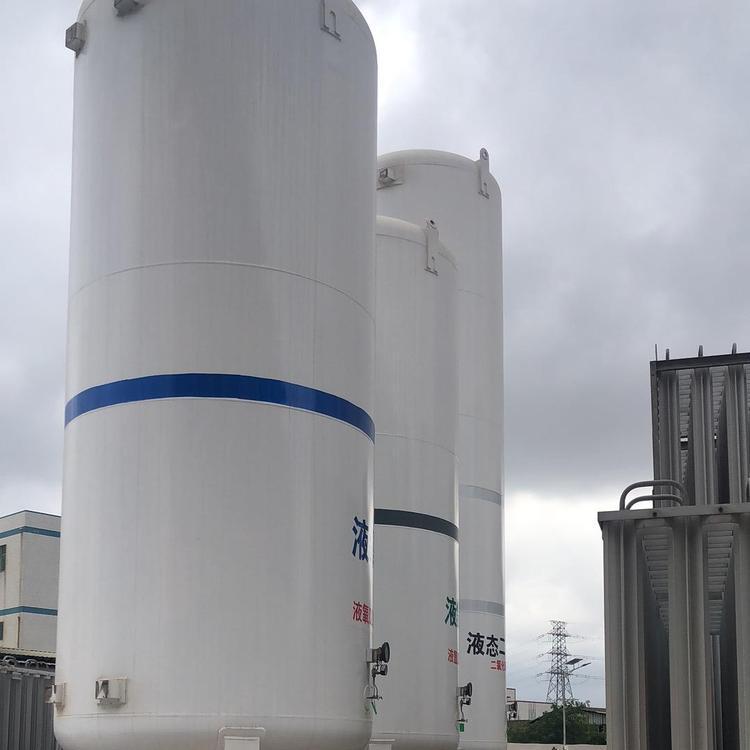

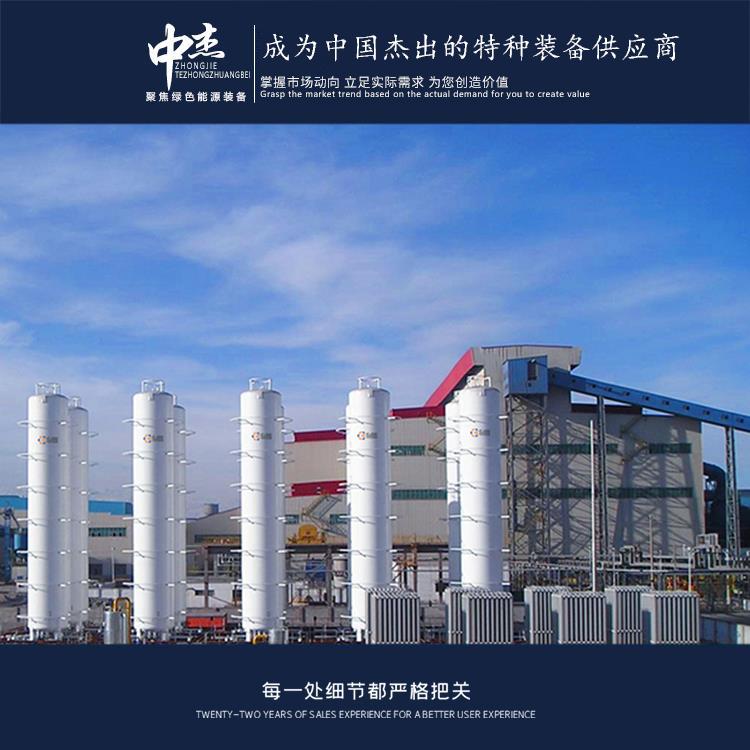
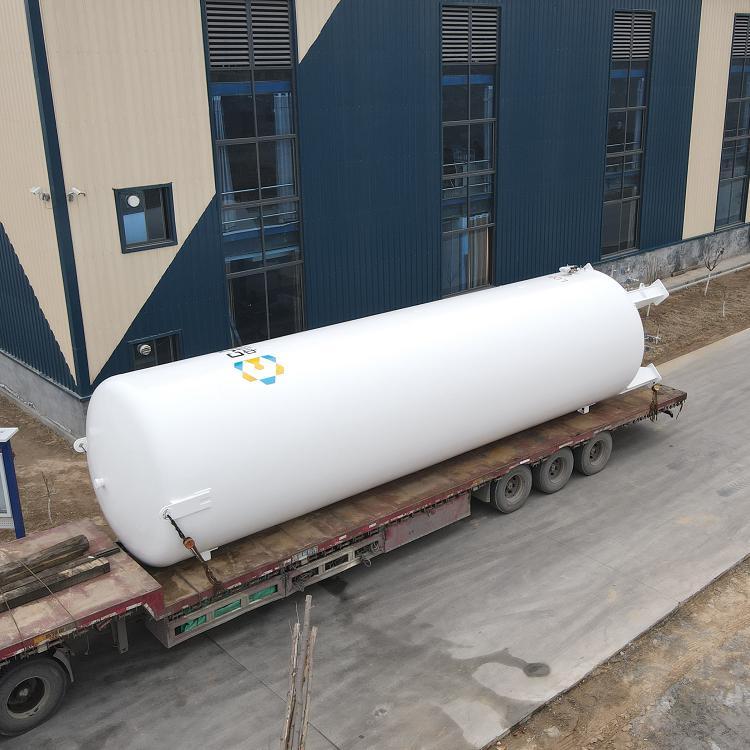


















Shandong Zhongjie Special Equipment (formerly Heze Boiler Factory Co., Ltd.) holds an A-grade boiler manufacturing license, A2-grade pressure vessel manufacturing license, A2-grade pressure vessel design license, B-grade boiler installation, and GB2/Class, GC2/Class pressure pipeline installation licenses, as well as equipment and machinery installation contracting qualifications. It is a member of the China Boiler and Water Treatment Association, the China Chemical Equipment Association, and a council member of the Shandong Equipment Manufacturing Association. The company has also passed certifications for ISO9001 Quality Management System, ISO14001 Environmental Management System, OHSAS18001 Occupational Health and Safety Management System, and the American ASME/U2 certification.
The testing and maintenance of liquid oxygen storage tanks are crucial for ensuring safe operation and extending their service life. Below is a general outline of the testing and maintenance procedures for liquid oxygen storage tanks:
- Visual Inspection: Regularly inspect the exterior of liquid oxygen storage tanks for signs of corrosion, wear, and cracks. Address any abnormalities promptly by repairing or replacing as necessary.
- Internal Cleaning: Regularly clean the interior of liquid oxygen storage tanks to remove accumulated debris and dirt. Use appropriate cleaning agents and tools to avoid damaging the tank.
- Level Measurement: Regularly measure the liquid level within the storage tank to ensure it remains within a safe range. Use level gauges or other measuring equipment, and record the measurements.
- Pressure Testing: Regularly conduct pressure tests to verify the tank's pressure resistance. Control pressure and time during testing to ensure safety and accuracy.
- Leak Detection: Regularly perform leak detection to ensure the tank's sealing integrity. Utilize leak detection instruments such as gas detectors or foam leak detection agents.
- Valve and Pipeline Inspection: Regularly check the valves and pipeline connections on the liquid oxygen storage tank to ensure they are sealed properly and there are no leaks. Address any issues promptly by repairing or replacing.
- Maintenance Records: Document the testing and maintenance activities for liquid oxygen storage tanks, including inspection dates, contents, and results. Records help track maintenance history and issue resolution.
- Scheduled Maintenance: Develop a regular maintenance schedule based on the tank's usage and requirements. Maintenance includes lubrication, bolt tightening, and seal replacement to ensure normal operation.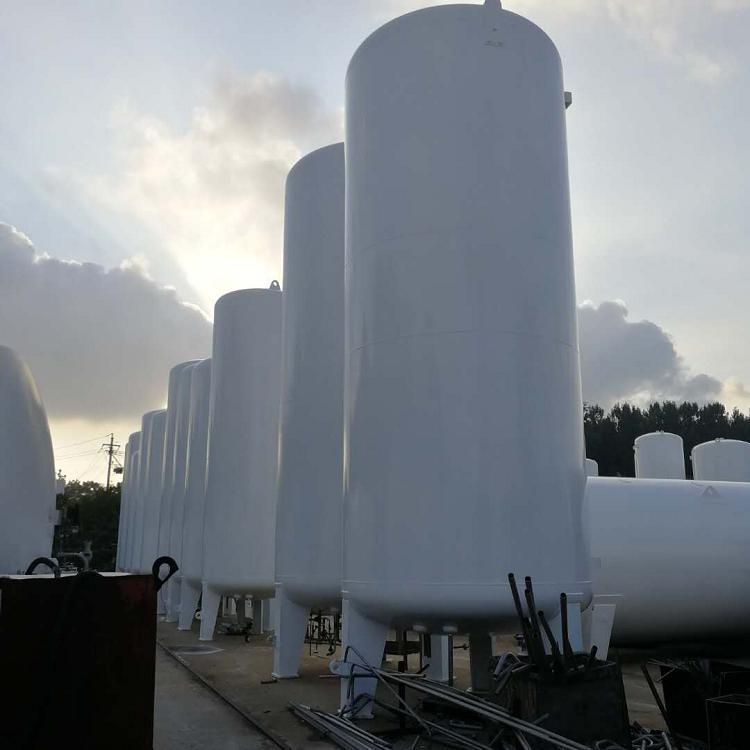
Carbon Dioxide Storage Tank Commissioning typically involves the following steps and contents: Tank Installation Inspection: Check if the tank's installation location, foundation, and supporting structure meet design requirements, ensuring the tank's stability and safety. Pipeline Connection Inspection: Verify the tank's connections to inlet and outlet pipelines are secure, and that valves and pipes are functioning properly for opening and closing, ensuring the integrity and normal operation of the pipeline system. Tank Cleaning and Emptying: Before commissioning, clean and empty the tank to ensure there are no impurities or residues inside, as well as no other gases or liquids. Tank Pressure Testing: Conduct pressure tests on the tank, including static pressure tests and leak tests. The static pressure test involves increasing pressure to check the tank's sealing and pressure resistance. The leak test checks for any leakage in the tank and pipeline system. Control System Commissioning: Calibrate and adjust the tank's control system, including pressure, temperature, and level sensors, to ensure accuracy and reliability of the control system. Safety System Testing: Test the tank's safety system, including the functionality of safety valves, pressure gauges, and level indicators, to ensure normal operation and response of the safety system. Operating Parameter Adjustment: Adjust the tank's operating parameters according to actual needs and process requirements, such as pressure, temperature, and level, to meet process requirements and safe operation. Documentation and Reporting: Record and organize data, test results, and operational records during commissioning, generating a commissioning report for future reference and management. The above are general steps and contents of carbon dioxide storage tank commissioning. Specific commissioning activities may vary based on tank design requirements and application scenarios. During commissioning, strictly adhere to relevant safety operation procedures and standards to ensure the safety and effectiveness of the commissioning process.
The reasons for not allowing long-term emptying of CO2 storage tanks are mainly as follows:
1. Safety Risks: CO2 is a high-pressure gas that maintains its liquid state only under a certain pressure within the tank. Long-term release of CO2 from the tank into the atmosphere can lead to a decrease in tank pressure, potentially causing structural failure or explosions, posing safety hazards.
2. Resource Wastage: CO2 is a valuable resource with extensive applications in industry and other fields. Long-term emptying of CO2 storage tanks results in resource wastage, which is inconsistent with the principles of sustainable development.
3. Environmental Impact: CO2 is a greenhouse gas, and long-term emptying of CO2 can increase atmospheric CO2 concentration, exacerbating climate change and environmental issues.
Therefore, to ensure safety, conserve resources, and protect the environment, CO2 storage tanks should be used and managed in accordance with prescribed procedures and requirements, avoiding long-term emptying. When CO2 is no longer needed in the tank, appropriate disposal methods should be employed, such as recycling, reuse, or safe discharge.
Key measures to ensure the quality of CO2 storage tanks include the following aspects:
1. Selecting qualified suppliers: Choose suppliers with a good reputation and experience, ensuring that the tanks they provide meet relevant quality standards and specifications. This can be achieved by assessing the supplier's qualifications, referencing customer reviews, and conducting on-site inspections to select the right supplier.
2. Strict quality control: Implement strict quality control measures during the manufacturing process of the tanks. This includes selecting and inspecting raw materials, controlling production processes, monitoring process parameters, product testing, and ensuring the tanks meet quality requirements.
3. Compliance with standards and regulations: The design, manufacturing, and installation of the tanks should comply with relevant standards and regulations, such as industry standards and specifications. These include structural design, material selection, welding techniques, corrosion prevention measures, safety valves, and the configuration of pressure sensors.
4. Regular inspections and maintenance: Tanks should undergo regular inspections and maintenance during use to ensure safety and reliability. This involves checking the tank's appearance, sealing, valves, and pipeline connections, conducting pressure tests and leak detection regularly, and addressing abnormal situations promptly.
5. Establishing a quality management system: Set up a comprehensive quality management system, including quality control processes, documentation, quality training, and internal audits. By establishing a quality management system, tank quality control and continuous improvement can be ensured.
6. Third-party testing and certification: Entrust third-party agencies to conduct tank testing and certification to verify quality and compliance. Third-party testing and certification bodies are typically independent and objective, providing unbiased assessment and certification results.
7. Through the implementation of these measures, the quality of CO2 storage tanks can be effectively ensured, enhancing their safety and reliability.
Zhongjie Special Equipment upholds the grand vision of "realizing employees' dreams, creating value for customers, and striving for the prosperity and strength of our motherland," and is dedicated to the development of the green energy equipment industry. We offer products and services with high cost-performance to contribute to society!
WeChat Official Account

Scan to follow Official Account



















