



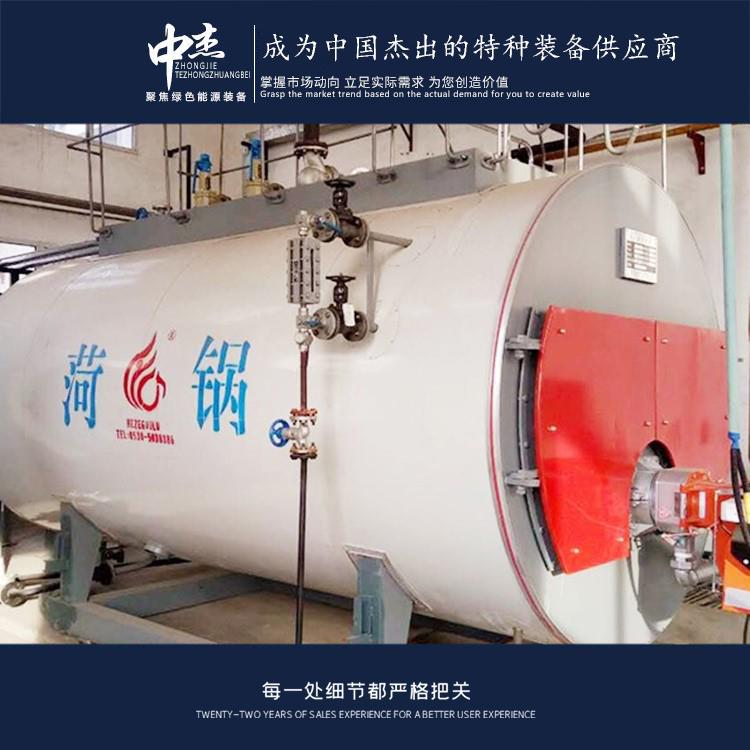


















Shandong Zhongjie Special Equipment (formerly Heze Boiler Factory Co., Ltd.) holds an A-grade boiler manufacturing license, A2-grade pressure vessel manufacturing license, A2-grade pressure vessel design license, B-grade boiler installation, and GB2, GC2 class pressure pipeline installation licenses, as well as an electromechanical installation contracting qualification. It is a member of the China Boiler and Water Treatment Association, the China Chemical Equipment Association, and a director unit of the Shandong Equipment Manufacturing Association. The company has also passed certifications for ISO9001 Quality Management System, ISO14001 Environmental Management System, OHSAS18001 Occupational Health and Safety Management System, and the U.S. ASME/U2 certification.
To optimize and improve the planning of gas boiler systems, consider the following aspects:
1. Energy Audit and Assessment: Conduct a comprehensive energy audit and assessment to understand the energy consumption of the gas boiler system and identify potential energy-saving opportunities. Through data analysis and energy measurement, determine the main sources of energy consumption and bottlenecks, providing a basis for subsequent optimization.
2. Combustion System Optimization: Optimize the combustion system of the gas boiler, including adjustments and cleaning of burners, control of the ratio of gas to air, and maintenance of the combustion chamber. Ensure high combustion efficiency and high gas utilization to reduce energy waste.
3. Heat Recovery Utilization: Consider installing heat recovery devices such as waste heat recovery units or flue gas heat exchangers. These devices can utilize the excess heat from the flue gas emitted by the gas boiler to heat water or other equipment requiring heat, improving energy utilization efficiency.
4. Pipe Insulation and Leak Inspection: Ensure that the insulation of gas and hot water pipes is effective to reduce energy loss. Regularly inspect for pipe leaks and make timely repairs to avoid energy waste and safety hazards.
5. Control System Upgrade: Consider upgrading the control system of the gas boiler to adopt automated control technology. Through precise control and adjustment, achieve optimal operation of the gas boiler.
To reduce the heat loss of a gas boiler, the following measures can be taken:
1. Improve Insulation: Apply insulation to the exterior shell and pipes of the gas boiler to minimize heat loss. Use insulating materials like rock wool and glass wool to wrap the boiler and pipes.
2. Install Heat Recovery Systems: Fit heat recovery units in the flue of the gas boiler to capture the waste heat from the flue gases. This can enhance thermal efficiency and reduce heat loss.
3. Control Combustion Process: Properly control the combustion process to ensure complete, stable, and efficient burning. Adjust the burner parameters, such as air flow and gas supply, to improve combustion efficiency and reduce heat loss.
4. Clean Heat Exchangers: Regularly clean the heat exchangers of the gas boiler to remove dirt and sediment from the surface. This maintains the heat exchange efficiency and reduces heat loss.
5. Control Flue Gas Temperature: Reasonably control the flue gas temperature of the gas boiler to avoid excessive temperatures leading to significant heat loss. This can be achieved by adjusting burner parameters and flue design.
6. Regular Inspection and Maintenance: Conduct regular checks and maintenance on the gas boiler to ensure proper operation. This includes inspecting key components like the combustion system, water level control, and safety valves, and repairing or replacing damaged parts promptly.
7. Utilize Waste Heat: Use the excess heat generated by the gas boiler for other processes requiring heat, such as water heating and heating systems. By utilizing waste heat, reduce energy waste and improve energy efficiency.
Through these measures, heat loss from gas boilers can be effectively reduced, enhancing energy utilization efficiency and cutting down on energy consumption.
Common faults of gas boiler burners and their solutions are as follows:
1. No flame or unstable flame: Check if the gas supply is normal and ensure the gas valve is open. Clean the burner nozzle to ensure the passage is clear. Inspect the ignition electrode for cleanliness, carbon buildup, or dirt. Adjust the gas-to-air ratio to ensure proper mixing.
2. Incomplete combustion or black smoke: Check if the gas supply is sufficient and adjust the gas pressure. Clean the burner nozzle and combustion chamber to ensure the passage is clear. Adjust the gas-to-air ratio to ensure proper mixing. Check for carbon buildup or dirt in the burner and clean or replace damaged parts.
3. Difficulty or failure to ignite: Inspect the ignition electrode for cleanliness, carbon buildup, or dirt. Adjust the position and gap of the ignition electrode to ensure normal spark generation. Check if the ignition transformer or controller is functioning properly, repair or replace damaged parts.
4. Abnormal noise from the burner: Check if the gas supply is normal and ensure the gas valve is open. Inspect the burner and combustion chamber for loose parts, tighten or replace damaged parts. Clean the burner and combustion chamber to ensure no carbon buildup or dirt.
If the above methods do not solve the problem, it is recommended to contact a gas boiler maintenance technician for inspection and maintenance. Also, to ensure safety, follow the relevant safety operating procedures when using a gas boiler.
The flow rate standard for thermal oil in the oil tubes of a thermal oil furnace typically varies based on specific application and equipment requirements, with no fixed, universal figure. Generally, the flow rate of thermal oil within the tubes should be maintained within a reasonable range to ensure proper equipment operation and heat transfer efficiency. Excessive flow rates of thermal oil can lead to issues such as increased system pressure loss and pump power consumption, higher friction losses in the pipes leading to energy loss, and increased system noise and vibration. On the other hand, low flow rates of thermal oil can result in insufficient heat transfer, affecting equipment thermal efficiency, prolonged residence time in the pipes which can lead to oxidation and thermal decomposition, reducing the lifespan of the thermal oil, and the formation of scale in the pipes, increasing resistance and affecting fluid flow. Therefore, when designing and operating a thermal oil furnace system, it is necessary to consider specific equipment parameters, the properties of the thermal oil, and pipeline layout, among other factors, to determine an appropriate flow rate. Typically, the flow rate of thermal oil should be within the range of 0.5-2.0 m/s, but the exact figure should be adjusted and optimized based on actual conditions. In practice, flow rates can be controlled by monitoring and adjusting the pump flow and pipeline resistance to meet the equipment's heat energy needs and operational requirements.
Zhongjie Special Equipment upholds the grand vision of "realizing employees' dreams, creating value for customers, and striving for the prosperity and strength of our motherland," and is dedicated to the development of the green energy equipment industry. We offer society high-quality products and services at competitive prices!
WeChat Official Account

Scan to follow Official Account



















