


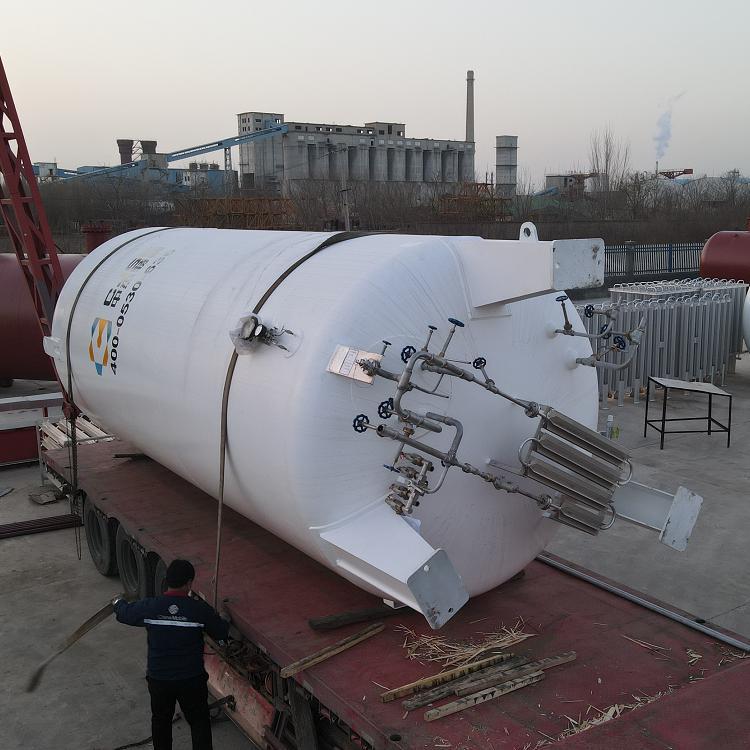

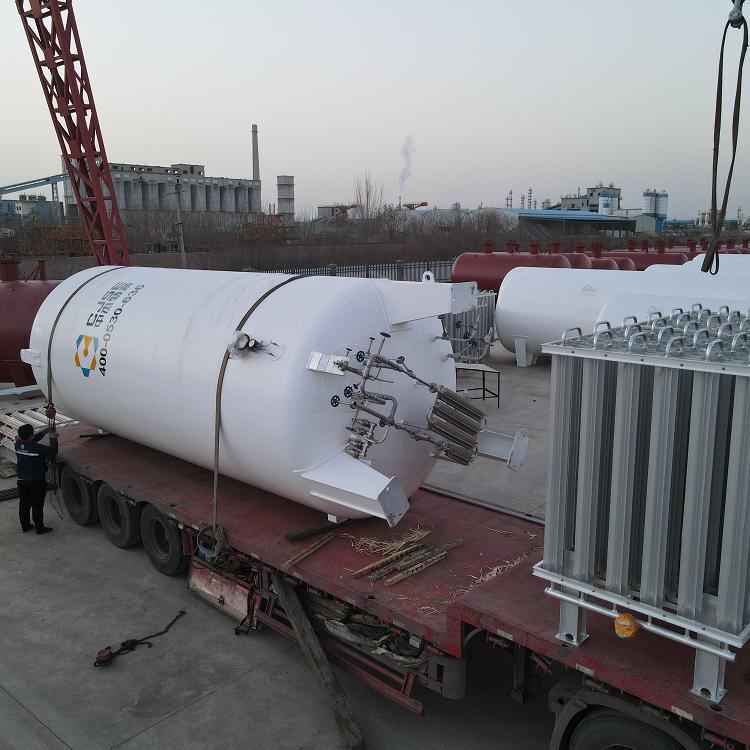
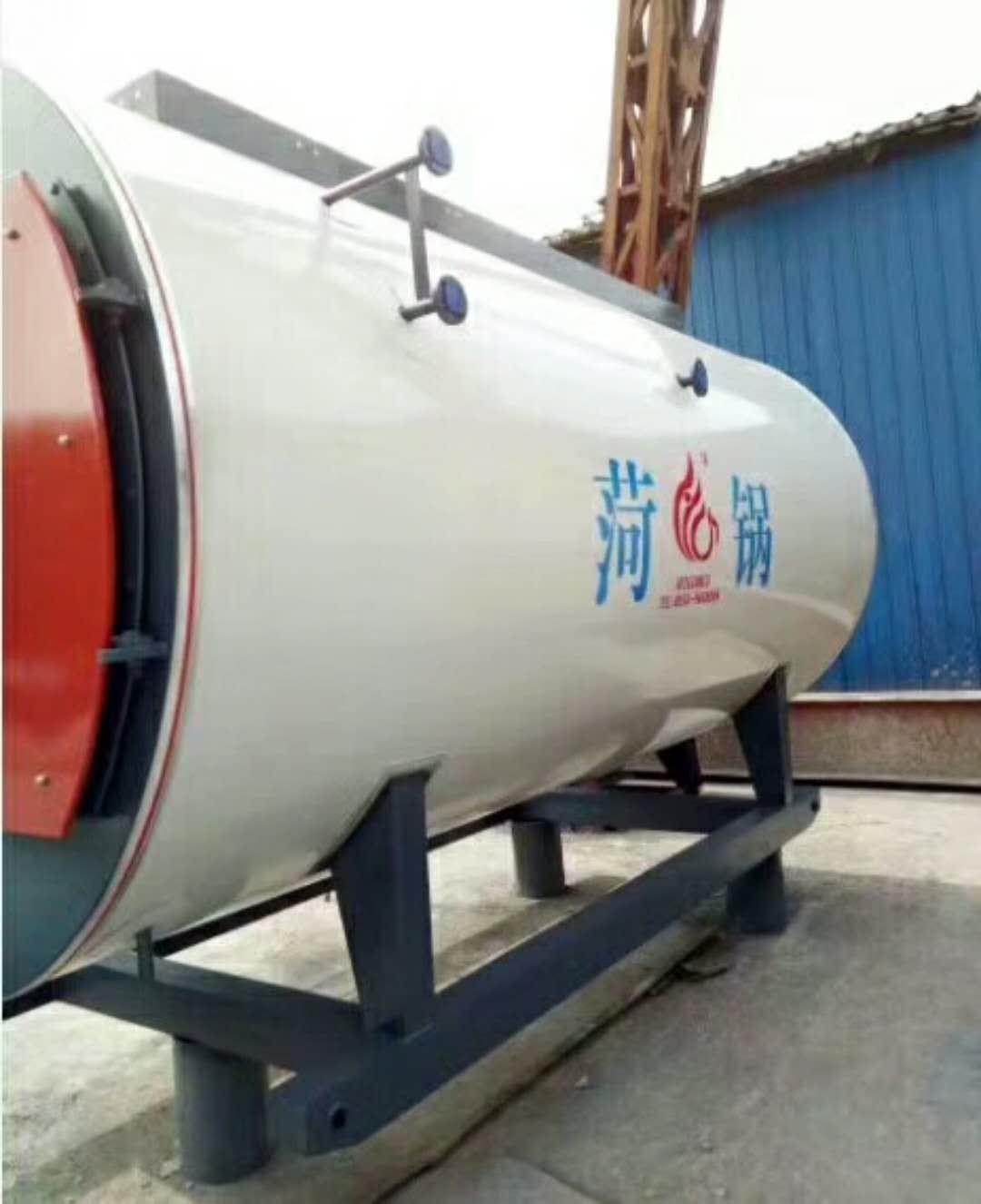


















Shandong Zhongjie Special Equipment (formerly Heze Boiler Factory Co., Ltd.) holds an A-grade boiler manufacturing license, A2-grade pressure vessel manufacturing license, A2-grade pressure vessel design license, B-grade boiler installation license, GB2 and GC2 pressure pipeline installation licenses, and a mechanical and electrical equipment installation contracting license. It is a member of the China Boiler and Water Treatment Association, the China Chemical Equipment Association, and the理事 unit of the Shandong Equipment Manufacturing Association. The company has also passed certifications for the ISO9001 Quality Management System, ISO14001 Environmental Management System, OHSAS18001 Occupational Health and Safety Management System, and the U.S. ASME/U2 certification.
When storing liquid nitrogen in low-temperature storage tanks, be mindful of the following points:
Protective Gear: When handling low-temperature storage tanks, it is mandatory to wear appropriate protective gear, including gloves, protective suits, and anti-slip shoes. This gear safeguards the skin from the low temperatures of liquid nitrogen and other hazards.
Avoid direct contact: Liquid nitrogen is extremely cold and can cause chilling. Hence, it should be avoided to come into direct contact with liquid nitrogen, especially with the skin. Use tools or equipment for handling, and prevent hands from coming into direct contact with liquid nitrogen.
Ventilation Requirements: In the operation area of low-temperature storage tanks, adequate ventilation must be ensured to exhaust gases produced by the evaporation of liquid nitrogen. Maintain air circulation to avoid excessive oxygen concentration and reduce the risk of fire and explosion.
Prevent Leaks: Regularly inspect the low-temperature storage tanks for leaks and equip with leak detectors and alarm systems. In case of a leak, take immediate action to control and repair it. Avoid the harm caused by liquid nitrogen leaks to personnel and the environment.
Fire Prevention Measures: Liquid nitrogen has a low boiling and freezing point, which can easily cause fires. To prevent and contain fires, fire walls and fire-retardant coatings should be installed around low-temperature storage tanks.
Static Protection: The accumulation of static electricity in low-temperature storage tanks may cause sparks, increasing the risk of fire. Measures such as using static-conductive materials and anti-static equipment should be taken to reduce the accumulation and release of static electricity.
Regular Inspections and Maintenance: Conduct regular checks of the low-temperature storage tank and associated equipment, including valves, pipes, and pressure gauges. Ensure the equipment is in perfect condition without any damage, and promptly repair or replace any faulty parts.
Waste Gas Treatment: Low-temperature storage tanks will produce waste gas during operation, and appropriate waste gas treatment measures must be taken to minimize environmental impact.
Above are the precautions to be taken when storing liquid nitrogen in a low-temperature storage tank, ensuring safe operation and normal tank performance. During operation, strictly follow the relevant operational procedures and safety requirements to prevent accidents.
Before using the liquid oxygen tank, the following preparations must be made:
Safety Inspection: Ensure the tank and its surrounding environment are safe. Check for any damage, leaks, or other safety hazards on the tank. Make sure there are no flammable materials or other hazardous items in the vicinity of the tank.
Tank Preparation: Inspect the tank's exterior, including the shell, welds, valves, and fittings. Ensure there are no visible damages or corrosion. Check that the insulation layer is intact and undamaged.
Liquid Oxygen Filling: Utilize liquid oxygen delivery equipment to fill the tank. Ensure that the flow rate and pressure of the liquid oxygen are maintained within a safe range during the filling process.
Pressure Control: Tanks should be equipped with pressure control devices to ensure the internal pressure of the tank remains within a safe range. Inspect and adjust the pressure control devices to ensure they are functioning properly.
Valve Operation: Inspect the tank valves and connections for proper operation. Ensure the valves open and close smoothly and reliably. Adjust the valve's open and close positions as required.
Safety Equipment: Inspect the safety equipment around the storage tanks, such as fire separation zones and alarm systems, to ensure they are functioning properly.
Operator Training: Ensure operators are proficient in the safe operation of liquid oxygen storage tanks.
The use of low-temperature liquid storage tanks requires attention to the following matters:
Safe Operation: Operators must receive training to understand the tank's operational procedures and safety precautions. Adhere to proper operational steps to ensure safe operation.
Protective Gear: Operators should wear appropriate protective gear, such as insulated clothing, gloves, etc., to safeguard against injuries from low-temperature liquids.
Leak Protection: Regularly inspect the tank and associated pipelines for seal integrity to prevent leakage of low-temperature liquids. Keep the area around the tank clean to avoid debris obstructing leak detection and handling.
Fire Protection: Low-temperature liquids are highly flammable and fire prevention measures must be taken. Maintain a fire-free environment around storage tanks, prohibit smoking and open flames. Equip with appropriate firefighting equipment to address fire risks.
Pressure Control: Regularly inspect and maintain the pressure control system of the storage tank to ensure the pressure inside remains within a safe range. Safety valves and pressure sensors, among other equipment, should operate normally, and abnormal pressure situations should be detected and addressed promptly.
Insulation Protection: Low-temperature liquid storage tanks should be equipped with effective insulation to minimize heat transfer and liquid evaporation. The selection and installation of the insulation should comply with relevant standards and requirements.
Regular Inspections and Maintenance: Conduct regular inspections of the tank's exterior and interior, including checking for leaks, corrosion, wear, or other damages. Pay special attention to inspecting the tank's interfaces, valves, and pipelines, ensuring they operate normally.
Emergency Preparedness: Develop an emergency response plan including measures for leaks, fires, and other unforeseen incidents. Operators should be familiar with the emergency response plan and be equipped with appropriate emergency and firefighting equipment.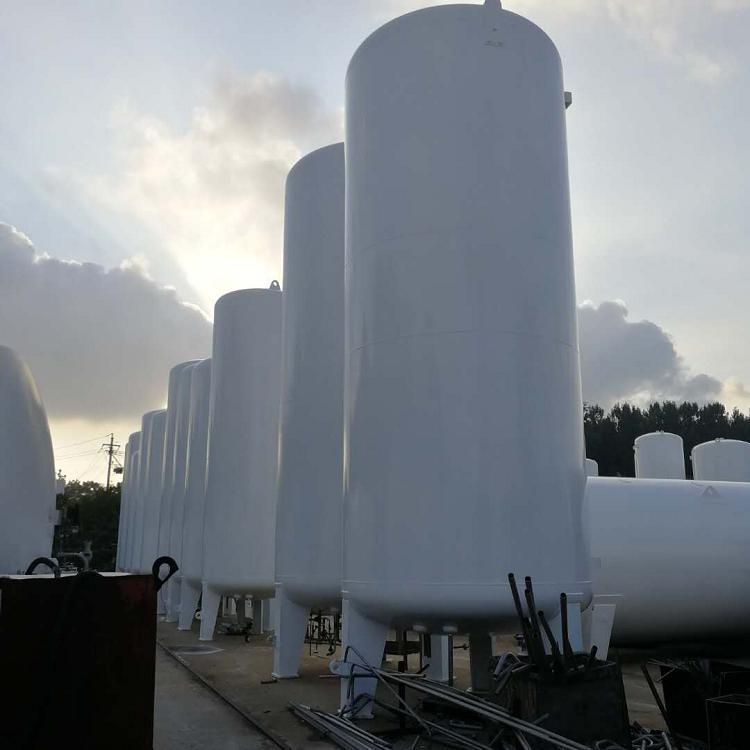
In the degreasing process of high-vacuum pipelines in low-temperature liquid storage tanks, the following steps can be taken:
Preparation: Ensure the cleanliness and readiness of the degreasing equipment and tools. Check the piping system's connections and sealing, ensuring no leaks.
Pipe Cleaning: Clean pipes using suitable detergents and tools to remove surface dirt and grease. Methods may include mechanical brushing, high-pressure water jetting, or chemical cleaning.
De-greasing Treatment: Select an appropriate de-greaser and inject it into the pipeline system. The de-greaser can be an organic solvent or an alkaline solution, the specific choice depending on the pipeline material and the type of dirt. Ensure the de-greaser thoroughly covers the inner pipeline wall and maintains a certain contact time.
Pipe flushing: Drain the degreaser from the pipeline system and flush with clean water to remove any remaining degreaser and dirt. During flushing, high-pressure water or gas can be used to scrub, ensuring the interior of the pipeline is clean.
Dry Pipe: Utilize drying equipment or ventilation systems to evaporate or exhaust moisture within the pipe, ensuring the interior wall is dry. Drying can be achieved using hot air or nitrogen.
Inspection and Testing: After degreasing, inspect and test the pipes to ensure their cleanliness and sealing. Visual inspection, pressure testing, or other relevant tests can be conducted.
Be mindful to adhere to the relevant safety operation procedures and guidelines during the de-greasing process of high vacuum pipelines for low-temperature liquid storage tanks. Ensure the operators are equipped with the necessary safety awareness and operational skills to prevent any accidental incidents.
Shandong Zhongjie Special Equipment, welcome customers to visit our factory for cooperation negotiations.
WeChat Official Account

Scan to follow Official Account



















