


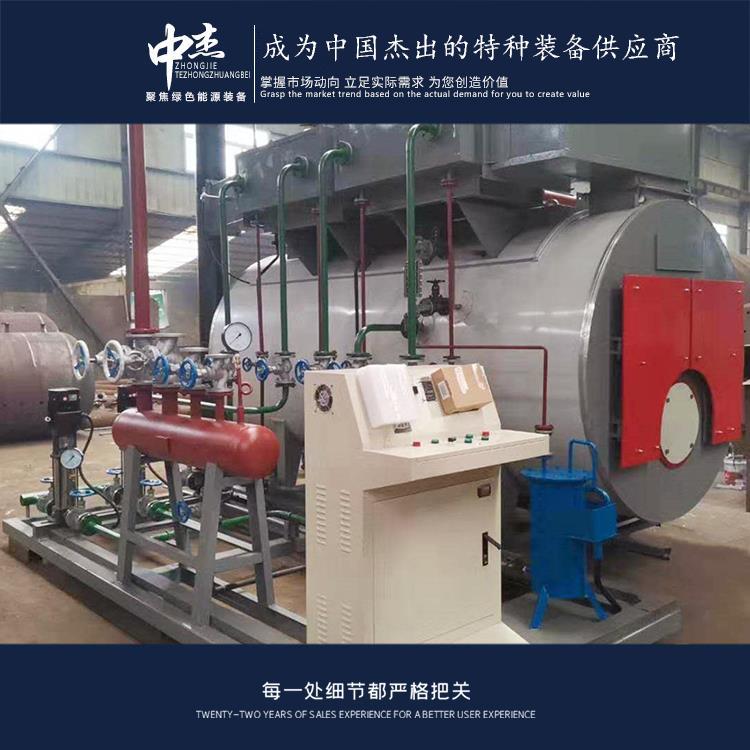

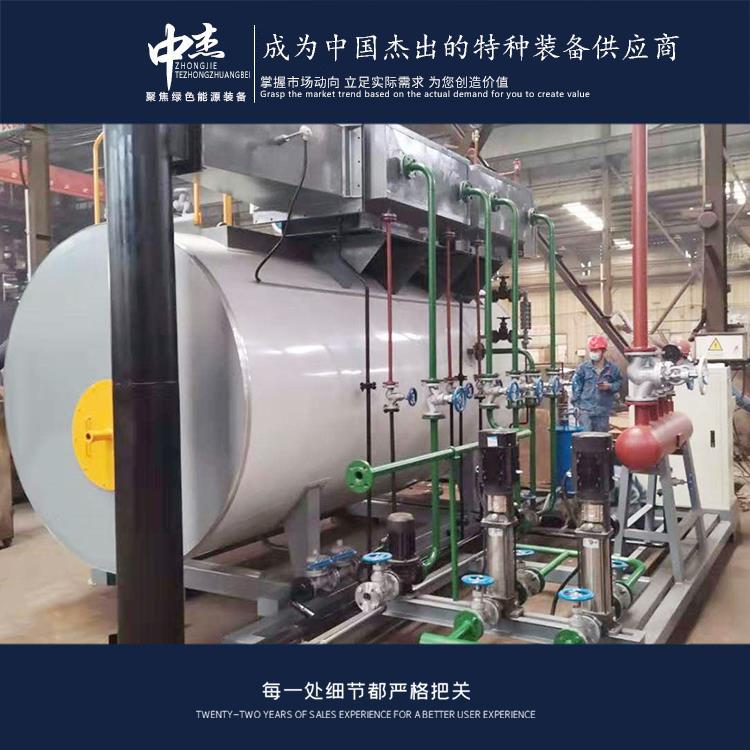
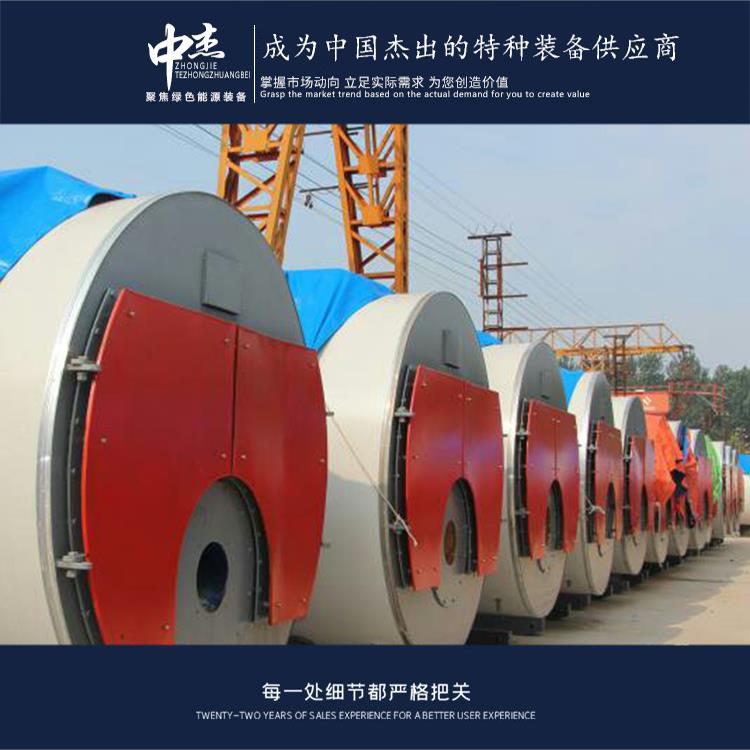


















Shandong Zhongjie Special Equipment's main products include: fuel (gas) boilers, organic heat carrier boilers, biomass boilers, waste heat boilers, and other boiler products; vacuum insulation cryogenic pressure vessels such as LNG tanks, oxygen/nitrogen/argon tanks, and CO2 tanks; pressure vessel products such as denitrification engineering equipment, heat storage and energy storage equipment, and complete chemical equipment sets; central air conditioning and HVAC equipment such as ground (water) source heat pumps, air source units, water-cooled screw units, and air-cooled modular units. Planned products include large-scale energy centers, LNG transport vehicles, LNG tank containers, and other green energy equipment.
After the hot water boiler is shut down, here are some common maintenance measures:
1. Clean the boiler: After shutdown, clean the boiler first. Dust, dirt, and sediment inside the boiler can be cleaned with appropriate cleaning tools and agents. Pay special attention to cleaning the combustion chamber, flue, and heat exchanger, among other critical areas.
2. Drain the water: Empty the water from the boiler to prevent the accumulation of scale and corrosive substances. Open the drain valve to discharge the water until the interior of the boiler is completely empty.
3. Anti-corrosion treatment: Before shutdown, apply anti-corrosion treatment to prevent internal metal corrosion of the boiler. Use suitable anti-corrosion agents or coatings and apply them to key areas inside the boiler.
4. Inspection and maintenance: During shutdown, regularly check the various components and connections of the boiler to ensure there are no loose, damaged, or leaking issues. If problems are found, repair or replace them promptly.
5. Keep dry: After shutdown, maintain the dryness inside the boiler. Open the ventilation and exhaust openings to maintain air circulation, preventing dampness and mold growth.
6. Regular inspection: Conduct regular inspections of the boiler's condition to ensure no abnormalities. Develop a corresponding inspection schedule based on the boiler's usage and requirements, such as a comprehensive check every quarter or year.
7. Pre-start preparation: Before restarting the boiler, prepare accordingly. This includes cleaning the boiler, checking equipment and pipeline connections, and inspecting fuel supply.
Operation that may cause issues with the fuel system of a thermal oil furnace include:
- Inadequate fuel quality: Using low-quality or contaminated fuel can lead to problems in the fuel system. For instance, impurities, moisture, or excessive sediment in the fuel can cause fuel pumps, injectors, and burners to clog, affecting fuel supply and combustion efficiency.
- Failure to regularly clean or replace the fuel filter: The fuel filter's purpose is to filter out impurities and particles from the fuel, preventing them from entering the fuel system. If the fuel filter is not cleaned or replaced regularly, it can become clogged, impeding fuel flow and supply.
- Incorrect adjustment of the fuel pump: Proper adjustment of the fuel pump is crucial for maintaining consistent fuel supply and pressure. Improper adjustment can result in either excessive or insufficient fuel supply, leading to incomplete combustion or insufficient fuel supply, affecting the furnace temperature and thermal efficiency.
- Clogging or wear on the fuel nozzle: The fuel nozzle is a critical component that atomizes and injects fuel into the furnace. Clogging or wear on the nozzle can cause uneven fuel injection or incorrect spray angles, impacting combustion efficiency and heat output.
- Inadequate fuel preheating: Fuel needs to be preheated before entering the burner to enhance combustion. Insufficient preheating can increase fuel viscosity, affecting fluidity and injection performance.
- Fuel system leaks: The sealing integrity of the fuel system is essential for stable fuel supply. Leaks in the fuel system can lead to fuel supply disruption.
The purpose of deoxygenation in industrial boiler feed water is to reduce oxygen corrosion and bubble formation within the boiler, ensuring the safety and proper operation of the boiler and pipeline system. The main methods of deoxygenation include:
1. Mechanical Deoxygenation: Removing oxygen from water through physical means. Common mechanical deoxygenation equipment includes deaerators and degassers. Deaerators remove oxygen by atomizing water into a film, utilizing the difference in gas solubility. Degassers remove oxygen by atomizing water into fine droplets, also taking advantage of the difference in gas solubility.
2. Thermal Deoxygenation: Removing oxygen from water by heating the water body, utilizing the property that oxygen solubility decreases with increasing temperature. Common thermal deoxygenation equipment includes deaerating pots and deaerators. Deaerating pots release oxygen from water by heating it to saturation temperature. Deaerators remove oxygen by heating water, taking advantage of the reduced solubility of oxygen.
3. Chemical Deoxygenation: Removing oxygen from water by adding chemicals that react with it, thus removing oxygen. Common chemical deoxygenating agents include salts and reductants. Chemical deoxygenation is often used in high-pressure boiler systems and can effectively remove oxygen from water.
The choice and method of deoxygenation depend on the specific boiler system and water quality. In practical applications, a combination of deoxygenation methods is often used to achieve the desired deoxygenation effect. The selection and operation of deoxygenation equipment should be assessed and adjusted based on actual conditions to ensure the safety and proper operation of the boiler system.
To optimize and improve the planning of gas-fired boilers, consider the following aspects:
1. Energy Audit and Assessment: Conduct a comprehensive energy audit and assessment to understand the energy consumption of the gas boiler system and identify potential energy-saving opportunities. Through data analysis and energy measurement, determine the main sources of energy consumption and bottlenecks, providing a basis for subsequent optimization.
2. Combustion System Optimization: Optimize the combustion system of the gas boiler, including adjustments and cleaning of burners, control of gas and air ratios, and maintenance of the combustion chamber. Ensure high combustion efficiency and high gas utilization rate, reducing energy waste.
3. Heat Recovery Utilization: Consider installing heat recovery devices such as waste heat recovery units or flue gas heat exchangers. These devices can utilize the excess heat in the flue gas emitted by the gas boiler to heat water or other equipment requiring heat energy, improving energy utilization efficiency.
4. Pipe Insulation and Leak Inspection: Ensure that the insulation performance of gas pipes and hot water pipes is good, reducing energy loss. Regularly inspect for pipe leaks and repair them promptly to avoid energy waste and safety hazards.
5. Control System Upgrade: Consider upgrading the control system of the gas boiler to adopt automated control technology. Through control and regulation, achieve optimal operation of the gas boiler.
Our company attaches great importance to technological innovation and R&D design. We have one municipal-level enterprise technology center in Heze City, equipped with testing facilities for non-destructive testing, physical and chemical testing, welding testing, hydrostatic testing, etc. We have over 600 various equipment, including CNC machine tools, X-ray flaw detectors, digital ultrasonic flaw detectors, mechanical property testing machines, chemical analyzers, spectrometers, tensile testing machines, plasma welding machines, and more. The key products we have developed, such as temperature and pressure vessel welding, biomass boiler emission reduction, and waste heat recovery, have successively been selected for multiple Shandong Provincial Department of Industry and Information Technology science and technology innovation projects, Shandong key projects, and Heze City innovation and excellence projects. We have accumulated 27 authorized utility models, 16 authorized inventions, participated in drafting 2 standards, 2 industry standards, and registered 15 trademarks. The technical team, in collaboration with Professor Yajiang Li from Shandong University, has developed deep cryogenic container processing technology using the international plasma arc + wire feeding tungsten inert gas arc welding (PAW-GTAW) technology. This technology has been appraised as reaching an international level in the field of deep cryogenic container manufacturing by the provincial-level science and technology achievement evaluation.
Choose ZJET for your custom solutions, let's create brilliance together!
WeChat Official Account

Scan to follow Official Account



















