


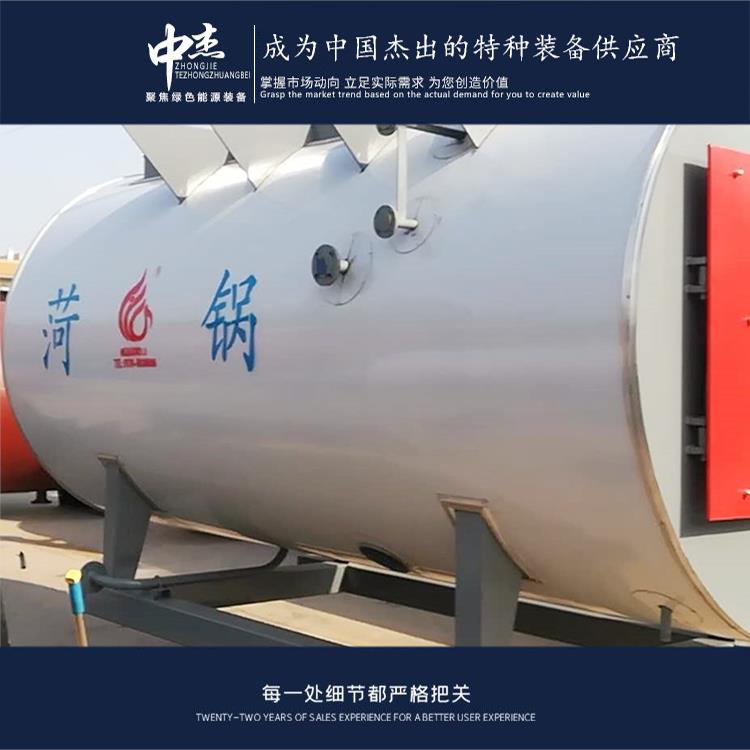

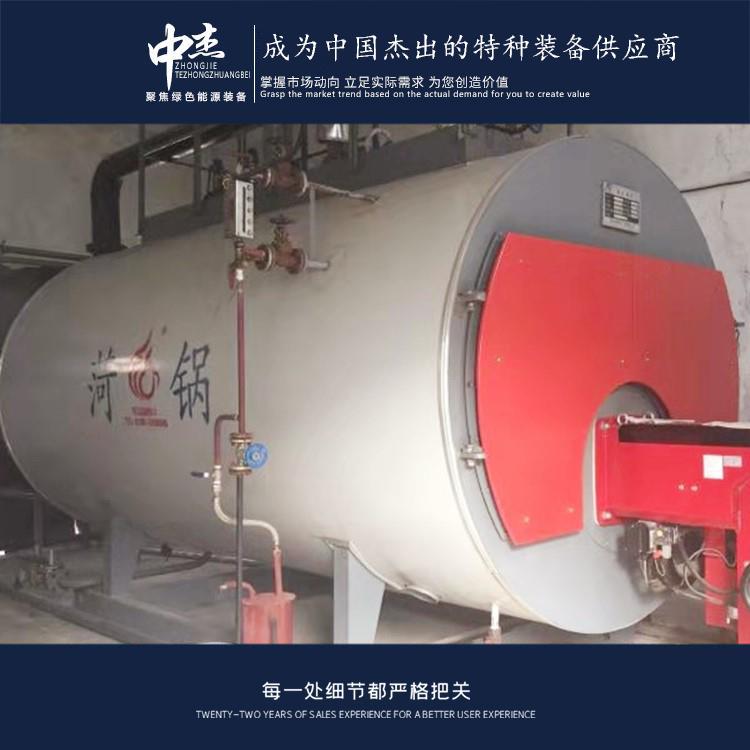
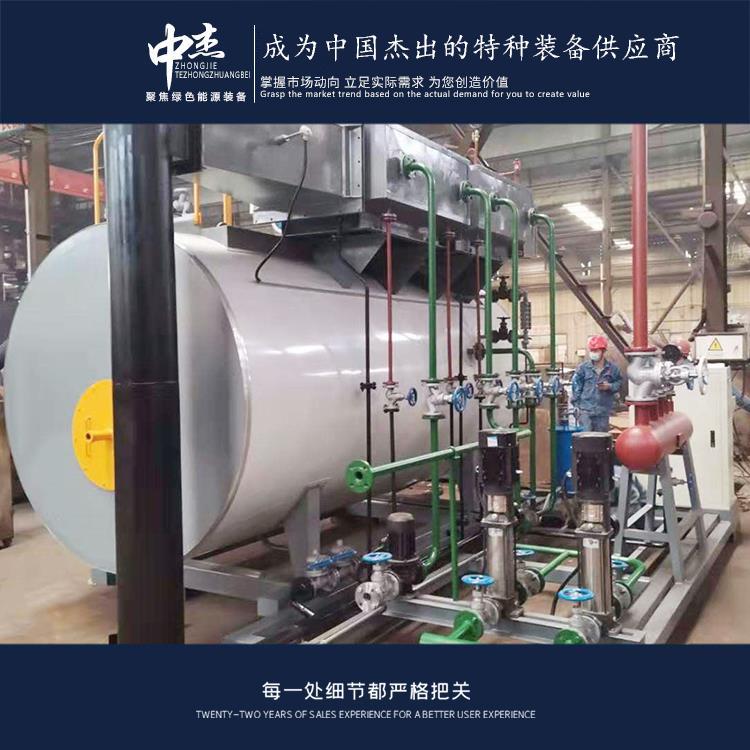


















Shandong Zhongjie Special Equipment (formerly Heze Boiler Factory Co., Ltd.) holds an A-grade boiler manufacturing license, an A2-grade pressure vessel manufacturing license, an A2-grade pressure vessel design license, a B-grade boiler installation license, and GB2/Class and GC2/Class pressure pipeline installation licenses, as well as a qualification for the installation of electromechanical equipment. It is a member of the China Boiler and Water Treatment Association, the China Chemical Equipment Association, and the理事 member of the Shandong Equipment Manufacturing Association. The company has also passed certifications for the ISO9001 Quality Management System, ISO14001 Environmental Management System, OHSAS18001 Occupational Health and Safety Management System, and the American ASME/U2 certification.
When designing a fuel-gas boiler room, the following points should be taken into consideration:
Safety Considerations: Ensure the design of the boiler room complies with relevant safety standards and regulations. Address fire risks by installing appropriate firewalls, fire doors, and isolation facilities. Ensure good ventilation in the boiler room, with suitable ventilation equipment and flue systems to expel harmful gases produced by combustion.
Space and Layout: Plan the space and layout of the boiler room based on the number and size of the boilers. Ensure there is ample space for operation, maintenance, and cleaning. Arrange the boilers, fuel storage equipment, flue systems, and pipeline layouts for ease of operation and maintenance.
Fuel Supply and Storage: Consider the requirements for fuel supply and storage. Ensure the safety and reliability of fuel supply pipelines and equipment, avoiding leaks and contamination. Plan the capacity and location of fuel storage equipment to ensure adequate fuel supply and compliance with safety requirements.
Emission and Exhaust Gas Treatment: Address the emission and treatment of exhaust gases produced by combustion. Install suitable flue systems and exhaust gas treatment equipment to minimize the environmental impact of emissions. Ensure the design and layout of the flue system effectively expels smoke and exhaust gases.
Control and Monitoring Systems: Design appropriate control and monitoring systems to ensure the safety and operation of the boilers. This includes monitoring and control equipment for parameters such as temperature, pressure, and flow, as well as alarm and automatic shutdown devices. Ensure operators can promptly understand the boiler's operating status and take necessary actions.
Excessive flue gas temperature in a thermal oil boiler may be due to several reasons:
Incomplete combustion: If the fuel is not fully combusted during the boiler's burning process, it results in a large amount of unburned fuel and harmful substances in the flue gas, raising the exhaust temperature. Possible causes include insufficient fuel supply, improper burner adjustment, or wear on the burner.
Excessive air: Too much air can lower the combustion temperature, making the heat in the flue gas insufficient to reduce the flue gas temperature to a reasonable range. Causes may include improper burner adjustment or excessively open air gates.
Chimney blockage: Accumulated ash, slag, or other impurities blocking the chimney can impede flue gas flow, increase the residence time of the flue gas, and thus raise the exhaust temperature.
Abnormal thermal oil flow: An abnormal flow of thermal oil, either too high or too low, can lead to uneven heat transfer, causing the flue gas temperature to rise.
Boiler overheating: Improper temperature control in the thermal oil boiler can lead to overheating, increasing the flue gas temperature.
Boiler design issues: Problems with the boiler design, such as a narrow chimney or poor flue gas flow, may also cause excessively high exhaust temperatures.
To address the issue of high exhaust temperature, a comprehensive inspection and analysis of the thermal oil boiler is necessary. Solutions may include adjusting burner parameters, cleaning the chimney, checking thermal oil flow and temperature control. In severe cases, modifications or repairs to the boiler system may be required. Regular maintenance and inspections are also crucial preventive measures against high exhaust temperatures.
In industrial boiler systems, the key functional parameters of pumps include the following aspects:
- Flow Rate: The flow rate of a pump refers to the volume of liquid pumped per unit of time. In industrial boilers, pumps must provide sufficient flow to meet the boiler's water requirements. The flow rate depends on the boiler's rated evaporation capacity and the design requirements of the circulating water system.
- Head: The head of a pump is its ability to overcome liquid resistance and lift the fluid to a certain height. In industrial boilers, pumps must have adequate head to ensure smooth flow to all parts of the boiler, including the feed water and circulating water systems.
- Power: The power of a pump is the electrical or mechanical energy required to drive the pump. In industrial boilers, the power of the pump must be determined based on flow rate and head to meet the system's needs.
- Efficiency: The efficiency of a pump is the ratio of the input energy to the output fluid energy. High-efficiency pumps can reduce energy consumption and operating costs. In industrial boilers, selecting high-efficiency pumps can improve the system's energy efficiency performance.
- Stability and Reliability: Pumps in industrial boiler systems must have good operational stability and reliability. They should be able to run stably for long periods without being affected by external disturbances or fluctuations and should be adaptable to different operating conditions.
- It is necessary to select the appropriate pump based on the specific industrial boiler system and design requirements, ensuring that the functional parameters meet the system's needs. Additionally, the selection and operation of the pump must comply with relevant standards and regulations to ensure safe and reliable operation.
When using a gas thermal oil furnace, the following precautions should be taken:
- Safe Operation: A gas thermal oil furnace is a high-temperature equipment, and safety must be ensured during operation. Operators should be familiar with the equipment's operating procedures and safety precautions, wear necessary personal protective equipment, and ensure safe operation.
- Gas Supply: A stable gas supply is required for a gas thermal oil furnace. Before use, check if the gas pipeline is clear and the gas valve is open to ensure normal gas supply.
- Thermal Oil Circulation: A thermal oil furnace needs to circulate the thermal oil through a circulating pump to the heat source equipment. Before use, inspect the operation of the circulating pump to ensure it is functioning properly.
- Temperature Control: A gas thermal oil furnace typically requires a temperature control system to regulate the thermal oil temperature. Before use, check the settings and adjustments of the temperature control system to ensure accurate and reliable control.
- Regular Maintenance: Regular maintenance and upkeep are necessary for a gas thermal oil furnace, including cleaning the burner, checking the sealing of pipelines and valves, and replacing worn parts. Regular maintenance ensures the normal operation of the equipment and extends its service life.
- Environmental Protection: Gas thermal oil furnaces produce exhaust gases during combustion, and emissions must be ensured. Appropriate exhaust gas treatment measures, such as flue gas purification equipment, can be taken to reduce environmental impact.
The above are some precautions when using a gas thermal oil furnace. To ensure safety and the normal operation of the equipment, it is recommended to follow relevant operating procedures and safety requirements, and to perform regular maintenance and inspections. If necessary, consult the manufacturer or engineer of the gas thermal oil furnace for advice.
Zhong Jie Special Equipment upholds the grand vision of "realizing the dreams of employees, creating value for customers, and striving for the prosperity and strength of our motherland," and is dedicated to the development of the green energy equipment industry. We commit to society with high-quality products and services at competitive prices!
WeChat Official Account

Scan to follow Official Account



















