



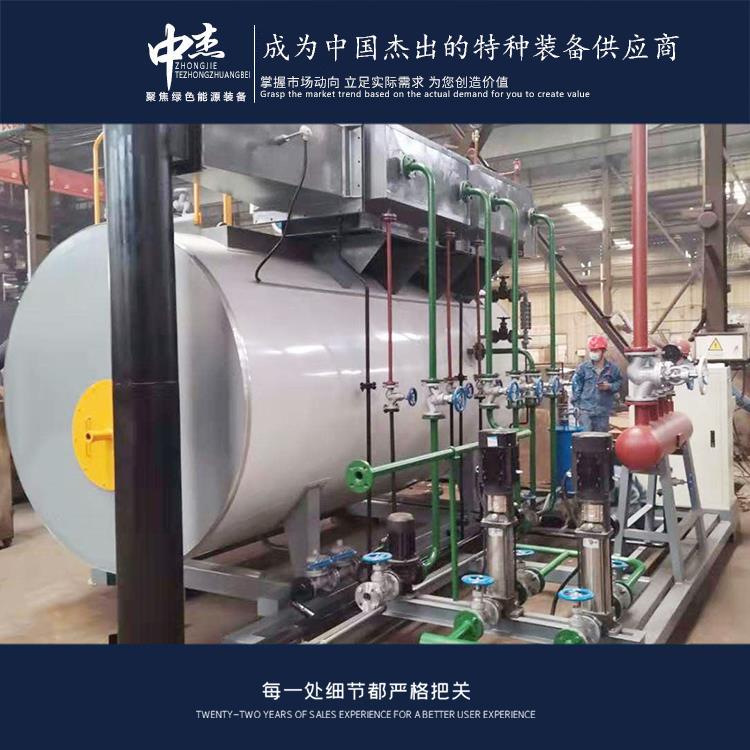
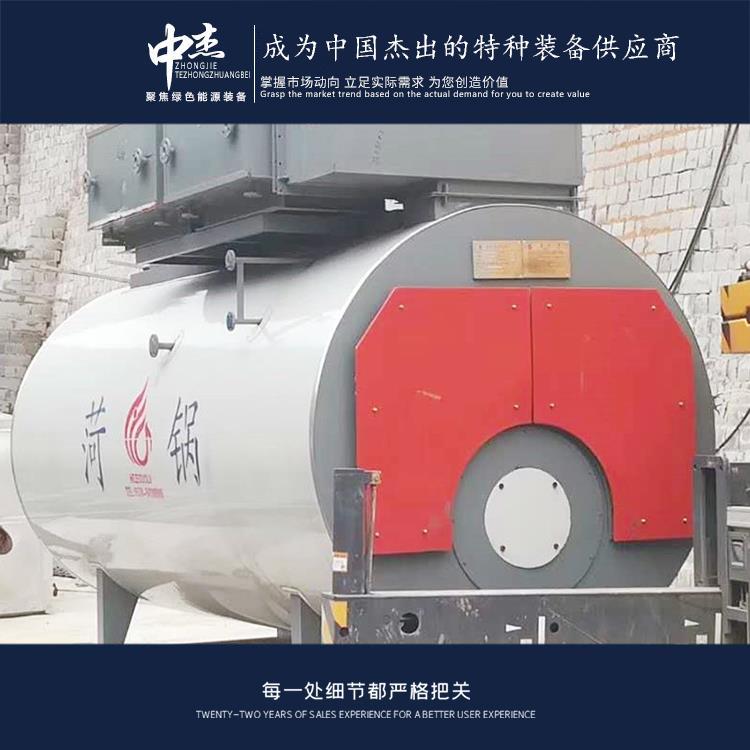


















Shandong Zhongjie Special Equipment (formerly Heze Boiler Factory Co., Ltd.) holds an A-grade boiler manufacturing license, an A2-grade pressure vessel manufacturing license, an A2-grade pressure vessel design license, a B-grade boiler installation license, and GB2/Class and GC2/Class pressure pipeline installation licenses, as well as an equipment and machinery installation contracting qualification. It is a member of the China Boiler and Water Treatment Association, the China Chemical Equipment Association, and the council unit of the Shandong Equipment Manufacturing Association. The company has also passed the ISO9001 Quality Management System, ISO14001 Environmental Management System, OHSAS18001 Occupational Health and Safety Management System certifications, and the U.S. ASME/U2 certification.
Based on the provided information, I cannot accurately determine the heating area for a 40-ton gas-fired hot water boiler or the gas pressure for an atmospheric pressure gas boiler. The determination of these parameters requires considering multiple factors, including the boiler's design specifications, the type and quality of the gas, and the heating system requirements. The heating area is typically calculated based on the size of the building or industrial production facility to be heated and the heat load, which is often calculated by considering the building's floor area, the climate conditions of the region, and the required indoor temperatures. The gas pressure depends on the type of gas and the design of the gas supply system. Different types of gas require different pressure levels. The gas pressure also needs to consider factors such as the transmission distance of the gas pipeline, pipe diameter, and pipe material. Therefore, for an accurate determination of the heating area for the 40-ton gas-fired hot water boiler and the gas pressure for the atmospheric pressure gas boiler, it is recommended to consult the boiler manufacturer or engineer, who can calculate and design based on the specific situation.
For the maintenance of industrial gas boilers, here are some common methods and precautions: Clean the burner: Regularly clean the interior and nozzle of the burner to ensure normal combustion of the gas and prevent carbon accumulation and blockage. Check the gas supply system: Regularly inspect the gas supply system, including gas pipes, valves, and pressure regulators, to ensure normal gas supply, no leaks, and blockages. Clean the flue and heat exchanger: Regularly clean the flue and heat exchanger to remove dust and dirt, maintain heat exchange efficiency, and avoid overheating and energy loss. Check water level and pressure: Regularly check the boiler's water level and pressure to ensure safe operation within the specified range. Refill water and adjust pressure to avoid issues caused by low or high water levels. Inspect safety devices: Regularly inspect the boiler's safety devices, including safety valves, pressure switches, and water level controllers, to ensure they are functioning properly and ensure safe boiler operation. Check the control system: Regularly inspect the boiler's control system, including automatic controllers, sensors, and instruments, to ensure accuracy and reliability, and to detect and repair faults in a timely manner. Scheduled maintenance: Regular maintenance, including lubricating parts, replacing worn components, and checking electrical connections, to extend the lifespan and stability of the boiler. Keep records: Record the boiler's operating parameters, maintenance records, and fault situations to help identify problems and analyze operating conditions. Train operators: Ensure that operators have sufficient
Industrial boilers, during their long-term operation, can accumulate scale and deposits, which affect the efficiency of heat exchange and the normal operation of the boiler. Below are some effective descaling methods:
1. Mechanical Cleaning: This method uses cleaning equipment and tools to wash away scale and deposits inside the boiler with high-pressure water or mechanical brushes. It is suitable for lighter scale and deposits.
2. Chemical Cleaning: Chemical cleaning agents are used to dissolve scale and deposits through chemical reactions. Choose an appropriate cleaning agent based on the composition and properties of the scale, and follow the instructions for use. Chemical cleaning requires safe operation to avoid damage to equipment and the environment.
3. Acid Cleaning: Acid cleaning is a commonly used descaling method for certain types of scale and deposits that are difficult to dissolve. Common acid cleaning agents include various types, and the appropriate agent and concentration should be selected based on the specific situation. Acid cleaning requires safe operation to avoid harm to equipment and personnel.
4. Alkaline Cleaning: Alkaline cleaning is a descaling method for specific types of scale, suitable for alkaline scales. Common alkaline cleaning agents include various types, and the appropriate agent and concentration should be selected based on the specific situation. Alkaline cleaning requires safe operation to avoid harm to equipment and personnel.
5. Physical Descaling: Physical descaling methods include ultrasonic cleaning and electrolytic descaling. Ultrasonic cleaning uses the vibration effect of ultrasound to vibrate and break up the scale. Electrolytic descaling utilizes the principle of electrolysis to dissolve the scale with the aid of electricity. These physical descaling methods are suitable for specific situations and types of scale.
When choosing a descaling method, it is necessary to consider the specific conditions of the boiler.
When selecting a steam boiler, several key factors should be taken into account:
- Steam Demand: First, determine the steam requirements of the factory or project, including steam pressure, flow rate, and quality. Choose the appropriate boiler model and specifications based on actual needs to ensure they meet the process and production requirements.
- Boiler Type: There are various types of steam boilers, such as fire-tube boilers, water-tube boilers, and gas boilers. Select the suitable boiler type based on the factory's actual conditions and needs. Also, consider the fuel type of the boiler, such as coal, gas, or biomass, and choose a fuel type that complies with the factory's energy supply and environmental protection requirements.
- Boiler Efficiency: The efficiency of the boiler directly affects energy utilization efficiency and operating costs. Understand the boiler's thermal and combustion efficiency and choose a steam boiler with higher efficiency to reduce energy consumption and operating costs.
- Quality and Reputation: Choose a supplier with a good reputation to ensure the quality and reliability of the steam boiler. Refer to customer reviews, industry certifications, and ratings to understand the supplier's reputation and product quality.
- Technical Support and After-Sales Service: Select a supplier that can provide comprehensive technical support and after-sales service. Ensure the supplier can offer installation guidance, training, maintenance, and troubleshooting support to ensure the normal operation and maintenance of the steam boiler.
- Cost and Budget: Finally, based on the budget and economic considerations, choose a steam boiler that meets budget requirements. Consider the purchase cost, operating cost, and maintenance cost, and select a steam boiler with a high cost-performance ratio.
It should be noted that the above factors are just some of the key considerations when purchasing a steam boiler, and the specific choice should be determined based on the actual conditions and needs of the factory. It is recommended to communicate and compare with multiple suppliers to obtain more information and advice for an informed decision.
Shandong Zhongjie Special Equipment, welcome customers to our factory for business discussions.
WeChat Official Account

Scan to follow Official Account



















