


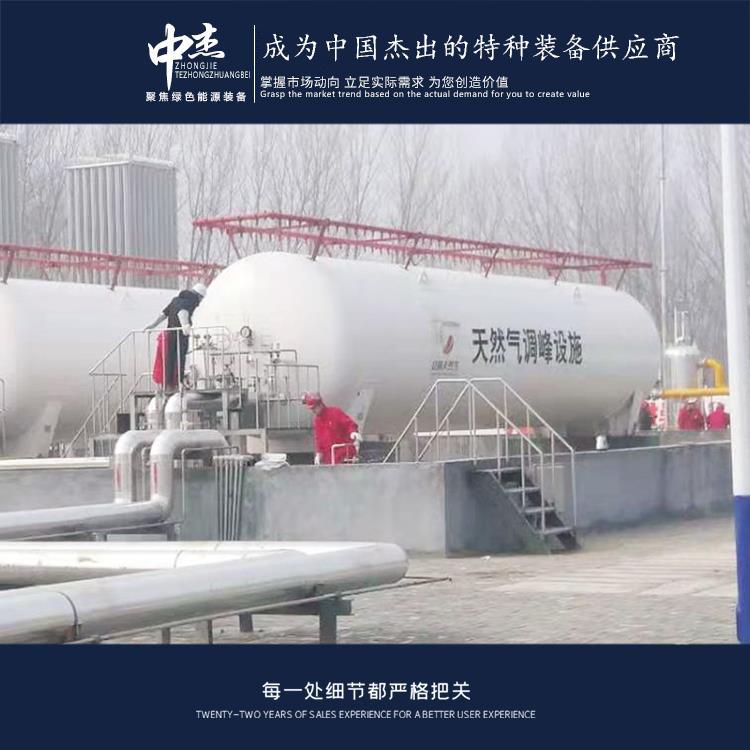

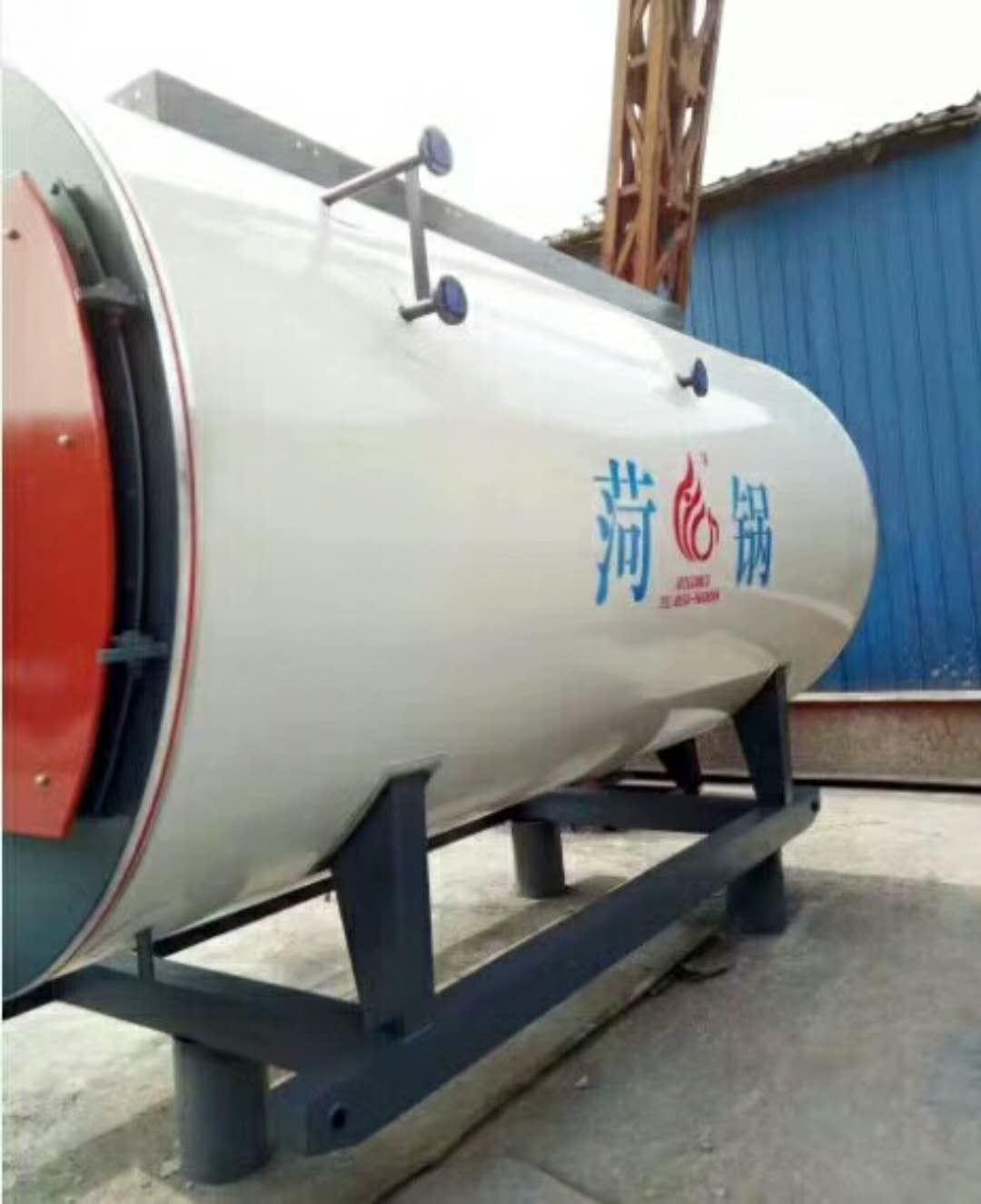


















Shandong Zhongjie Special Equipment (formerly Heze Boiler Factory Co., Ltd.) holds an A-grade boiler manufacturing license, an A2-grade pressure vessel manufacturing license, an A2-grade pressure vessel design license, a B-grade boiler installation license, and GB2/Class and GC2/Class pressure pipeline installation licenses, as well as a qualification for electromechanical equipment installation contracting. It is a member of the China Boiler and Water Treatment Association, the China Chemical Equipment Association, and the director unit of the Shandong Equipment Manufacturing Association. The company has also passed the ISO9001 Quality Management System, ISO14001 Environmental Management System, OHSAS18001 Occupational Health and Safety Management System certifications, and the American ASME/U2 certification.
Low Temperature Carbon Dioxide Storage Tank Related Knowledge
1. Structure of Low Temperature Carbon Dioxide Storage Tank
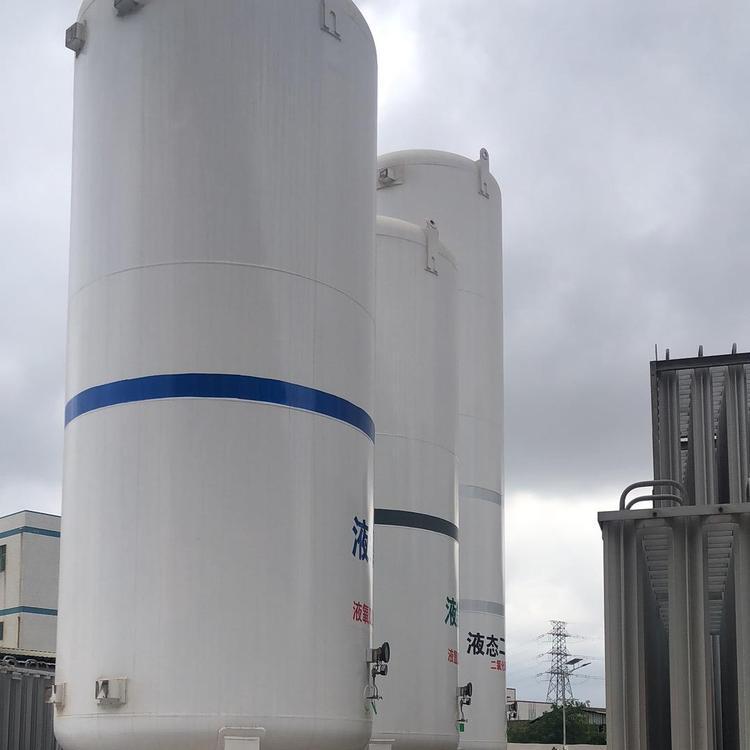
The storage tank is typically a double-layered cylindrical structure, with the inner cylinder made of 6MnDR alloy steel and the outer cylinder of Q245R or Q345R pressure vessel steel plate. The pipeline is made of austenitic stainless steel, and the jacket is filled with high-vacuum sintered sand or insulated with multi-layer wrapping. The storage tank is equipped with valves for operation, which are arranged for ease of use. Pressure gauges and level indicators are also installed to monitor the pressure and liquid level inside the tank.
2. Key Features of Low Temperature Carbon Dioxide Storage Tank
(1) The tank is equipped with a liquid filling connection for tank trucks, allowing for liquid supply to vaporizers, tank trucks, and pumps.
(2) Both the inner and outer cylinders are equipped with safety devices to ensure safe operation for users.
(3) The insulation material of the tank has been specially treated to provide a longer vacuum life. Additionally, the tank is fitted with a vacuum gauge for measuring the jacket vacuum when necessary.
3. Transportation of Low Temperature Carbon Dioxide Storage Tank
(1) During road transportation, the tank should be securely fastened to the vehicle, travel at moderate speeds, and avoid collisions with other objects.
(2) After arrival, the unloading personnel should work with the equipment supervisor to develop a scientific and reasonable unloading plan.
4. Installation of Low Temperature Carbon Dioxide Storage Tank
(1) Upon arrival at the installation site, the tank can be positioned when installation conditions are met. During the installation process, avoid impacts and strikes, and pay special attention to the explosion-proof equipment of the outer cylinder and the vacuum valve; do not touch them.
(2) Perform a gas-tightness test on the inner cylinder system using nitrogen to the working pressure. After checking that valves, pipelines, flanges, etc., have no leaks, the installation is complete.
(3) The installation dimensions are as per the supply materials. When considering liquid loading and unloading with tank trucks, account for the vehicle's travel pathway.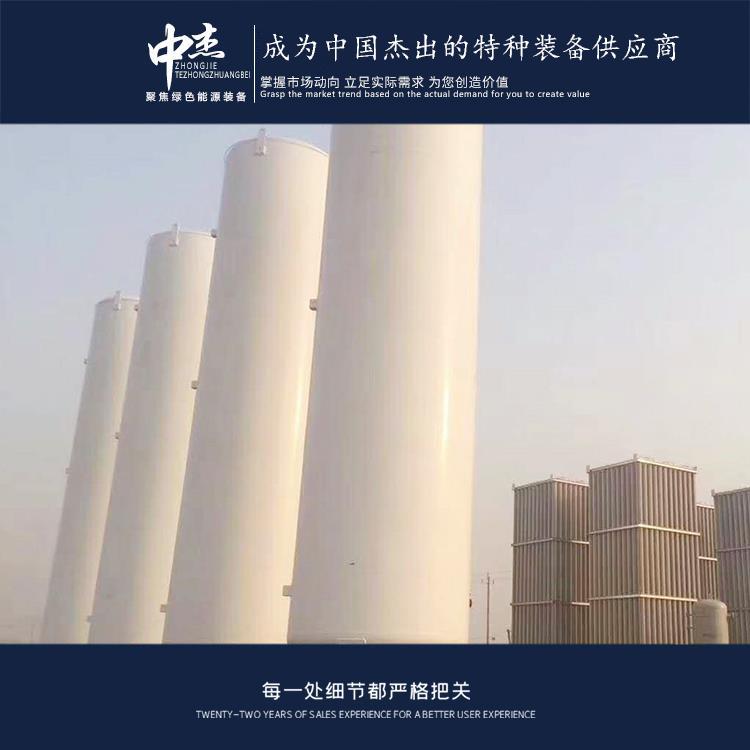
Low-temperature carbon dioxide storage tanks offer several advantages:
- Low-temperature storage capacity: These tanks can store carbon dioxide at low temperatures, typically between -40°C and -70°C. This low-temperature storage allows carbon dioxide to be stored in a liquid state, significantly reducing the storage space required.
- High storage density: Due to the liquid state of carbon dioxide at low temperatures, its storage density is relatively high. Compared to gaseous storage, liquid storage can hold more carbon dioxide in a smaller tank, improving storage efficiency.
- Environmental and renewable: Carbon dioxide is an environmentally friendly gas, with minimal harmful emissions during storage and use. Moreover, carbon dioxide can be reused through capture and recycling technologies, reducing environmental impact.
- High safety: Low-temperature carbon dioxide storage tanks are made from high-strength materials with good sealing and corrosion resistance. They are equipped with safety valves and pressure relief devices to effectively control internal pressure and temperature, ensuring safety during storage.
- Wide application: These tanks are widely used in various industries, such as food and beverage, pharmaceutical, and chemical industries. They can be used for freezing food, refrigeration equipment, and gas supply, meeting diverse industry needs.
In summary, low-temperature carbon dioxide storage tanks offer low-temperature storage capacity, high storage density, environmental friendliness, renewability, high safety, and wide application. These advantages make them essential equipment for storing and using carbon dioxide in many industries.
When using carbon dioxide storage tanks, the following protective procedures must be adhered to ensure safety:
Tank Operator Training: All operators must receive training to understand the characteristics, operational requirements, and safety measures of carbon dioxide storage tanks. Training should include safe tank operation, leak handling, emergency response plans, etc.
Safety Operating Procedures: Establish and follow relevant safety operating procedures, including tank start-up, shutdown, inspection, and maintenance. Operators should operate in accordance with the procedures to ensure the safe operation of the tank.
Leak Handling: Develop a leak handling program, including leak detection, emergency shutdown, and isolation of the leak source. Operators should be familiar with the leak handling procedures and be able to respond quickly and correctly to leak incidents.
Fire Protection Measures: Carbon dioxide is flammable; therefore, fire protection measures must be taken when in use. Smoking, open flame operations, or the placement of flammable materials near the tank are prohibited. Ensure that fire protection equipment around the tank is in good condition and that fire drills are conducted regularly.
Waste Gas Emission: When using carbon dioxide storage tanks, waste gases should be emitted correctly to avoid the accumulation of carbon dioxide in enclosed spaces, which can cause asphyxiation and safety risks. Ensure the smooth and normal operation of the waste gas emission system.
Regular Inspection and Maintenance: Regularly inspect the tank's appearance, seals, valves, and pipeline connections. In case of abnormalities or damage, repairs or replacements should be made promptly. Additionally, regularly inspect and maintain accessories such as safety valves and pressure sensors.
Emergency Response Plan: Develop and implement an emergency response plan, including handling of leak incidents, evacuation procedures, and first aid measures. Operators should be familiar with the emergency response plan and conduct drills regularly.
Monitoring and Alarm System: Install and maintain the tank's monitoring and alarm system.
For the maintenance of CO2 storage tanks, here are some recommended methods:
Regular Inspections: Conduct regular checks of the tank's exterior and interior, including inspecting for corrosion, cracks, and leaks. Non-destructive testing methods, such as ultrasonic testing, can be used to assess the tank's integrity.
Cleaning and Corrosion Protection: Regularly clean the tank's exterior to remove dirt and debris. For tanks coated with corrosion-resistant paint, regularly inspect the coating's condition and perform repairs or recoating to protect the tank from corrosion.
Leak Detection: Regularly perform leak detection to ensure there are no leakage issues. Use gas detectors or leak detectors for testing, or evaluate the tank's sealing performance through pressure tests.
Safety Valve Inspection: Regularly check and test the operational status of safety valves to ensure they function properly under overpressure conditions. Adjust and test according to the specifications and requirements of the safety valves.
Pipe and Valve Maintenance: Regularly inspect and maintain the pipes and valves connected to the tank to ensure their proper operation and sealing performance. Clean and lubricate valves, and check for leaks at pipe connections.
Documentation: Record the dates, contents, and results of maintenance, establishing a maintenance record for the tank. Retain relevant documents and reports for future reference and review.
Please note that for the maintenance of CO2 storage tanks, it is recommended to follow relevant safety operating procedures and standards. If you do not have the necessary knowledge and experience, it is advisable to consult professionals or manufacturers for maintenance work.
Zhongjie Special Equipment adheres to the grand vision of "realizing employees' dreams, creating value for customers, and striving for the prosperity and strength of our motherland," and is dedicated to the development of the green energy equipment industry. We commit to society with high-quality, cost-effective products and services!
WeChat Official Account

Scan to follow Official Account



















