


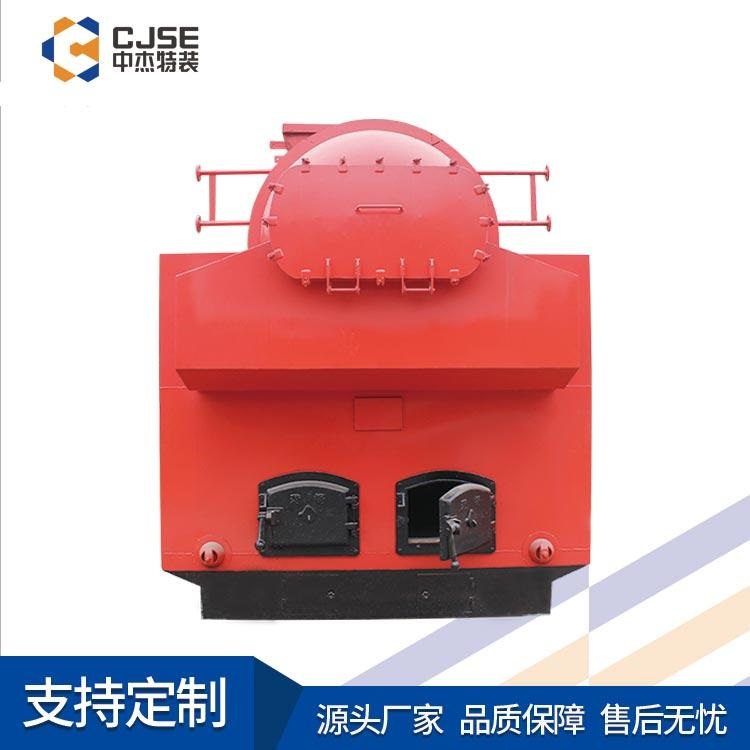

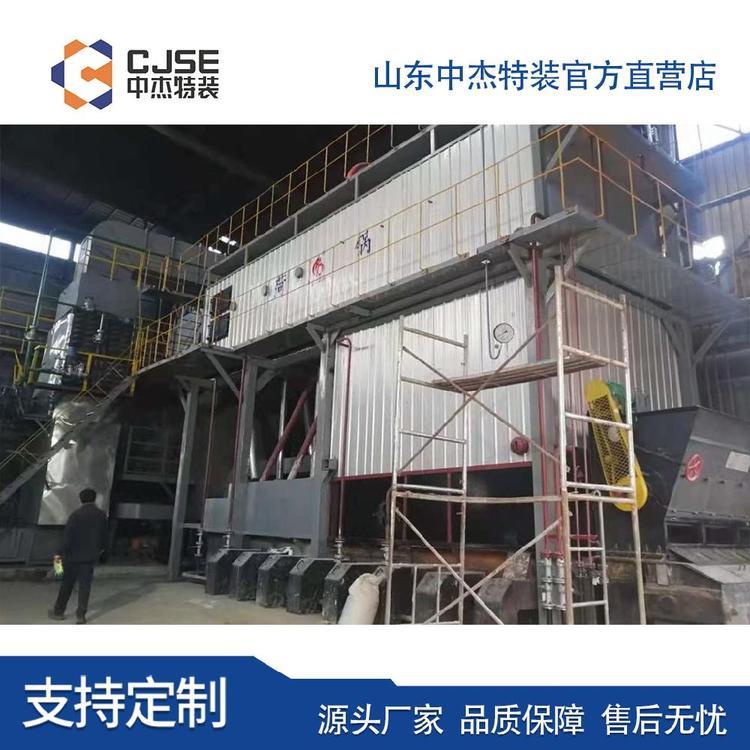
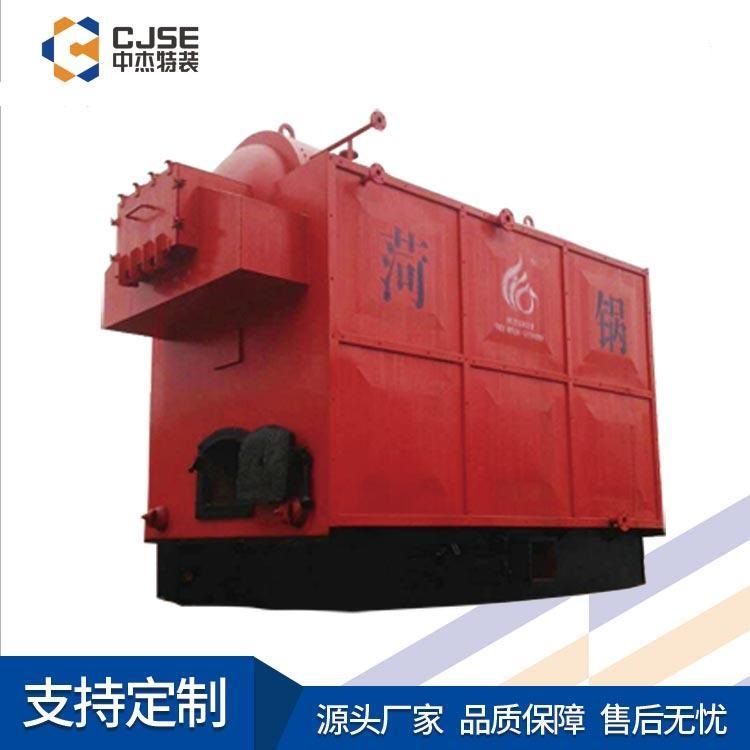


















Shandong Zhongjie Special Equipment (formerly Heze Boiler Factory Co., Ltd.) was established in 2001, located at No. 2218 Jinnan Road, Development Zone, Heze City, with a registered capital of 50 million yuan and total assets of 500 million yuan. The company has 7 business centers: boilers, deep-freezing containers, pressure vessels, central air conditioning, engineering installation, international trade, and Internet of Things. It has three factory sites on Jinnan Road, East Changjiang Road, and Bohai Road, covering a total of 200,000 square meters, with the main workshop spanning 83,000 square meters. It currently employs 710 people, including 247 engineers and technicians and 82 intermediate-level technical personnel. In December 2016, it was recognized as a "High-tech Enterprise" by the Science and Technology Department. In June 2021, it was identified as a "Specialized and New Enterprise in Shandong Province" by the Ministry of Industry and Information Technology. In June 2022, it was recognized as a "Gazelle Enterprise in Shandong Province" and in August 2022, it was identified as a "Specialized and New Small Giant Enterprise" by the Ministry of Industry and Information Technology.
The brief steps for the biomass boiler drying kiln are as follows:
Prepare fuel: Select appropriate biomass fuel such as wood chips and straw, and conduct pre-treatment like drying and sieving to ensure fuel quality and meet the requirements of the furnace.
Ignition and ignition adjustment: Place the fuel into the combustion chamber of the biomass boiler, ignite, and make ignition adjustments. Adjust the oxygen supply, fuel supply, and combustion temperature parameters in the combustion chamber to ensure stable combustion.
Heating and Temperature Control: As fuel burns, biomass boilers produce high-temperature flue gases, which transfer their heat energy to the drying kiln through a heat exchanger. During the heating process, it is necessary to control the temperature of the drying kiln to ensure that the materials inside receive adequate heating.
Furnace Operation and Monitoring: During the furnace heating process, both operation and monitoring are required. Operation involves controlling fuel supply, heat transfer, and the movement of materials inside the furnace. Monitoring includes tracking parameters such as furnace temperature, pressure, and combustion efficiency to ensure normal operation and safety.
Furnace shutdown and cleaning: Upon completion of the heating process or achievement of the desired furnace effect, stop the fuel supply and heating, and perform the furnace shutdown procedure. After shutdown, it is necessary to clean the furnace and biomass boiler, as well as the combustion chamber and flue.
To burn biomass pellets and avoid coking issues, the following measures can be taken:
Appropriate Particle Size: The size of biomass pellets is crucial for combustion efficiency. The particle size should be controlled within an appropriate range, typically 3-5 millimeters. Larger particles can lead to incomplete combustion, while smaller particles tend to fly away and clog.
Sufficient Oxygen Supply: Adequate oxygen supply is required for combustion to ensure a complete combustion reaction. Biomass boilers should ensure that there is sufficient oxygen in the combustion chamber, which can be achieved by adjusting the ventilation system and the operating parameters of the burner.
Appropriate Combustion Temperature: The combustion temperature of biomass pellets is also a significant factor affecting combustion efficiency. A low combustion temperature leads to incomplete combustion, while a high combustion temperature can easily cause coking. Biomass boilers should adjust the combustion temperature to an appropriate range based on the fuel characteristics and combustion requirements.
Proper combustion duration: The combustion time of biomass pellets should also be properly controlled. Insufficient combustion time leads to incomplete combustion, while excessive time can cause coking. Biomass boilers should adjust the combustion time based on fuel characteristics and combustion requirements, to an appropriate range.
Regular cleaning and maintenance: Biomass boilers require regular cleaning and maintenance to keep the combustion chamber and flue passages clear. Regularly cleaning the ash and carbon deposits in the combustion chamber, and cleaning the flue and heat exchanger, can prevent the occurrence of scaling issues.
Note: Different types of biomass fuels and biomass boilers may vary; specific operations and adjustments should be made according to the actual situation. When making adjustments and
Biomass boiler combustion has the following energy-saving features compared to traditional fuel boilers:
Combustion: The combustion technology and design of biomass boilers enable the combustion of biomass fuel. Compared to traditional fuel boilers, biomass boilers have higher combustion efficiency, allowing for more effective energy utilization from the fuel and reducing energy waste.
Reclaimed Heat Utilization: Biomass boilers are equipped with a heat recovery system that can utilize the excess heat from combustion for the heating system, enhancing energy efficiency. Typically, the flue gas heat in traditional fuel boilers is released, but biomass boilers can recover and utilize the heat from flue gases, reducing energy waste.
Renewable Energy Utilization: Biomass boilers utilize renewable biomass fuels such as wood chips, straw, and waste crops, reducing reliance on finite fossil fuel resources. Compared to traditional fuel boilers, biomass boilers have a more sustainable fuel source and can achieve sustainable energy use.
Carbon Emission Reduction: The combustion of biomass fuel results in lower carbon emissions compared to traditional fuel boilers, thereby reducing carbon emissions. The use of biomass boilers can decrease greenhouse gas emissions and is more environmentally friendly.
Waste Utilization: Biomass boilers can use agricultural straw, wood waste, and other agroforestry by-products as fuel, effectively utilizing waste resources and reducing resource waste. Compared to traditional fuel boilers, biomass boilers have a more diverse fuel source and can achieve effective utilization of waste.
Yes, the biomass boiler market is expected to continue expanding. Here are some factors driving the growth of the biomass boiler market:
Rising Demand for Renewable Energy: As the demand for renewable energy continues to grow, biomass, as a renewable energy source, holds broad application prospects. Government and corporate support and promotion of renewable energy will facilitate the expansion of the biomass boiler market.
Rising Environmental Awareness: Biomass boilers have lower carbon emissions and environmental impact compared to traditional fossil fuel boilers. With the increasing awareness of environmental protection, more and more users are opting for biomass boilers to minimize environmental impact.
Policy Support: Many regions have implemented policies and measures to support the development of renewable energy, including tax incentives and energy regulations. These policies are driving the growth of the biomass boiler market.
Energy Security Needs: Biomass, as a native renewable energy source, can reduce dependence on imported energy and enhance energy security. In areas with scarce resources, the demand for biomass boilers will be more pronounced.
Technological advancement and cost reduction: With ongoing technological progress and falling costs, biomass boilers have seen improved performance and efficiency, making them more competitive and viable.
In summary, the biomass boiler market is expected to grow continuously, driven by factors such as the increasing demand for renewable energy, enhanced environmental awareness, policy support, energy security needs, as well as technological advancements and cost reductions.
Shandong Zhongjie Special Equipment, welcome clients to our factory for business discussions.
WeChat Official Account

Scan to follow Official Account



















