



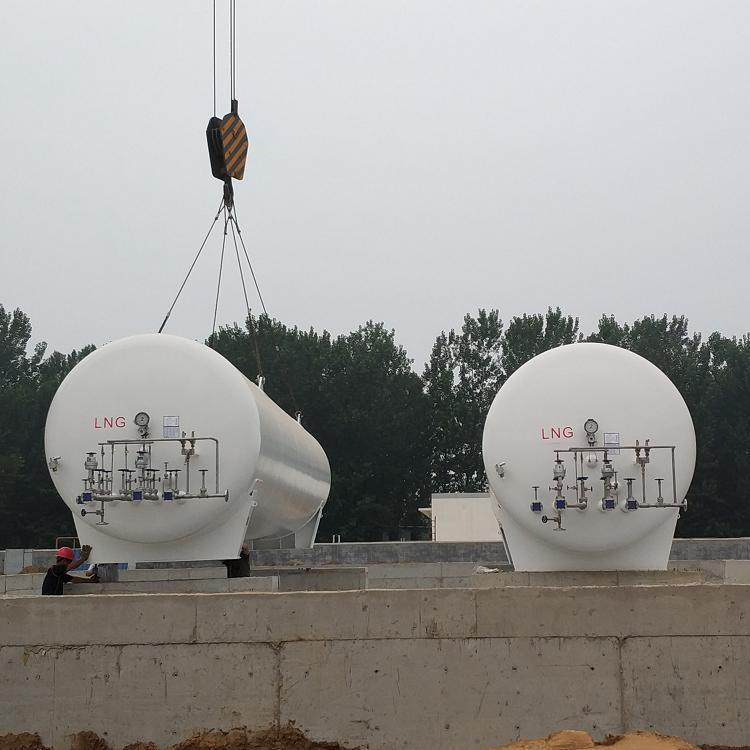
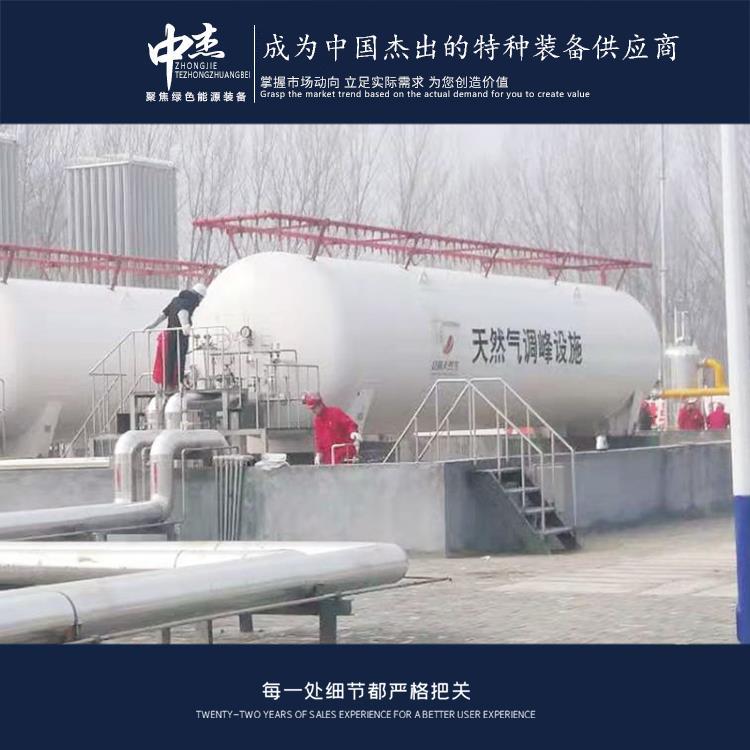


















Shandong Zhongjie Special Equipment (formerly Heze Boiler Factory Co., Ltd.) holds an A-grade boiler manufacturing license, an A2-grade pressure vessel manufacturing license, an A2-grade pressure vessel design license, a B-grade boiler installation license, and GB2/Class and GC2/Class pressure pipeline installation licenses, as well as an electromechanical equipment installation contracting qualification. It is a member of the China Boilers and Water Treatment Association, the China Chemical Equipment Association, and the council unit of the Shandong Equipment Manufacturing Association. The company has also passed the ISO9001 Quality Management System, ISO14001 Environmental Management System, OHSAS18001 Occupational Health and Safety Management System certifications, and the American ASME/U2 certification.
The primary reason for pre-cooling a CO2 storage tank before use is to ensure that the CO2 inside remains in a liquid state and maintains a stable temperature during storage and supply. The pre-cooling process typically involves the following steps:
1. Tank Cooling: Before the tank is put into operation, it must be cooled to a sufficiently low temperature to convert the CO2 from a gas to a liquid. This can be achieved by injecting a cooling medium (such as liquid nitrogen) into the tank or by using an external cooling device.
2. Tank Pre-filling: After the tank has been cooled, liquid CO2 needs to be pre-filled into the tank to fill it and maintain a certain pressure. The purpose of pre-filling is to provide sufficient CO2 supply during storage and supply and to maintain stable pressure within the tank.
Through pre-cooling, the liquid state of the CO2 inside the tank can be ensured, preventing premature evaporation and energy loss. Additionally, pre-cooling helps to lower the tank's temperature in advance, reducing CO2 evaporation and pressure fluctuations, thereby improving the tank's operational efficiency and safety.
It should be noted that the specific methods and requirements for pre-cooling may vary depending on the tank design and usage scenario. When performing pre-cooling operations, it is necessary to follow relevant safety operation procedures and standards to ensure the safety and effectiveness of the operation.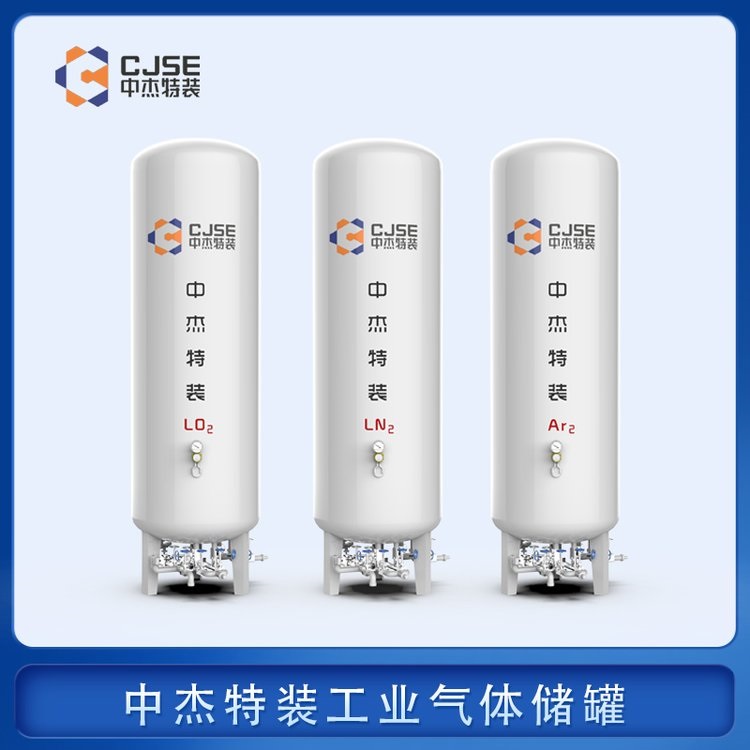
Here are some common protective techniques for carbon dioxide storage tanks:
Fire and Explosion Prevention Measures: A fire-resistant isolation zone should be set up around the tank, away from ignition sources and flammable materials. The tank itself should adopt fire and explosion prevention measures, such as fire-resistant coatings and explosion-proof devices, to prevent fires and explosions.
Leak Detection and Alarm Systems: The tank should be equipped with leak detection and alarm systems to promptly detect and alert of any leaks. Regularly inspect and maintain the leak detection equipment to ensure proper functioning.
Regular Inspections and Maintenance: Regularly inspect the tank's exterior, valves, and fittings to ensure they are intact. Conduct regular leak detection and pressure tests to ensure the tank's safety performance meets requirements.
Waste Gas Treatment: Treat the waste gases produced by the carbon dioxide storage tank to prevent environmental pollution. Implement appropriate waste gas treatment measures, such as collecting and treating the waste gases.
Static Protection: Take static protection measures to avoid static accumulation and discharge. Use anti-static equipment and tools to ensure static safety during operations.
Safety Training and Awareness: Train operators on safety procedures to enhance their awareness and ability to handle carbon dioxide storage tanks safely. Conduct regular safety training and drills to prepare for emergencies.
Management Records and Documentation: Establish comprehensive management records and documentation, including the tank's usage, inspection, and maintenance records. Regularly review and update management records to ensure safe management and maintenance of the tank.
It should be noted that the above are common protective techniques, and specific techniques may vary depending on the type and application of the tank. When using carbon dioxide storage tanks, operate according to relevant regulations and standards and consult experts to ensure safety and effectiveness.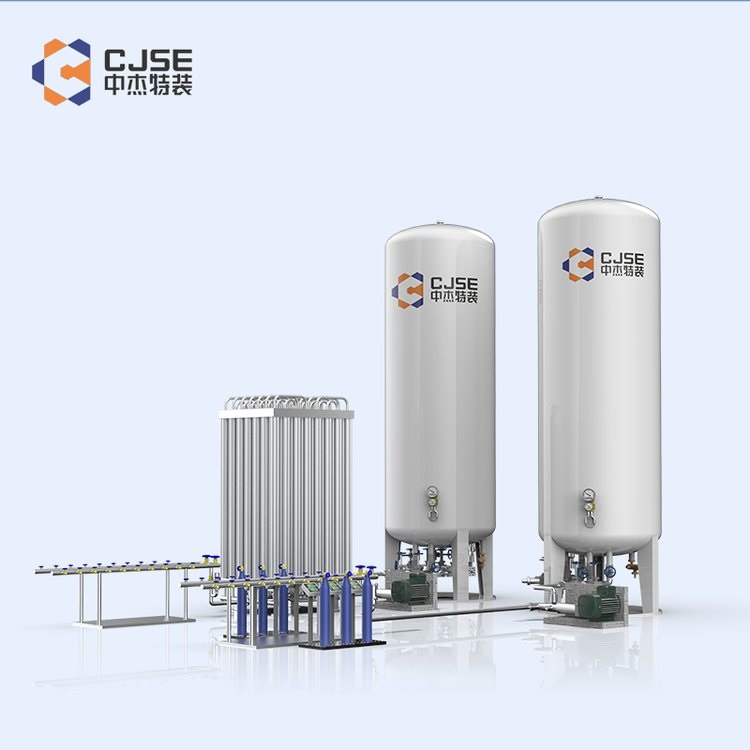
CO2 flooding is a commonly used增产 technology for enhancing oil recovery in oilfields. It involves injecting CO2 gas into the reservoir to alter its physical and chemical properties, thereby promoting flow and increasing recovery rates. The working principle of CO2 flooding is as follows:
Dissolution Principle: CO2 has a high solubility in oil. When CO2 gas is injected into the reservoir, it dissolves within it, reducing viscosity and surface tension, making the oil more flowable.
Expulsion Drive Principle: After CO2 gas is injected into the reservoir, it expands to form a gas phase, increasing the internal pressure of the reservoir and pushing the oil towards the wellbore. Additionally, CO2's high permeability can improve the reservoir's permeability, enhancing oil flow.
Chemical Reaction Principle: CO2 reacts with certain components in the oil, producing soluble substances that further reduce viscosity and improve flowability.
CO2 flooding technology offers certain advantages in oilfield development, such as:
Environmental Friendliness: CO2 is a clean, non-toxic, and renewable gas. Using CO2 flooding can reduce environmental pollution.
Economic Viability: CO2 flooding can increase oil recovery rates and production, thereby enhancing economic benefits.
Sustainability: CO2 can be separated from air or captured and stored from industrial flue gases, enabling the recycling of CO2, which is sustainable.
It is important to note that the application of CO2 flooding technology requires consideration of reservoir characteristics, geological conditions, and economic feasibility. A thorough reservoir evaluation and engineering design should be conducted before implementing CO2 flooding to ensure the effectiveness and safety of the technology.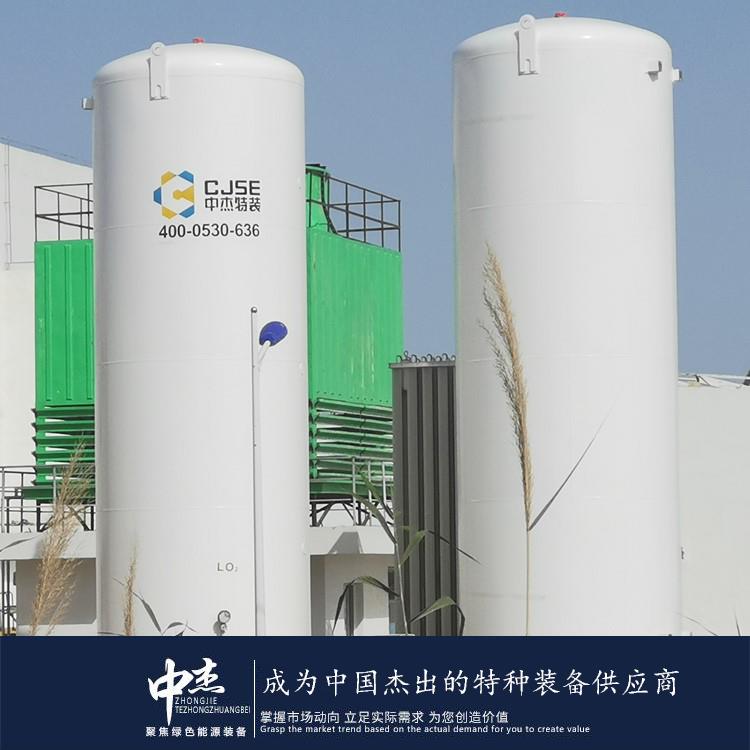
Carbon dioxide tanks possess the following characteristics:
- High-pressure vessel: Carbon dioxide tanks are typically designed as high-pressure vessels, capable of withstanding significant pressure. This is due to the fact that carbon dioxide requires high pressure at room temperature to maintain its liquid state.
- High oxidizing potential: Carbon dioxide has a high oxidizing potential, supporting combustion. Thus, when handling and storing carbon dioxide, precautions must be taken to prevent contact to avoid fire and explosion risks.
- Low-temperature storage: Carbon dioxide exists as a gas at room temperature but can be compressed into a liquid at lower temperatures. Therefore, carbon dioxide tanks usually need to have good insulation properties to maintain the low-temperature liquid state of stored carbon dioxide.
- High density: Liquid carbon dioxide has a high density, allowing for the storage of large amounts of carbon dioxide in a relatively small volume. This makes carbon dioxide tanks useful in scenarios requiring substantial CO2 supplies.
- Safety valves and pressure control: To ensure internal tank pressure remains within a safe range, carbon dioxide tanks are usually equipped with safety valves and pressure control devices. These devices monitor and control the tank's internal pressure to prevent overpressure from causing tank rupture.
- Corrosiveness: Carbon dioxide has some corrosive properties, particularly in high humidity environments. Therefore, the materials and corrosion prevention measures for the tanks must consider the corrosiveness of carbon dioxide to ensure the tank's durability and safety.
These characteristics make carbon dioxide tanks widely applicable in many industries, such as the food and beverage industry, fire suppression, and gas industry. When using carbon dioxide tanks, it is necessary to follow relevant safety operation procedures and standards to ensure safety during operation.
Zhongjie Special Equipment upholds the grand vision of "realizing employees' dreams, creating value for customers, and striving for the prosperity and strength of our motherland," and is dedicated to the development of the green energy equipment industry. We offer society high-quality products and services at competitive prices!
WeChat Official Account

Scan to follow Official Account



















